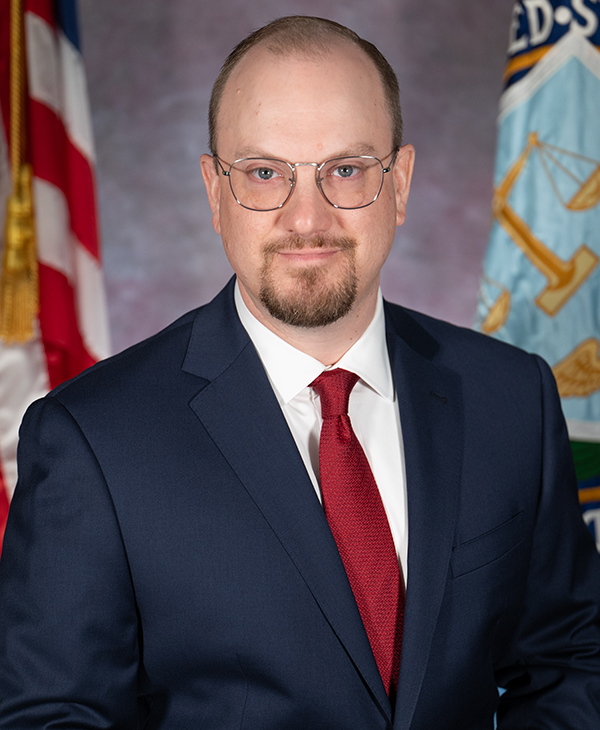
Andrew N. Ferguson
Chair
Commission
10 reports
U.S. Federal Trade Commission
Government · Hybrid structure · 1K employees · Washington, DC
Leadership data sourced from cited SEC filings · reviewed 2026-04-01 View sources ↓
Interactive org chart
Explore the agency leadership model, component structure, and reporting layers from official public sources.
Choose a prompt, then open an AI app and paste.
Download the CSV data instead
Independent federal commission enforcing competition and consumer protection laws through bureaus and offices under a bipartisan commission structure in Washington, DC. Sources: U.S. Government Manual; FTC official website.
What to model
Start with the public baseline, then use the scenario views and source-backed changes to ask what happens when leadership, span, or team ownership shifts.
The people
6 senior leadership roles or offices from official public sources. Use this section as a current agency-leadership index, not a private-company filing table.
Chair
Commission
10 reports
Commissioner
Commission
0 reports
Chief of Staff
Office of the Chair
0 reports
Chief Technologist
Office of Technology
0 reports
Inspector General
Office of Inspector General
0 reports
Executive Director
Office of the Executive Director
5 reports
The operating model
3 offices, branches, or components organize the agency mission. Tile size scales with estimated staff where public estimates exist.
300 employees
p7
Prevents anticompetitive mergers and business practices through investigation, enforcement, and policy.
400 employees
p8
Protects consumers from deceptive or unfair practices through enforcement, education, and policy initiatives.
200 employees
p9
Provides economic analysis and research to support FTC enforcement and policy decisions.
The agency brief
The comparison
Compared with the Department of Justice Antitrust Division, the FTC is an independent commission with both competition and consumer protection mandates, whereas DOJ is an executive department focused primarily on antitrust enforcement through litigation.
The FTC is led by Chair Andrew N. Ferguson, one of five Commissioners appointed by the President and confirmed by the Senate.
The FTC protects consumers and promotes competition by enforcing federal laws against anticompetitive, deceptive, and unfair business practices.
The FTC’s major components include the Bureau of Competition, Bureau of Consumer Protection, Bureau of Economics, and supporting offices such as the Office of the Executive Director and Office of Inspector General.
As an independent regulatory commission, the FTC does not report to a cabinet department; it operates independently within the executive branch.
The org chart helps compare the FTC’s commission-based structure with other regulatory agencies and supports workforce or mission planning across bureaus.
Reference
If you reference this page in research, analysis, or news writing, use one of the formats below. Citation includes the SEC filing source where applicable.
Creately. (2026). U.S. Federal Trade Commission organizational structure. Creately. Retrieved , from https://creately.com/org-chart/us-government/federal-trade-commission/"U.S. Federal Trade Commission Organizational Structure." Creately, April 1, 2026, https://creately.com/org-chart/us-government/federal-trade-commission/. Accessed .Creately. "U.S. Federal Trade Commission Organizational Structure." Last modified April 1, 2026. https://creately.com/org-chart/us-government/federal-trade-commission/.Permanent URL: https://creately.com/org-chart/us-government/federal-trade-commission/ · last updated 2026-04-01