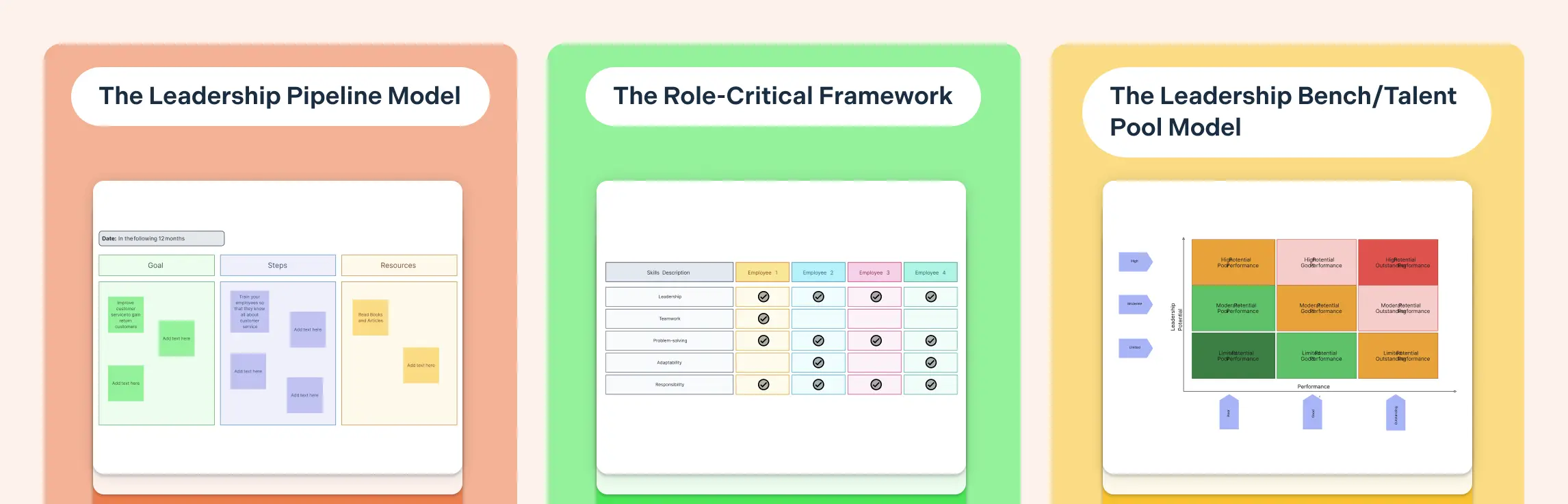
For many teams, the “panic-hire” reality is a result of scattered workflows and a lack of structural clarity. This guide explores the succession planning framework as the structural “bones” of your leadership strategy, comparing the big three succession planning models—Pipeline, Role-Critical, and Talent Pool—to find the one that “just works” for your organization.
What Is a Succession Planning Framework?
Think of a succession planning framework as the structural “bones” of your leadership strategy. While your succession planning process represents the day-to-day actions and movement, the framework is the blueprint that ensures those actions actually lead somewhere.
A formal succession planning model helps structure the process with a repeatable system and builds true organizational resilience. By defining the “how” and “who” before you need them, you ensure leadership continuity that doesn’t skip a beat when the organizational chart shifts.
Core Components of a Succession Planning Framework
To move from a scattered workflow to a streamlined engine, every high-impact framework needs a few non-negotiable pillars. These components of a succession planning framework work together to turn raw potential into ready-now leadership:
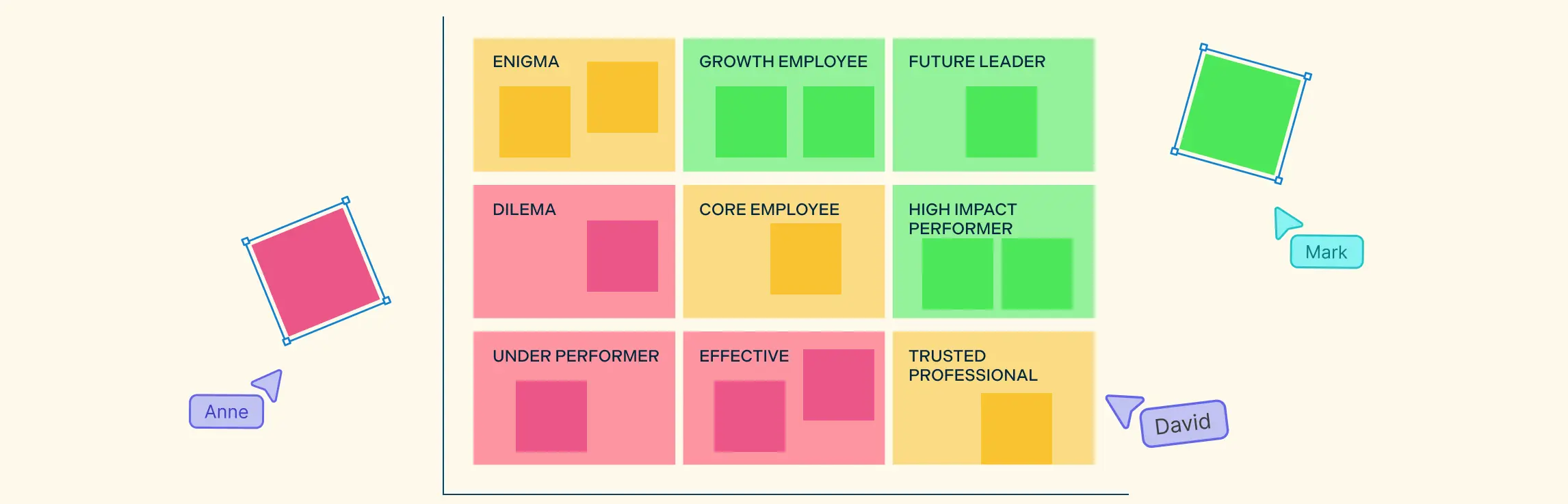
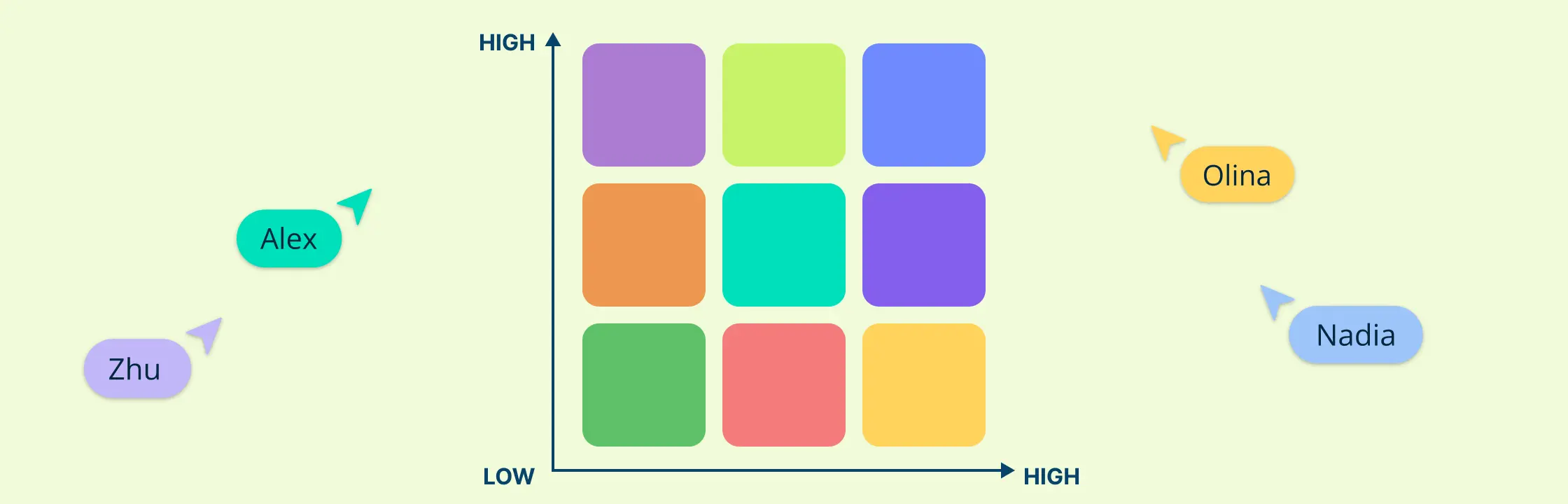
- Talent Identification: This is your “radar.” It’s the systematic way you identify high-potential (HiPo) employees using data—like the 9-box grid—rather than just popularity.
- Development Pathways: Once you’ve found your future leaders, how do they grow? This component focuses on targeted coaching, “stretch” assignments, and formal training to close skill gaps.
- Risk Assessment: You need to know where the “cracks” are. This involves identifying critical roles that have no immediate backup and calculating the “flight risk” of current incumbents.
- Succession Metrics: You can’t manage what you don’t measure. This bridges the gap to your succession planning metrics, tracking things like “bench strength” and “internal hire rate.”
- The Human Element: Remember, a framework isn’t just a rigid set of rules; it’s a living structure designed to support your people. When your team sees a clear, transparent framework in place, that “scattered” feeling vanishes and is replaced by a sense of clarity and career purpose.
3 Most Popular Succession Planning Models
Choosing a succession planning framework isn’t about picking the “best” one—it’s about picking the one that fits your organization’s DNA. Think of these as different architectural styles: one might be a sturdy skyscraper, while another is a flexible, modular workspace.
Here’s a breakdown of the three most effective models for modern teams.
1. The Leadership Pipeline Model (The Traditionalist)
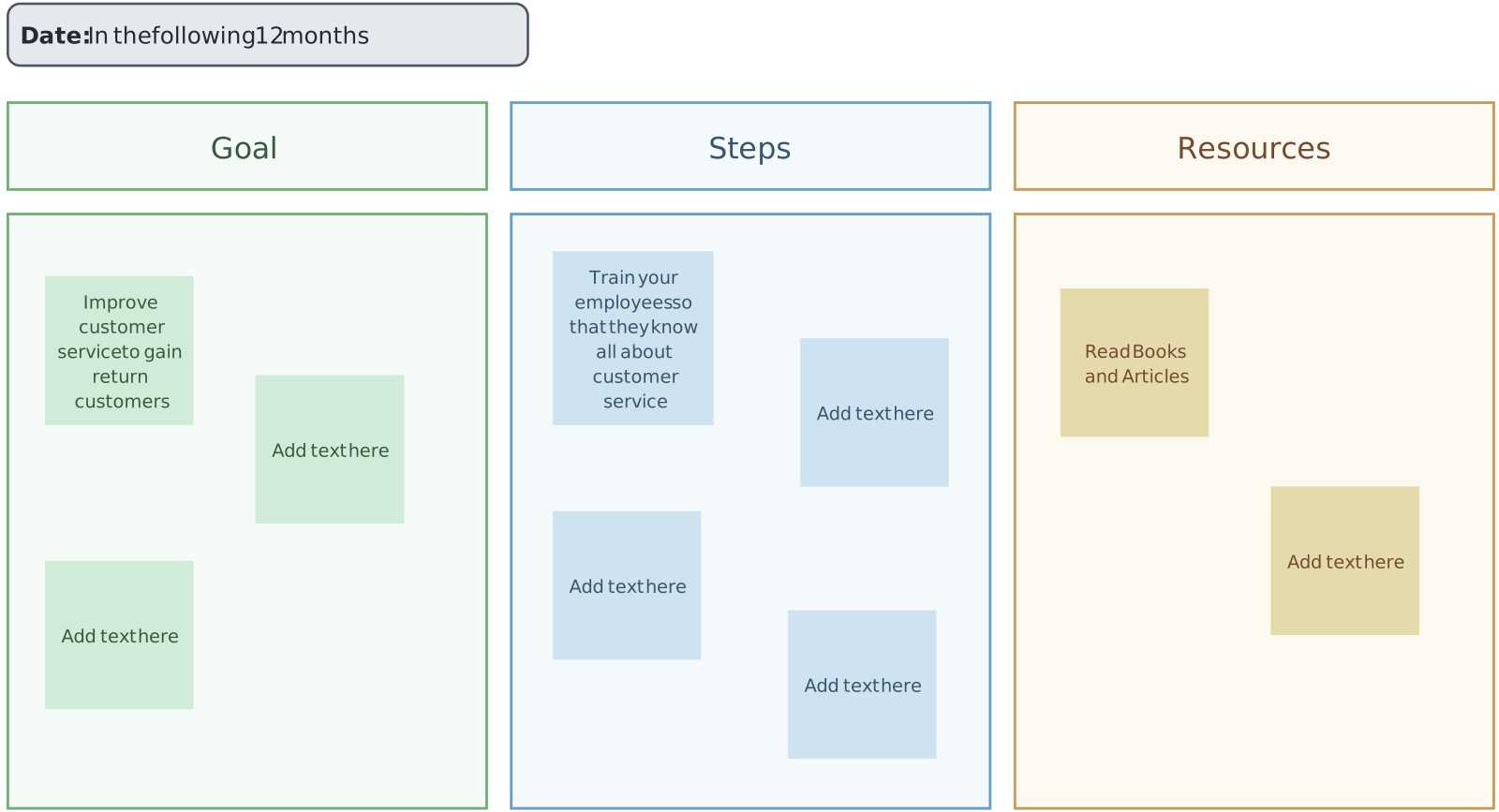
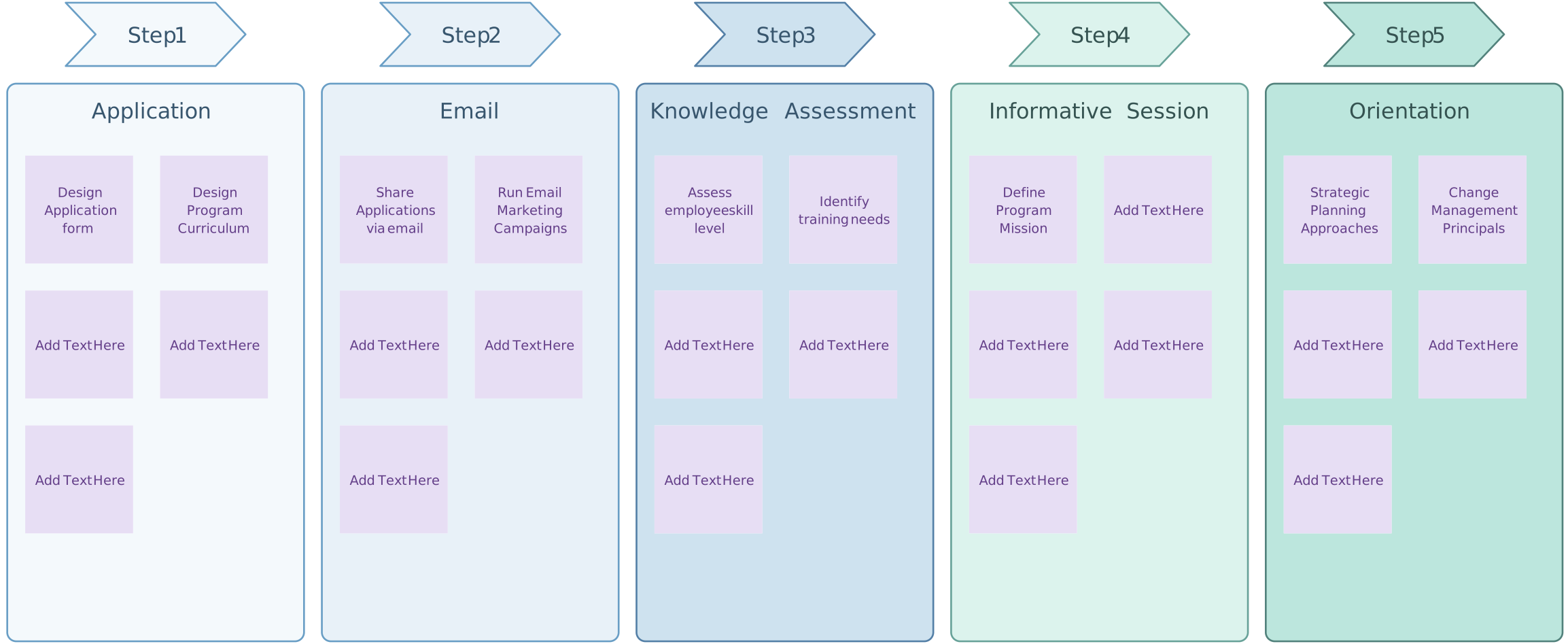
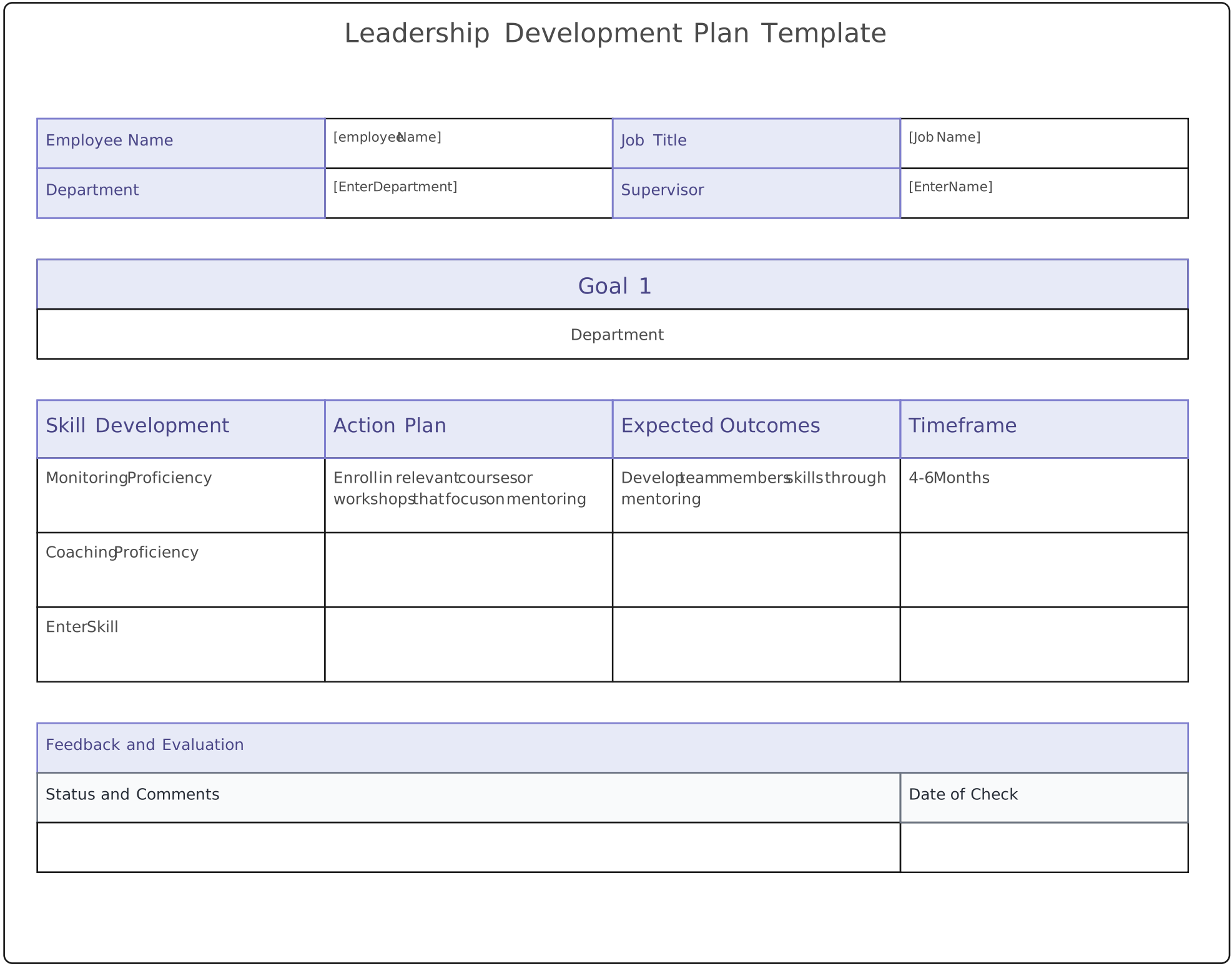
The Leadership Pipeline is the gold standard for organizations with a clear, vertical hierarchy. This succession planning model is built on the idea that leading at one level requires a completely different set of skills and values than leading at the level below it.
- The Concept: It maps out the specific transitions (or “passages”) an employee takes, from managing themselves to managing others, and eventually managing the entire enterprise.
- Why it works: It removes the guesswork from career progression. Everyone knows what the next step looks like and what skills they need to master to get there.
- Best for: Large, established corporations or government entities with well-defined career ladders.
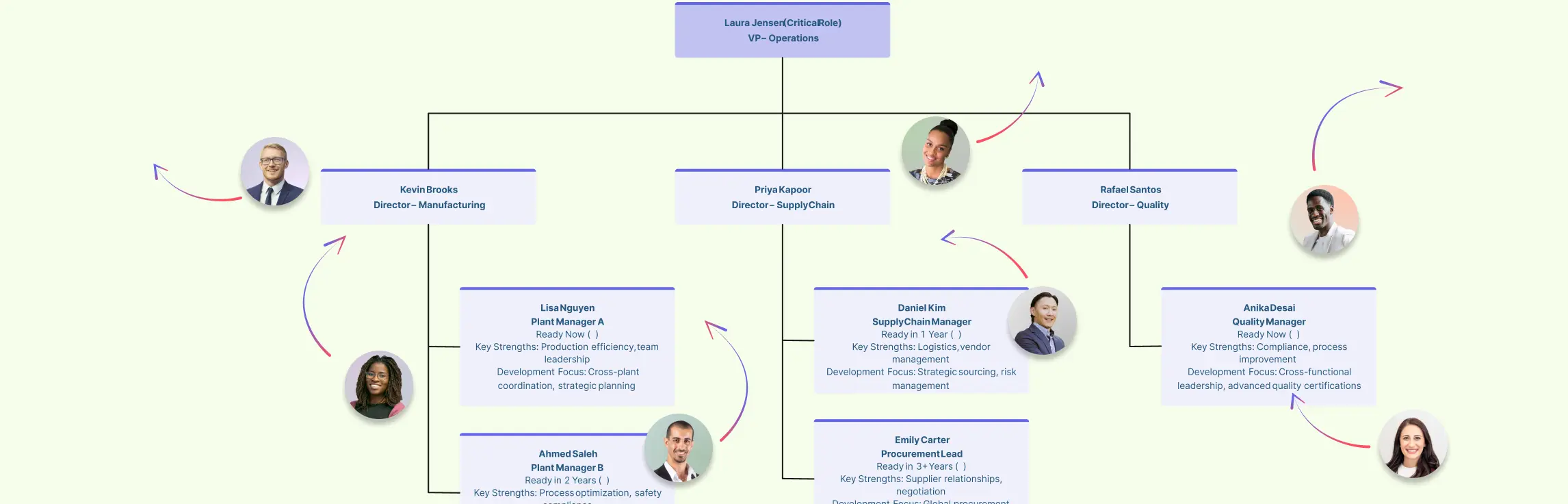
Examples of Leadership Pipeline Models


2. The Role-Critical Framework (The Specialist)
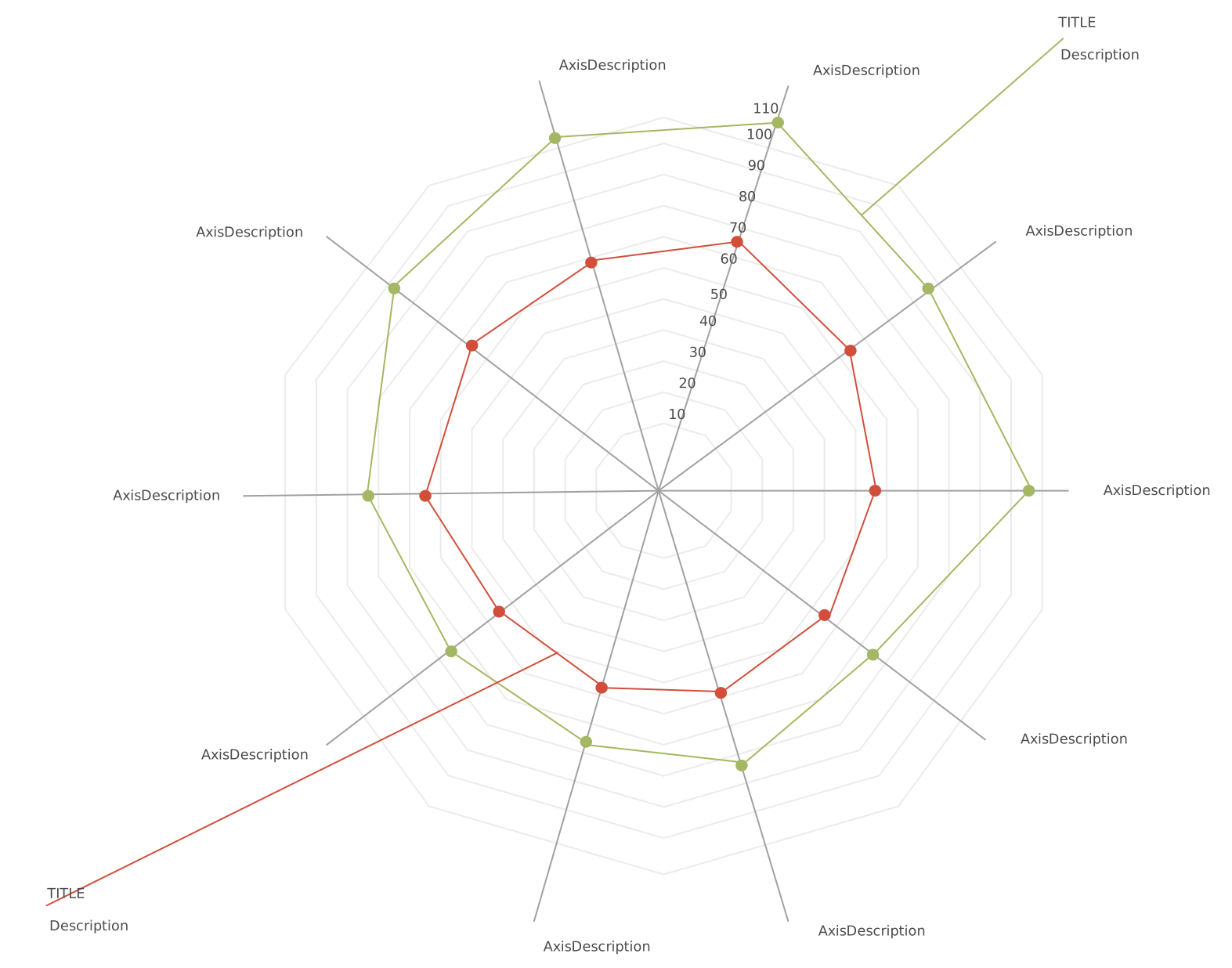
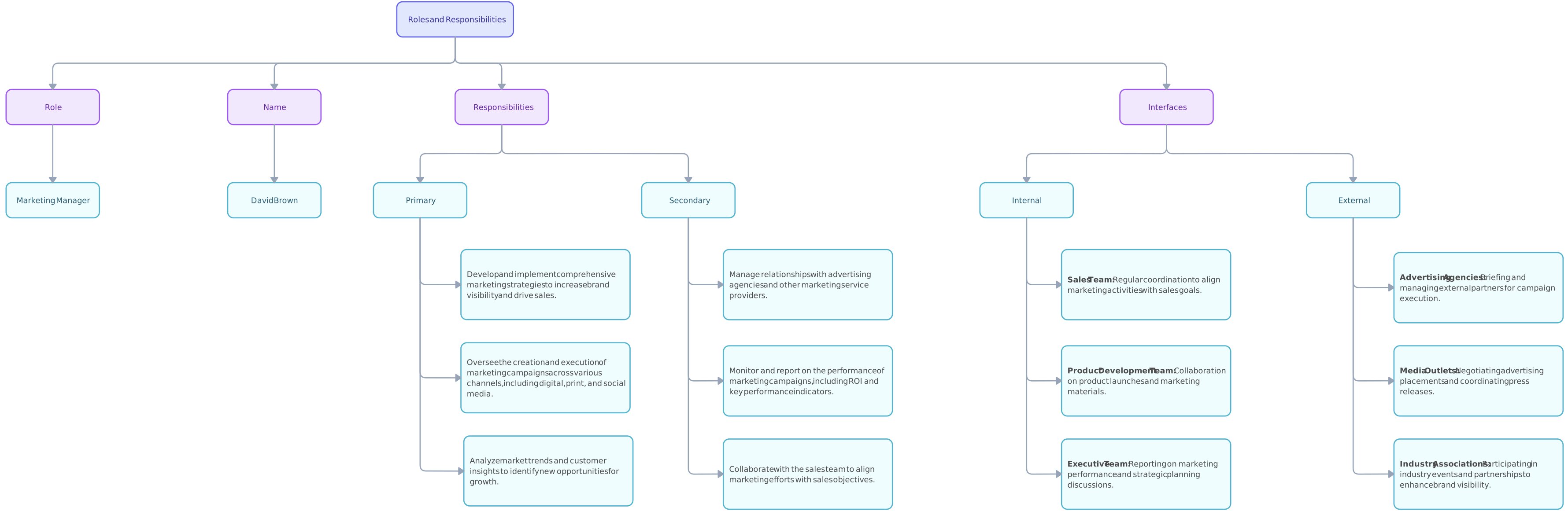
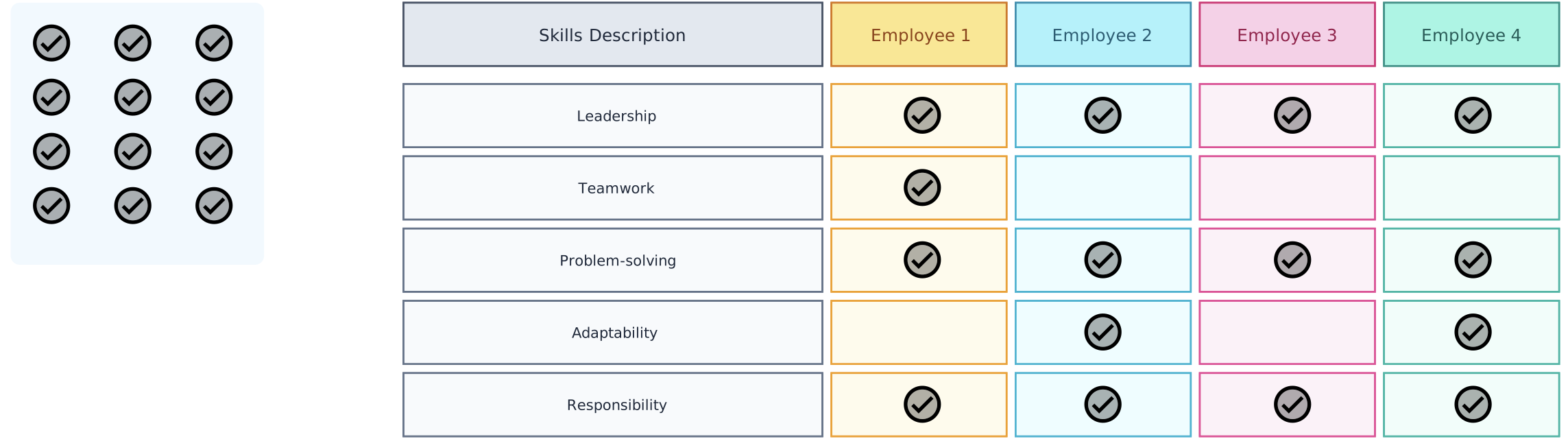
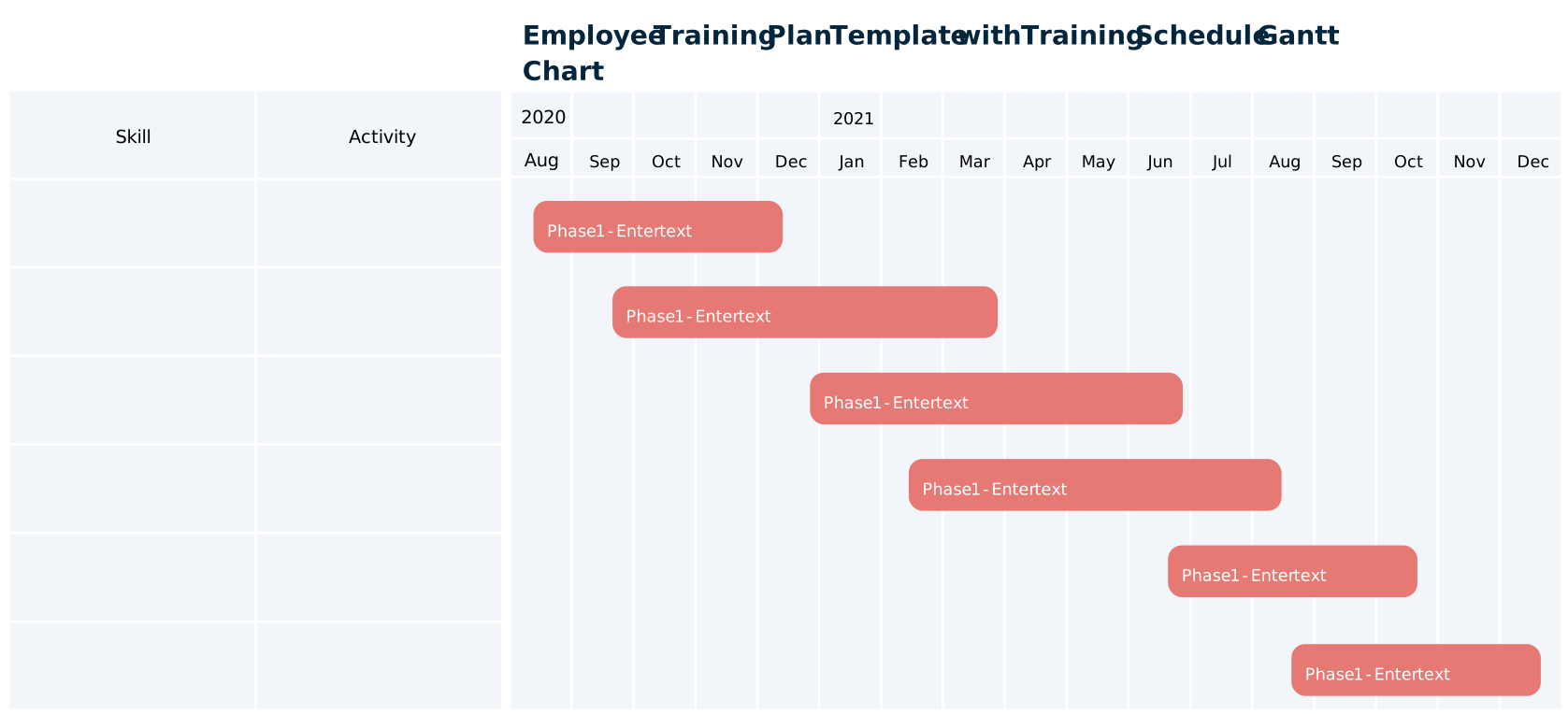
If the Pipeline is about the “ladder,” the Role-Critical Framework is about the “linchpins.” This model acknowledges that some roles are so specialized or impactful that their vacancy poses an immediate threat to the business.
- The Concept: Instead of looking at every management level, you identify the “mission-critical” roles—the ones that, if left empty for even a week, would cause a system-wide meltdown. You then focus your succession planning frameworks exclusively on securing these specific seats.
- Why it works: It’s incredibly efficient for lean teams. You aren’t over-complicating things by planning for every single role; you’re protecting the heart of the operation.
- Best for: Tech startups, specialized manufacturing, or R&D-heavy firms where specific technical knowledge is king.
Examples of Role-Critical Frameworks
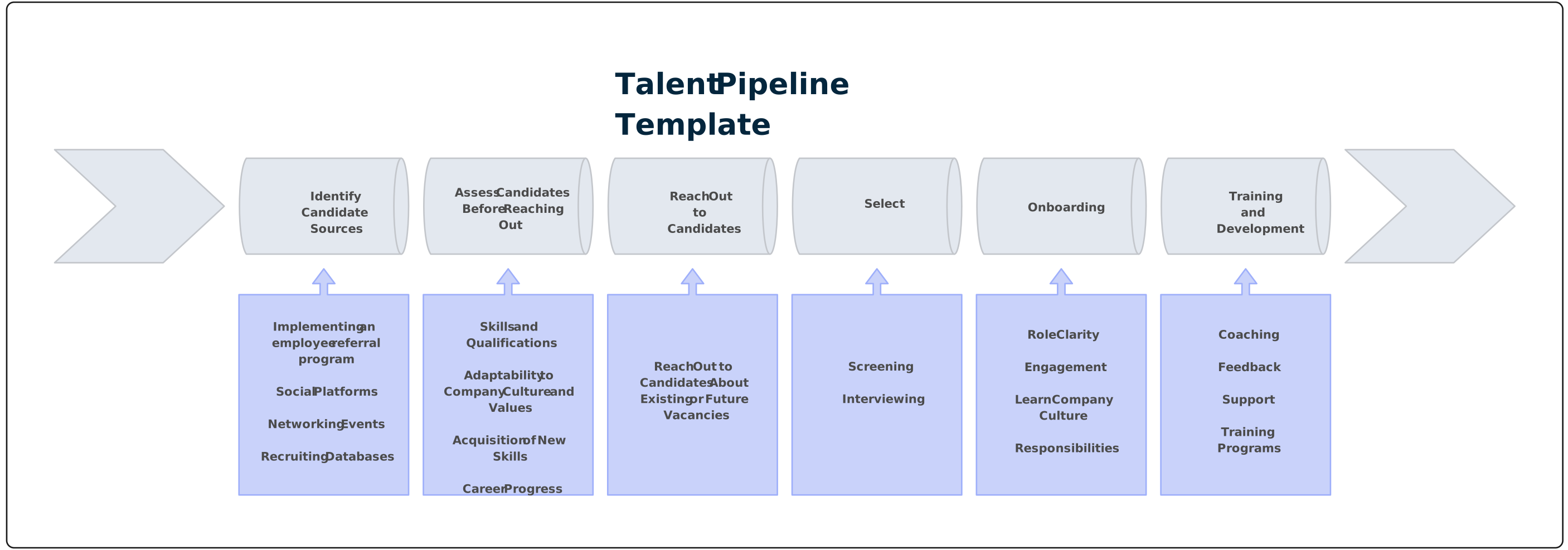
3. The Leadership Bench/ Talent Pool Model (The Modernist)
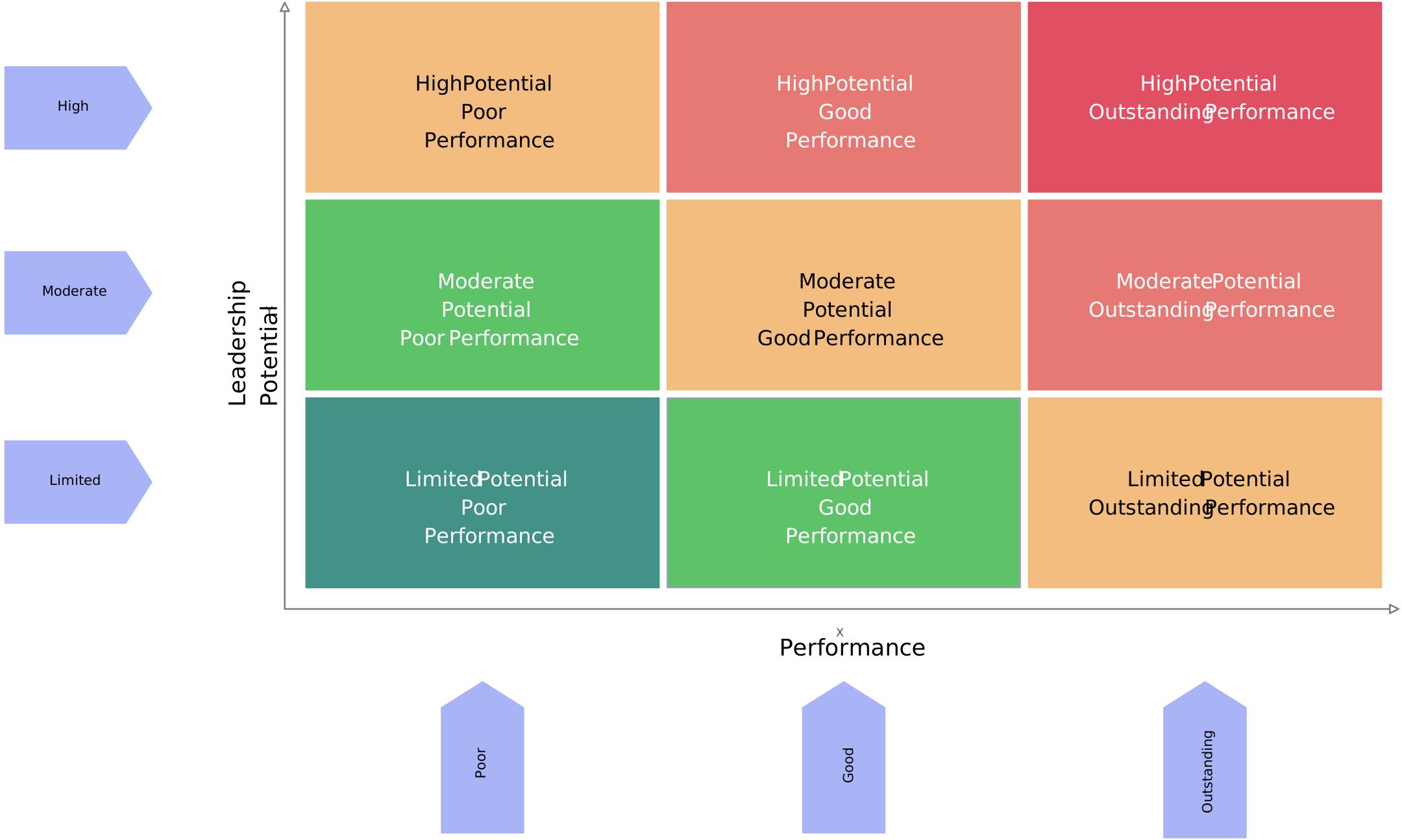
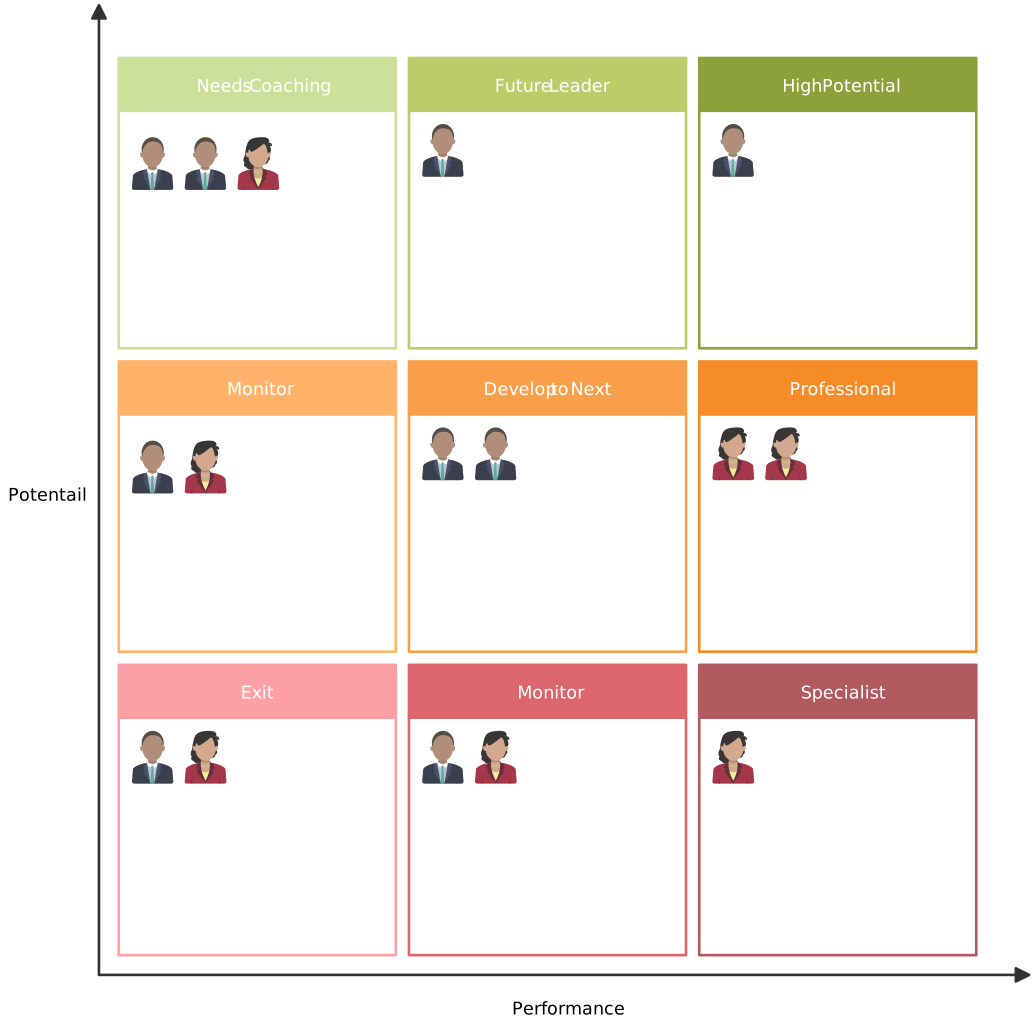
In a world that moves at lightning speed, many teams find that “Person A replacing Person B” is too rigid. Enter the Leadership Bench (or Talent Pool) model.
- The Concept: You develop a broad “pool” of high-potential leaders who are cross-trained in multiple areas of the business. When a vacancy opens up, you don’t look for a specific successor; you look to your bench of ready-now talent.
- Why it works: It’s the ultimate antidote to scattered workflows. It creates massive flexibility and prevents “siloing.” It also aligns with succession planning best practices by focusing on skill-building rather than just job-filling.
- Best for: Agile, high-growth companies and organizations in “pivot-heavy” industries where roles change as fast as the market does.
Examples of Talent Pool Model

What Framework Should You Choose?
Not every organization needs a complex, multi-tiered hierarchy. The “best” succession planning framework is the one that actually gets used. If the model is too heavy for your team, it becomes “shelfware”, a nice idea that nobody touches.
Here is how to match your succession planning model to your organization’s current stage.
| Business Type | Framework | Strategy | Goal |
| Startup & Small Business | Role-Critical Framework | Identify the "Single Points of Failure." If your lead developer or your head of sales walked out today, what would happen? Focus 100% of your energy on those 3–5 linchpin roles. | Survival and continuity |
| Mid-Market | Role-Critical + Leadership Bench | Protect your critical roles, but start building "Talent Pools" for your most common leadership positions (like Department Heads). This creates a "ready-now" bench that can pivot as the company scales. | Scaling without losing speed |
| Enterprise | Leadership Pipeline | Implement a full-scale pipeline that tracks "passages" from individual contributors to C-suite executives. Use integrated tools to monitor across different regions and business units. | Cultural consistency and long-term legacy |
Connecting Frameworks to Results
A succession planning framework is only as good as the action it inspires. Without a direct line to your daily operations, even the most beautiful model is just a “cool diagram” gathering digital dust. To make it “just work,” you need to pull the golden thread—the functional link between your conceptual model, your execution, and your ultimate results.
The “Bridge”: From Concept to Action
If the framework is your blueprint, the Bridge is the connective tissue that feeds directly into your process. It ensures that “identifying” a successor actually leads to “developing” one.
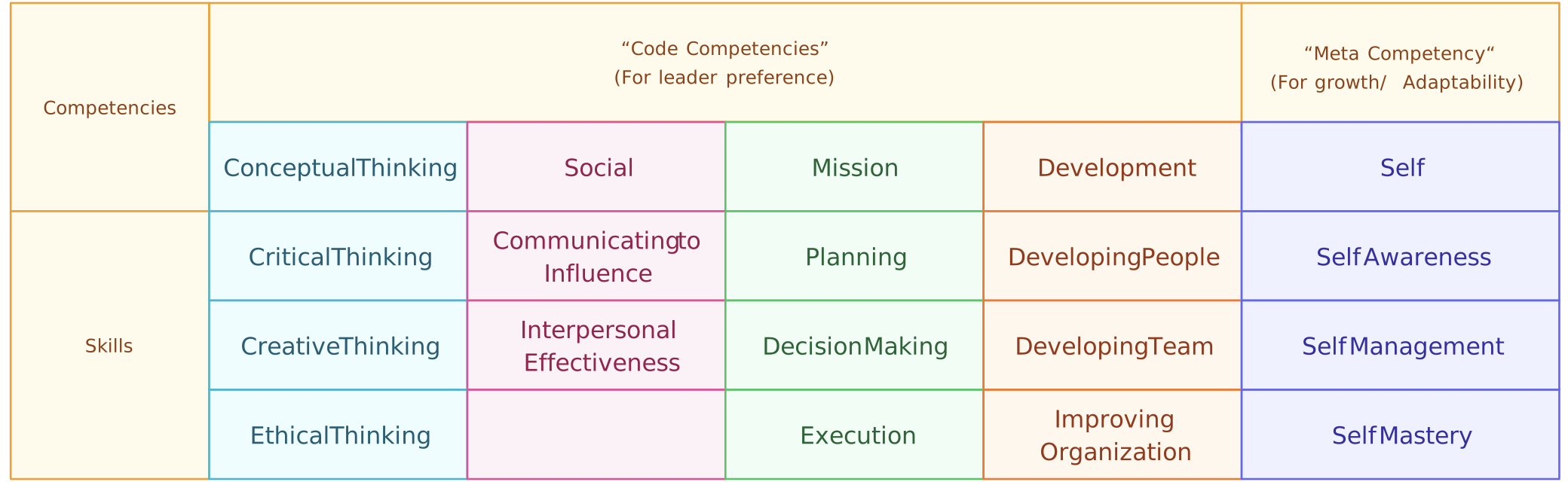
- For the Pipeline Model: The bridge is your Competency Mapping. It defines exactly what skills a manager needs to “cross over” to the Director level.
- For the Role-Critical Framework: The bridge is Knowledge Transfer. It’s the formal plan to ensure a specialist’s “secret sauce” is documented and shared before they exit.
- For the Leadership Bench: The bridge is Cross-Functional Rotations. It moves talent out of their comfort zone and into different departments to build that “modernist” versatility.
The Feedback Loop: Metrics That Prove Stability
Here are some specific KPIs to evaluate your chosen model:
- Bench Strength Ratio: The number of “Ready Now” successors available for every critical role. (Essential for the Leadership Bench).
- Succession Risk Index: A heatmap-style score that flags roles with zero backups.
- Pipeline Utilization: How often you actually promote the person you identified in your Pipeline Model.
- Depth of Talent: The number of levels in your succession plan.
Conclusion: From Blueprint to Reality
Succession planning shouldn’t feel like a high-stakes guessing game. By moving from a scattered, text-heavy process to a structured succession planning model, you empower your team with clarity and speed. We’ve covered everything from defining your core components of a succession planning framework to choosing the right blueprint for your company’s maturity level. Turn your leadership blueprint into a dynamic framework with Creately.
Helpful Resources
Learn what is succession planning and how it helps organizations to continue their growth
Learn how to make a succession plan that aligns with your company growth strategy
Discover how to execute a high-impact, strategic 9 box talent review for succession planning.
Explore real-world succession planning examples and visual roadmaps that actually work for modern teams
Discover how this talent management tool works, define every category in the 9-box model, and provide a step-by-step framework to build your own succession planning roadmap.