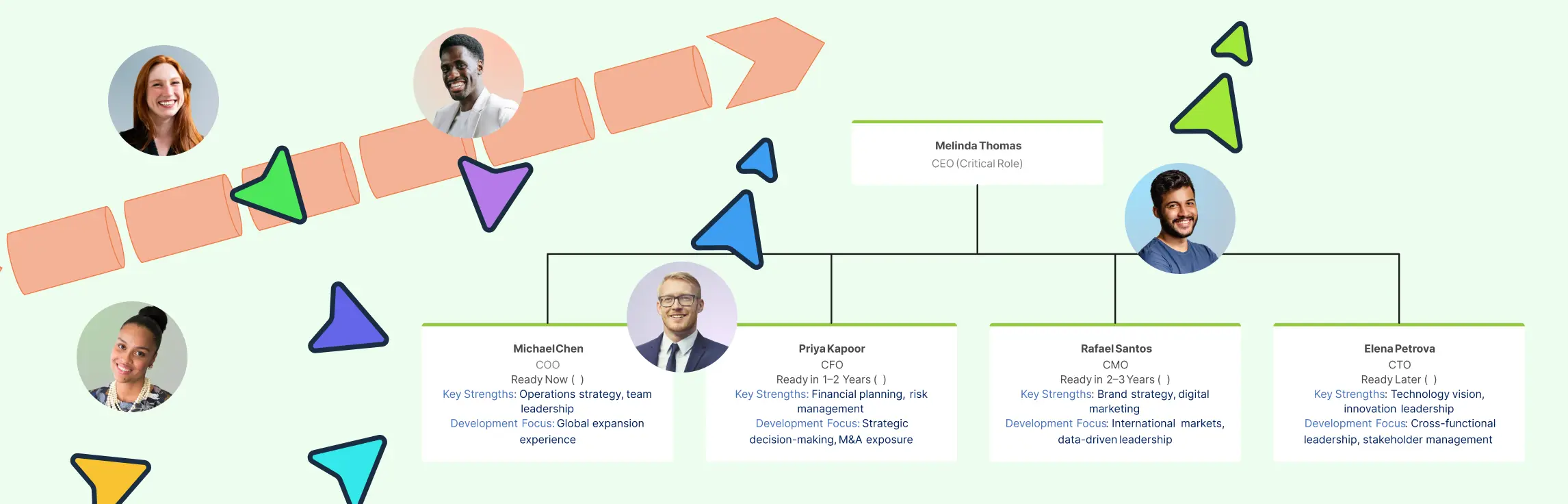
Leadership changes are inevitable, but being unprepared doesn’t have to be. This guide walks through what succession planning is, why it matters, who it benefits, and how it works in practice. You’ll learn the key stages of succession planning, see a simple real-world example, understand the advantages and common misconceptions, and explore how strategy, process, and tools come together to support confident leadership transitions.
Succession Planning Definition
Succession planning is the practice of preparing people ahead of time to step into critical roles, so the organization stays steady when change happens. Instead of scrambling when someone leaves, you build confidence that the right people are ready to step up. Done well, succession planning protects continuity, supports career growth, and turns leadership transitions into a smooth, forward-looking process rather than a disruption.
Structured frameworks provide ways to apply this approach, helping teams assess readiness, manage risk, and plan leadership transitions with clarity. Learn more in our succession planning frameworks guide.
Why Succession Planning Matters
The objectives of succession planning go beyond replacing roles. They’re about protecting continuity, building future leaders, and staying ready for change when it happens.
Reduces disruption during change: Keeps leadership transitions smooth, even when departures are unexpected.
Protects business continuity: Ensures critical decisions and operations don’t stall when key roles change.
Builds confidence in future leadership: Gives leaders and teams clarity that the right people are being prepared ahead of time.
Supports career growth and retention: Shows employees clear paths to development, increasing engagement and loyalty.
Preserves institutional knowledge: Prevents loss of critical expertise by planning knowledge transfer early.
Aligns talent development with long-term needs: Develops internal talent in line with future business priorities, not just immediate gaps.
Who Benefits From Succession Planning
Succession planning isn’t just for large enterprises or executive teams. It’s valuable for any organization that wants to stay prepared as people, roles, and priorities change.
Business leaders and executives: To reduce leadership risk, protect continuity, and plan confidently for the future.
HR and talent teams: To align development, readiness, and internal mobility with long-term needs.
Small and growing businesses: To reduce dependency on a few key individuals and keep operations running smoothly.
Family-owned organizations: To manage leadership transitions clearly and reduce uncertainty across generations.
Boards and governance teams: To maintain oversight and ensure leadership depth for critical roles.
High-potential employees: To understand growth paths and prepare for future leadership opportunities.
4 Stages of Succession Planning
Succession planning works best when it’s approached as a progression, not a one-time task. These four stages help organizations move from identifying risk to building long-term leadership readiness.
Stage 1: Identifying Critical Roles
The first stage focuses on understanding which roles are essential to business continuity and long-term success. These are positions where an unexpected gap would create significant disruption, slow decision-making, or increase risk.
Stage 2: Assessing Talent and Readiness
Once critical roles are clear, organizations assess internal talent based on performance, potential, and readiness. This stage creates visibility into leadership depth, highlights gaps, and sets a shared baseline for future development.
Stage 3: Developing Future Leaders
Succession planning goes beyond naming successors. This stage focuses on targeted development, such as mentoring, stretch assignments, and cross-functional exposure to build the skills and confidence needed for future roles.
Stage 4: Reviewing, Refining, and Preparing for Change
The final stage ensures succession planning stays current. Regular reviews help organizations adjust priorities, update readiness, and stay prepared for both planned transitions and unexpected change.
For a more in-depth walkthrough about the different stages of succession planning, read our succession planning process guide.
Succession Planning Explained with a Practical Example
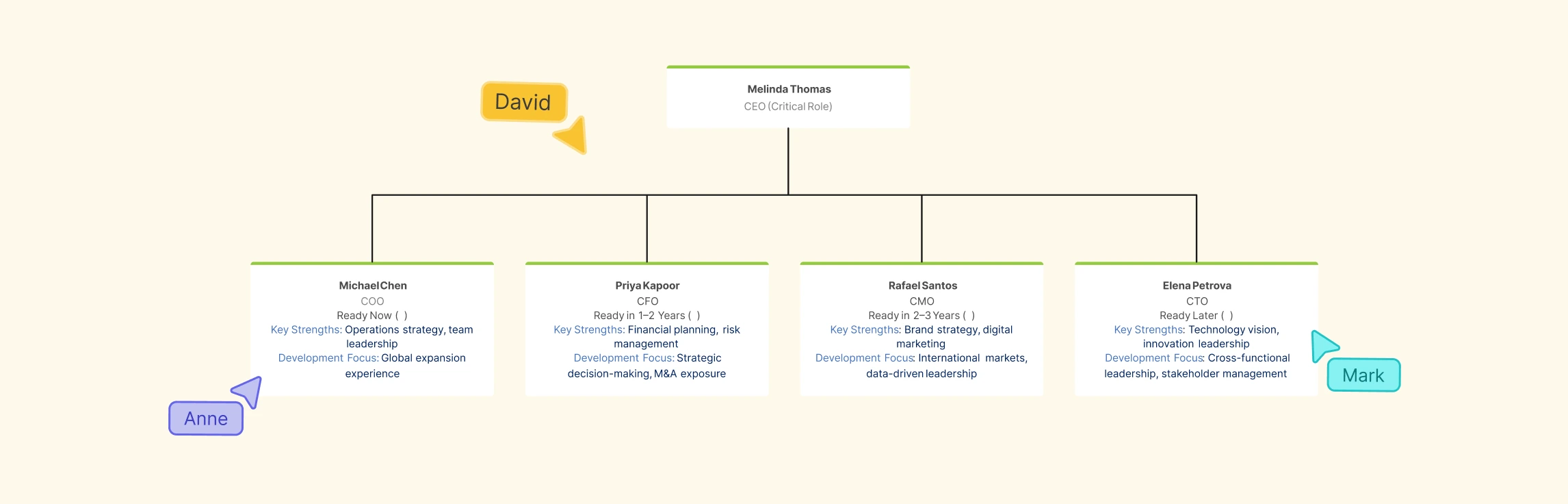
Let’s walk through a simple succession planning example and explain what each part includes and why it matters. This helps show how succession planning works in practice without overcomplicating the process.
Critical roles: These roles are called out because a sudden gap in any one of them would disrupt operations, cash flow, or revenue.
Current role holders: Naming the current role holder makes responsibility clear and helps plan knowledge transfer before a transition happens.
Primary successors: Each role has a primary successor identified to show who is being prepared next and where development efforts should focus.
Secondary successors (external hire or consultant): Secondary options are included to reduce risk if the primary successor becomes unavailable or needs more time.
Readiness levels (3–12 months): Readiness timelines set realistic expectations and help the business prioritize which roles need attention first.
Key knowledge to transfer (contracts, forecasting, client relationships): Highlighting specific knowledge such as vendor contracts or cash flow forecasting, prevents critical information from being lost.
Development actions (job shadowing, ownership, handovers): Simple actions explain how successors will build capability over time, not just who is next in line.
Emergency backups: Emergency backups ensure the business can continue operating during sudden or unplanned departures.


For more real world examples for different use cases, read succession planning examples.
Succession Planning Advantages
Succession planning offers practical benefits that go beyond replacing roles. When done well, it strengthens the organization today while preparing it for what’s next.
Reduces leadership risk: Ensures critical roles are covered, even during unexpected departures.
Protects business continuity: Keeps decisions, operations, and customer relationships moving without disruption.
Builds future-ready leaders: Prepares internal talent over time, rather than rushing development when a role opens.
Improves employee engagement and retention: Shows clear growth paths, helping high-potential employees stay motivated and committed.
Preserves institutional knowledge: Encourages planned knowledge transfer before expertise is lost.
Supports confident decision-making: Gives leaders visibility into readiness and depth, reducing uncertainty during change.
Strengthens long-term organizational resilience: Helps the business adapt smoothly as roles, teams, and priorities evolve.
You can use Creately’s succession planning software to visualize roles, track readiness, and collaborate across teams at each stage, making these advantages easier to put into practice.
Common Misconceptions of Succession Planning
Succession planning is often misunderstood, which can cause teams to delay or avoid it altogether. Clearing up these misconceptions makes it easier to approach succession planning with confidence.
“Succession planning is only for large organizations.” - In reality, smaller organizations often face greater risk from leadership gaps, making succession planning just as important, if not more so.
“It’s only about replacing senior leaders.” - Succession planning also covers role-critical positions where the loss of skills or knowledge could disrupt daily operations.
“Succession planning means choosing one person and locking it in.” - Effective succession planning builds options and readiness over time, rather than relying on a single name.
“It creates uncertainty or fear among employees.” - When handled transparently, succession planning actually builds trust by showing clear growth paths and development opportunities.
“It’s a one-time exercise.” - Succession planning works best as an ongoing process that evolves as people, roles, and business needs change.
“External hires are always better for leadership roles.” - While external candidates can bring fresh perspectives, internal talent often offers stronger continuity and cultural alignment.
Succession planning best practices help address these misconceptions by providing a clear, consistent approach that builds readiness over time and reduces uncertainty across the organization.
How Succession Planning Connects to Strategy, Process, and Tools
Succession planning works best when strategy, process, and tools support each other. When these pieces are disconnected, planning becomes reactive or difficult to maintain. When they’re aligned, succession planning stays practical, visible, and trusted over time.
Strategy Sets Direction
Strategy defines why succession planning matters and where to focus. It clarifies which roles are critical, what risks need to be reduced, and how leadership continuity supports long-term business goals.
Process Turns Strategy Into Action
The succession planning process provides structure. It guides how roles are reviewed, how readiness is assessed, and how development happens over time, ensuring succession planning isn’t a one-time exercise.
Tools Make The Process Usable
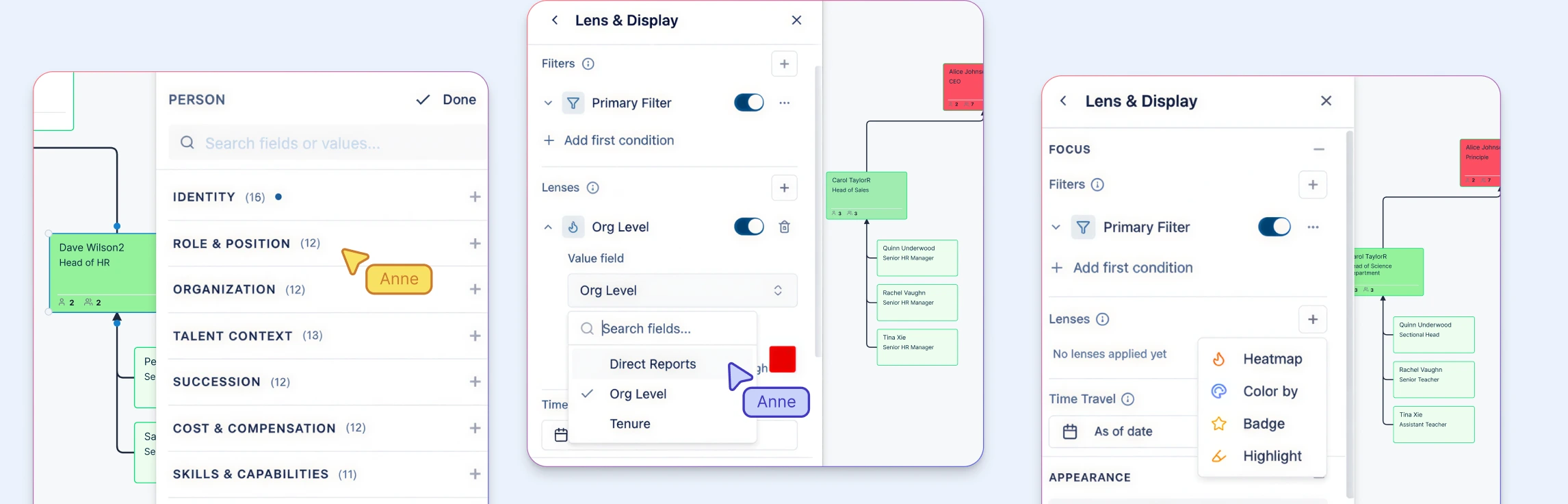
Tools support visibility, collaboration, and consistency. They help teams document roles, track readiness, update plans, and keep everyone aligned as people and priorities change.
When the succession planning strategy defines the focus, process provides rhythm, and tools support execution, succession planning becomes easier to manage and easier to trust.
Free Succession Planning Templates to Get Started


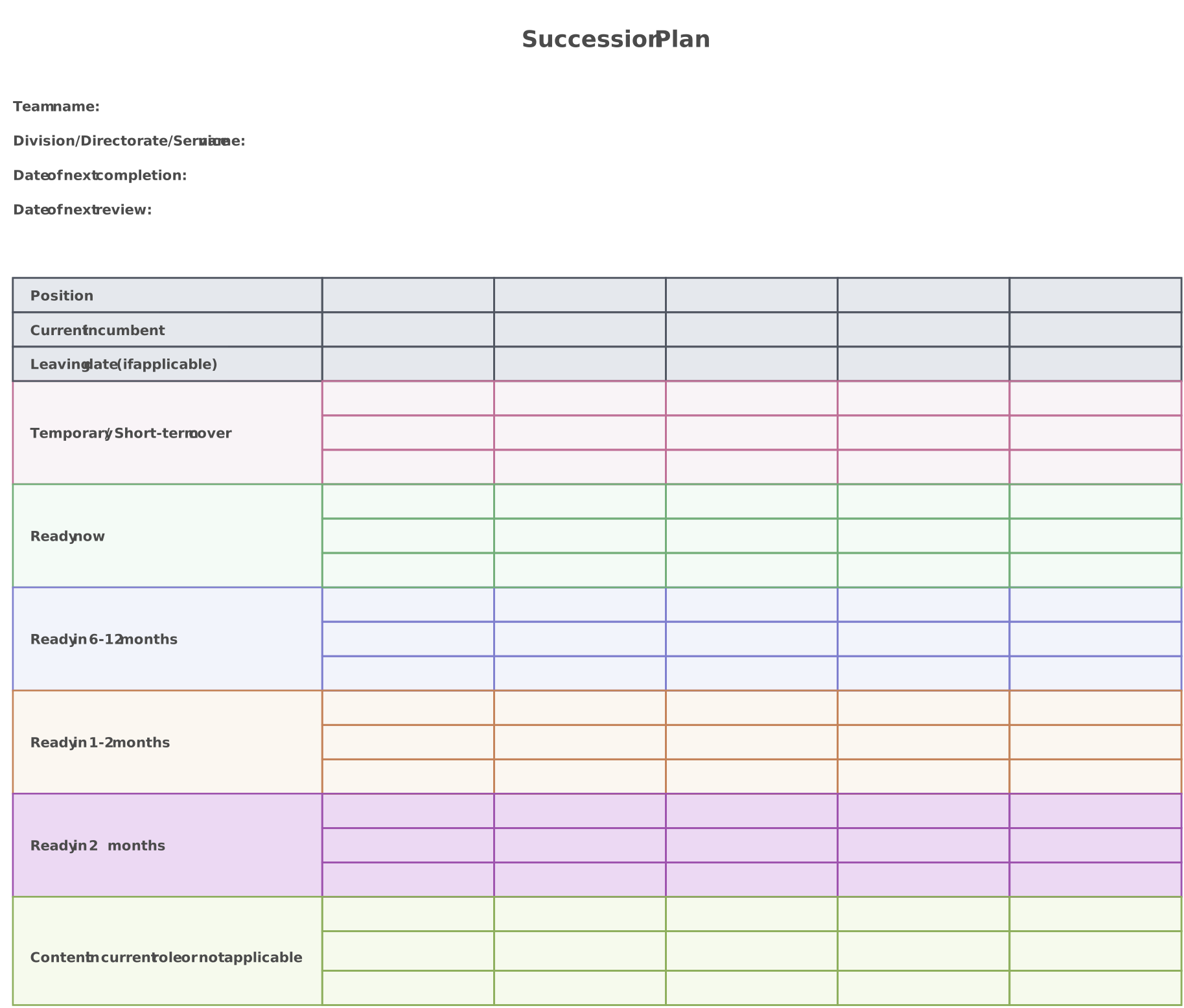
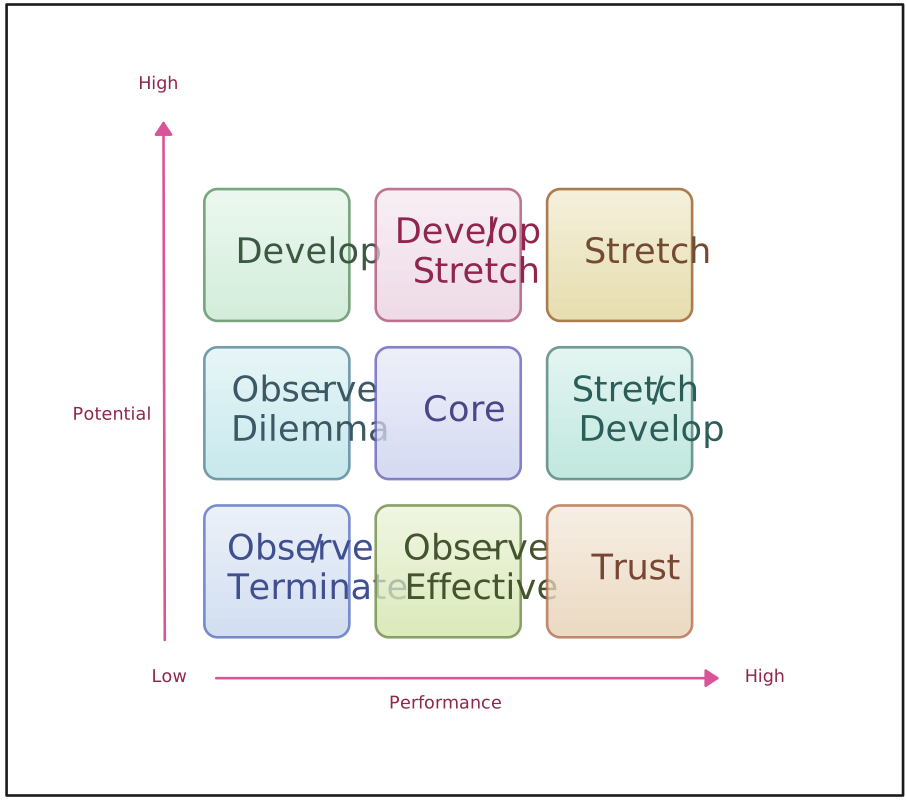
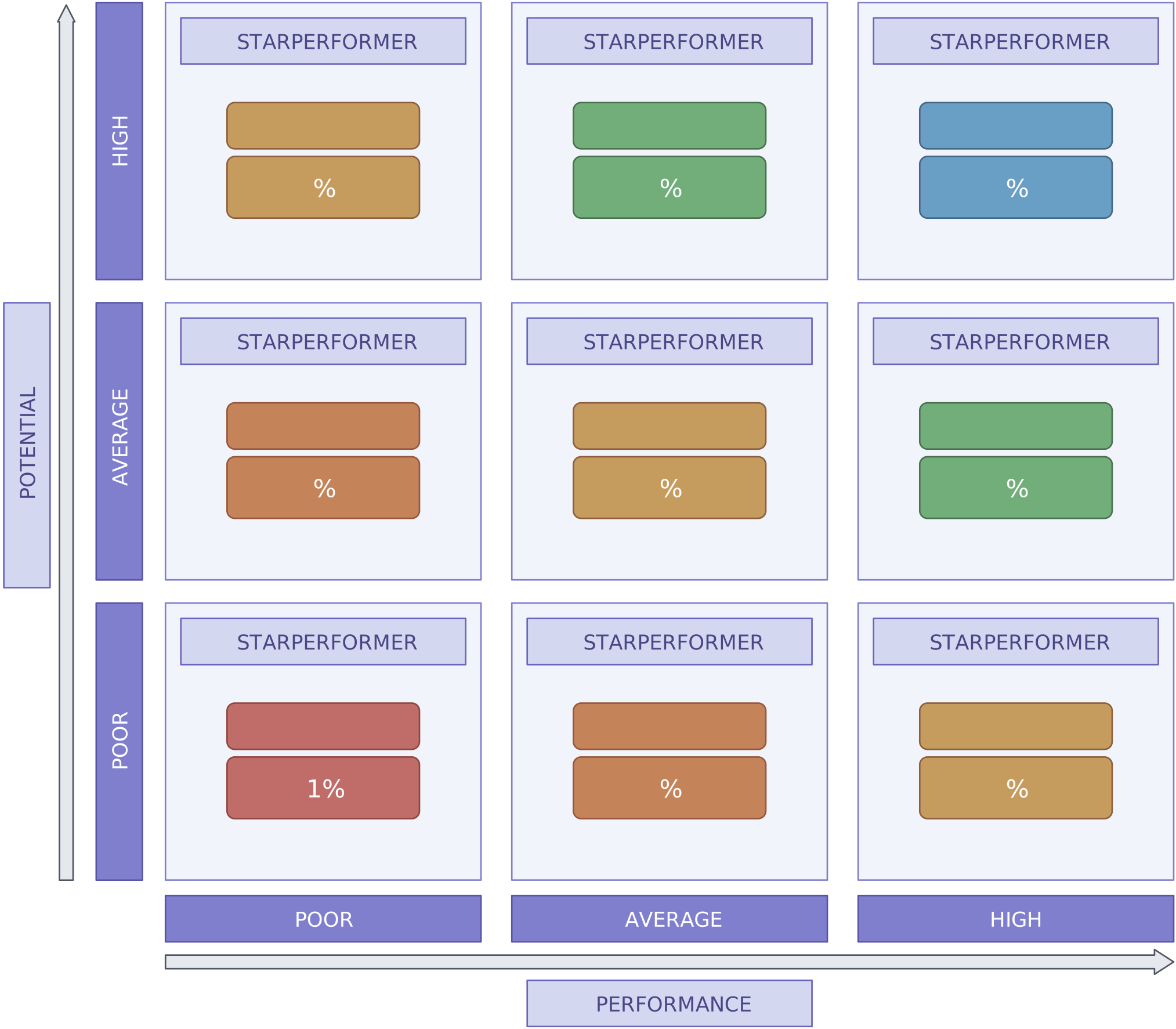
Helpful Resources for Succession Planning
Discover real-world succession planning examples for different use cases.
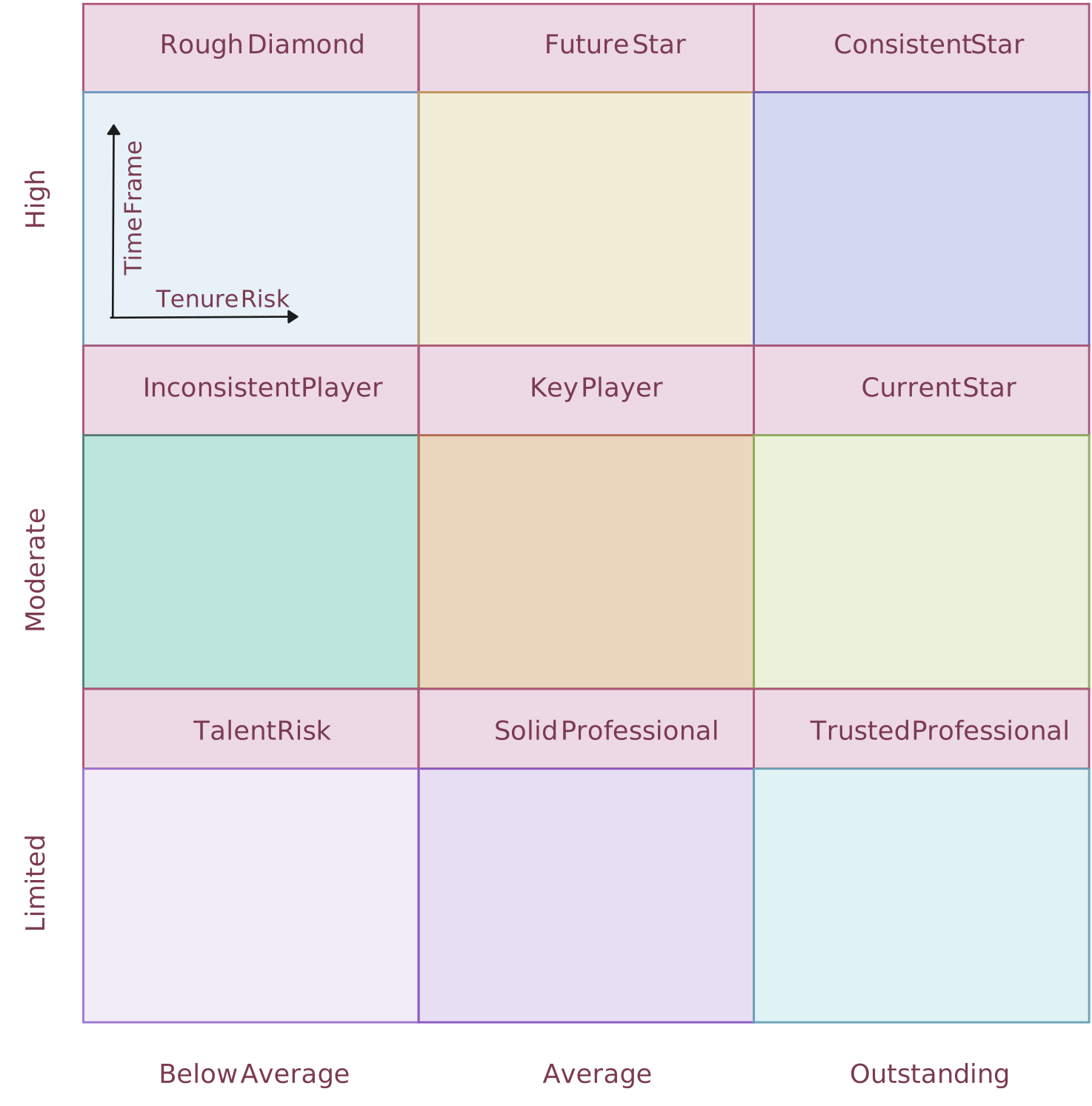
Learn how the talent review is done for 9-Box grid framework in succession planning.
Learn what the 9-Box grid framework is and how it is used for succession planning.
Learn about the differences between replacement planning and succession planning.
FAQs on Succession Planning
When should succession planning start?
Does succession planning mean promising someone a role?
Can succession planning improve employee retention?
Is the succession plan the same as talent management?
What is succession plan documentation and what should it include?
Resources
Barnett, Robert, and Sandra Davis. “Creating Greater Success in Succession Planning.” Advances in Developing Human Resources, vol. 10, no. 5, Oct. 2008, pp. 721–739, https://doi.org/10.1177/1523422308322277.
Naveen, Lalitha. “Organizational Complexity and Succession Planning.” Journal of Financial and Quantitative Analysis, vol. 41, no. 3, Sept. 2006, pp. 661–683, https://doi.org/10.1017/s002210900000257x.