Managing a large organization can sometimes feel like juggling too many balls at once, products, services, regions, and teams all pulling in different directions. When workflows get scattered, decision-making slows down, and accountability becomes murky, frustration sets in. This is where a multidivisional structure comes to the rescue. In this guide, we’ll explore what a multidivisional structure is, its key features, advantages, and challenges, and provide practical templates for visualizing your organization.
What Is a Multidivisional Structure?
A multidivisional structure is an organizational model where a large company is divided into semi-autonomous units, each responsible for a specific product line, service, or geographic region. Each division operates almost like a mini-company, with its own management team, resources, and goals, while still aligning with the overall corporate strategy.
In simple terms, if managing a sprawling organization feels like juggling too many moving parts, a multidivisional structure helps you organize those parts into clear, manageable divisions. This approach brings clarity, accountability, and speed, so decisions happen closer to where the work is actually done.
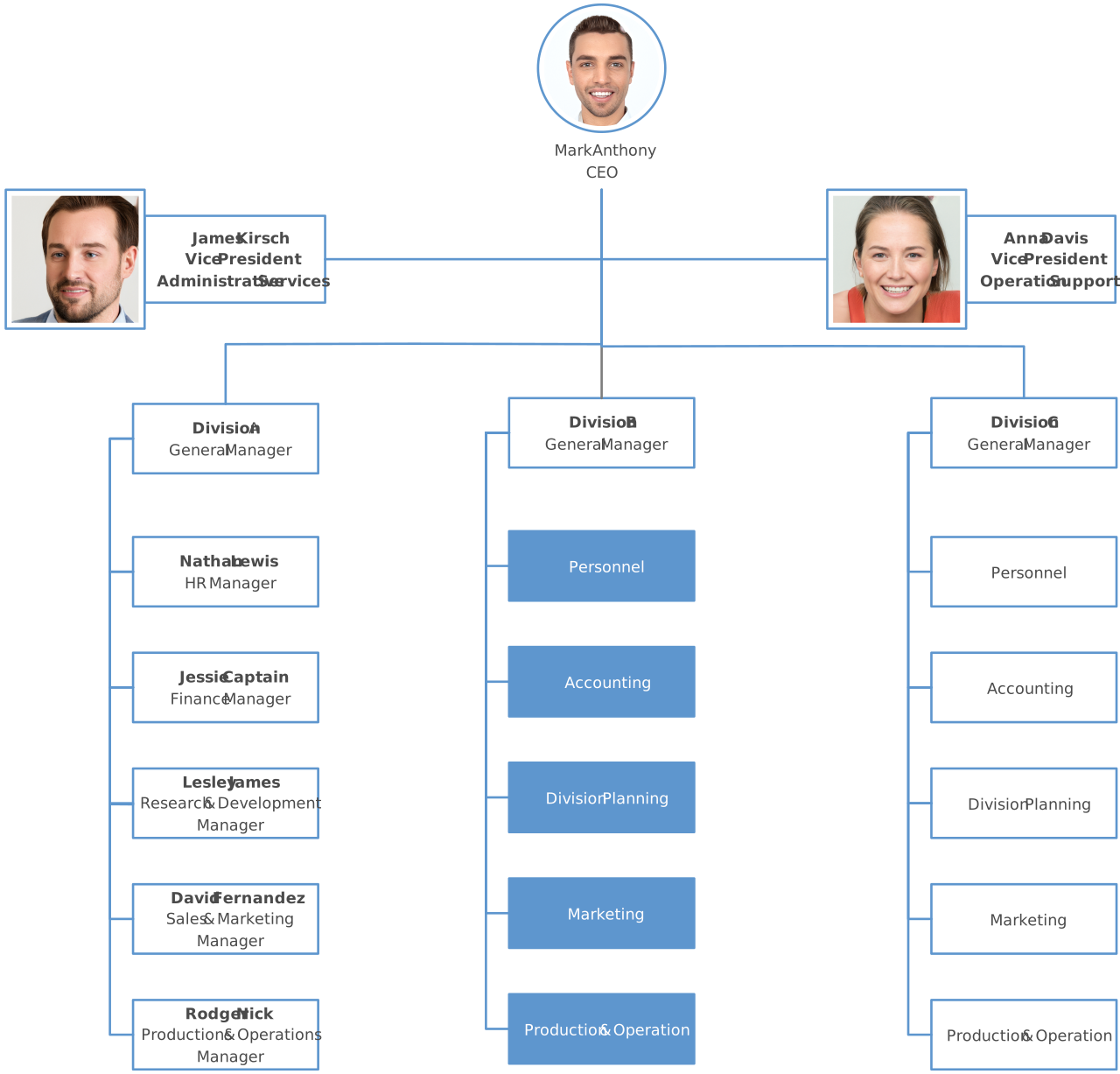

Key Features of a Multidivisional Organizational Structure
A multidivisional organizational structure is designed to help large companies manage complexity without losing focus. Here are the key features that make it so effective:
1. Division by Product, Service, Region, or Market
Organizations are split into distinct divisions based on what they offer or where they operate. For example, a global company might have separate divisions for electronics, apparel, and home goods—or separate regional divisions for North America, Europe, and Asia. This segmentation makes it easier to track performance, set goals, and respond quickly to market demands.
2. Semi-Autonomous Divisions
Each division operates like a mini-company, with its own management team, budget, and operational decisions. While divisions follow the company’s overarching strategy, they have the autonomy to adapt processes and tactics to their specific context, promoting agility and faster decision-making.
3. Clear Reporting Hierarchy
A multidivisional structure establishes a well-defined hierarchy. Divisional heads report to top-level executives, ensuring accountability while keeping the chain of command simple and transparent. This hierarchy reduces confusion and makes performance management straightforward.
4. Centralized Strategic Control with Decentralized Operations
While each division manages day-to-day operations independently, strategic decisions—such as corporate vision, major investments, or mergers—remain centralized. This balance allows organizations to maintain strategic control without stifling operational creativity and efficiency at the division level.
By combining autonomy with oversight, a multidivisional organizational structure empowers divisions to act swiftly while keeping the company aligned with its overall mission.
Examples of Multi-Divisional Organizations
A multi-divisional (M-form) organizational structure groups a company into semi-autonomous divisions, each responsible for its own products, services, or markets. This allows large organizations to operate efficiently while maintaining focus on specific business areas. Here are some notable examples:
| Company | Divisions | Key Features | Benefits |
| Virgin Group | Airlines, Telecommunications, Health, Space | Semi-autonomous divisions with own management; aligned with central strategy | Enables innovation across industries while maintaining a unified vision |
| General Electric (GE) | Aviation, Healthcare, Energy, Finance | Clear divisional hierarchy, specialized business units | Faster decision-making, clear performance tracking, and specialization |
| Samsung | Consumer Electronics, Semiconductors, Construction | Divisions operate independently but follow company strategy | Agile response to market changes while contributing to overall growth |
| Procter & Gamble (P&G) | Beauty, Health, Household Care | Product-category-based divisions with dedicated R&D, marketing, production | Focused expertise, accountability, and efficient management per product line |
How Does a Multidivisional Organizational Structure Work?
A multidivisional organizational structure works by breaking a large company into semi-autonomous divisions, each responsible for a specific product, service, or geographic region. While divisions manage their day-to-day operations independently, they all report to a central corporate headquarters that sets overall strategy, allocates resources, and ensures alignment across the organization.
1. Divisional Autonomy
Each division has its own management team, budget, and operational processes. This allows teams to make faster decisions that are tailored to their specific market or product.
2. Centralized Strategic Control
While divisions operate independently, major decisions, like corporate vision, capital investments, or mergers, remain centralized. This balance ensures that the company moves forward cohesively.
3. Clear Reporting Lines
Divisional heads report to the top-level executives, maintaining accountability while simplifying the chain of command. This clarity helps avoid confusion and ensures performance is measurable.
4. Performance Tracking and Accountability
Metrics and KPIs are tracked at the division level. This enables precise monitoring of revenue, growth, and efficiency, allowing the company to reward high-performing divisions and address underperformance.
5. Flexibility and Scalability
New products, services, or regional markets can be added as separate divisions without disrupting the existing structure. This makes multidivisional structures particularly effective for fast-growing, diversified organizations.
Multidivisional Structure Org Chart Templates
Managing a large organization with multiple products, services, or regions can get messy. That’s where visual org charts come in. They transform complex hierarchies into clear, easy-to-understand visuals, helping teams see the big picture and make faster decisions.
With Creately, creating multidivisional organizational structure charts is intuitive and stress-free. Here are some org chart templates to get you started:
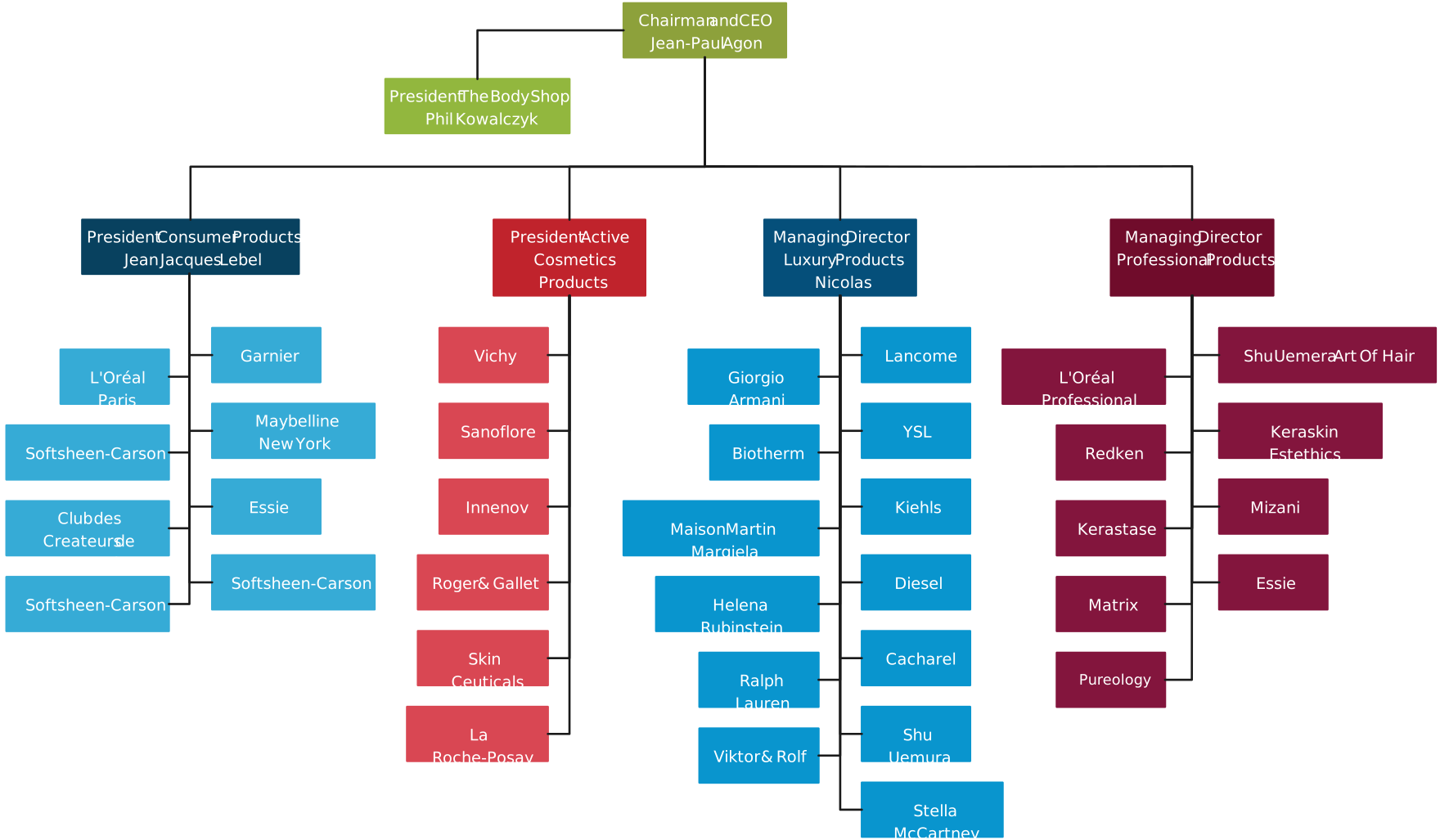
1. Product-Based Divisions Template
Perfect for companies organized by product lines, this template lets you map each division and its subdivisions clearly. Track teams, roles, and responsibilities within each product unit without losing sight of the overall corporate hierarchy.
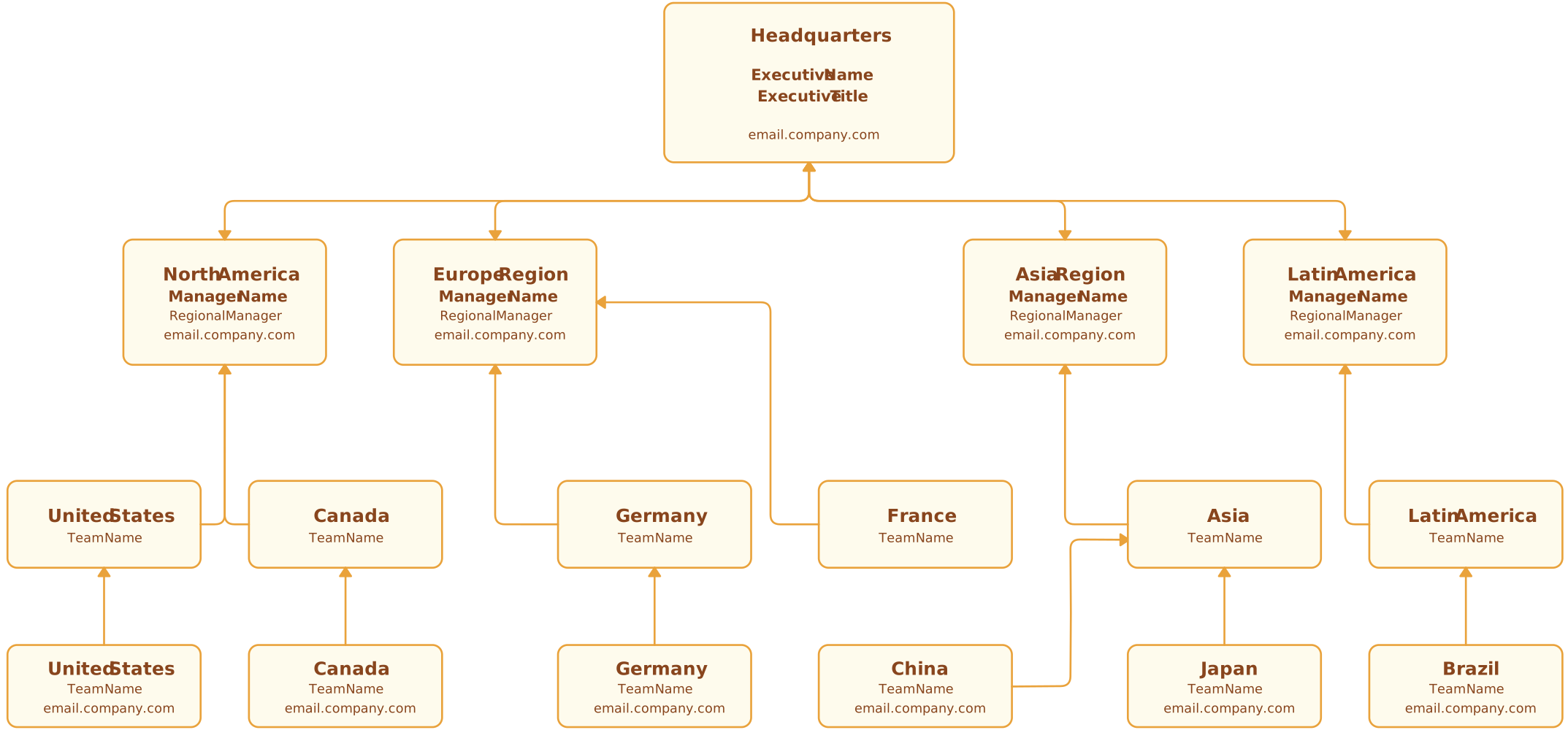
2. Regional Divisions Template
Ideal for organizations operating across different geographic regions. This template highlights regional managers, local teams, and reporting structures, making it easier to coordinate across borders and maintain consistency in operations.
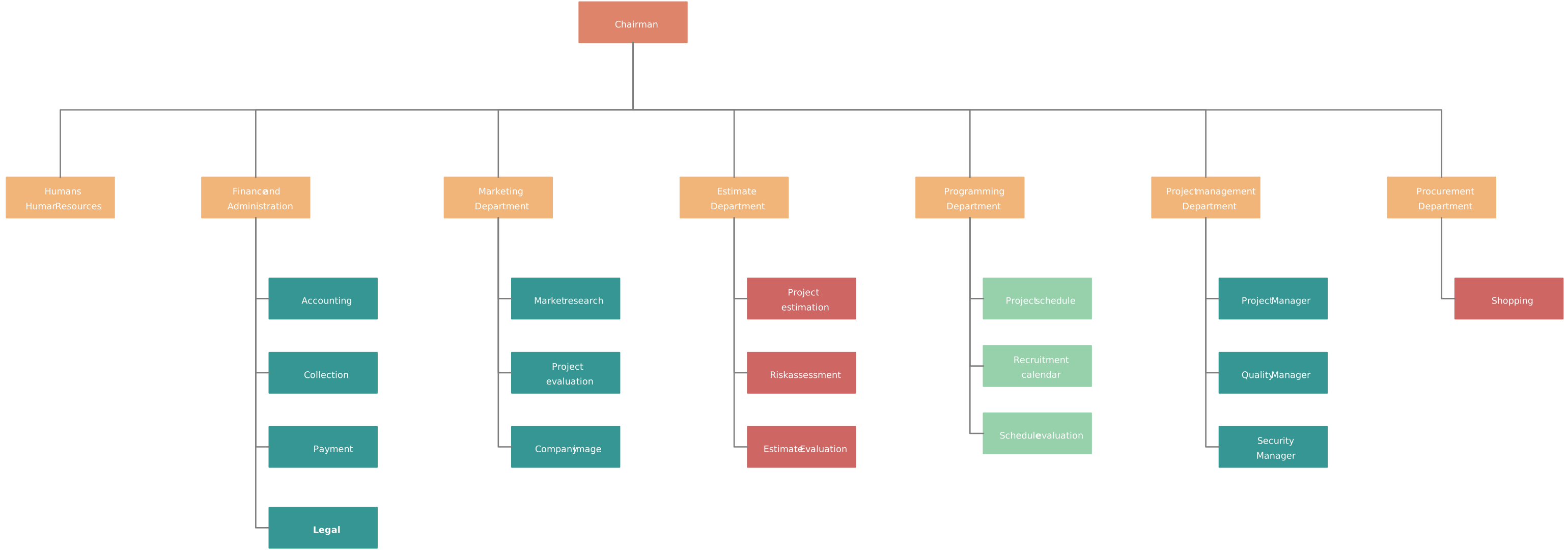
3. Functional Structure Template
Not every organization uses a multidivisional approach. A functional structure template organizes teams by core functions—like marketing, finance, operations, and HR. It’s perfect for smaller companies or those focusing on departmental expertise. This template clearly defines reporting lines within each function, making coordination and accountability easier.
Advantages and Challenges of a Multidivisional Structure
A multidivisional organizational structure can transform how large companies operate, but like any model, it comes with both benefits and challenges. Understanding these helps leaders implement it effectively and avoid common pitfalls.
Advantages | Challenges |
Faster Decision-Making at the Division LevelEach division operates semi-autonomously, which means decisions can be made closer to the action. Teams don’t have to wait for central approval for every operational move, speeding up responses to market changes. | Resource-IntensiveRunning multiple semi-autonomous divisions requires more staff, budgets, and infrastructure. Without careful planning, this can increase costs and operational complexity. |
Easier Performance Tracking per Product or ServiceBy separating divisions by product line, region, or service, companies can monitor performance metrics more accurately. This clarity makes it easier to identify high-performing units, allocate resources efficiently, and reward success. | Risk of Inter-Divisional SilosWhile divisions operate independently, this can sometimes lead to communication gaps or a lack of collaboration between units. Siloed operations may hinder knowledge sharing and overall corporate cohesion. |
Encourages Accountability and SpecializationDivisional heads are responsible for their own outcomes, fostering a culture of accountability. Teams can specialize in their product or market area, increasing expertise, efficiency, and focus. | Requires Strong Central CoordinationEven with decentralized operations, strategic decisions—like company-wide policies, major investments, or long-term planning—must remain centralized. Weak oversight can lead to misaligned objectives or conflicting priorities across divisions. |
When to Use a Multidivisional Structure
Not every company needs a multidivisional structure, but for large and complex organizations, it can be a game-changer. Here’s when it makes sense to adopt this model:
1. Large Companies with Diverse Product Lines or Geographic Markets
If your organization manages multiple products, services, or operates in different regions, a multidivisional organizational structure helps keep things organized. Divisions can focus on their specific area while still aligning with the company’s overall strategy.
2. Organizations Facing Functional Silos
Functional structures (grouping by department like marketing, finance, or operations) can create bottlenecks or communication gaps. Switching to a multidivisional structure reduces these silos, giving each division clear responsibilities and decision-making authority.
3. Companies Scaling Rapidly
When growth is rapid, keeping track of performance, accountability, and operational efficiency becomes challenging. Divisions in a multidivisional structure operate semi-autonomously, allowing teams to act quickly while maintaining centralized strategic oversight.
4. Signs Your Organization Might Benefit
- Teams frequently wait for approval from top management.
- Tracking performance across products or regions is complicated.
- Managers struggle with overloaded reporting lines.
- The organization wants to empower divisions without losing strategic alignment.
How to Draw a Multidivisional Org Chart with Creately
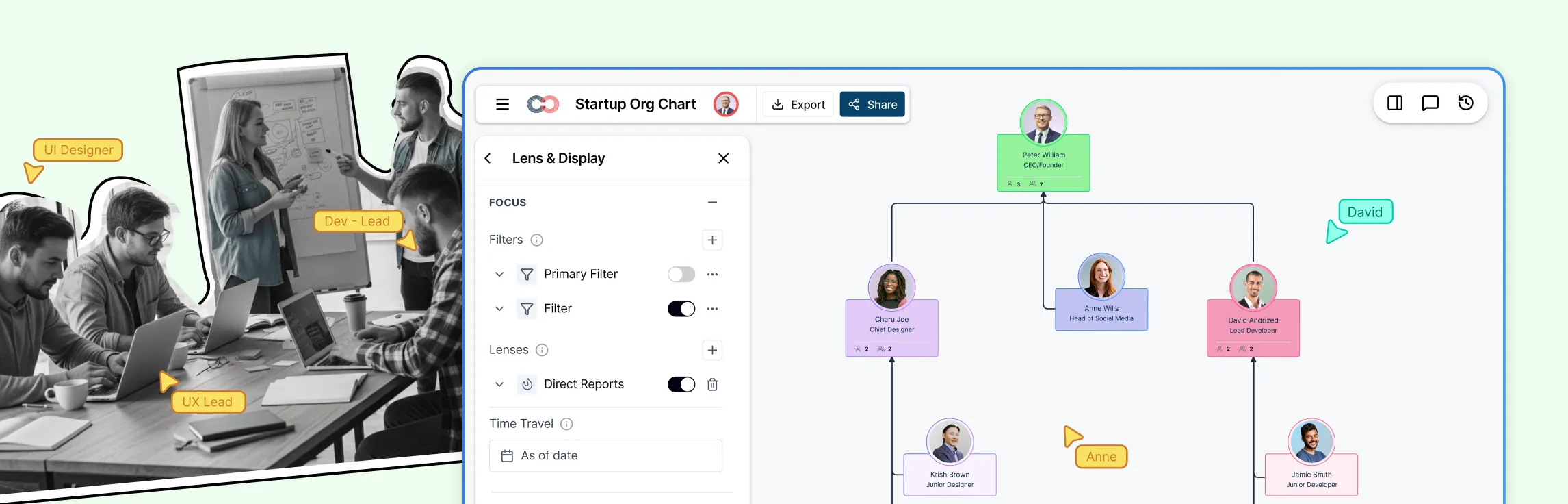
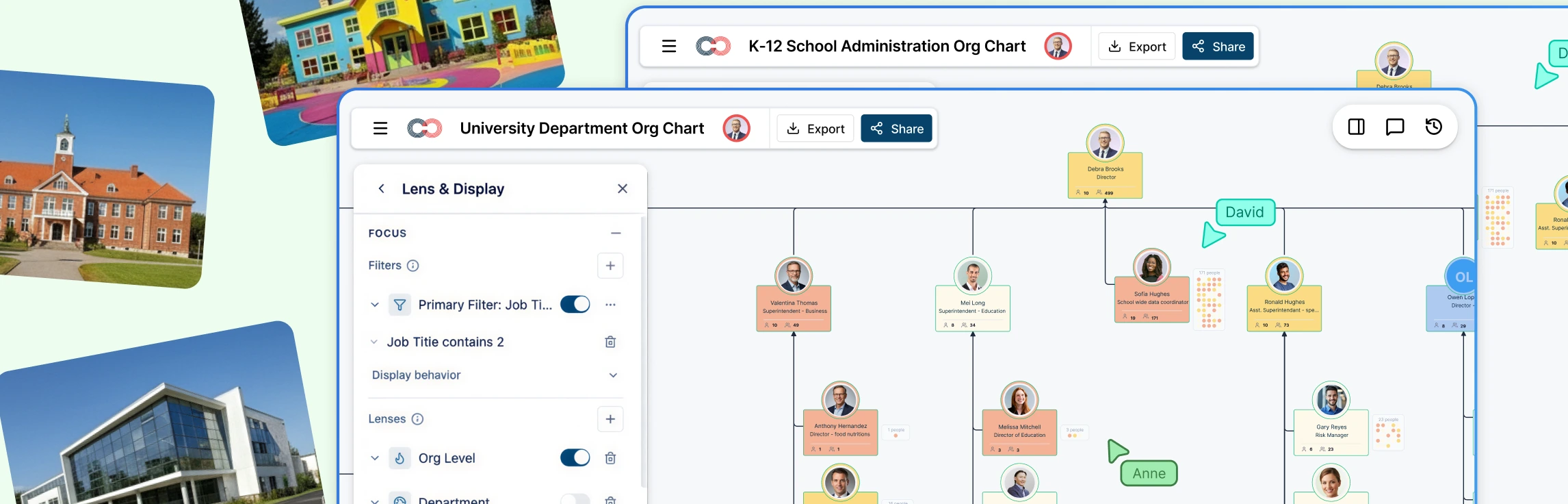
A multidivisional org chart can quickly become overwhelming if it’s built in static tools or spreadsheets. Creately’s org chart software simplifies the process by letting you visually map divisions, hierarchies, and reporting lines in one shared workspace. Here’s how to build a clear, scalable multidivisional org chart using Creately.
Step 1: Start with a Multidivisional Org Chart Template
Begin by selecting a multidivisional org chart template in Creately. These templates are designed for complex organizations and already include a logical top-down structure. You can instantly customize the layout by dragging elements, renaming divisions, or adjusting spacing—saving time while ensuring consistency from the start.
Step 2: Add the Corporate Leadership Layer
Place your corporate leadership or headquarters at the top of the chart. Creately’s org chart shapes snap neatly into place, making it easy to define executive roles and maintain a clean hierarchy. As you add or reposition leaders, the layout automatically stays aligned, so your structure remains readable even as it grows.
Step 3: Create Divisions by Product, Region, or Market
Next, build out each division under the corporate level. In Creately, divisions can be visually grouped using containers and color coding, which helps clearly distinguish product-based, regional, or market-based units. This visual separation makes large multidivisional organizational structures easier to scan and understand at a glance.
Step 4: Map Reporting Lines within Each Division
Within every division, add managers, teams, and roles. Creately’s smart connectors automatically adjust as you move roles around, allowing you to experiment with reporting relationships without breaking the chart. This is especially useful when refining decentralized operations while keeping reporting lines clear.
Step 5: Collaborate with Divisional Leaders in Real Time
Because multidivisional structures involve multiple stakeholders, Creately’s real-time collaboration allows leaders from different divisions to review and update the org chart together. Comments, shared editing, and instant updates ensure everyone is aligned—without endless back-and-forth emails.
Step 6: Update and Scale the Org Chart as the Organization Grows
As new divisions are added or teams evolve, Creately makes it easy to update your org chart without starting over. You can duplicate sections, add new divisions, or revise reporting lines while keeping the overall structure intact—making it ideal for fast-growing, complex organizations.
A multidivisional structure is a powerful way to manage complex organizations, offering clarity, accountability, and agility. But visualizing these divisions and reporting lines is key to making the structure work in practice. That’s where Creately shines. With drag-and-drop functionality, real-time collaboration, and fully customizable org chart templates, Creately lets you turn complex hierarchies into clear, actionable visuals in minutes. Whether you’re mapping product-based divisions, regional units, or hybrid structures, Creately makes it easy for your team to see, understand, and act on your organizational structure.
Streamline your organization, empower your teams, and visualize success—start building your multidivisional org chart with Creately today.
Helpful Resources
Explore rules for drawing organizational charts and org chart best practices to make your org chart more meaningful and useful.
Easily make organizational charts to visualize the reporting structure of your organization for effective HR planning and management with org chart maker.
Learn simple steps to create an org chart that fits your business, along with tips and tools to make it easy to build and update.
FAQs About Multidivisional Structure
How does a multidivisional structure differ from a matrix structure?
Can small businesses use a multidivisional structure?
How do you track performance in a multidivisional structure?
What are common pitfalls of implementing a multidivisional structure?
How can visual tools help manage a multidivisional organizational structure?