Every organization needs a steady supply of fresh creative ideas to stay relevant and ahead of their competitors successfully. As necessary as it is, generating good new ideas isn’t as easy as getting everyone in the team into a room and spending 3 hours to come up with barely anything.
A good ideation session is hard work. It needs a well-facilitated process, carefully-designed exercises, and proper tools (especially when a remote team is involved) to generate innovative, and viable ideas.
We’ve listed 10 ideation techniques you can try to generate diverse ideas easily, even if your team is conducting the ideation session remotely. We’ve also included interactive online templates that you can open on your web browser and use to collaborate with the team right away during the meeting.
What are Ideation Techniques
Ideation techniques are methods and strategies used to generate creative and innovative ideas. These techniques are often employed in various settings, such as business, design, problem-solving, and innovation, to help individuals and teams brainstorm and develop fresh concepts and solutions. You may also need to consider the experience in ideation your team holds and their creative productivity when selecting the best ideation technique as well. Here are some to choose from:
1. SCAMPER
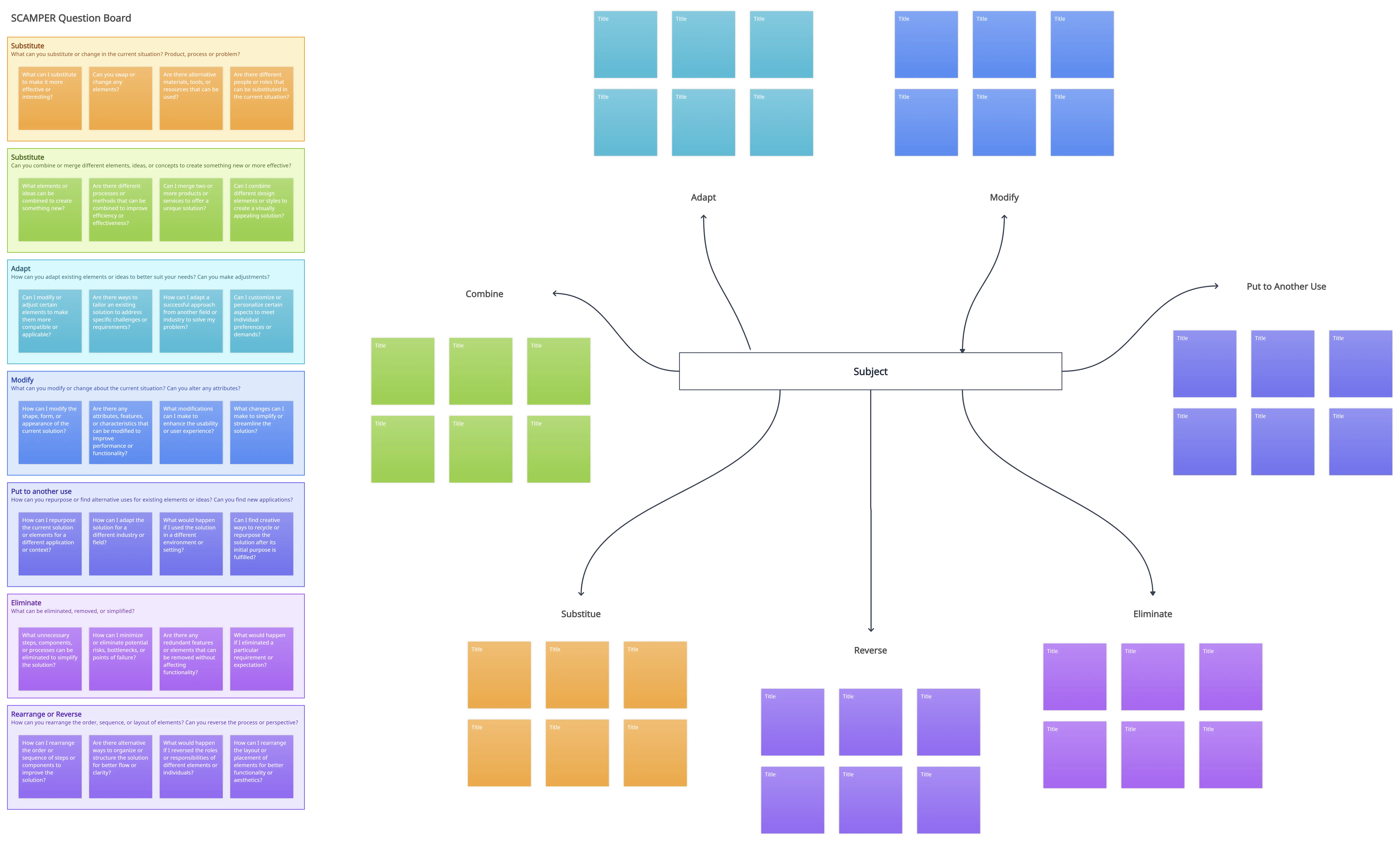
SCAMPER is a creative thinking and ideation technique used to generate innovative ideas by encouraging individuals or teams to ask questions and explore possibilities related to an existing product, process, or idea. The acronym SCAMPER stands for seven different ways to approach and modify the subject under consideration:
- Substitute – what can you substitute (i.e. material used, people involved, process steps, etc.) in your product/ service to make an improvement?
- Combine – What ideas, resources, steps in the process, can you combine to generate a more efficient output?
- Adapt – What process, component, or feature should you adjust to generate a better result?
- Modify – What elements can you modify (add more or less of it) to achieve the result you desire?
- Put to another use – What other purposes can the product/ service be used for? Who else can use it?
- Eliminate – What element in your product or service can you remove or reduce?
- Reverse/ Rearrange – What process, component, or feature can you rearrange or reverse?
By systematically applying these seven strategies, you can stimulate creative thinking and generate fresh ideas or improvements for existing concepts or products. It encourages a structured exploration of possibilities and can be particularly helpful in ideation sessions or when trying to breathe new life into familiar ideas.
2. Brainwriting
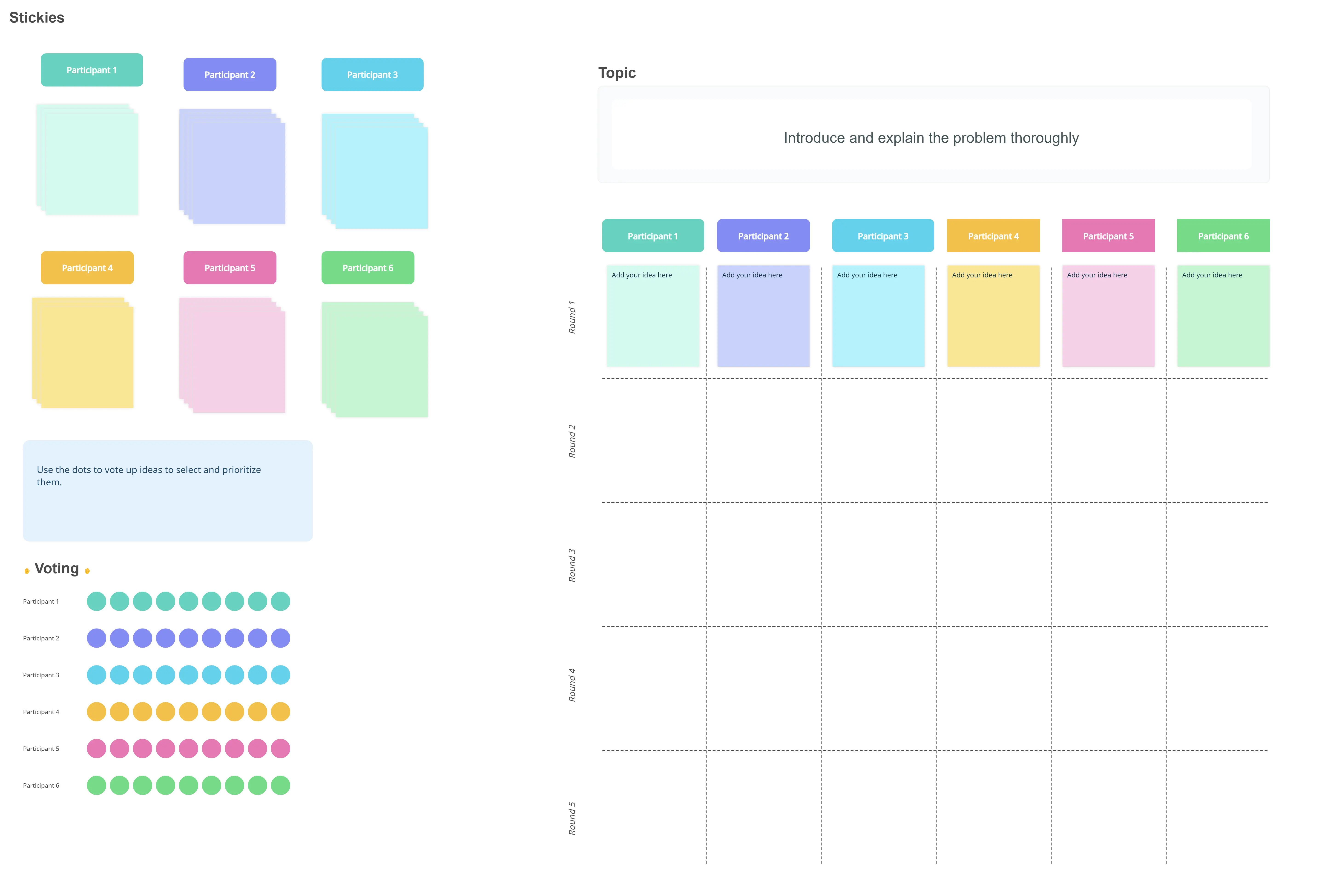
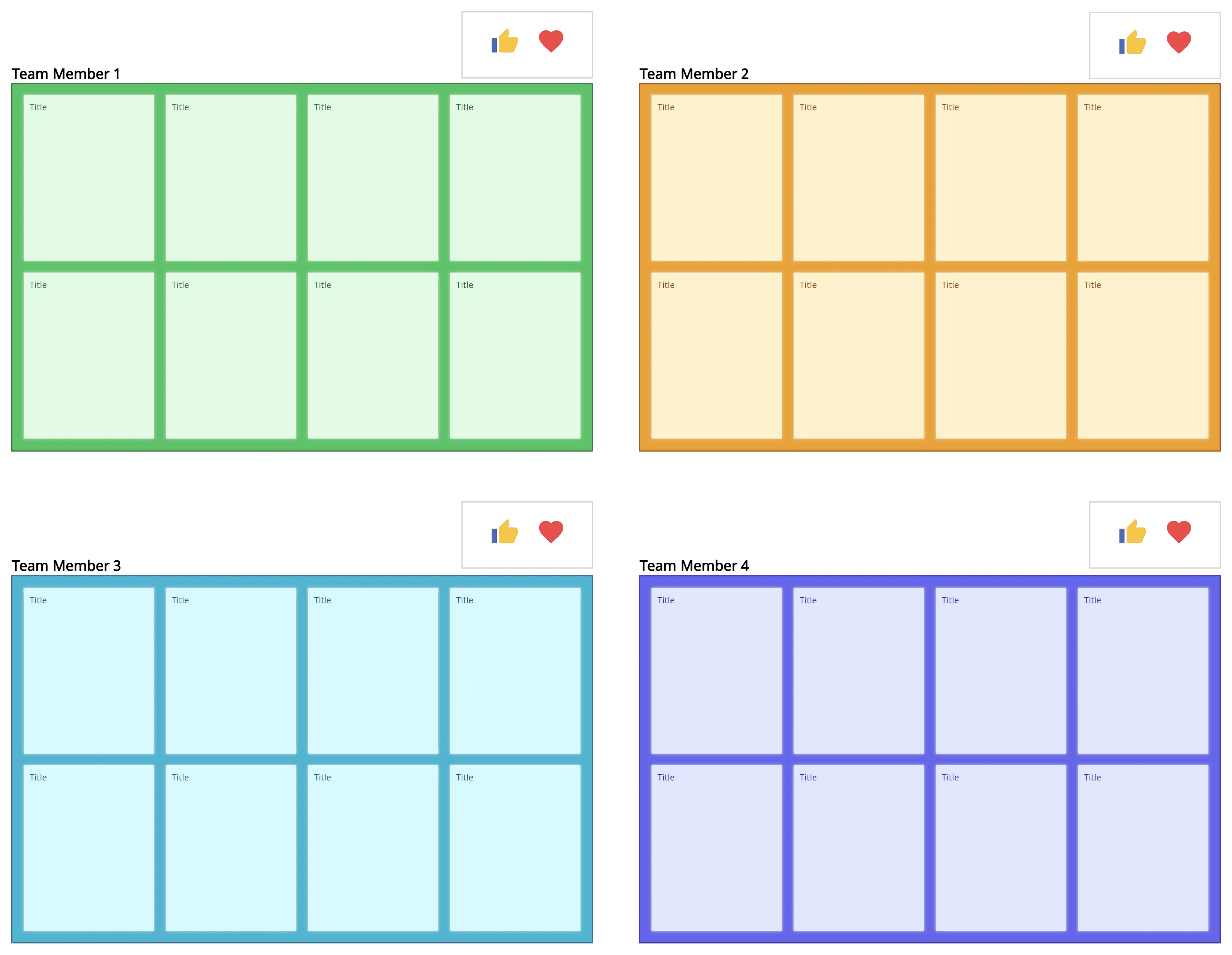
Brainwriting is a creative ideation technique that encourages individuals to generate ideas individually and then share and build upon each other’s ideas in a structured, collaborative manner. In brainwriting sessions, participants start by silently jotting down their ideas related to a specific problem or topic. Then, they pass their written ideas to their peers, who, in turn, read and expand upon them.
This iterative technique allows for the development and refinement of ideas through collective input, ultimately leading to a richer pool of creative solutions. Brainwriting is designed to promote inclusivity and mitigate some of the challenges associated with traditional brainstorming sessions, making it a valuable tool for group idea generation and problem-solving.
3. Round Robin
Round robin is a structured approach that promotes equal participation and inclusivity in idea generation. It begins with a central topic, question, or problem to address, and participants arrange themselves in a circle. Unlike traditional brainstorming, where participants “jump in” with ideas, round robin makes sure every voice is heard and every perspective is considered.
The process starts with one participant sharing an idea on a piece of paper or notecard and passing it to the person on the right. This continues until everyone has contributed an idea, fostering a collaborative environment. The session typically concludes with a group discussion and a review of all the generated ideas.
4. Mind Mapping
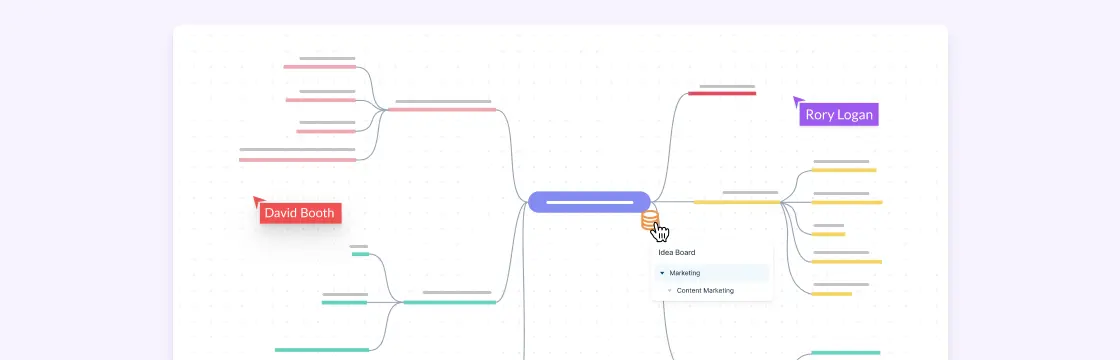
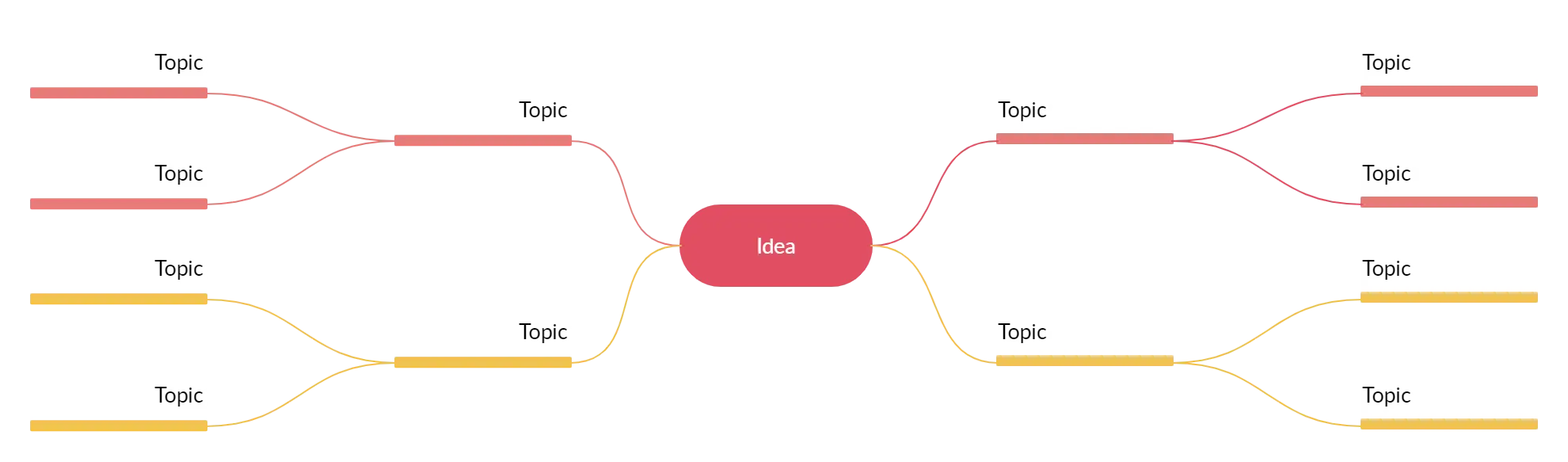
Mind mapping is a visual ideation technique used to organize and represent information, ideas, or concepts in a hierarchical and interconnected manner. It involves creating a diagram that starts with a central idea or topic and branches out into subtopics, associations, and related details. Mind maps use lines, colors, keywords, and visual elements to illustrate the relationships between different components of the mapped information.
Mind maps are used for various purposes, including brainstorming, note-taking, project planning, problem-solving, and organizing complex information. They are valuable tools for visualizing and simplifying intricate concepts, facilitating creative thinking, and improving memory retention due to their visual and associative nature.
5. Reverse Brainstorming
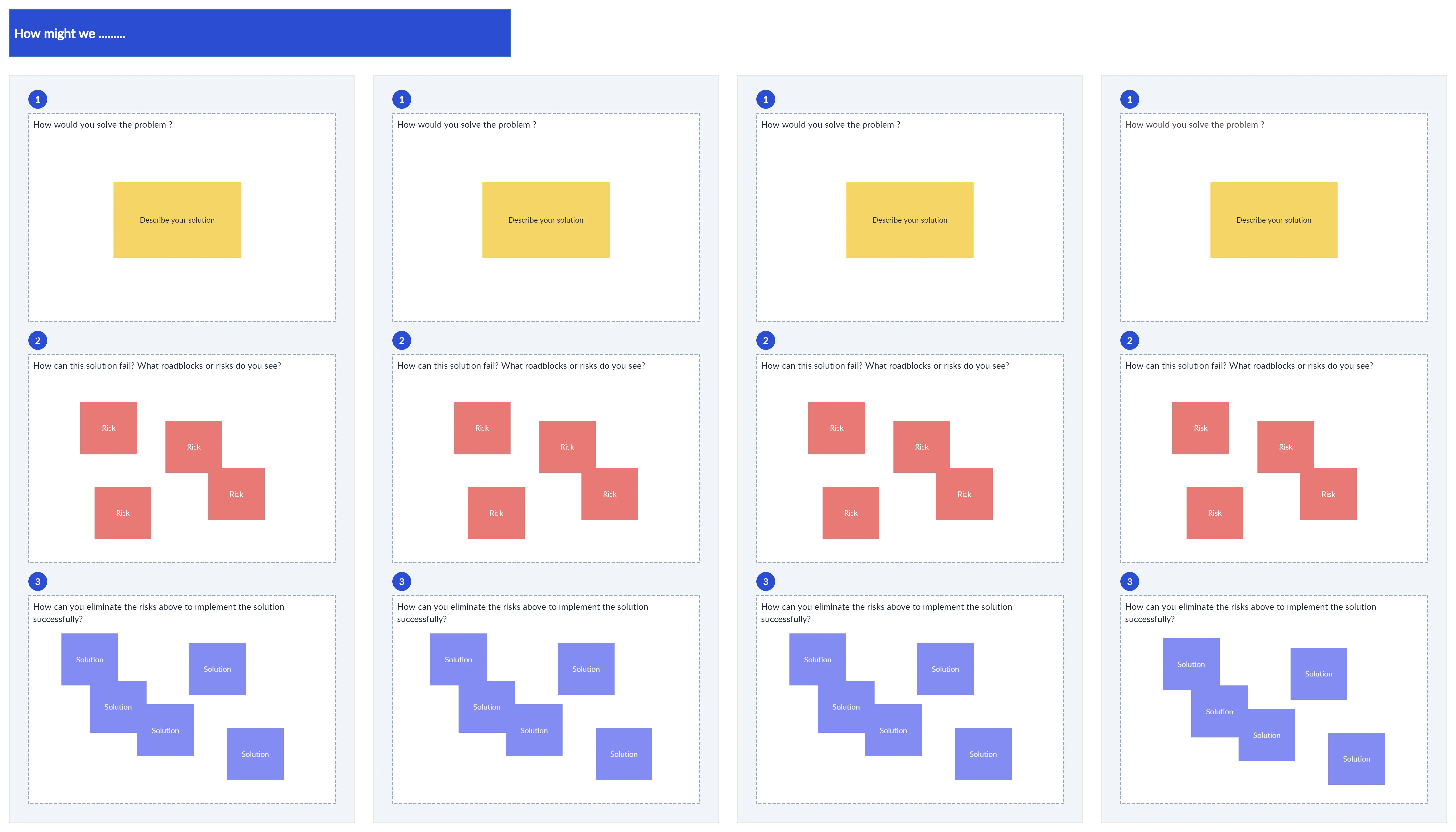
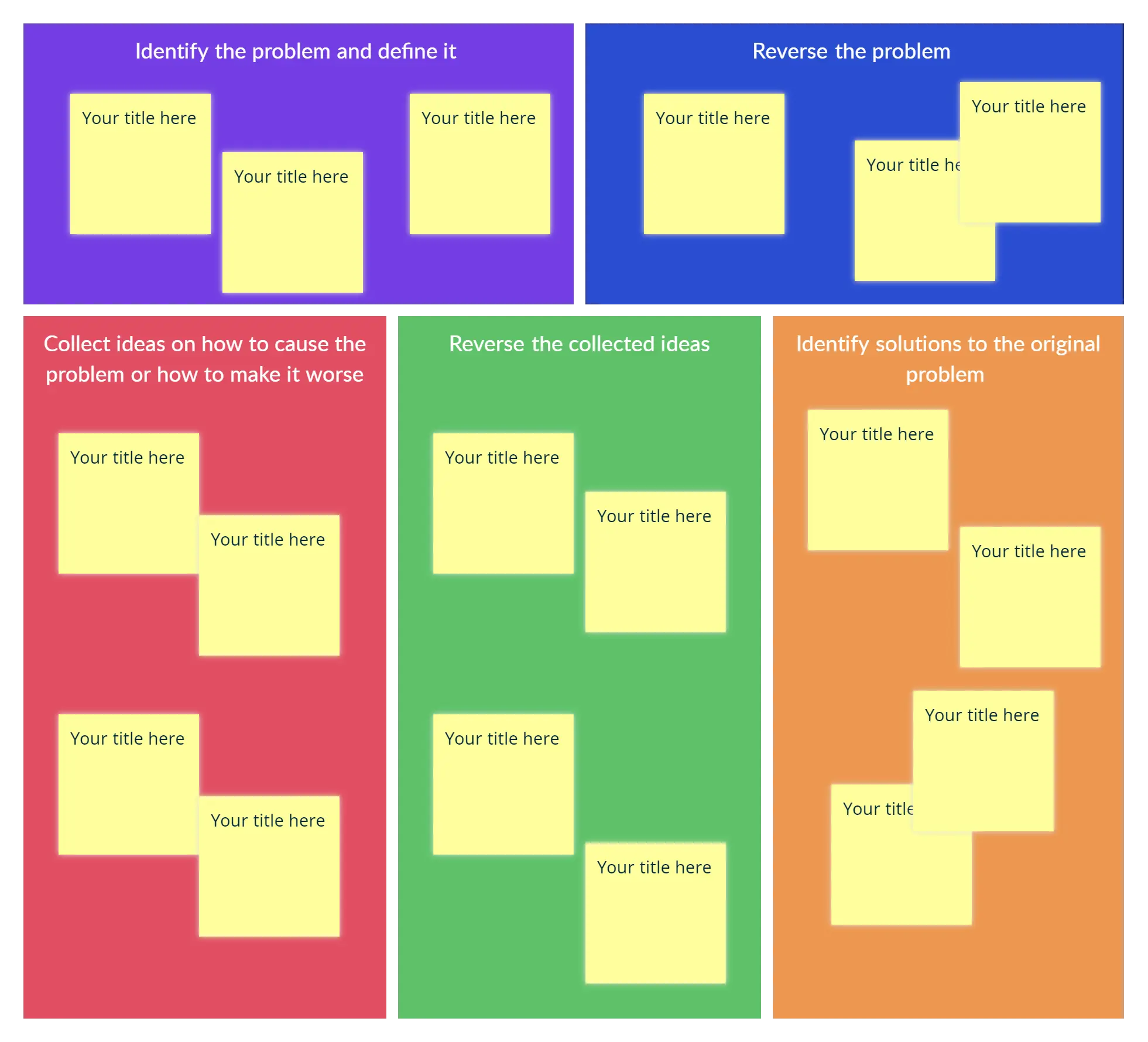
Reverse brainstorming is an ideation technique that approaches problem-solving from an unconventional perspective. Instead of directly searching for solutions, it begins by trying to identify ways to worsen the problem. The process involves looking at the problem in reverse, seeking actions, causes, or factors that could contribute to the problem’s escalation.
Start by clearly defining the problem or challenge at hand. Then, get participants to brainstorm ideas on how to make the problem worse. These ideas can be counterintuitive, humorous, or unconventional but should remain logically connected to the problem. Once you have a list of negative ideas, examine them to identify underlying causes that contribute to the problem’s escalation. Finally, reverse these causes or factors again to develop potential solutions that aim to tackle the core problem in an innovative and effective manner.
6. Six Thinking Hats
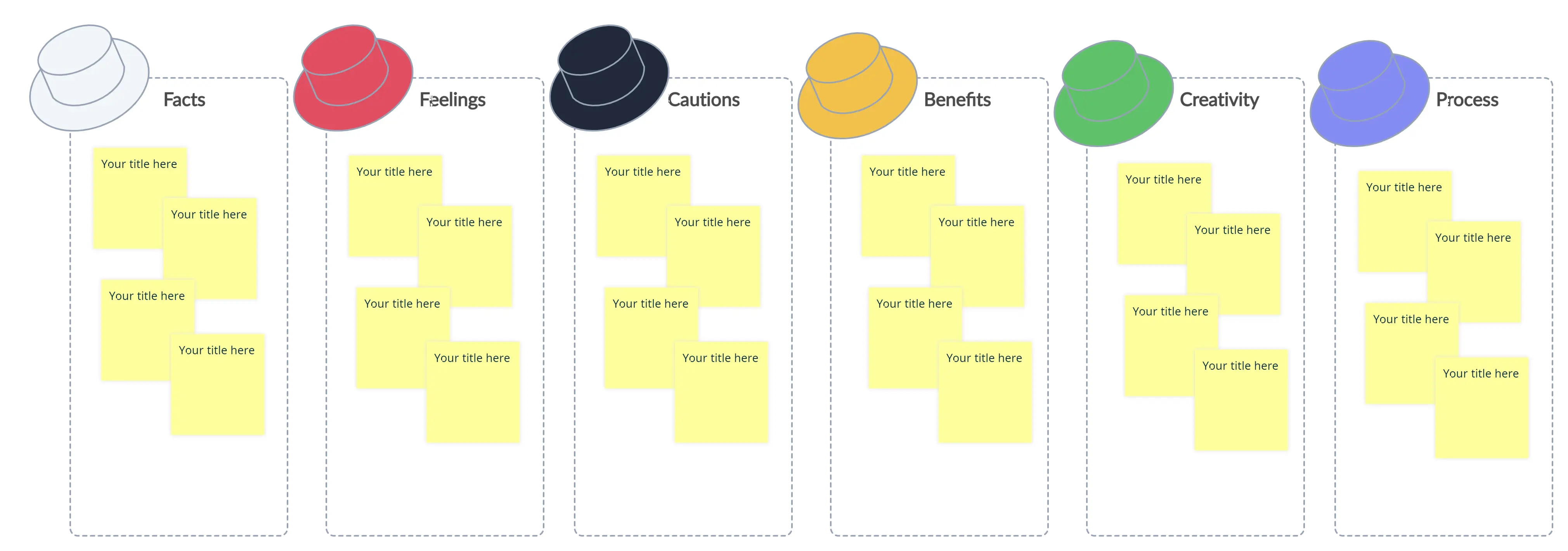
The six thinking hats is a creative problem-solving and decision-making technique developed by Edward de Bono. It provides a structured framework for individuals or groups to think about and discuss complex issues from various perspectives. Each “thinking hat” represents a different mode of thinking, helping participants explore different angles of a problem or decision systematically. Here are the six thinking hats and their respective roles:
White – Represents neutral and objective thinking. When wearing the White Hat, participants focus on gathering facts, information, and data.
Red – Represents emotional and intuitive thinking. Participants express their feelings, emotions, and hunches without the need to justify them.
Black – Symbolizes critical and cautious thinking. Participants wearing this hat focus on identifying potential problems, risks, and drawbacks.
Yellow – Signifies optimistic and positive thinking. Participants look for the benefits, advantages, and opportunities associated with an idea or decision.
Green – Represents creative and innovative thinking. Participants put on the Green Hat to generate new ideas, solutions, and alternatives.
Blue – Serves as the control hat or process hat. The person wearing the Blue Hat acts as a facilitator or manager, guiding the thinking process.
7. Storyboard
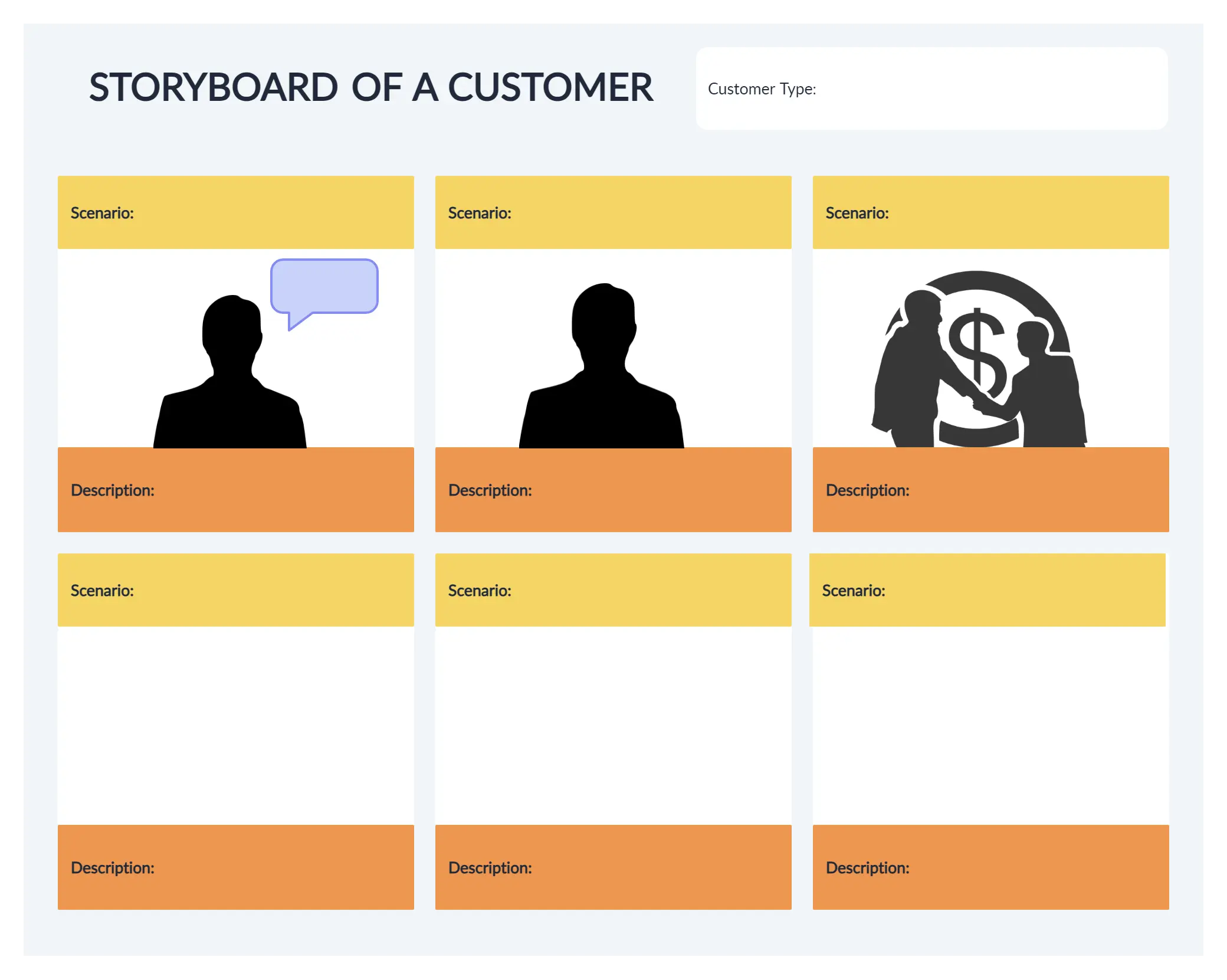
A storyboard is one of the ideation techniques involving visual storytelling or a sequence of images to generate and communicate creative concepts, solutions, or innovations. It is particularly valuable when dealing with complex or abstract concepts that may be challenging to convey through words alone.
First, participants generate ideas related to a specific project, problem, or concept. These can be ideas for new products, marketing strategies, user experiences, or any other creative concepts. Instead of describing these ideas in words, participants translate them into a sequence of images or sketches. Each image represents a specific aspect or step of the idea. These images are organized in a logical order to form a visual narrative that tells the story of the idea’s progression.
8. Sketching
Sketching is an ideation technique that involves visually expressing ideas or concepts through simple drawings. It is a powerful method for creative problem-solving and concept development. Participants generate ideas related to a specific challenge and then use quick, rough sketches to represent those ideas visually.
These sketches serve as a visual language that helps effective communication and exploration of concepts. Sketching encourages creativity, facilitates collaboration, and helps refine and develop innovative solutions in various fields, including design, product development, and problem-solving processes.
9. Worst Possible Idea
The worst possible idea ideation technique is a creative approach that encourages participants to deliberately generate the worst, most impractical, or absurd ideas related to a particular problem or challenge. By embracing and exaggerating negative aspects or far-fetched concepts, this technique helps teams break free from conventional thinking and explore unconventional angles.
Once these extreme ideas are generated, participants can then reverse them, extract valuable insights, or identify elements to avoid. It’s a counterintuitive but effective method for sparking innovative thinking and uncovering unexpected solutions by pushing boundaries and exploring the opposite end of the spectrum.
10. Crazy 8s
The “Crazy 8s” ideation technique is a fast-paced and structured brainstorming exercise often used in design and creative problem-solving. Participants take a sheet of paper and fold it into eight sections. They then set a timer for eight minutes. During this time, participants rapidly sketch or write down eight different ideas or concepts, each within its own section.
This time constraint encourages quick thinking and prevents overthinking. Once the eight minutes are up, participants share and discuss their ideas, potentially combining or refining them into more viable and innovative solutions. Crazy 8s is an effective method for generating a diverse range of ideas in a short timeframe, promoting creativity and encouraging participants to explore multiple angles and concepts.
More Ideation Techniques
Listed below are resources for more ideation techniques and templates that you can use to generate ideas remotely.
- 5 whys analysis to get to the bottom of an issue and uncover more insight needed to generate a solution
- Lotus diagram to breakdown broad topics into smaller components for easy analysis and prioritization
- Online idea board to collect and organize ideas in a visually pleasing way that is easier to refer to and understand
- Mood board to solidify your design ideas
- The ultimate list of essential visual brainstorming techniques
- The ultimate list of visual creative thinking techniques
The ideation process
- Identify the need for ideating. Perhaps you are looking to solve an organizational problem, come up with new product or service ideas, expand your market reach, etc., and specifying that need will help you set a goal for the session and guide it more effectively.
- Select your team for the ideation session. To generate more diversified ideas, involve a variety of people with different experiences and backgrounds.
- Single out the best idea/s to implement. To do this, you need to have a set of defined criteria that the generated ideas will be evaluated against (this should be ready prior to the session). Along with the evaluation criteria, you should also determine the internal teams you will be handing over the prioritized ideas for further evaluation or implementation.
- Next comes the implementation of the prioritized ideas, which involves allocating resources, assigning responsibilities, mapping workflows, defining timelines, and tracking progress.
Conclusion
Ideation helps you discover unexpected solutions and even sometimes shed light on the obvious ones you might have missed, and push you to think beyond them. With the right tools, techniques, and the team, ideating the correct feasible solutions will become easier. We hope these techniques will help you conduct productive ideation sessions with your remote team.
Got more ideation techniques that you would love to use with your team? Share with us in the comments section below.