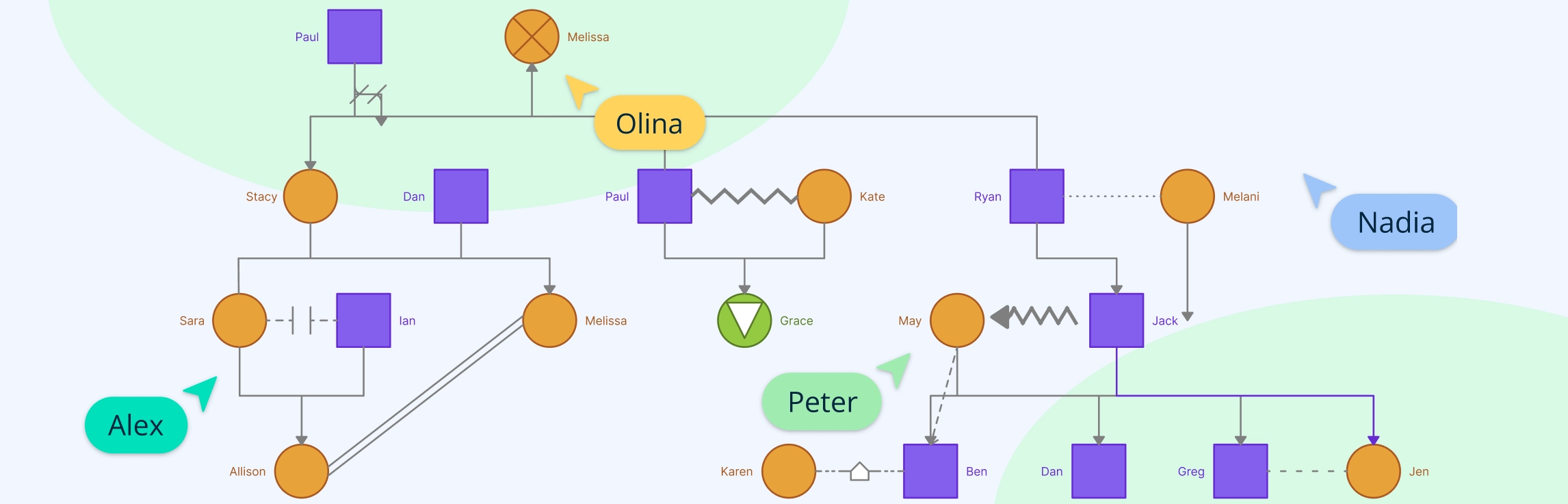
Genograms in therapy help clinicians connect present-day symptoms, relationship struggles, and coping patterns to the wider family system. Instead of treating each issue in isolation, a therapy genogram gives counselors, psychologists, and clinical social workers a way to map structure, emotional ties, major life events, and recurring themes in one view.
This guide walks through 10 therapy genogram examples and explains when each one is useful, from family relationship mapping to trauma, mental health, attachment, and communication patterns.
10 Therapy Genogram Examples and When to Use Them
These genogram examples are useful across individual therapy, couples work, and family therapy. Each one highlights a different kind of clinical question, such as family structure, emotional closeness, trauma history, caregiving roles, or repeated mental health concerns.
1. Family Relationship Genogram
A family relationship genogram maps out familial connections, including marriages, divorces, and sibling relationships. It helps therapists identify conflict areas, strong emotional bonds, and potential sources of distress within the family.
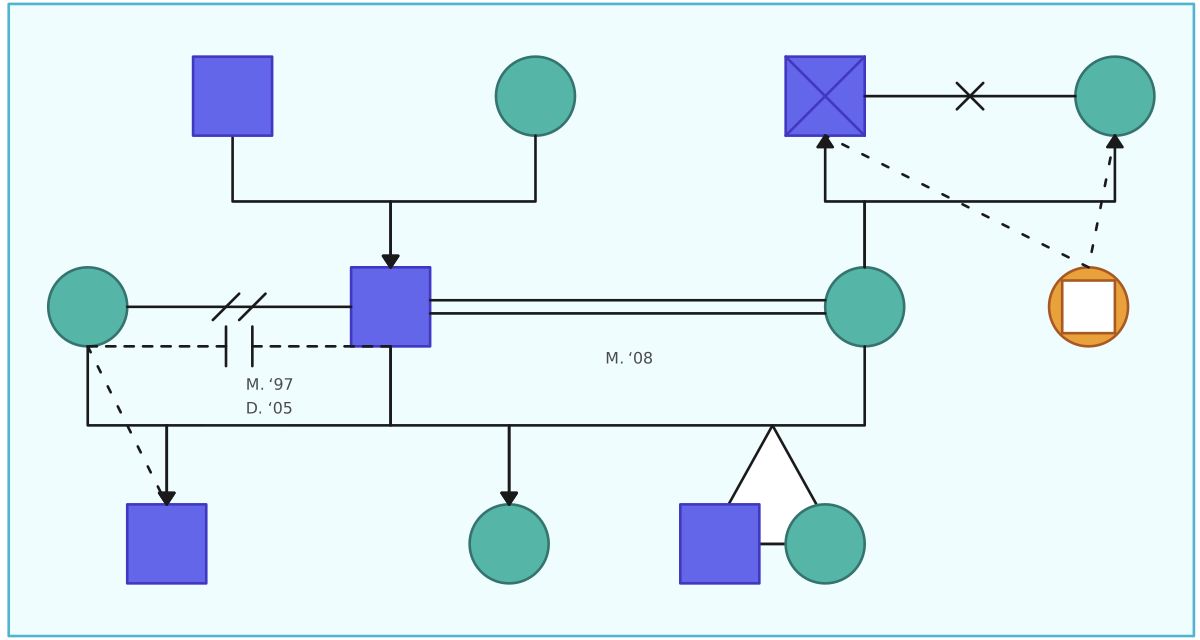

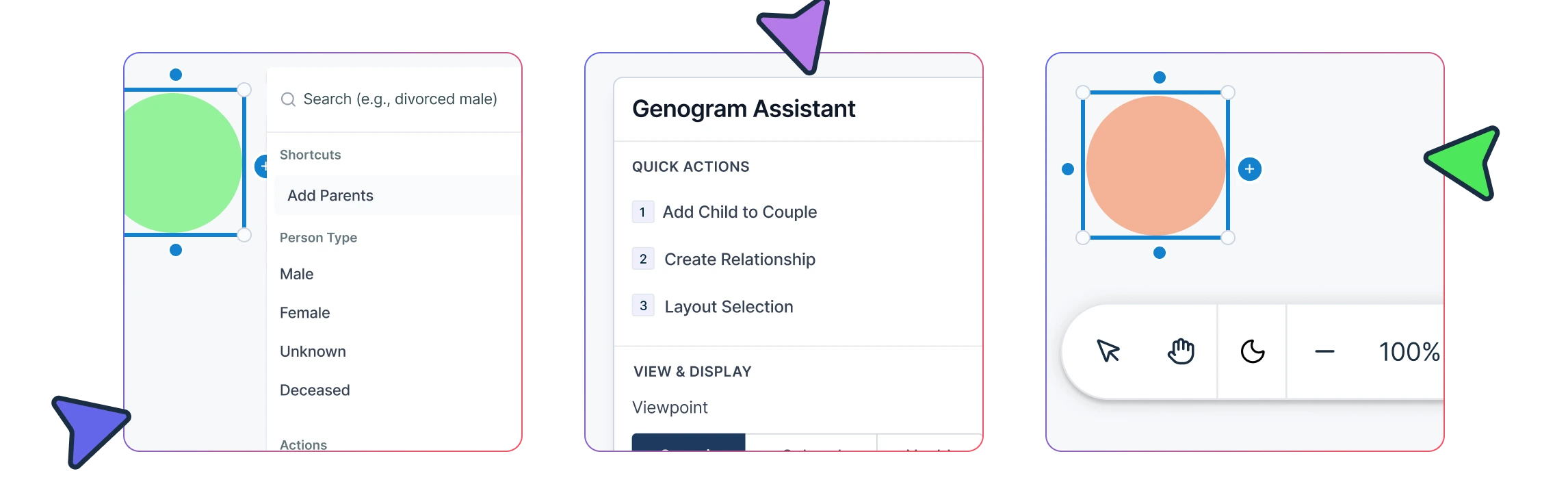
Therapists can turn this into a working family therapy genogram by starting with a therapy genogram template and adding parents, partners, children, and siblings without redrawing the structure manually. During live sessions, keyboard shortcuts also make it easier to build out the family system quickly while keeping the conversation moving.
2. Emotional Relationship Genogram
This genogram illustrates emotional ties between family members, showcasing bonds such as love, hostility, or dependency. Therapists use it to assess emotional dynamics and address unhealthy attachment patterns.
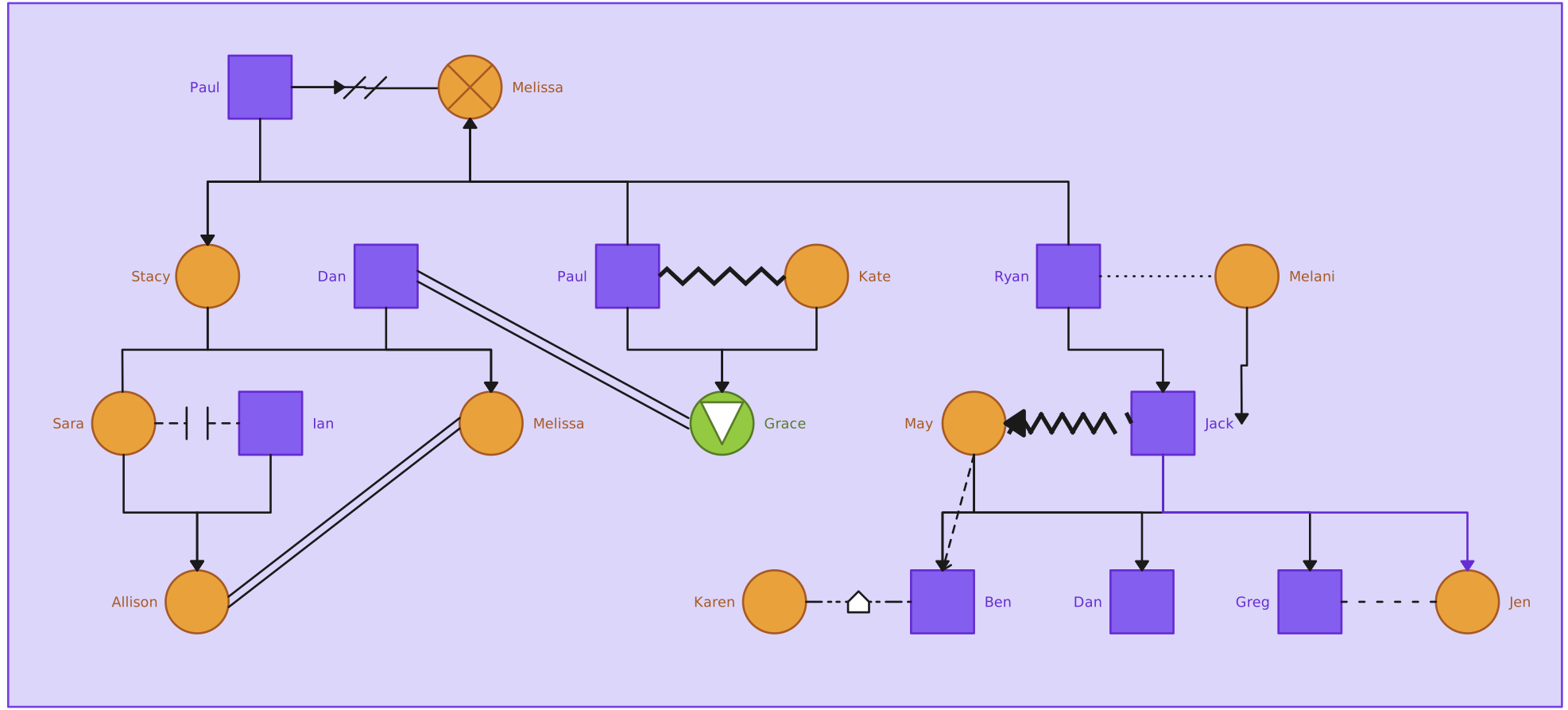
Therapists can map this kind of genogram in therapy with emotional relationship lines for closeness, conflict, cutoff, and other clinically important patterns. Once the structure is in place, therapists can use Creately’s AI assistant to help point out recurring emotional dynamics, highlight relationship patterns that may need closer attention, and support therapists as they review attachment concerns, distress, or intergenerational relational themes.
3. Medical Genogram
A medical genogram focuses on hereditary health conditions, such as diabetes, heart disease, or mental health disorders. It enables therapists and healthcare professionals to understand genetic risks and encourage preventive care.
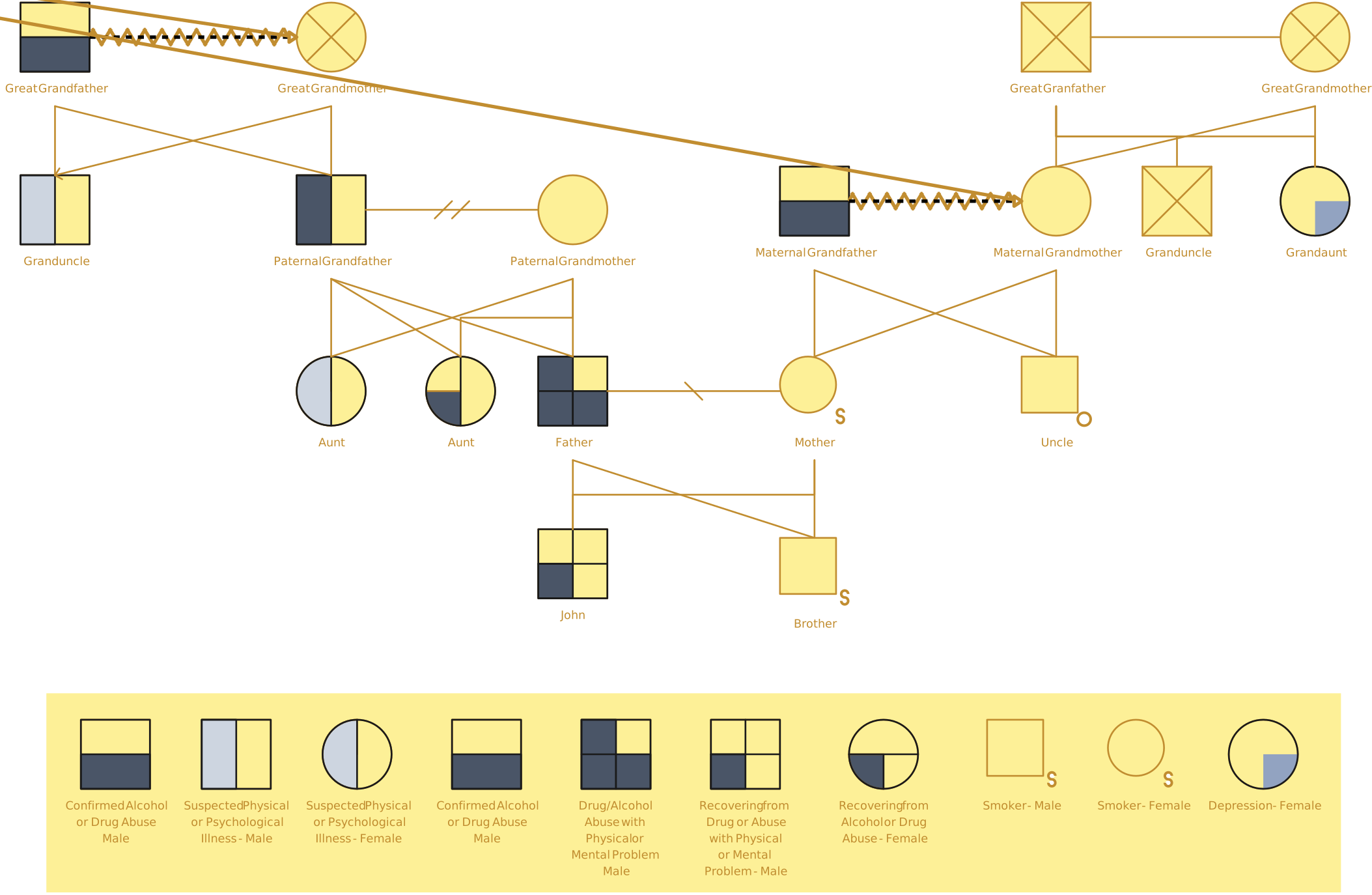
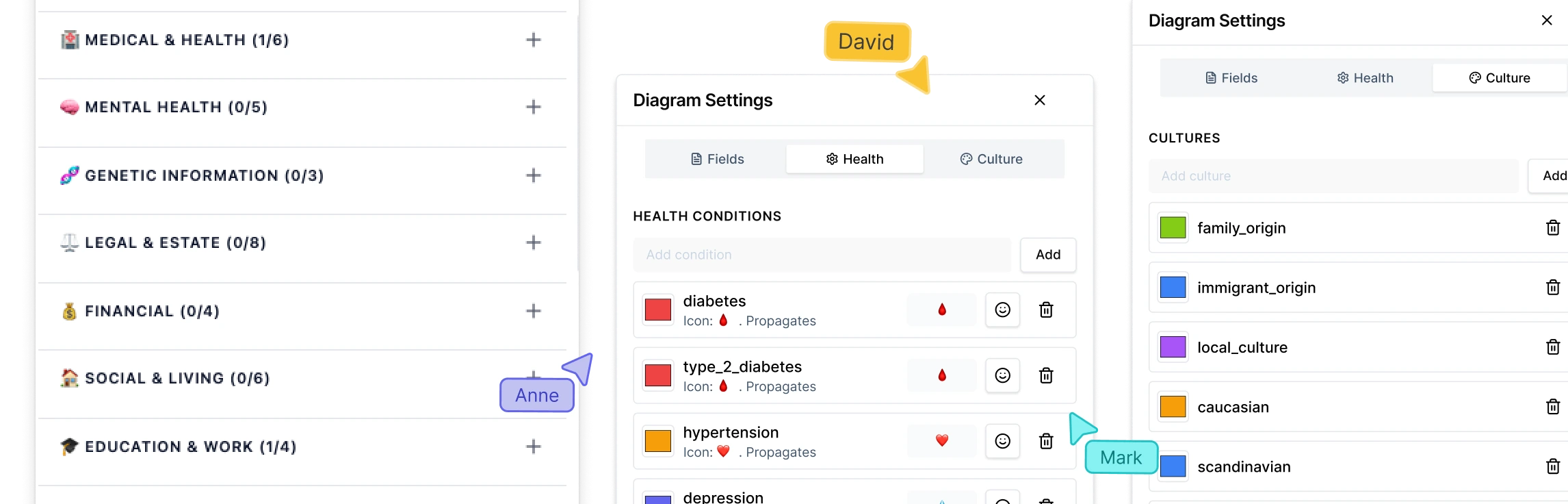
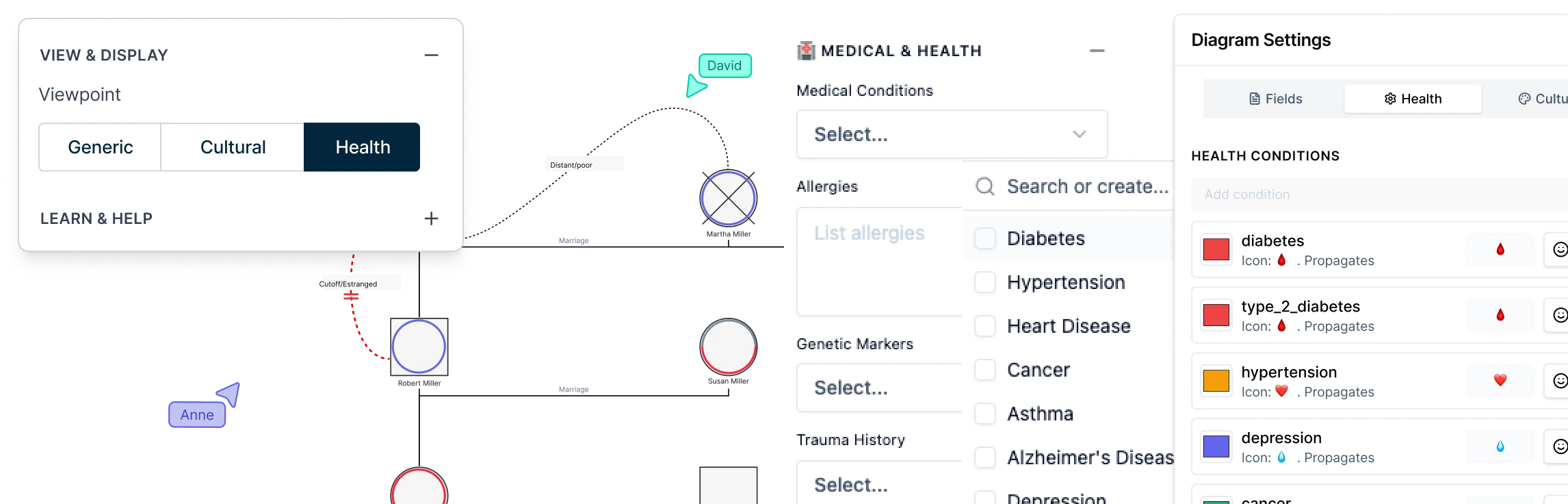
If a genogram for therapy also needs family health context, clinicians can add medical conditions and supporting notes directly to each person, then review the diagram in health view mode. This is useful when a therapy genogram overlaps with a mental health genogram or when therapists want a clearer picture of hereditary and cross-generational influences.
4. Substance Abuse Genogram
This genogram highlights substance use patterns across generations, identifying potential hereditary influences or environmental triggers. It helps therapists develop intervention plans for individuals struggling with addiction.

This therapy genogram can be expanded with structured notes, relationship details, and case context so therapists can track substance use patterns more clearly over time. The therapy-related field pack also helps clinicians keep treatment-relevant details in the same working document instead of separating the diagram from the case notes.
5. Trauma and Abuse Genogram
A trauma genogram maps instances of abuse, neglect, or significant trauma within a family. It aids therapists in recognizing intergenerational trauma and designing appropriate therapeutic interventions.
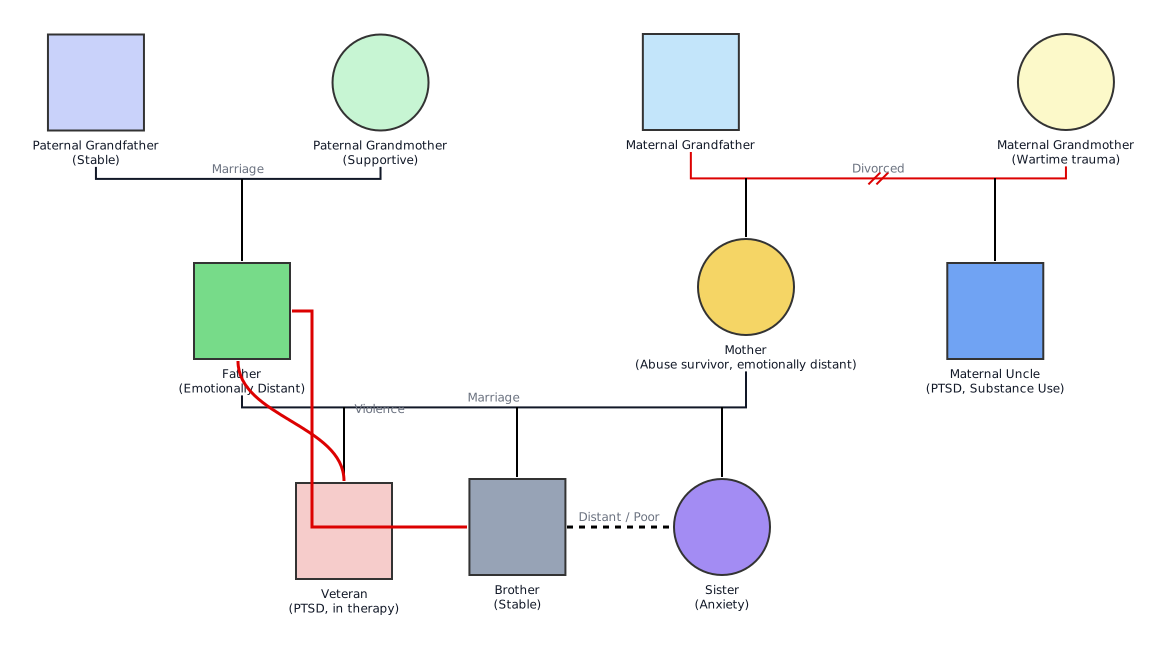
Therapists in trauma work can map difficult family patterns visually while adding sensitive context through Creately’s sticky notes and person-level notes. This makes a trauma genogram easier to review, update, and revisit across therapy sessions without losing important clinical observations.
6. Mental Health Genogram
A mental health genogram provides insights into patterns of anxiety, depression, bipolar disorder, or other mental health conditions within a family. It enables therapists to create personalized treatment plans based on family history.
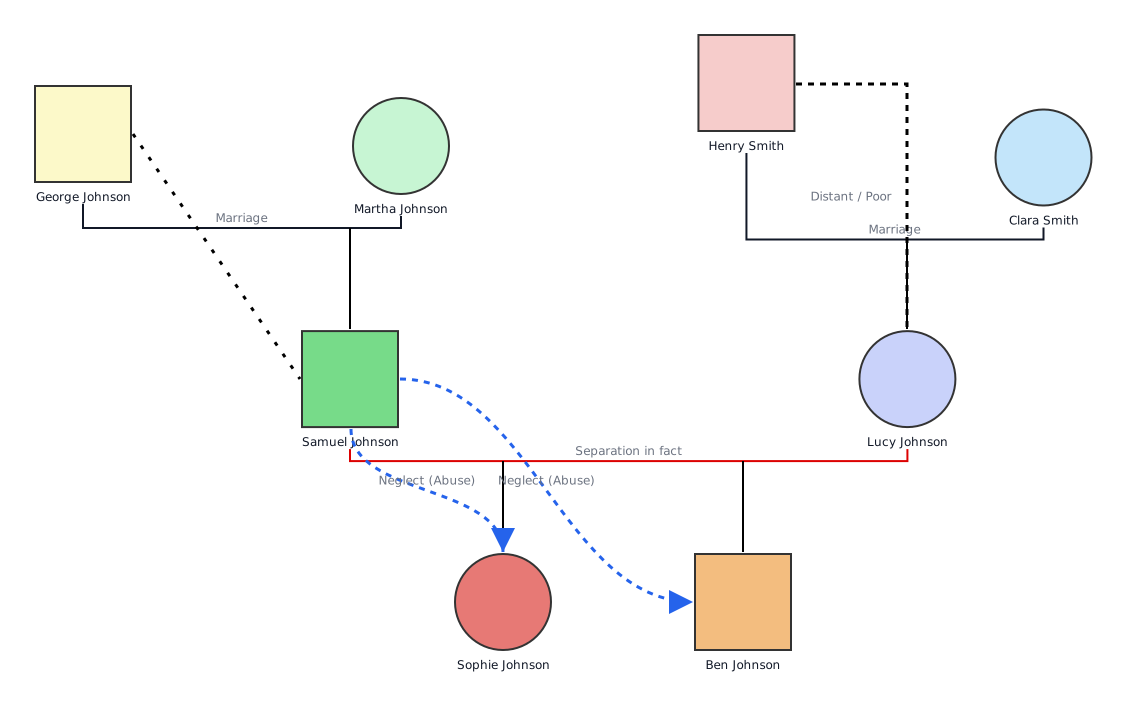
A mental health genogram becomes more practical when therapists can combine family structure, psychological patterns, and case notes in one place. Clinicians can use the mental health field pack to document relevant context and then review the genogram in therapy as a working visual for assessment and treatment planning.
7. Parenting Style Genogram
This genogram evaluates parenting techniques and discipline styles passed down through generations. Therapists use it to address parenting concerns and improve family dynamics.
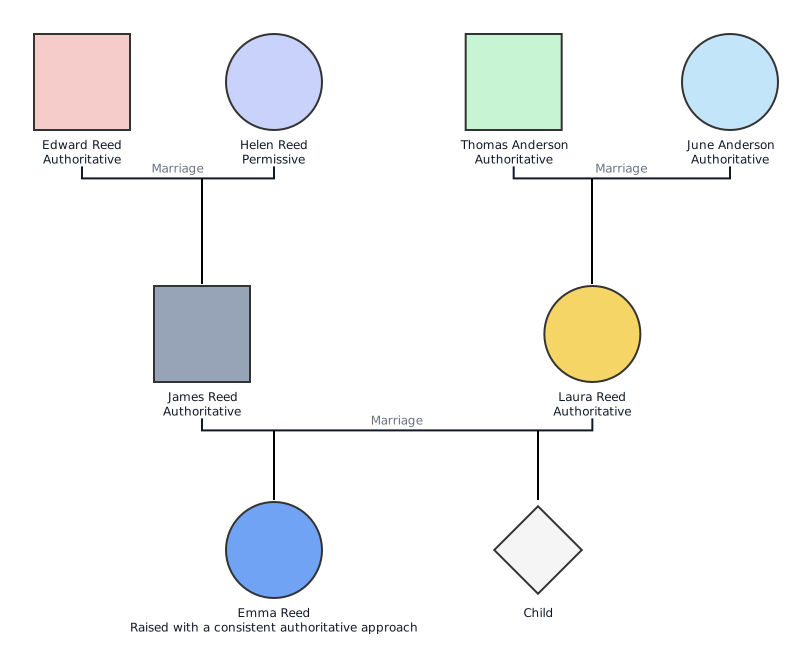
Therapists can use this parenting-style therapy genogram to connect parenting patterns with attachment, family roles, and treatment goals. The relationships field pack helps bring those details into the same genogram for therapy, making the diagram more useful in family therapy, parent work, and case conceptualization.
8. Conflict and Communication Genogram
A conflict genogram identifies recurring family disputes and communication barriers. By visualizing how conflicts arise and are managed, therapists can guide clients toward healthier interactions.
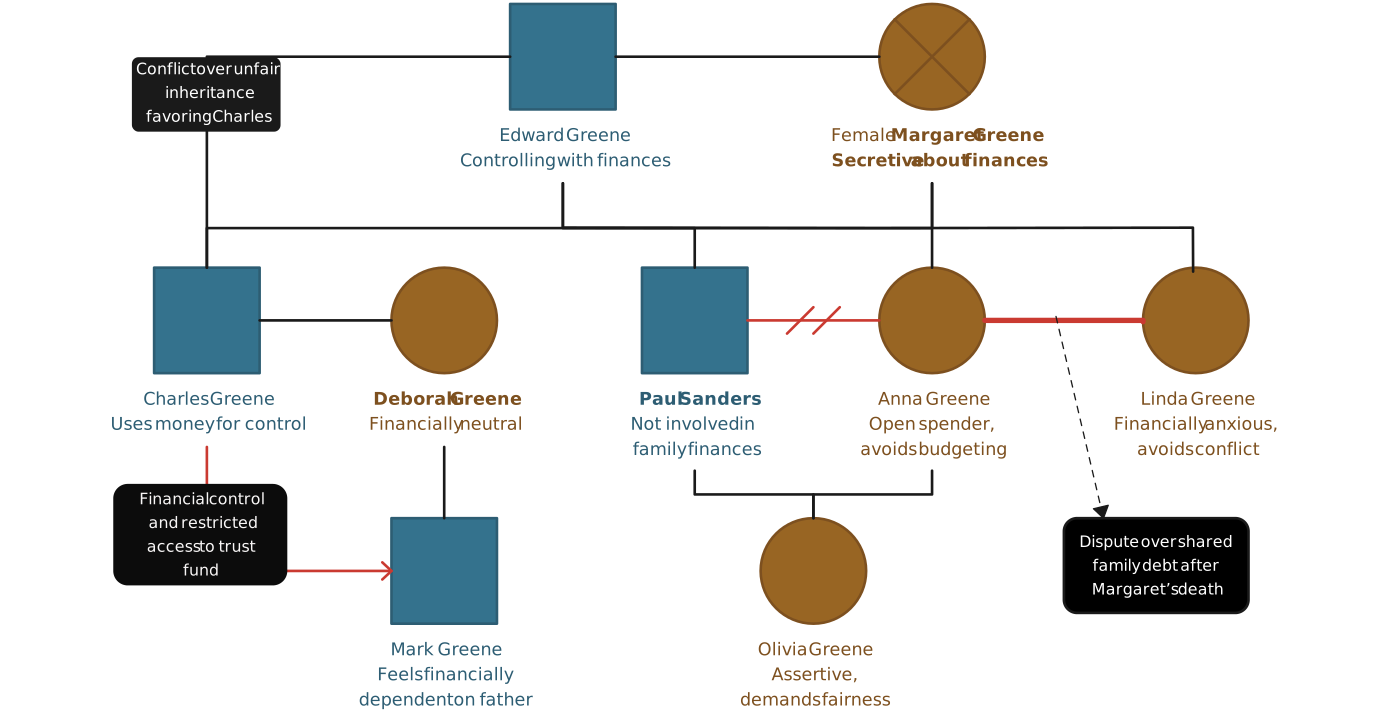
This kind of genogram is especially useful in family therapy because conflict patterns can be shown visually while comments and notes capture the context behind them. Therapists can also use read-only sharing when they want supervisors or collaborators to review the therapy genogram without changing the original.
9. Attachment Style Genogram
An attachment style genogram helps therapists understand how attachment patterns, such as secure, anxious, avoidant, or disorganized attachments, have been transmitted across generations. It assists in addressing relational difficulties and building healthier connections.
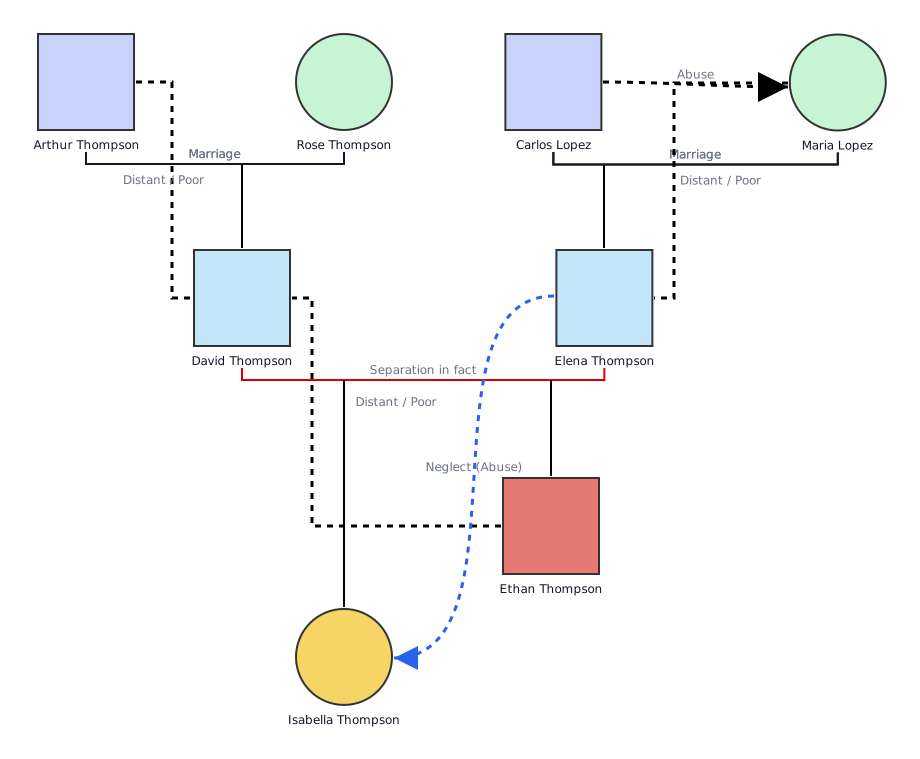
This attachment style genogram works well when therapists can add relational observations directly alongside the family structure instead of keeping them in separate documents. That makes the therapy genogram easier to use when linking present-day relationship struggles with intergenerational attachment patterns and ongoing treatment themes.
10. Intergenerational Trauma Genogram
This genogram highlights how trauma is passed down through generations, affecting family members in different ways. Therapists use it to uncover deep-rooted psychological wounds and develop strategies for healing.
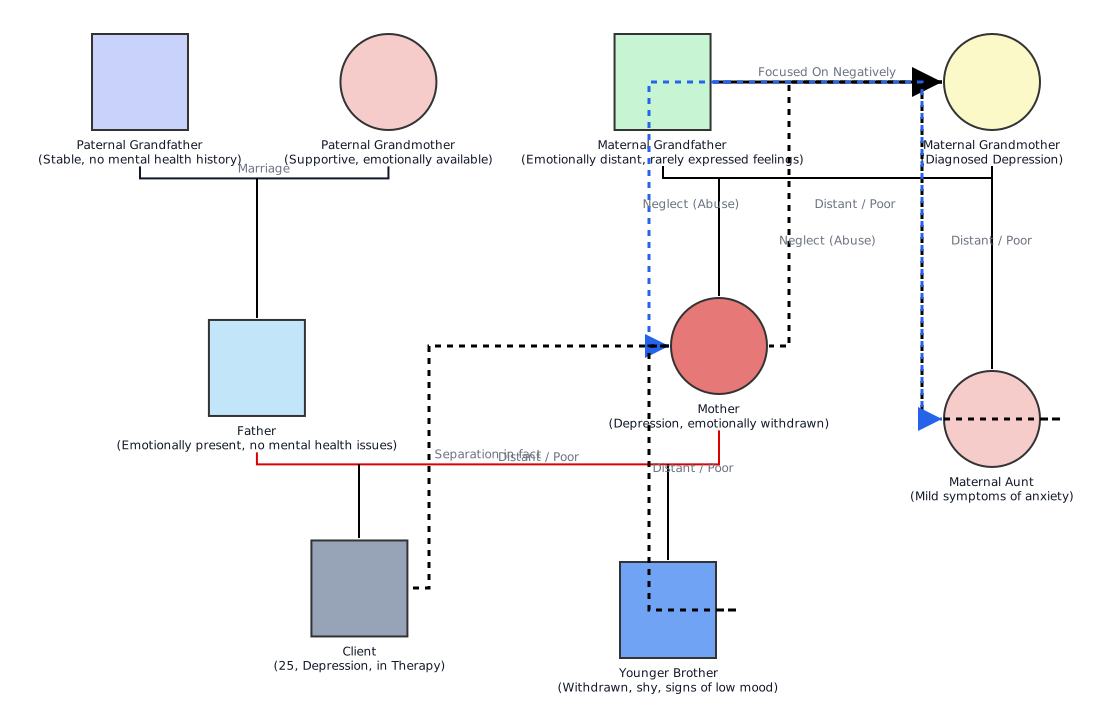
Therapists can use this genogram for therapy to bring together family structure, trauma history, emotional relationships, and session observations in one visual record. When the genogram needs to be shared beyond the session, it can also be prepared as a PDF/DOCX clinical report for documentation or case review.
Benefits of Using Genograms in Therapy
Genograms in therapy help therapists organize complex family information into a visual format that supports assessment, reflection, and treatment planning. For counselors, psychologists, and clinical social workers, a therapy genogram can do much more than show who is related to whom. It can reveal emotional patterns, trauma histories, mental health concerns, and family dynamics that are hard to spot in notes alone.
1. They help therapists see family patterns faster
A genogram in therapy makes recurring themes such as trauma, addiction, cutoff, caregiving roles, and communication problems easier to identify. This gives therapists a faster way to understand what may be shaping the client’s current struggles.
2. They make a therapy genogram more clinically useful
A strong therapy genogram includes more than names and lines. It can also capture emotional relationships, major life events, mental health history, and treatment-relevant context that supports better clinical understanding.
3. They support deeper conversations in therapy sessions
Using genograms in therapy gives both the clinician and the client a shared visual reference. That often makes difficult conversations easier, especially when discussing family roles, painful patterns, or intergenerational trauma.
4. They help with complex family therapy cases
A family therapy genogram is especially useful when the case involves remarriage, blended families, foster relationships, step relationships, attachment issues, or long-standing conflict. The visual format makes these systems easier to understand and explain.
5. They improve continuity across sessions
Because a genogram for therapy can be updated over time, it becomes more than a one-time assessment. Therapists can return to it in later therapy sessions, refine it as new information emerges, and use it to track insight and progress.
6. They make collaboration and documentation easier
Genograms in therapy are often reviewed with supervisors, care teams, or clients themselves. A well-built therapy genogram makes it easier to share case understanding, support treatment planning, and create a more useful clinical record, especially when the work may later need to be documented more formally.
How to Turn a Therapy Genogram Example Into a Working Case Tool
A useful therapy genogram should do more than illustrate relationships. It should help the clinician capture clinically relevant detail, revisit patterns over time, and support discussion, reflection, and treatment planning. Once you choose the right example, the next step is adapting it to the real case rather than treating the template as the final product.
1. Start with a template or use text-to-genogram
Therapists can begin with a genogram template or use text-to-genogram to turn intake notes, a family description, or a case summary into a starting draft. This is especially useful when you already know the type of genogram for therapy you need, such as a mental health genogram, trauma genogram, or attachment style genogram.
2. Build the family structure with quick-add and keyboard shortcuts
Once the starting point is in place, build out the therapy genogram by adding parents, partners, children, siblings, and extended family. A quick-add workflow can help therapists expand the structure faster, and keyboard shortcuts make it easier to create a family therapy genogram during live sessions without interrupting the therapeutic conversation.
3. Add emotional relationships, notes, and therapy-specific context
A genogram in therapy becomes much more useful when it includes emotional closeness, conflict, cutoff, trauma history, mental health patterns, and other clinically relevant observations. Creately supports this with emotional relationship lines, sticky notes, and the therapy-related genogram field packs, so the therapy genogram can hold both the family map and the case context in one place.
4. Review the genogram from the right clinical angle
Different therapy goals require different kinds of focus. In some cases, the therapist may want to stay in general view to review family structure, emotional relationships, and overall case context. In others, the genogram may need to be reviewed in health view mode to explore medical or mental health history across generations. This makes the same genogram for therapy more flexible across assessment, reflection, and treatment planning.
5. Collaborate, share, and export when needed
A therapy genogram is often reviewed with clients, supervisors, or other professionals. Comments, collaboration, and read-only sharing can help support that process while protecting sensitive family and mental health information through controlled access. When a more formal record is needed, therapists can also generate a PDF/DOCX clinical report for documentation, supervision, or case review.
For examples of the written reasoning that can accompany a completed diagram, see written genogram analysis examples. Those examples focus on evidence, bounded findings, missing information, and follow-up questions; this page remains focused on editable therapy diagrams.
If you already know which therapy genogram fits your case, the next step is to open a template, customize the family structure, and add the emotional and clinical details that make the genogram useful in therapy. That is where Creately helps turn genogram examples for therapy into an actual working tool for therapists and counselors.
Helpful Resources
Learn what a genogram in psychology is, how to create one step-by-step, its key uses in therapy and assessment.
Explore how therapists use genograms in therapy sessions to reveal family patterns, emotional dynamics, and treatment-relevant insights.
Learn what a mental health genogram is, how to create one, and how it’s used in clinical and personal contexts.
Use these questions to gather better family information before building a genogram for therapy or family therapy.
References
Joseph, B., Dickenson, S., McCall, A. and Roga, E. (2022). Exploring the Therapeutic Effectiveness of Genograms in Family Therapy: A Literature Review. The Family Journal, 31(1), pp.21–30. doi:https://doi.org/10.1177/10664807221104133.
박정희 and Kim, Yoosook (2009). Genograms in Family Therapy Practice. Family and Family Therapy, 17(1), pp.31–55. doi:https://doi.org/10.21479/kaft.2009.17.1.31.
FAQs on Genograms in Therapy
What is a genogram in therapy?
Why Are Genograms Used in Therapy?
How are genograms used in therapy sessions?
What information is typically included in a therapy genogram?
Can genograms in therapy be used for individuals and couples?
How accurate are genograms in diagnosing mental health issues?
Are there specific genogram examples used in family therapy?
What is a mental health genogram?
Are there genogram case studies in therapy that show real outcomes?
Can I create different types of therapy genograms, such as a mental health genogram or trauma genogram?