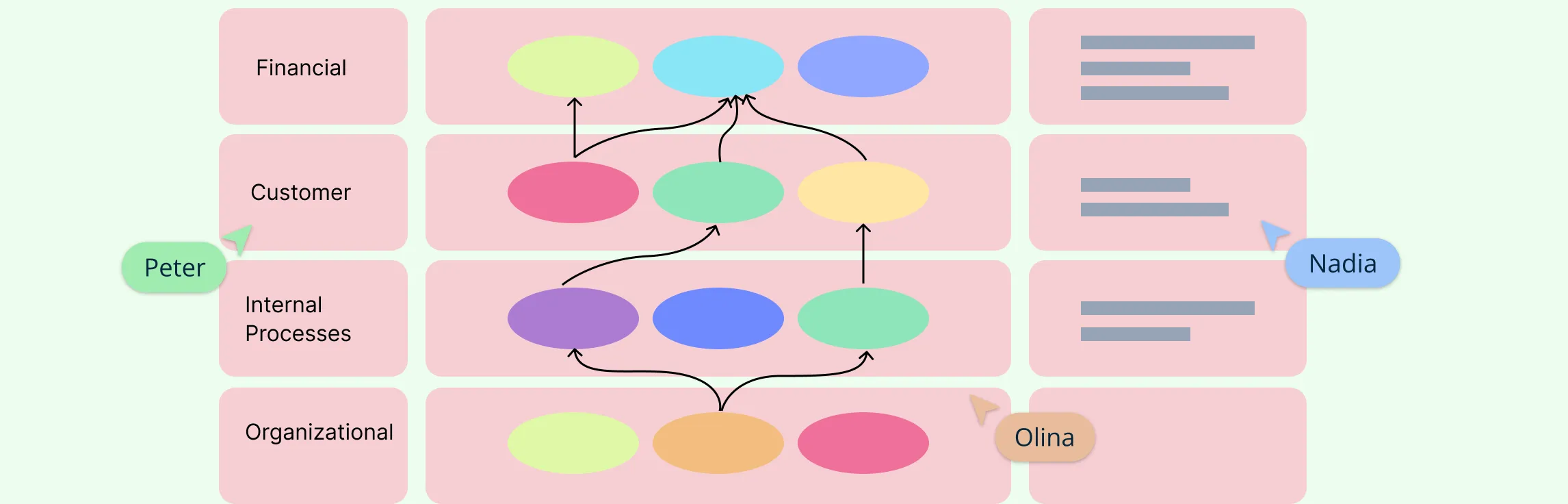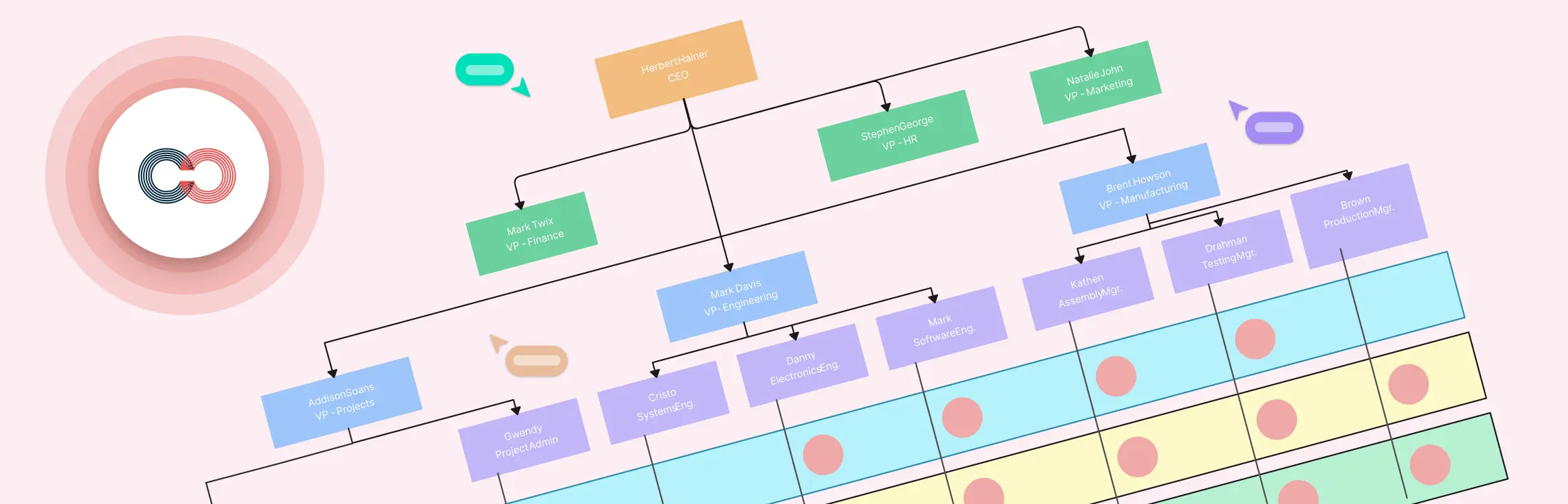
When you’re trying to create change—inside an organization, across a community, or in the public sphere—it’s rarely about pushing harder; it’s about understanding who holds influence, how people are connected, and where real leverage exists. Power mapping helps you see the landscape beneath the surface: the informal relationships, hidden gatekeepers, unlikely allies, and pressure points that shape decisions. Instead of relying on assumptions or chasing the loudest voices, you get a clearer picture of where to focus your time, energy, and conversations. This guide will walk you through how to approach power mapping in a practical, grounded way so you can navigate complex situations with confidence and strategy.
Power Mapping Definition
Power mapping is a strategic way of understanding who has influence over an outcome and how that influence moves through relationships. Instead of guessing or approaching everyone randomly, it helps you see the real decision-makers, the people who sway them, and the network of connections in between. The purpose is simple: focus your effort where it counts, target the right people, and build a path of influence that actually leads to change.
Brief history of power mapping
Power mapping has been used for decades to see influence beyond titles. Grassroots organizers, political campaigns, labor unions, nonprofits, and even workplaces used it to identify key decision-makers, uncover hidden influence, and understand who can drive change. The core idea remains the same: power lives in relationships, trust, and influence—not just positions or titles.
Where power mapping is most useful
Power mapping shines whenever understanding people, influence, and networks is key:
Advocacy and activism: Identify decision-makers, allies, and opposition to run targeted campaigns that drive change.
Policy and public institutions: See how committees, departments, and stakeholders influence each other, and locate leverage points.
Organizational reform: Map leaders, champions, skeptics, and gatekeepers to gain buy-in for new initiatives or cultural change.
Community mobilization: Visualize trusted voices—teachers, business owners, faith leaders, organizers—to turn awareness into collective action.
Core concepts and principles
Decision-maker / target
These are the people who can actually make the change happen. It’s easy to assume the person with the biggest title is the most important, but power isn’t always obvious.
Think of them as the end point of your strategy: the person whose decision, approval, or action matters most for your goal.
By identifying the decision-makers early, you can target your efforts effectively rather than wasting energy on people who don’t have real influence.
Influence networks
Power rarely exists in isolation. Decision-makers are connected to others who shape their thinking, priorities, and options.
These networks include direct and indirect relationships—friends, colleagues, advisors, donors, professional associations, and even social or media connections.
Mapping these networks lets you see how influence flows, helping you identify hidden allies or leverage points you might otherwise miss.
Relational power vs positional power
Positional power comes from a title or role, while relational power comes from the connections, trust, and influence someone has.
Someone with a modest title but strong relationships across an organization or community can often move decisions faster and more effectively than a senior executive.
Recognizing relational power helps you identify unexpected allies or obstacles and plan smarter approaches.
The dynamic nature of power
Power isn’t fixed. It’s about relationships, context, and timing.
A person influential today may lose sway tomorrow; new players may emerge; alliances can shift.
Treat power maps as living tools—update them as you learn, adapt, and navigate changing circumstances.
The Importance of Power Mapping
Power mapping isn’t just a nice-to-have exercise—it’s a game changer for anyone trying to create real impact. It takes the guesswork out of influence and strategy, helping you see the invisible connections and leverage points that make or break your efforts.
Focus your energy where it counts: Instead of spreading yourself thin, power mapping shows you which people, groups, or institutions have the most influence over your goal. You know exactly where to invest your time and resources.
Reveal hidden influencers: Sometimes the person with the title isn’t the one calling the shots. Power maps help you uncover the behind-the-scenes players who can open doors or sway opinions.
Plan smarter strategies: With a clear picture of influence, you can tailor your approach: build alliances, anticipate pushback, and design actions that move decision-makers effectively.
Strengthen relationships and coalitions: Mapping relationships highlights allies you might have overlooked and helps you connect with others who share your goal, creating stronger networks of support.
Adapt to changing dynamics: Power isn’t static—people move, relationships shift, and priorities evolve. Regularly updating your power map keeps you responsive and ahead of the curve.
Types of Power Maps
Different types of power maps give you different angles on influence. Each one helps you understand relationships, priorities, and leverage in a unique way. Here’s a breakdown:
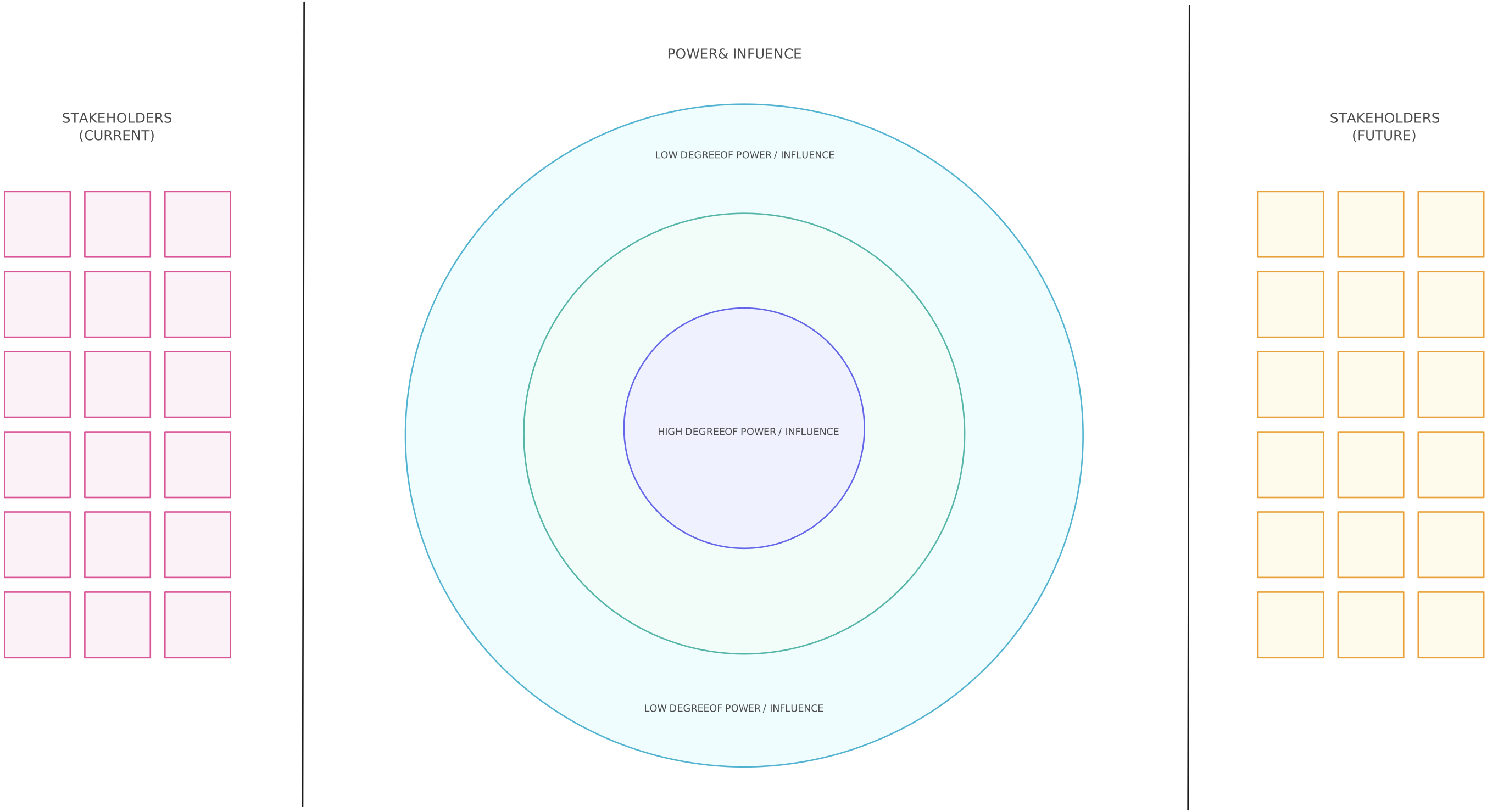
1. Relationship Circles
What it is:
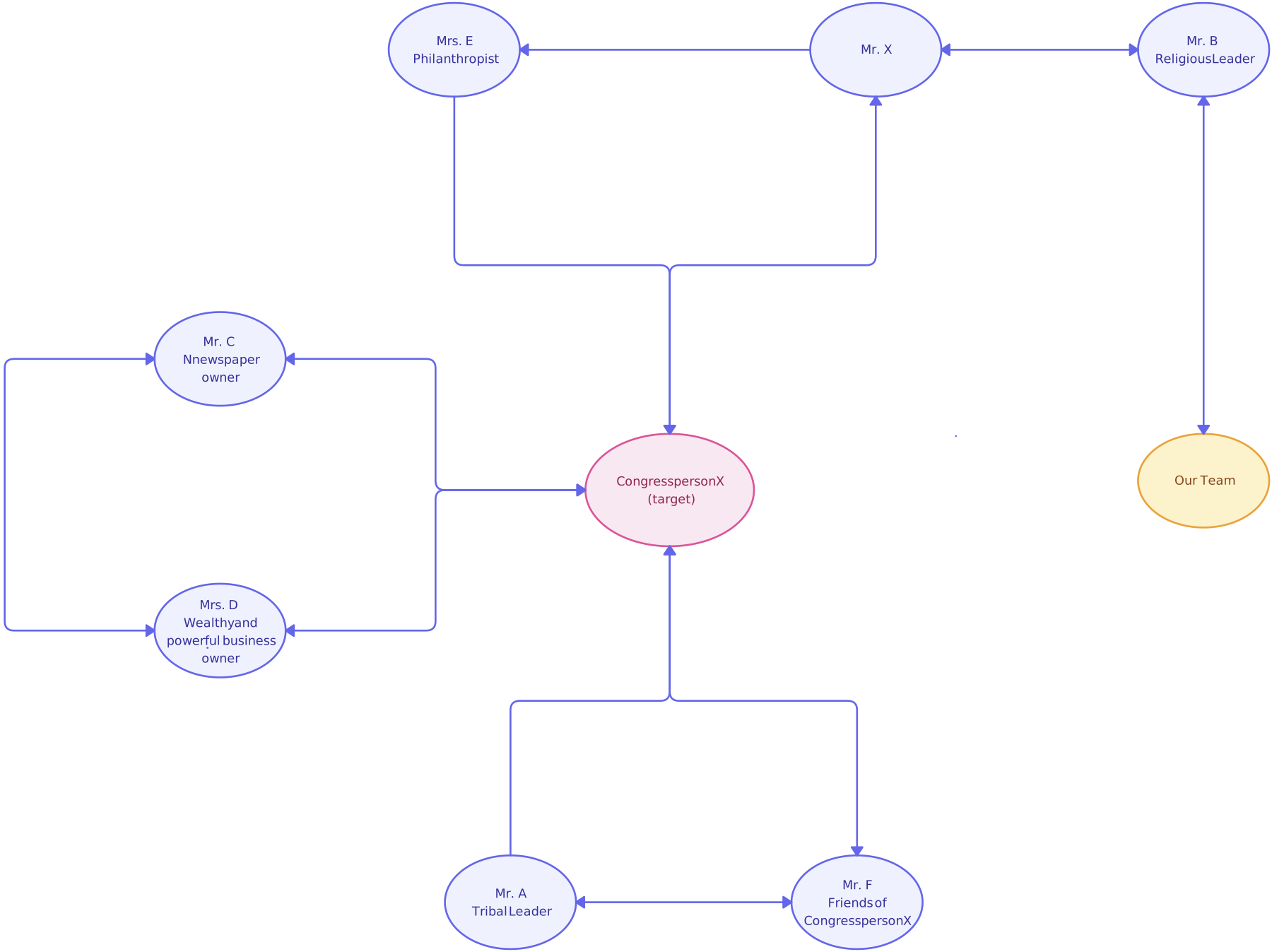
Imagine concentric circles with your main target (the decision-maker or key player) in the center.
Other people or groups are placed in rings around the center based on how directly they influence or relate to the target.

Why it’s useful:
Shows who has the strongest connection to your target.
Helps you identify key allies, close advisors, and indirect influencers.
Makes it clear who you should approach first and who might be “behind the scenes” power.
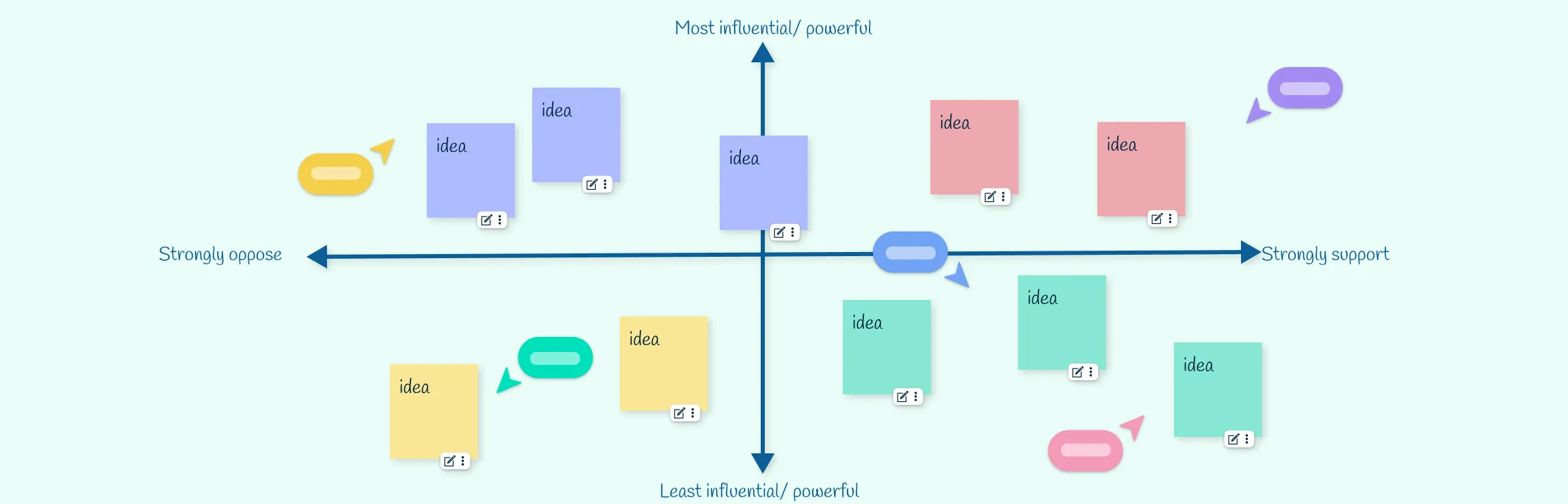
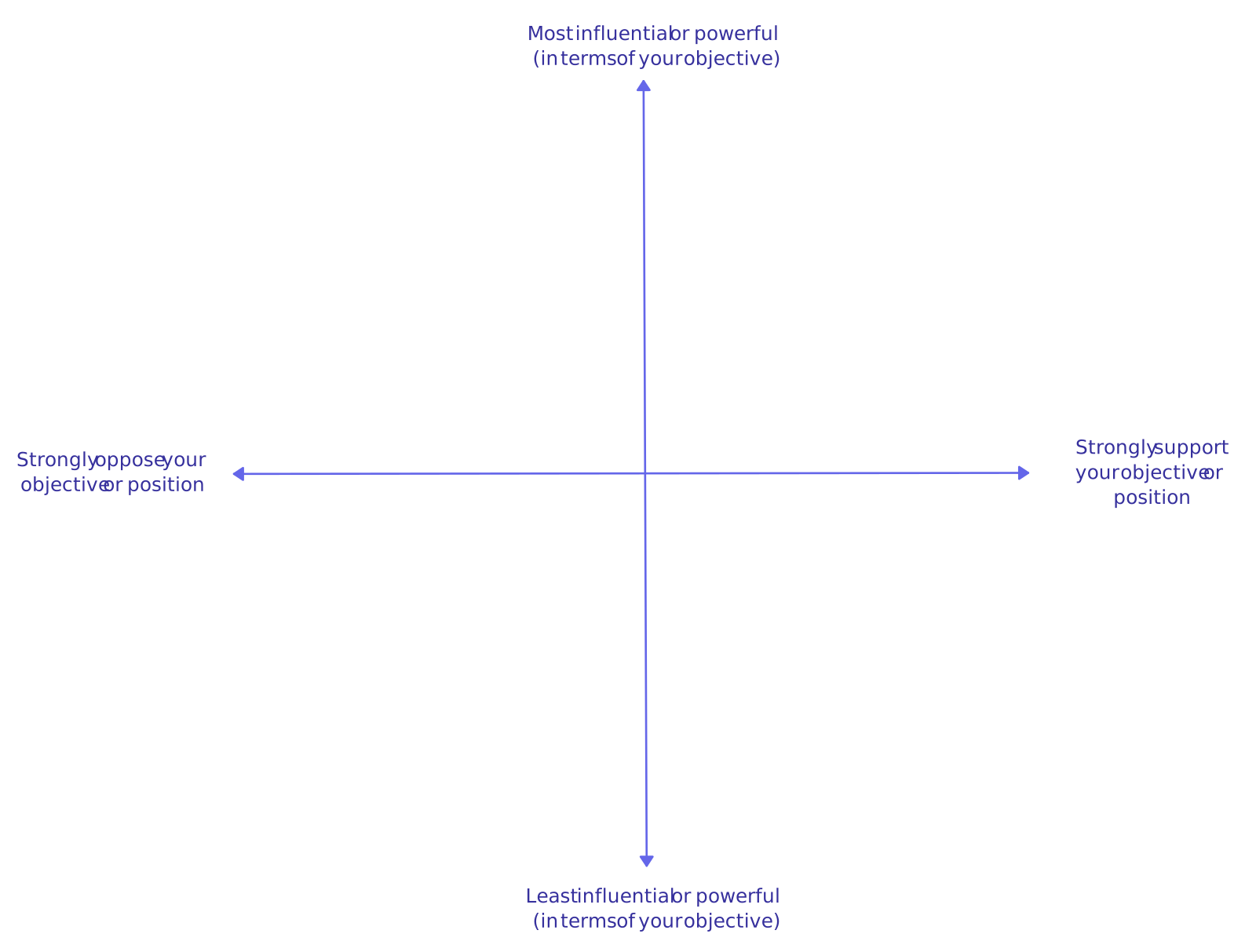
2. Quadrant Analysis (Power vs Support Grid)
What it is:
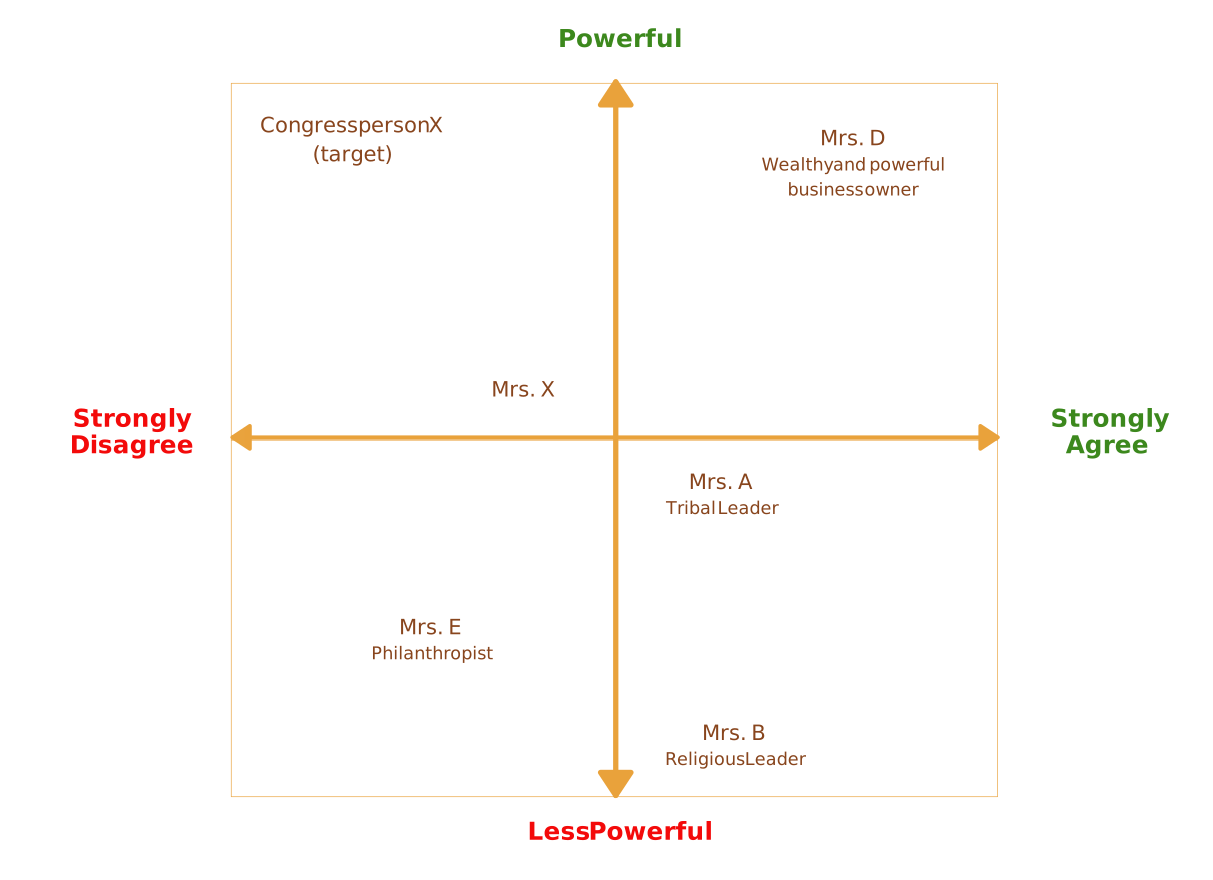
A two-axis grid: one axis represents power/influence (high to low), the other represents support/interest (supportive to opposed).
Stakeholders are plotted into quadrants based on their combination of power and support.
Why it’s useful:
Helps prioritize actions:
High power + supportive → engage actively.
High power + opposed → persuade or mitigate risk.
Low power + supportive → mobilize as allies.
Low power + opposed → monitor, but don’t overfocus.
Gives a quick visual snapshot of where your energy will have the most impact.
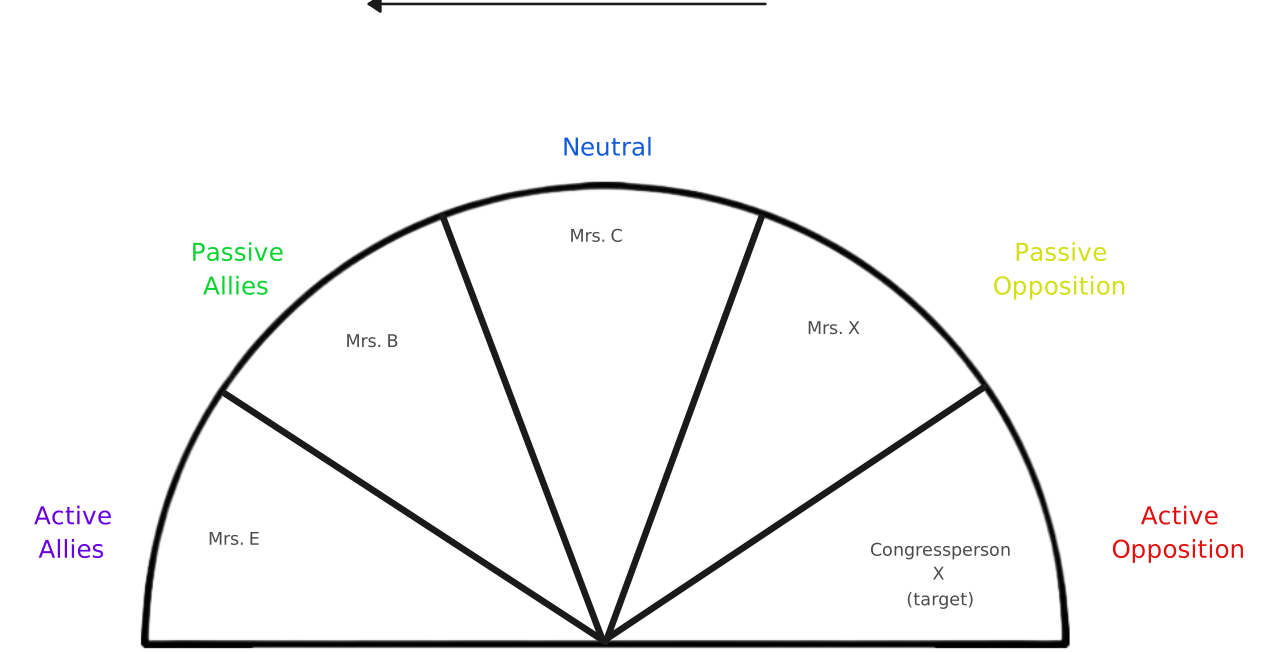
3. Spectrum of Allyship
What it is:
Instead of rigid quadrants, power and support are treated as continuous spectrums.
Each stakeholder falls somewhere along these spectrums, reflecting nuances in influence and alignment.
Why it’s useful:
Captures complex or shifting relationships.
Shows potential allies who are not fully supportive yet or opponents who may be won over.
Flexible when attitudes or influence are fluid.
4. Landscape Analysis (Network / Influence Map)
What it is:
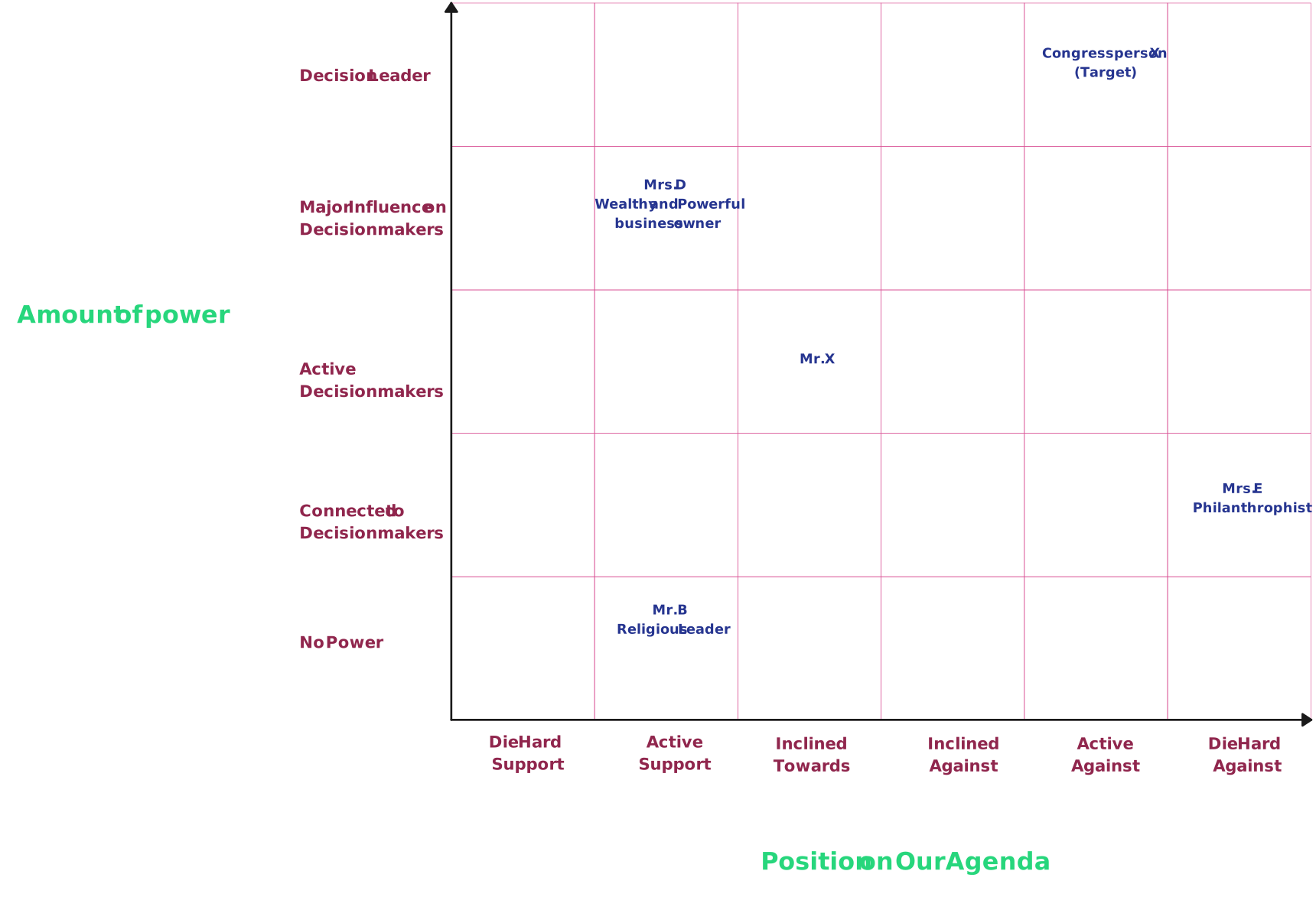
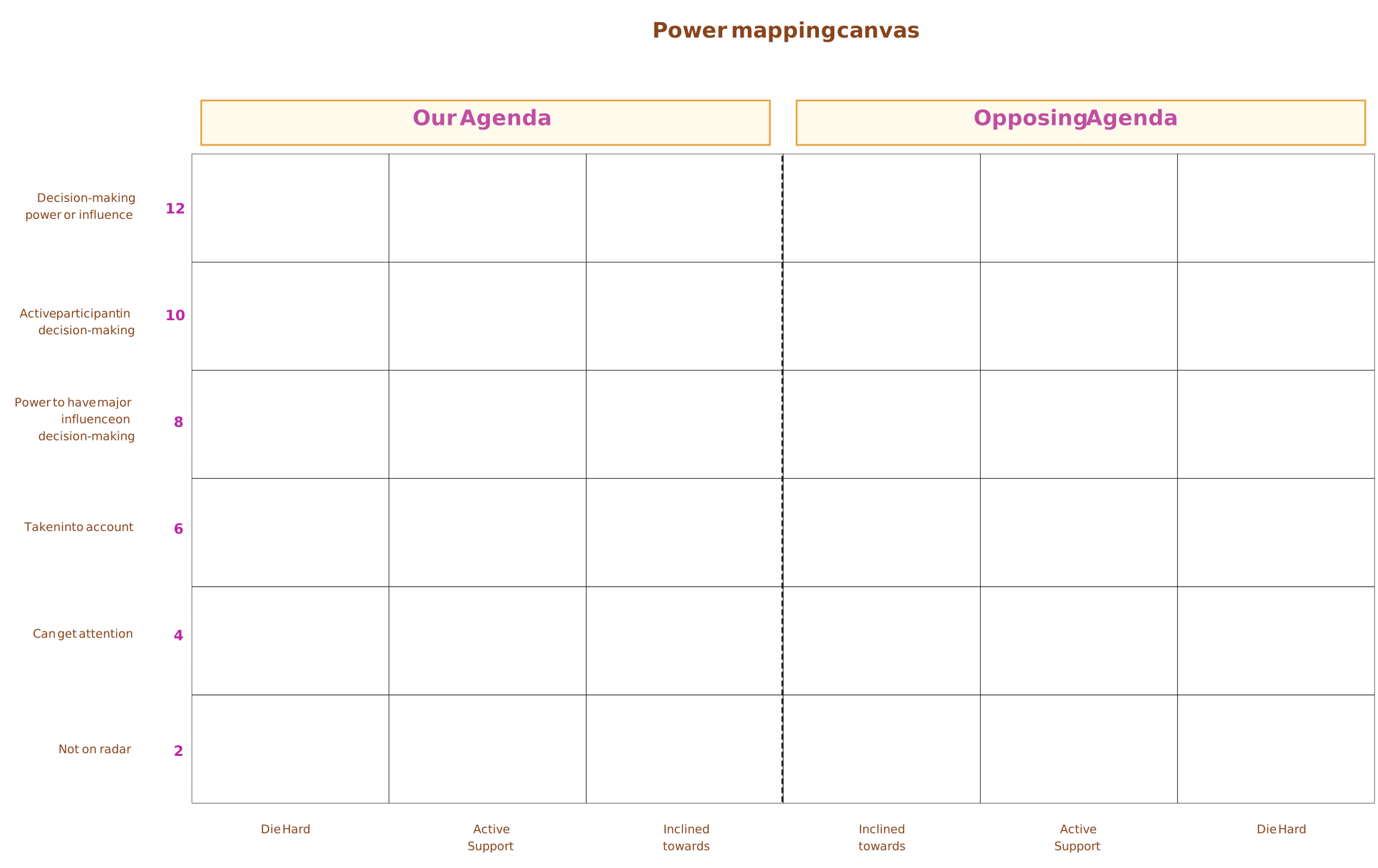
Landscape Analysis is a strategic tool that helps you see who has the power and where they stand on your agenda.
Amount of power – how much influence they have over the decision (e.g., Decision Leader, Active Decisionmaker, Major Influence on Decisionmaking, Connected to Decisionmakers).
Position on your agenda – how aligned they are with your goals (e.g., Die-Hard Support, Active Support, Inclined Towards, Inclined Against, Active Against, Die-Hard Opposed).
Each stakeholder is placed on the graph according to these two dimensions.
Why it’s useful:
Gives a strategic overview of who holds power and whether they support or oppose your agenda.
Helps you prioritize engagement: who to convince, who to maintain, who to monitor, and who to mobilize.
Makes it easier to see leverage points — influential allies, persuadable neutrals, or powerful opponents.
How to Conduct a Power Mapping Exercise
Power mapping is your roadmap to influence. Using Creately, you can make it visual, collaborative, and actionable. Here’s how:
Step 1: Define your goal
What to do:
Be crystal clear about what change you want to see—a policy, project, decision, or organizational shift.
Be specific—vague goals lead to scattered efforts. For example, instead of “increase support for a policy,” focus on “get the city council to approve a community recycling program.”
Using Creately: Start a new canvas or mind-map and place your goal at the center or top using a bold shape, like an oval or rectangle. Add notes or attachments to capture context, constraints, or success criteria—this central goal then becomes your reference point for the rest of the map.
Step 2: Identify your target
What to do:
Determine who has the power to make or block your desired change.
Look beyond formal titles—some people with modest roles may have outsized influence through relationships, networks, or expertise.
Include multiple targets if needed, but prioritize those whose decisions are critical.
Using Creately: Add shapes for each target around your goal and color-code them—green for supportive, red for opposed, and grey for uncertain. Use notes or comments on each shape to record why the person is a target and what kind of power or influence they hold.
Step 3: Research your target
What to do:
Gather intel on the target’s motivations, priorities, alliances, and history.
Consider: What pressures are they under? Who do they listen to? What past decisions can reveal their patterns?
The deeper your understanding, the more strategic your engagement can be.
Using Creately: Attach notes, documents, or links directly to each target shape to store research, media, or other resources. You can also invite team members to add insights or comments in real time, keeping all information in one collaborative space.
Step 4: Map the influencers
What to do:
Brainstorm all people, groups, or institutions that affect or connect to your target.
Include allies, opponents, neutral parties, and informal influencers.
Draw connections: indicate the strength, type, and direction of influence (e.g., mentor, peer, financial backer, media).
Using Creately: Represent each actor and their relationships with shapes and connectors. Customize line styles, colors, and thickness to show the type or strength of influence, and add sticky notes or annotations for quick observations or hypotheses. Take advantage of the infinite canvas to map large networks clearly without clutter.
Step 5: Analyze and prioritize
What to do:
Examine your map to identify:
Key allies who can help you reach your target
Potential blockers who may resist
Hidden influencers who can tip the decision in your favor
Rank actors by power, interest, and accessibility, so your strategy focuses on high-impact connections first.
Using Creately: Aapply labels, color codes, or tags on shapes to indicate roles and influence levels. Organize stakeholders into groups or layers, like allies versus opponents, and collaborate in real time to validate assumptions with your team. You can also duplicate the map to create alternative views, such as power versus support or influence versus accessibility.
Step 6: Plan, act, and track
What to do:
Use your insights to craft a strategic action plan:
Decide who to engage first, how, and in what order
Choose tactics that fit each relationship: coalition-building, persuasive messaging, leveraging shared interests, or public support
Anticipate obstacles and plan contingency approaches
Treat your map as a living document—update it as relationships, priorities, and circumstances change.
Using Creately: Add task shapes or cards linked to specific actors, like “meet X” or “gather info on Y,” and assign responsibilities to team members using comments or task features. Use presentation mode to share your plan with allies or stakeholders, and keep the map dynamic by updating connections, adding new influencers, and tracking progress.
More Power Mapping Tools
Beyond the core types, there are several other stakeholder power mapping approaches you can use to understand influence, relationships, and power dynamics:
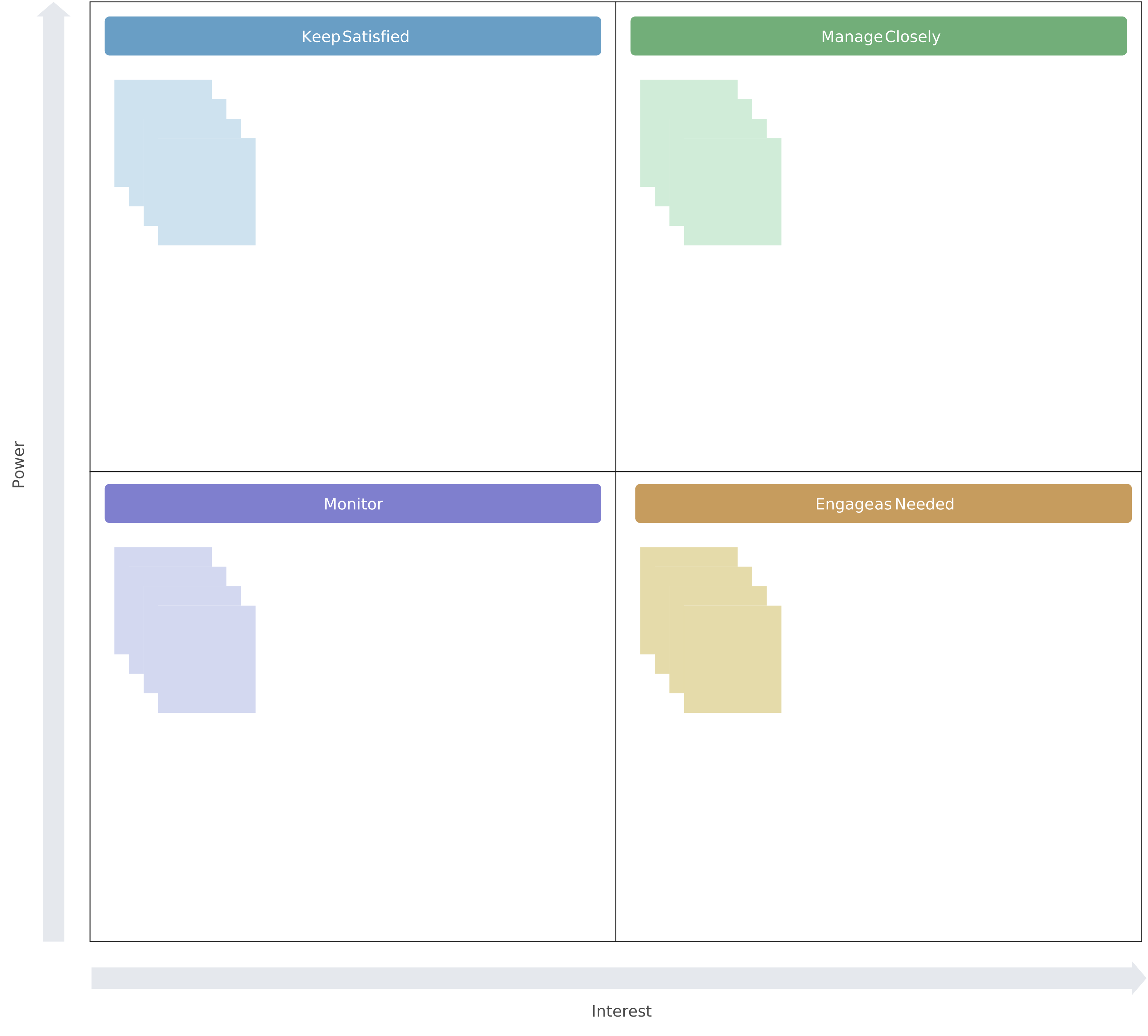
1. Stakeholder Influence Matrix
A visual grid that plots stakeholders based on their level of influence or power and their level of interest or engagement in your issue. The power influence gridhelps teams quickly identify which stakeholders are key players, who to engage closely, who to monitor, and who requires minimal effort. This technique is particularly useful for prioritizing time and resources in campaigns, advocacy, or organizational change.
2. Power/Interest or Power/Attitude Grids
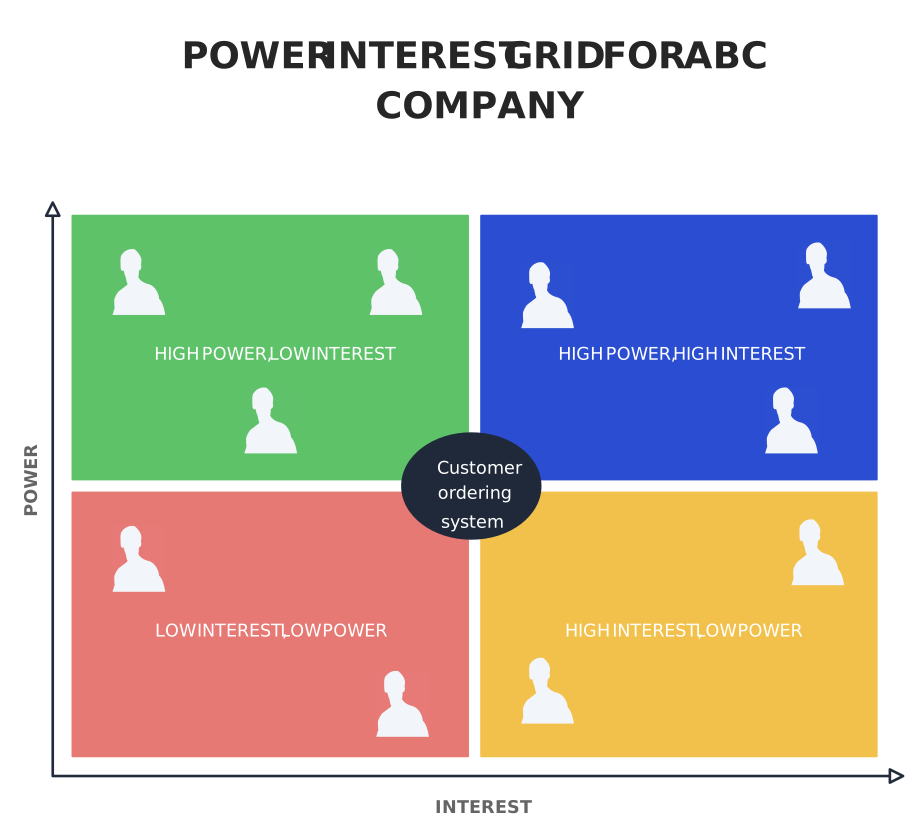
A quadrant-based map that places stakeholders along axes of power versus interest or power versus attitude/support toward your goals. This approach helps you categorize stakeholders as allies, opponents, neutrals, or high-impact players, guiding engagement and advocacy strategies. It’s particularly effective for identifying who to focus on persuading, collaborating with, or monitoring.
Benefits and Limitations of Power Mapping
Power mapping is a high-impact strategic tool, but it’s not magic. Think of it like a compass — it shows direction and highlights the terrain, but you still need to navigate carefully, gather intel, and adapt as the landscape changes. Done right, it gives you a huge advantage in advocacy, campaigns, workplace influence, or organizational change.
| Aspect | Benefits | Limitations |
| Understanding Power | Reveals hidden influencers, behind-the-scenes allies, and subtle dynamics. | Influence is subtle and context-dependent; some power may remain invisible. |
| Prioritization | Helps focus efforts on stakeholders with real power and potential alignment. | Requires accurate and up-to-date information; missing data can create blind spots. |
| Strategic Planning | Identifies levers, pathways, and pressure points for targeted action. | Can oversimplify complex relationships; charts may miss emotional, cultural, or social nuances. |
| Alliances & Engagement | Spot potential supporters early and build coalitions effectively. | Time-consuming to research, map, and maintain accurate stakeholder information. |
| Adaptability | Tracks shifts in influence or position, keeping strategy flexible. | Misinterpreted maps can cause confusion or political tension if shared without context. |
| Communication | Provides a visual tool for teams to understand influence flows and stakeholder priorities quickly. | Visual maps alone may not fully capture underlying motivations or informal power structures. |
Power Mapping Examples
Now that you know what is a power map and how to create one, here are ready-to-use templates to get a head start.
Power Mapping Template
Power Mapping Example
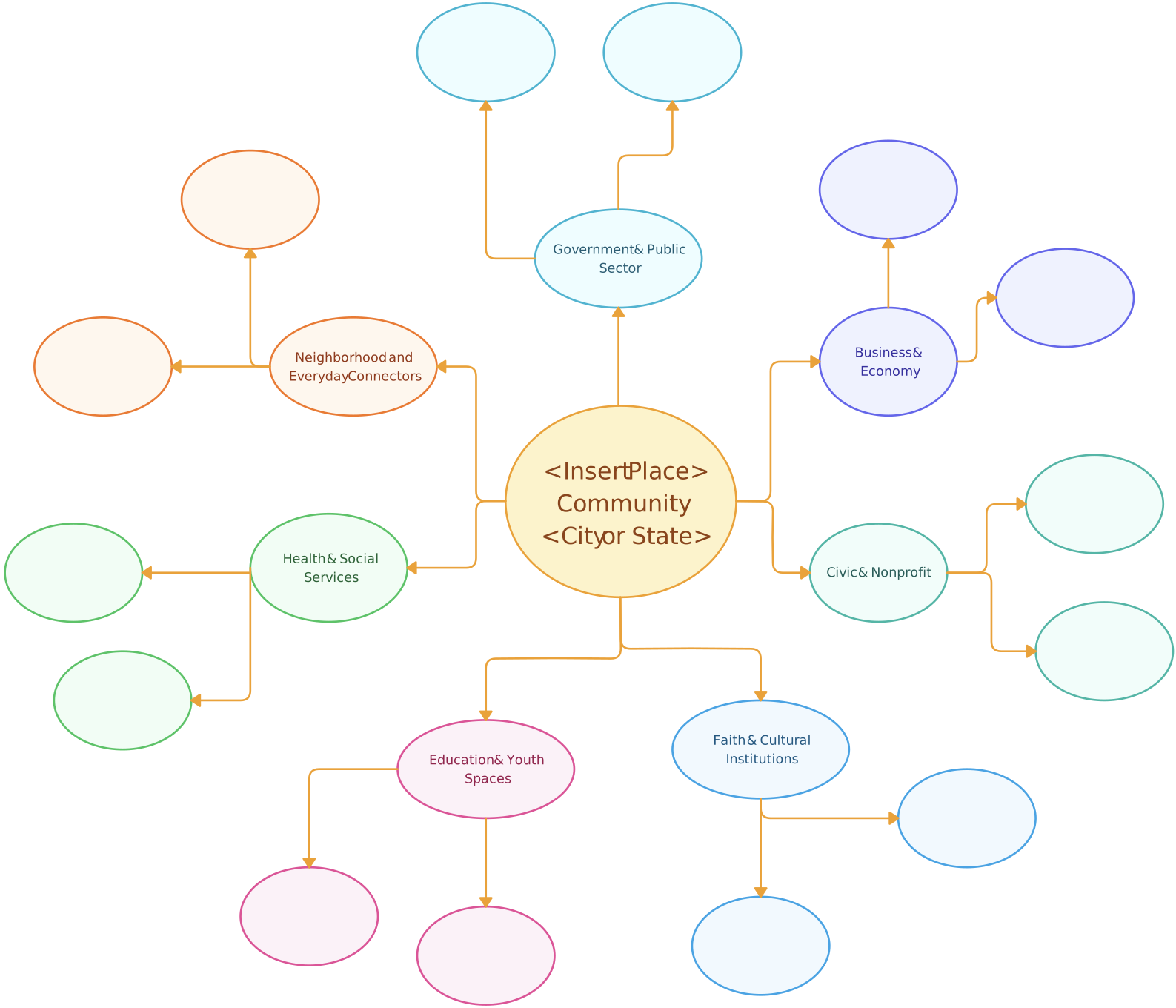
Community Power Map
Power Mapping Canvas
References
WATCHDOG HOW-TOS. (n.d.). Available at: https://www.ucs.org/sites/default/files/attach/2018/07/SN_Toolkit_Power_Mapping_Your_Way_to_Success.pdf.
Boyles, M. (2022). Power mapping: What it is & how to use it. [online] Business Insights Blog. Available at: https://online.hbs.edu/blog/post/power-mapping-what-it-is-and-how-to-use-it.
Anyone trying to make change: Start with three layers: Decision-makers — who can say “yes” or “no.” Influencers — people or organizations they listen to or rely on. Allies & opposition — who will push with you or push against you. Mapping is iterative — you refine as you learn more. Look for: Influence is often invisible and relational — not in org charts. You know it’s good if: A power map that sits untouched is just a drawing. Use guardrails:FAQs About Power Mapping
Who should use power mapping?
How do you decide who to put in a power map?
Can power mapping work for small campaigns or local issues?
How do you find hidden influencers?
How do I know if my power map is “good”?
How do you handle ethical dilemmas in power mapping?