PEST Analysis Definition
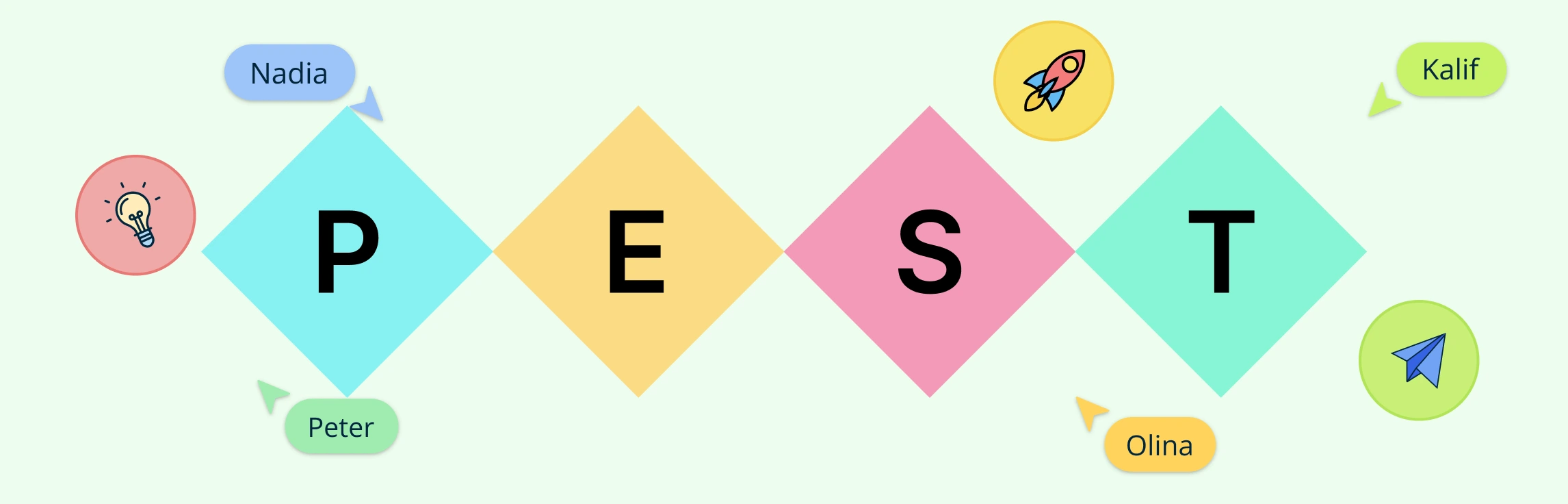
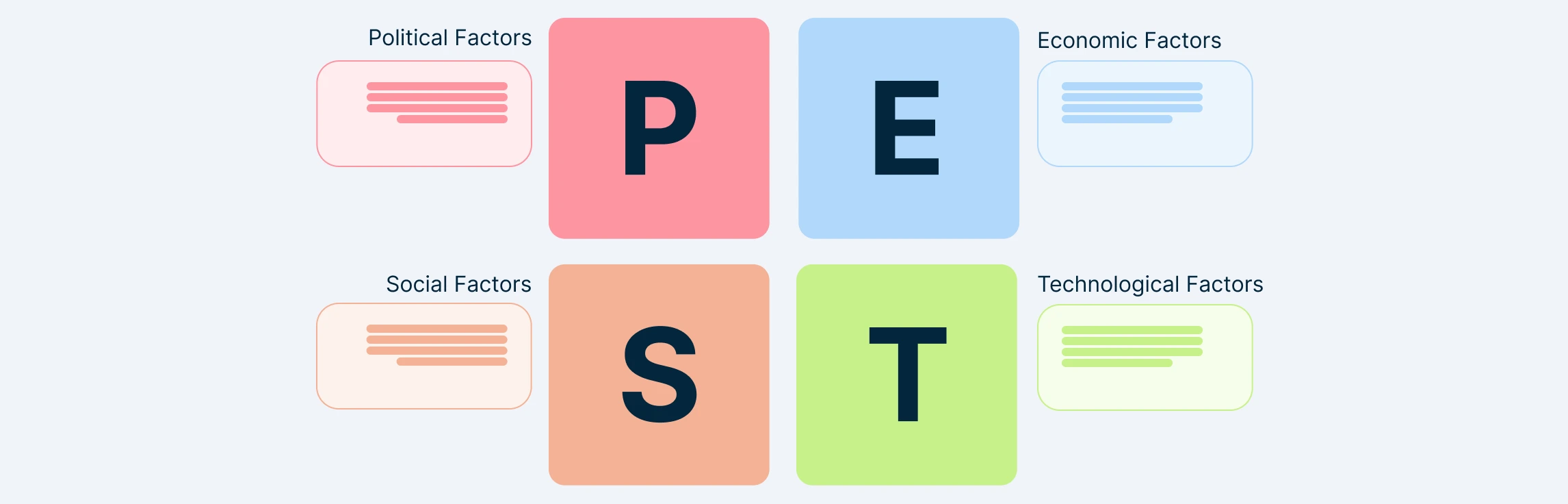
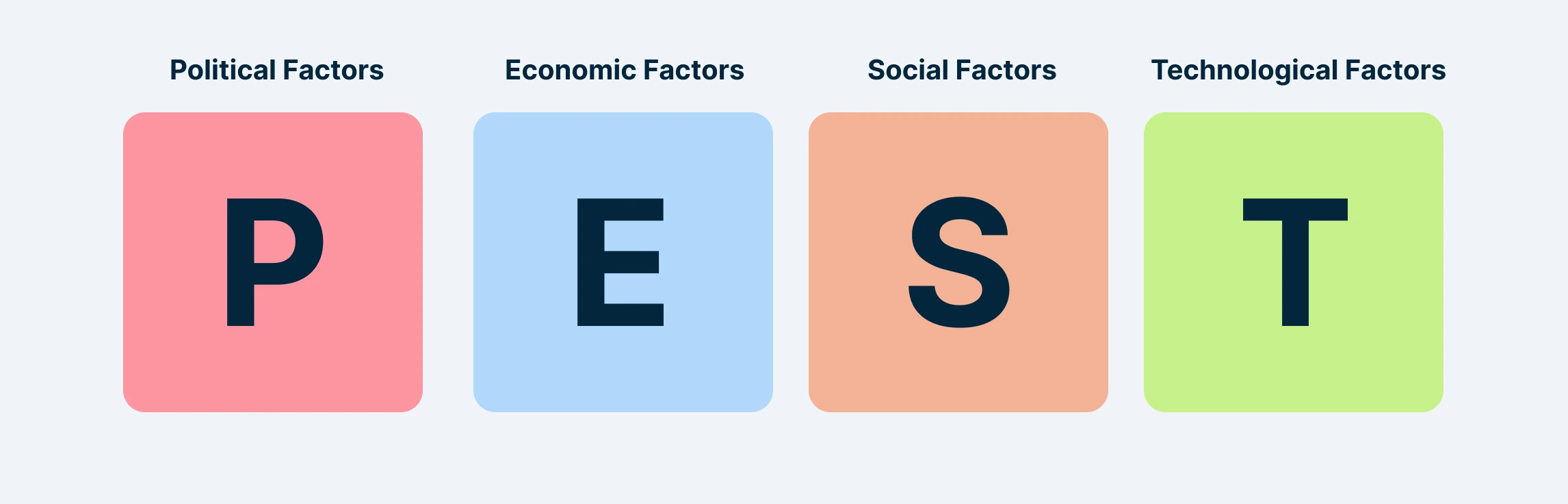
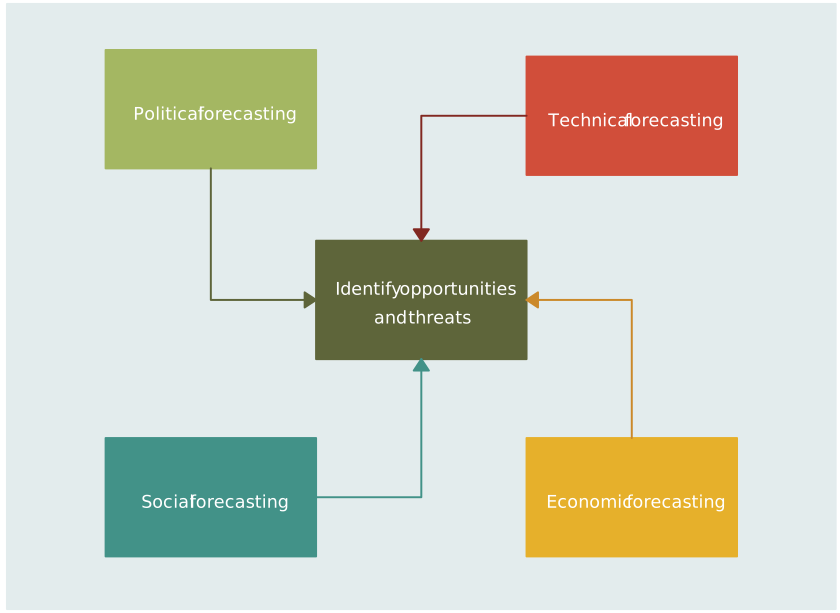
PEST analysis is a strategic framework used to identify and assess the external macro-environmental factors that may impact an organization’s performance. It categorizes these influences into four key factors: Political, Economic, Social, and Technological, providing a structured approach for evaluating potential opportunities and threats in the external environment.
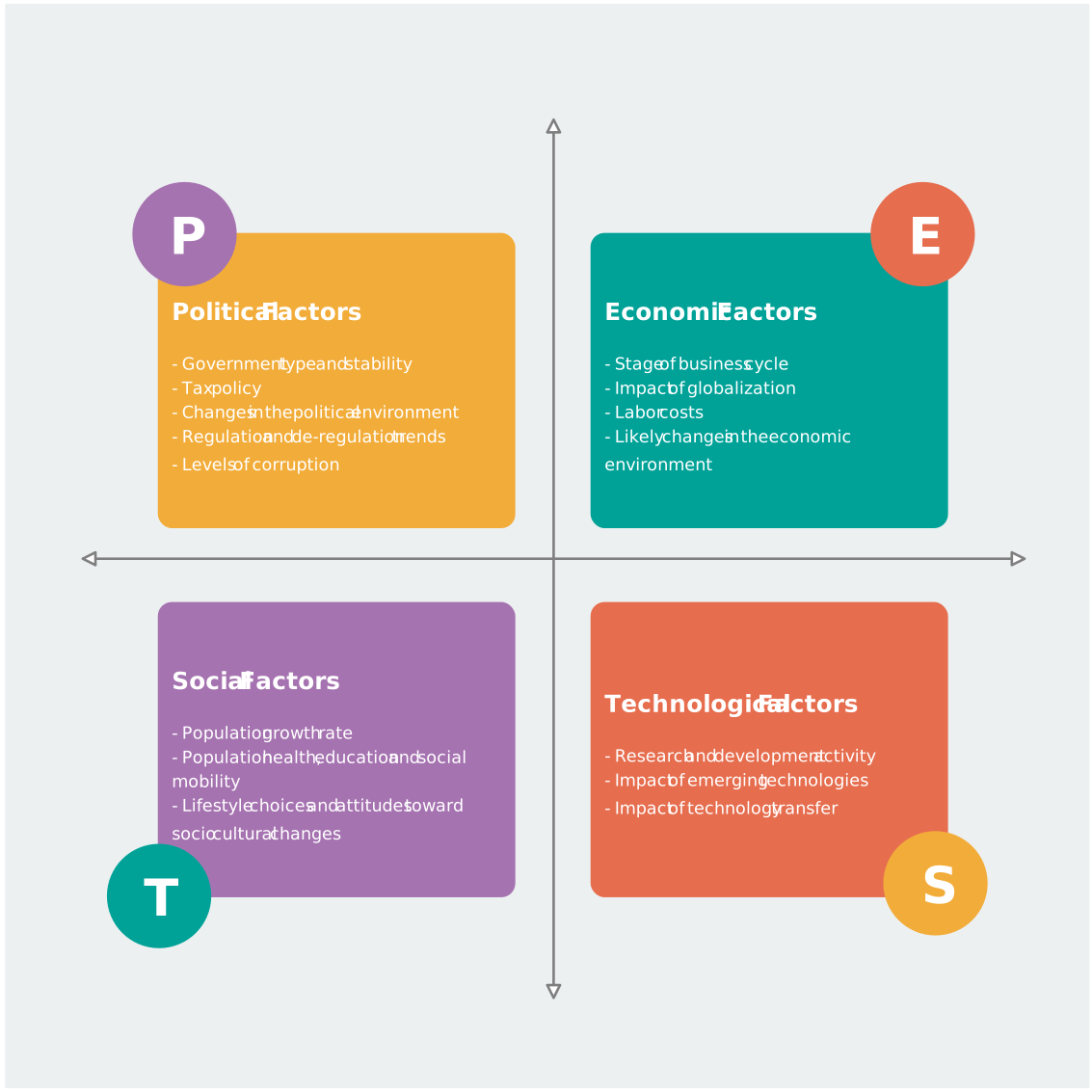

Key Factors of a PEST Analysis
Political Factors
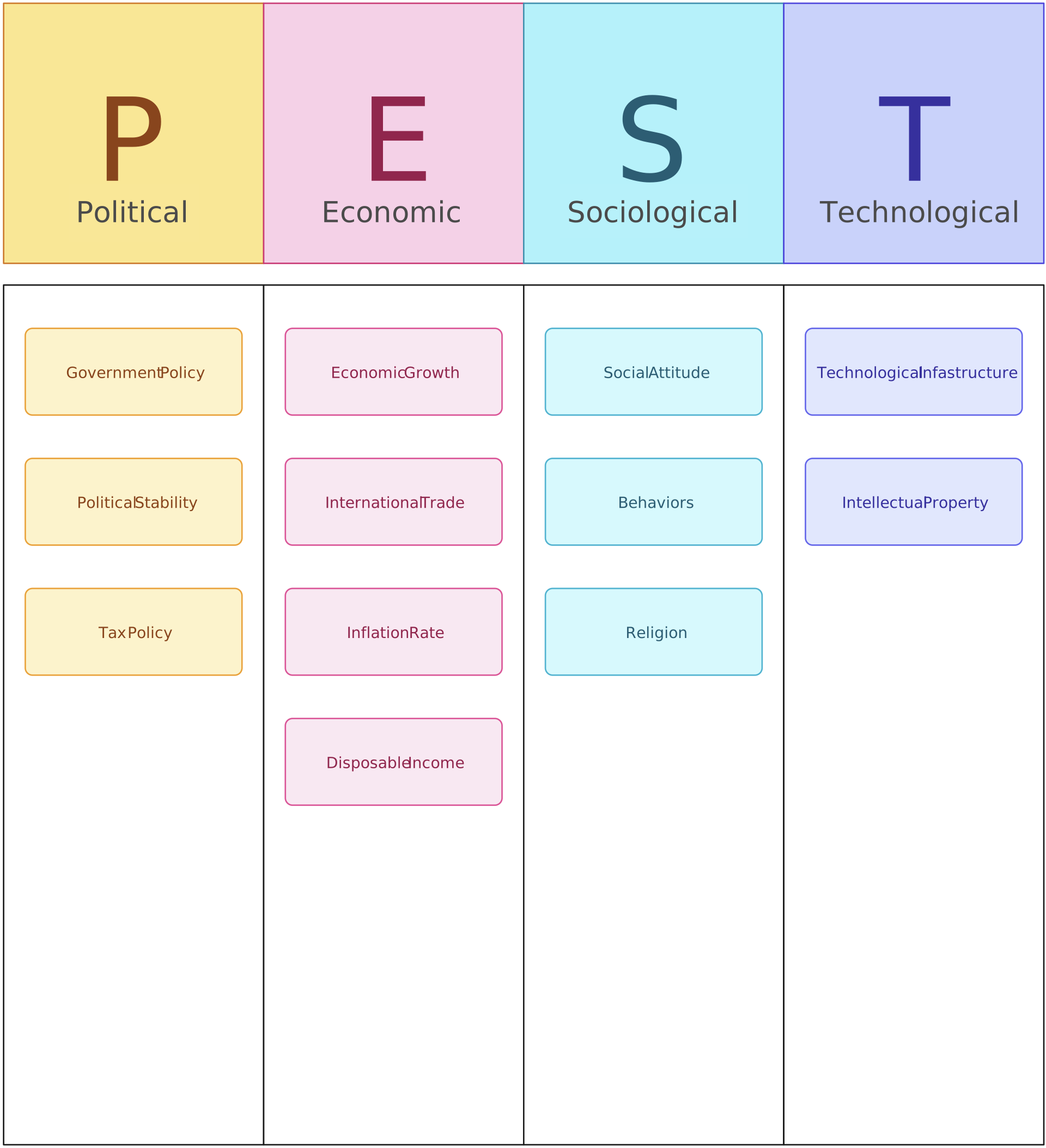
Political factors cover government policies, regulations, and stability. Businesses must track leadership changes, trade laws, and labor policies—especially when expanding globally—to adjust strategies and stay compliant.
Economic Factors
Economic factors like GDP, inflation, interest rates, and employment affect consumer spending. Monitoring income levels, credit access, and economic trends helps with pricing, forecasting, and market planning.
Social Factors
Social factors include demographics, lifestyle trends, and cultural values. Changes in age groups, urbanization, and attitudes toward sustainability or diversity can shape product demand and marketing.
Technological Factors
Technological factors involve innovation and digital trends. Keeping up with new technologies helps businesses improve operations, adapt offerings, and stay competitive in evolving markets.
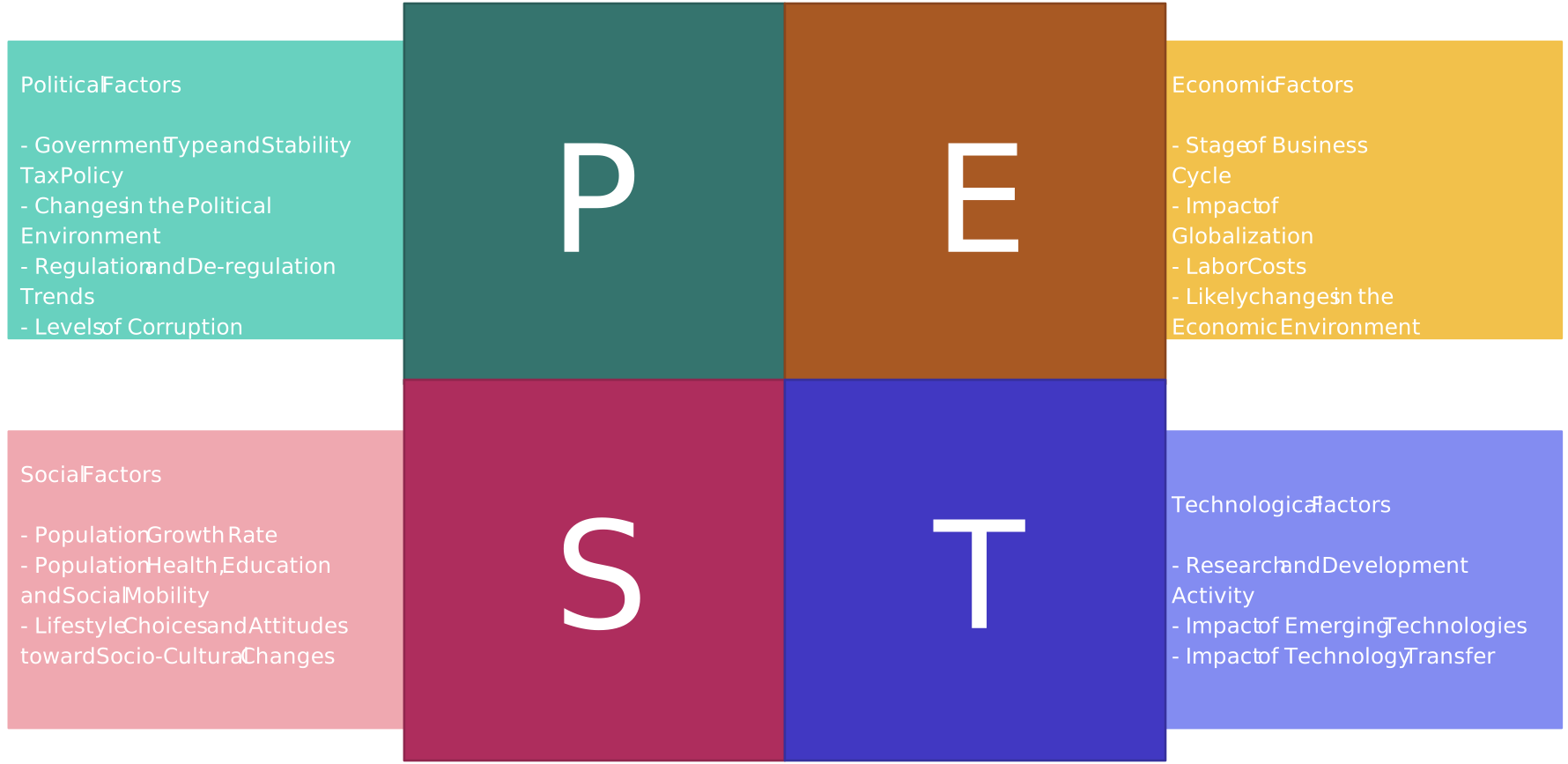
Uses of PEST Analysis
- Guides long-term strategic decisions by monitoring political, economic, social, and technological trends.
- Helps identify opportunities and threats beyond an organization’s internal factors.
- Supports risk mitigation by forecasting regulatory changes or policy shifts.
- Complements other frameworks such as SWOT analysis, and Porter’s Five Forces for a more complete picture.
- Enhances stakeholder alignment through a shared view of the external environment.
How to Do a PEST Analysis in Creately
Step 1: Define Objectives and Scope
Clarify the market, business unit, or product focus, set a timeline, and establish specific analysis goals.
Step 2: Assemble a Cross-functional Team
Include representatives from marketing, strategy, finance, product development, operations, and legal to ensure a comprehensive coverage of relevant areas.
Step 3: Select a PEST Analysis Template
Choose a PEST analysis template from Creately’s template library to jumpstart your analysis and align on framework structure. You can rename the template headings or customize the template visually to match your company style.
Step 4: Gather and Categorize Data
Collect insights under Political, Economic, Social, and Technological PEST factors using credible secondary research, primary interviews, and real-time data sources.
Step 5: Brainstorm Impacts
Brainstorm with your team to assess how each factor influences strategic objectives, operational risks, and competitive positioning. Invite colleagues to comment, co-edit, and brainstorm in real-time on Creately’s shared visual workspace.
Step 6: Visualize Findings
Use the chosen PEST analysis template, along with other diagrams and flowcharts in one shared workspace to map external trends, spot connections, and gather stakeholder input.
Step 7: Prioritize Factors
Rate each factor based on probability, potential impact, and strategic relevance, focusing resources on high-priority external trends.
Step 8: Export and Present
Summarize key insights, highlight external factors, and outline recommended actions—formatted and ready to share with stakeholders. With Creately, you can instantly generate slide decks from your PEST analysis, and export them in the image format of your choice (PNG, SVG, JPEG, or PDF).
Step 9: Review and Iterate
Schedule quarterly or event-triggered updates, revisit data sources, validate assumptions, and refine rankings as external conditions change. Creately allows you to track changes in real time, and preserves version history for auditability and alignment.
Step 10: Use AI to do the PEST Analysis
Select Creately’s AI PEST Analysis template from the template library. Enter a brief description of your business or market into the prompt box, and the AI will generate relevant political, economic, social, and technological factors. You can then review, customize, and collaborate on the analysis before sharing or exporting it.
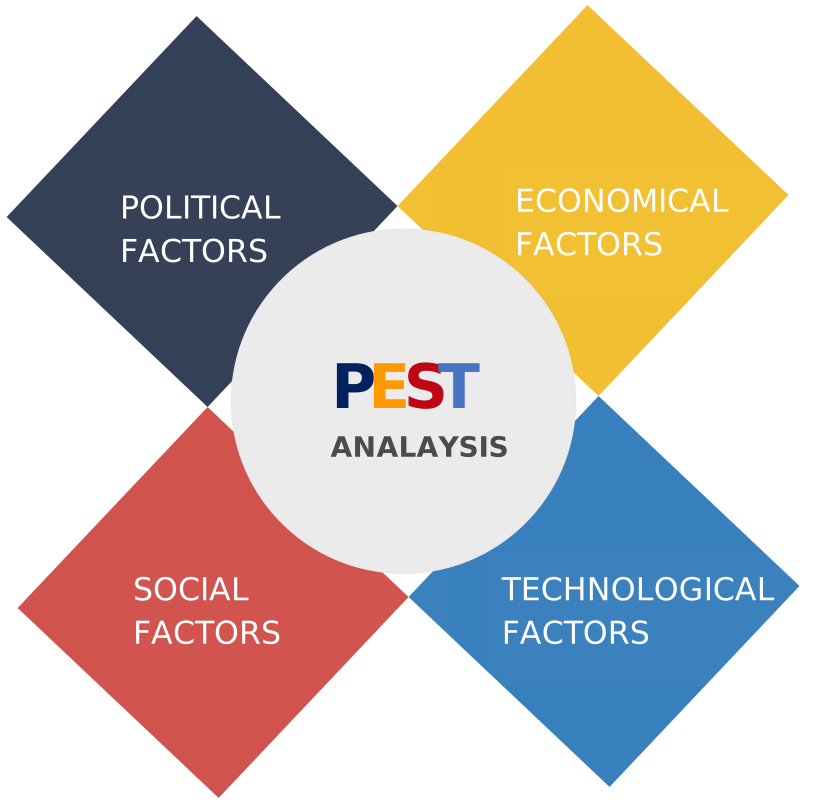
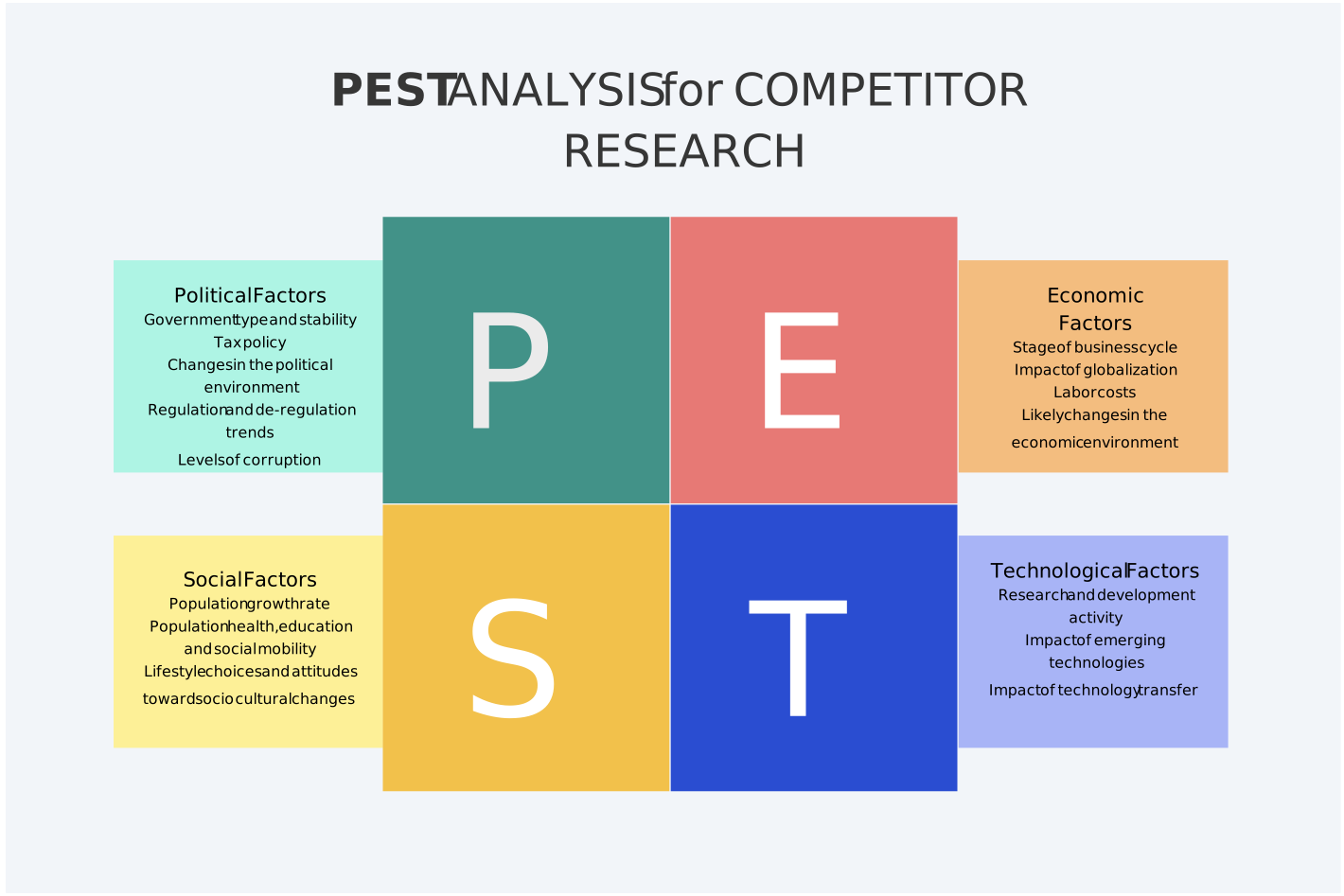
Free Templates for PEST Analysis By Creately


Helpful Resources for PEST Analysis
Use this AI-powered tool to speed up your PEST analysis.
Learn how to conduct a PEST analysis using key PEST factors.
A comparison PEST and SWOT Analysis and how they complement each other.
FAQs about PEST Analysis
What are the limitations of PEST Analysis?
When should I use a PEST Analysis?
How is PEST analysis different from SWOT analysis?
What is the difference between PEST vs PESTLE?
What tools can I use to conduct a PEST Analysis?
Can I customize the PEST framework?
Is PEST useful for small businesses or startups?
Resources
Yuksel, I. (2012). Developing a Multi-Criteria Decision Making Model for PESTEL Analysis. International Journal of Business and Management, [online] 7(24), pp.52–66. doi:https://doi.org/10.5539/ijbm.v7n24p52.
Carruthers, H. (2009). Using PEST Analysis to Improve Business Performance. In Practice, 31(1), pp.37–39. doi:https://doi.org/10.1136/inpract.31.1.37.