Leadership transitions rarely fail because they’re unexpected. They fail because organizations can’t clearly see who’s ready, where the gaps are, and what happens if a key leader leaves. This guide explains how succession planning org charts help HR leaders, People Ops teams, and executives move beyond scattered spreadsheets and static diagrams. You’ll learn when to use them, what problems they solve, and how to build one step‑by‑step. Finally, we’ll cover best practices to follow when using org charts for succession planning, pitfalls to avoid, and how to turn succession planning into an ongoing decision system, not a once‑a‑year exercise.
What Is a Succession Planning Org Chart?
A succession planning org chart is a visual representation of your organization that goes beyond reporting lines to show leadership continuity.
It maps:
- Critical roles and positions
- Potential successors for each role
- Readiness levels (for example: ready now, ready soon, long‑term)
- Risk indicators such as single points of failure or no successor coverage
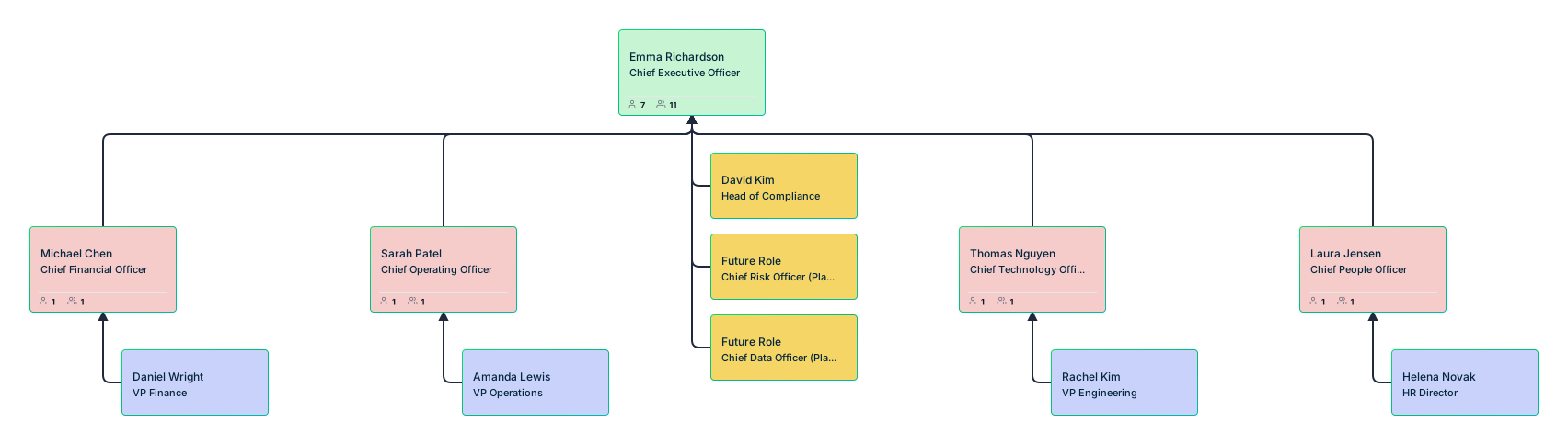
- Vacant or future positions that must be planned for
Unlike a standard org chart, which reflects today’s structure, a succession planning org chart focuses on future readiness, helping organizations anticipate disruption instead of reacting to it. For more on the different stages of succession planning, and its advantages, read our succession planning guide.
Why Succession Planning Org Charts Matter
Succession planning often fails not because organizations don’t care, but because the information lives in too many places. Organizational charts for succession planning strategy bring fragmented data together into one visual source of truth, making leadership risk visible and actionable.
Expose Hidden Leadership Risk
Quickly identify roles with no successors, weak bench strength, or over‑reliance on a single individual before those risks escalate into operational problems.
Support Evidence‑based Decisions
Replace subjective opinions with visual signals that combine readiness, performance, tenure, and role criticality in one view.
Enable Proactive Workforce Planning
Model retirements, internal promotions, hiring delays, or restructures so leadership teams can evaluate outcomes before making commitments. To learn how this works, read the workforce planning guide.
Create Board‑ready Clarity
Succession pipelines are easier to communicate visually than through dense tables or slide decks, especially during executive and board discussions.
Common Use Cases for Succession Planning Org Charts
Succession planning org charts are used across multiple HR and leadership workflows, including:
- Leadership and executive succession reviews
- Annual talent reviews and 9‑box grid discussions
- Identifying single points of failure in critical teams
- Preparing for retirements, acquisitions, or leadership exits
- Scenario planning for growth, reorgs, or downsizing
- Tracking successor readiness and development progress over time
How to Create a Succession Planning Org Chart
While organizational charts for succession planning can be created in many ways, using Creately’s succession planning org chart software makes it easier to model roles, assign successors, visualize readiness, and explore scenarios without relying on fragile spreadsheets or static diagrams. Here are the steps to make one.
Step 1: Identify Critical Roles
Start by identifying roles that would significantly impact the business if left unfilled. These often include executive roles, leadership positions, and roles with specialized or institutional knowledge. Focus on role importance, not just seniority.
Step 2: Model Positions Separately From People
Succession planning works best when org charts are position‑based rather than person‑based. Each critical role should exist as its own entity, even if it’s currently vacant so successors can be planned independently of current role holders.
Step 3: Assign Potential Successors
For each role, identify one or more potential successors. These may be internal candidates at different stages of readiness. Link successors directly to the role they may inherit, not just to their current manager.
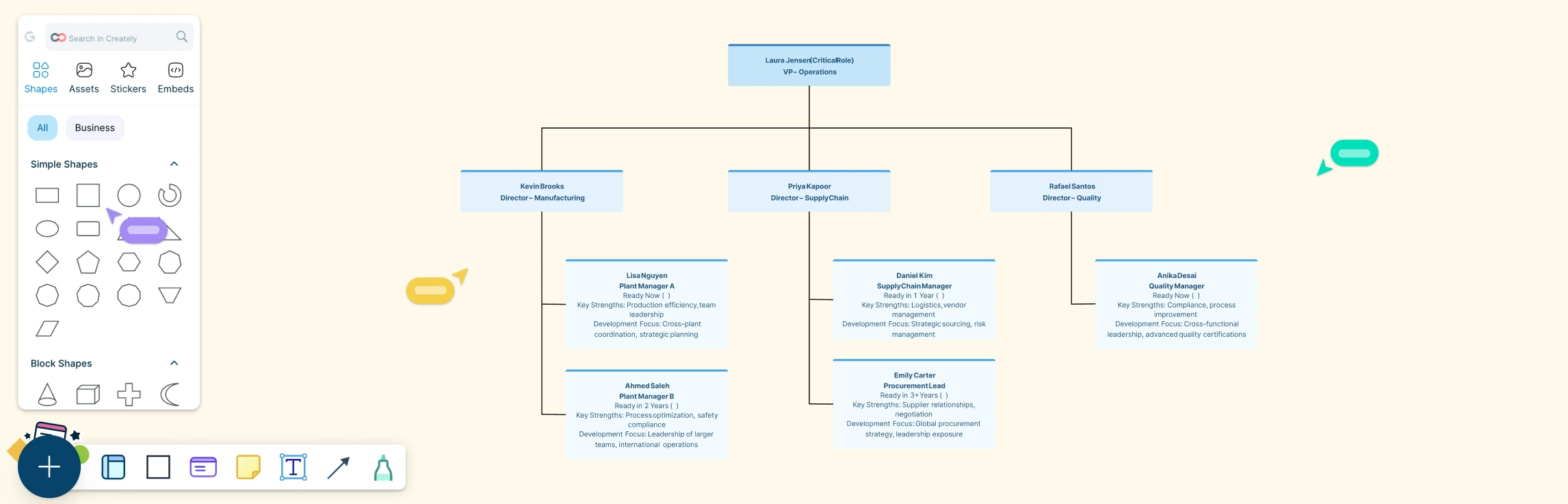
Step 4: Define Readiness Levels
Apply a consistent readiness framework across the organization, such as:
- Ready now
- Ready in 1–2 years
- Ready in 3+ years
- No identified successor
Clear definitions ensure alignment and prevent subjective interpretation.
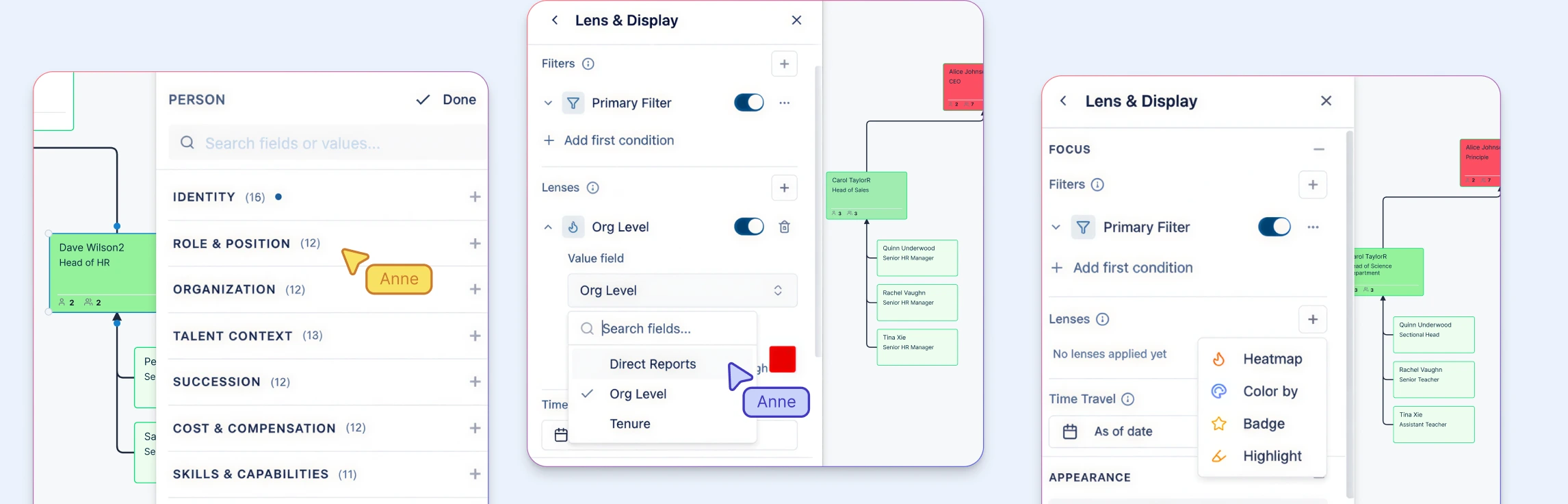
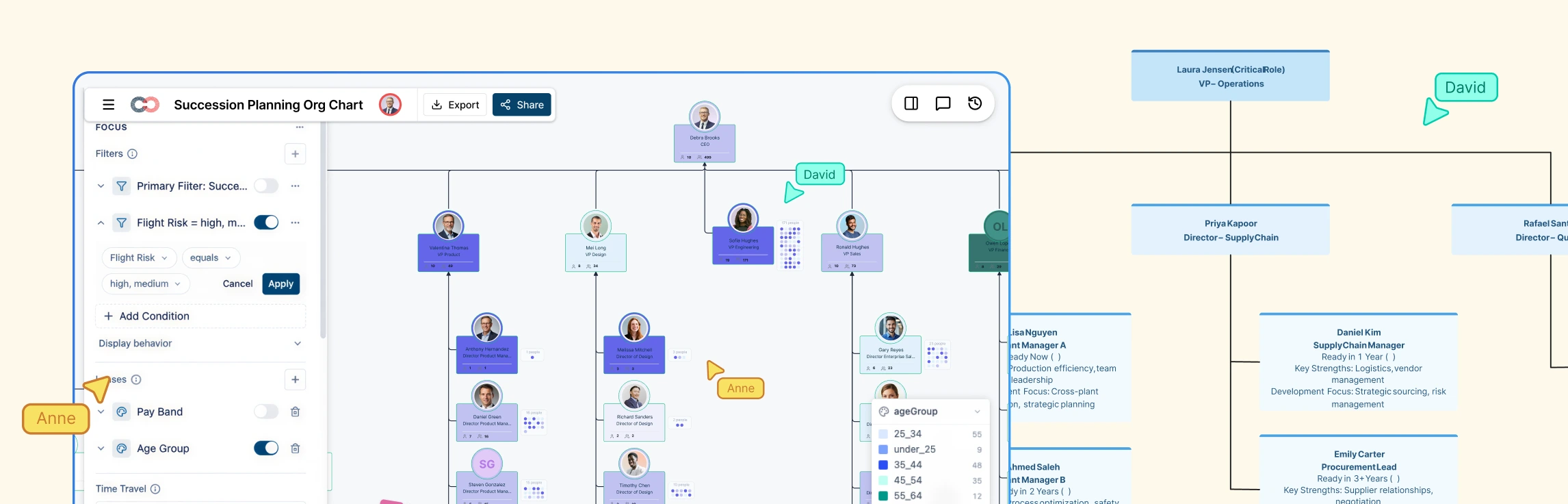
Step 5: Add Risk and Context
Layer in additional context that affects succession decisions, including:
- Roles with only one successor
- Vacant but critical positions
- High flight‑risk employees
- Leaders approaching retirement
- Long ramp‑up or specialized roles
This transforms the org chart from a planning artifact into a risk management tool.
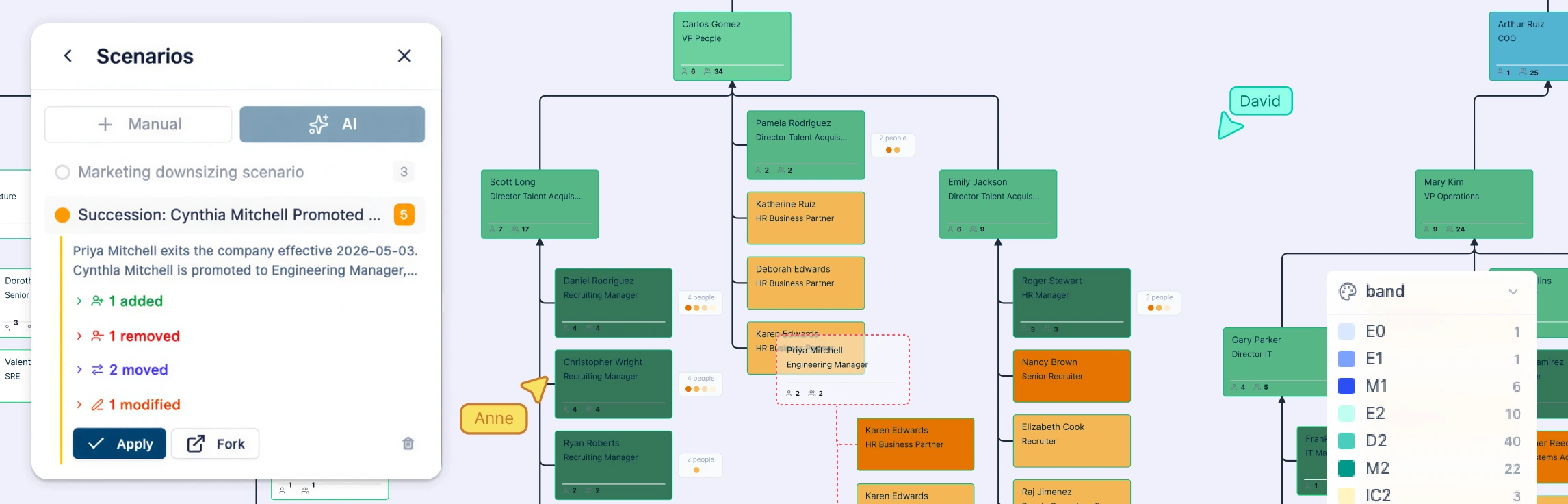
Step 6: Create Scenario Views
Use scenarios to explore “what‑if” situations such as:
- Sudden leadership departures
- Internal promotions
- Hiring freezes or delays
- Organizational restructures
Scenario planning allows teams to evaluate outcomes without altering the live org structure.
Best Practices for Succession Planning Org Charts
Keep The Org Chart Current
A succession planning org chart loses credibility when reporting lines, role ownership, or successor assignments aren’t updated as people move or leave.
Control Visibility At The Chart Level
Succession readiness, risk indicators, and compensation‑related signals should be governed by role‑based access—so managers see what’s relevant without exposing sensitive leadership data.
Standardize Readiness Indicators On The Chart
Use consistent labels, colors, or tags for readiness levels across the org chart so leaders interpret succession status the same way in every department.
Review The Chart On A Set Cadence
Quarterly reviews of the succession planning org chart help surface emerging gaps, overloaded successors, and new critical roles before annual planning cycles.
Link The Chart To Development Actions
An organizational chart for succession planning should not just display names—it should clearly signal where development plans are needed to move successors toward readiness.
Common Pitfalls to Avoid When Using Org Charts for Succession Planning
Treating The Chart As A Static Document
When succession org charts are updated only once a year, they stop reflecting real organizational risk.
Hiding Leadership Gaps In The Visualization
Suppressing roles with no successors or weak bench strength undermines the chart’s purpose as a risk‑visibility tool.
Building Succession Charts In Spreadsheets
Spreadsheet‑based org charts break as soon as reporting lines change and make it difficult to visualize multi‑successor or scenario‑based planning.
Assigning A Single Successor Per Role
An organizational chart for succession planning should highlight depth, not just a single backup, especially for high‑impact leadership roles.
Excluding Vacant Or Future Positions
Failing to represent unfilled but critical roles in the org chart leads to reactive hiring instead of proactive succession planning.
Succession planning works best when leadership readiness and risk are visible, not buried in disconnected documents. By using org charts for effective succession planning, organizations gain a clear, shared view of critical roles, successor depth, and future gaps, making it easier to plan proactively, respond confidently to change, and build leadership continuity over time.
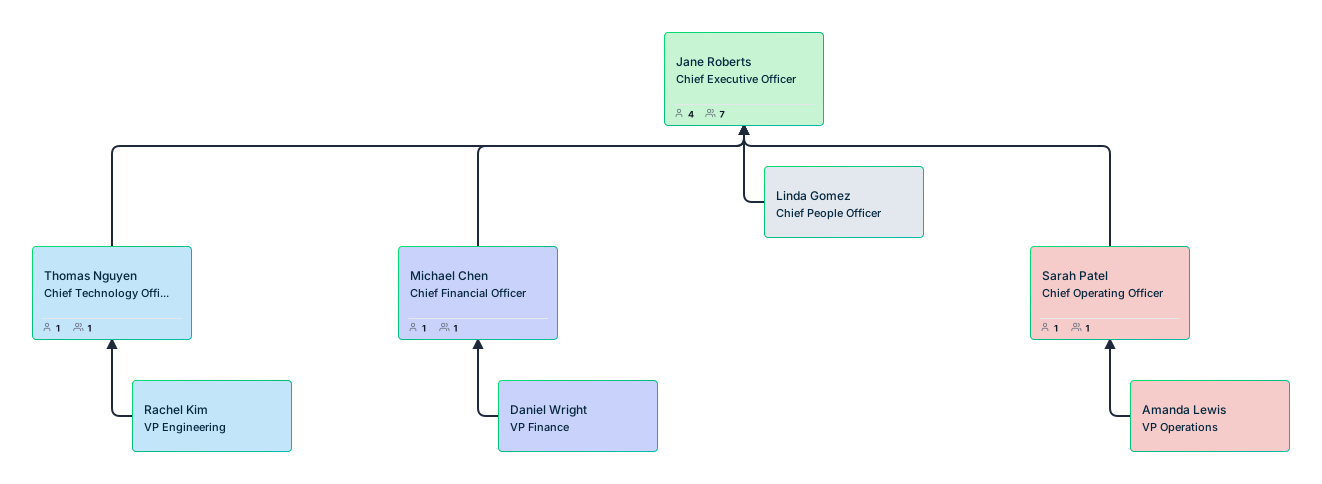
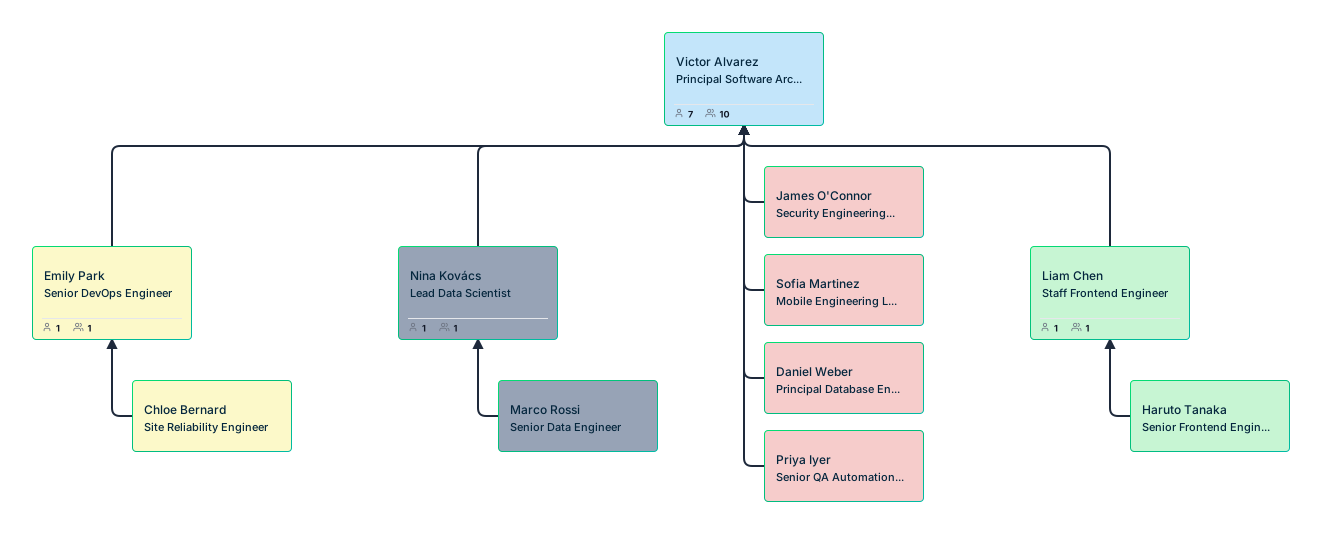
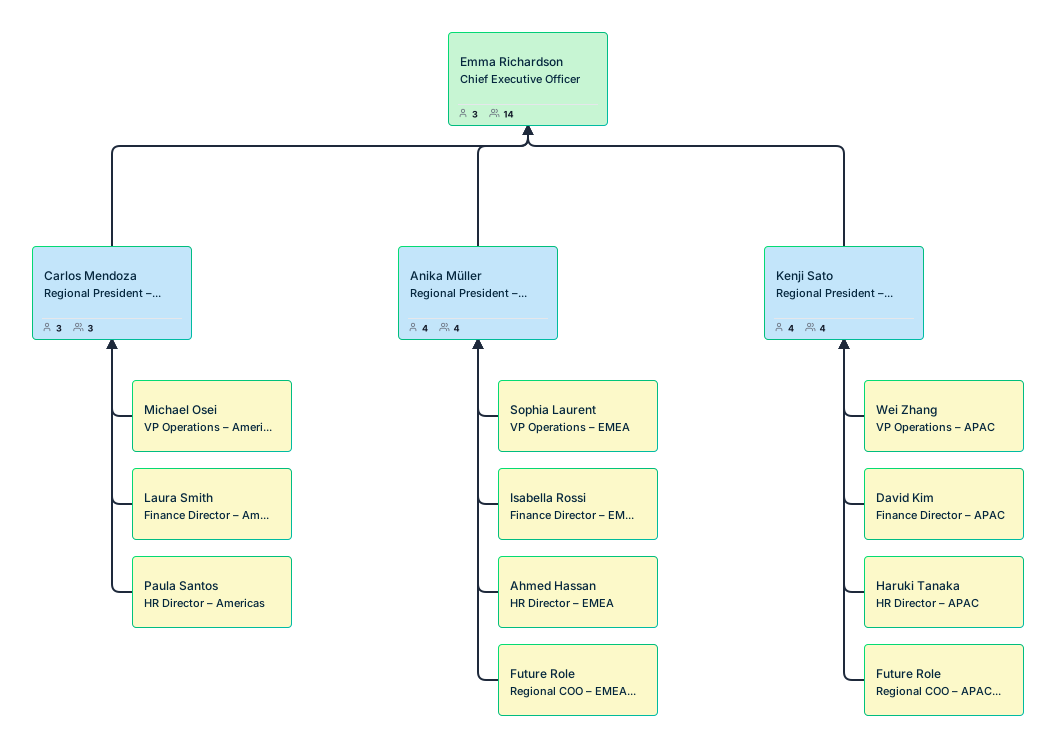
Free Succession Org Chart Templates to Get Started


Helpful Resources for Succession Planning
Learn how to make a succession plan that aligns with your company growth strategy.
Explore the succession planning frameworks for your leadership strategy while comparing the big three succession planning models.
Discover real-world succession planning examples for different use cases.
FAQs about Succession Planning Org Charts
What’s the difference between an org chart and a succession planning org chart?
Should succession planning be position‑based or person‑based?
How often should succession plans be reviewed?
Can succession planning org charts support scenario planning?
References
Mark, Scott M. “Succession Planning: The Forgotten Art.” Hospital Pharmacy, vol. 43, no. 7, July 2008, pp. 593–600, https://doi.org/10.1310/hpj4307-593.
Martin, Christina M., and Kristen O’Shea. “Succession Planning for Organizational Stability.” Nursing Management, vol. 52, no. 4, Apr. 2021, pp. 12–20, https://doi.org/10.1097/01.numa.0000737612.48252.0a.