Leadership transitions often expose gaps that weren’t visible before like unclear ownership, outdated plans, or roles no one was ready to step into. This guide covers the core succession planning best practices that help organizations avoid those moments, along with common mistakes to watch for, how practices differ by role and organization size, and what to focus on as succession planning evolves over time.
Why Succession Planning Best Practices Matter
Succession planning best practices exist because leadership transitions rarely go as smoothly as teams expect. When roles change unexpectedly or plans lose momentum, these practices help bring clarity and confidence back into the process. They reflect what experienced organizations rely on to keep succession planning fair, focused, and trusted over time, so leadership continuity feels prepared, not reactive.
Core Best Practices for Successful Succession Planning
Succession planning works best when a few fundamentals are consistently in place. These core best practices help keep the process clear, trusted, and sustainable, especially as leaders, priorities, and teams change.
Define What Success Looks Like in Each Role
Succession planning works best when there is clarity on what future success requires. Identifying which roles matter most, the capabilities they demand, and how expectations may evolve ensures successors are being prepared for the outcomes the organization needs next.
Clarify Which Roles Are in Scope
Clearly communicating which roles are included, and which are not, reduces uncertainty and speculation. Setting boundaries early helps employees understand the purpose of succession planning and how it connects to their career paths.
Establish Clear Governance and Decision Criteria
Strong governance keeps succession planning objective and aligned with business priorities. Clear decision standards, review forums, and accountability help reduce bias and ensure leadership decisions are made with consistency and confidence.
Assign Clear Responsibility and Accountability
Defined ownership keeps succession planning moving forward. When responsibilities such as maintaining visibility, reviewing outcomes, and driving follow-up are clear, the process remains active and accountable over time.
Maintain Reliable, Current Talent Data
Reliable data is the foundation of credible succession decisions. Up-to-date information on roles, readiness, and development progress ensures leaders are working from a shared, trusted view of the talent landscape.
Plan Across Short, Mid, and Long-Term Horizons
Effective succession planning balances immediate coverage with long-term readiness. Looking ahead across multiple time horizons helps organizations anticipate leadership needs driven by retirements, turnover patterns, engagement trends, and skill shifts.
Maintain a Regular Review and Assessment Cycle
Succession planning should operate as an ongoing cycle rather than a one-time exercise. Regular reviews and talent assessments help keep risk, readiness, and potential evaluations accurate as roles, individuals, and business priorities evolve.
Enable Employee-Owned Development Plans
Succession planning delivers value when it leads to action. Employee-owned development plans, supported by manager input and regular review, help translate succession insights into meaningful progress toward future roles.
Reward Leaders Who Build Talent Pipelines
Succession pipelines are stronger when leaders are encouraged to develop talent beyond their own teams. Recognizing this behavior reduces talent hoarding and reinforces development as a core leadership responsibility.
Leverage Technology to Support Succession Planning
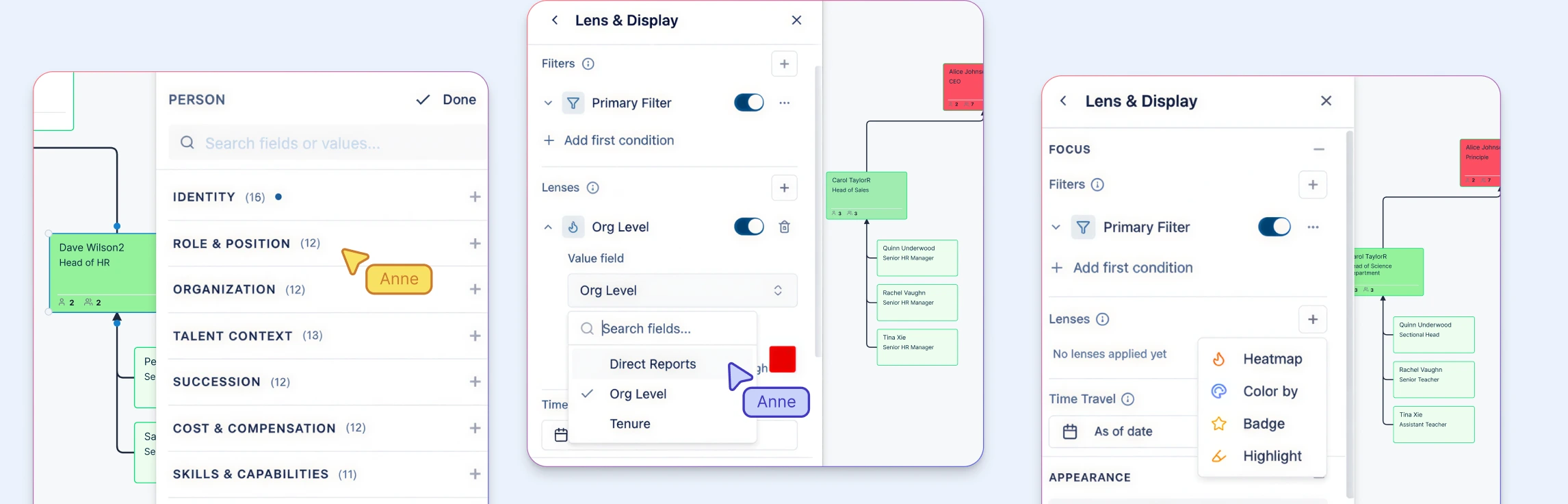
Technology helps keep succession planning flexible and current. Centralized tools make it easier to track readiness, update plans as people grow or change direction, and share insights across leadership teams.
These best practices help keep the succession planning process clear, consistent, and trusted at every stage. For a deeper look at how the actual process works, read our succession planning process guide.
Leadership Vs Role‑critical Best Practices
Understanding whether a role is leadership-focused or role-critical helps determine how these best practices should be applied. Leadership and role-critical positions carry different risks, and succession planning best practices need to reflect that difference. Here’s how they differ.
| Dimension | Leadership Roles | Role-Critical Positions |
| Primary Risk | Strategic direction and continuity | Operational disruption and knowledge loss |
| Time Horizon | Long-term, future-focused | Immediate to medium-term continuity |
| Readiness Focus | Leadership capability and potential | Skill coverage and role stability |
| Successor Depth | Multiple future-ready options | Clear coverage and backups |
| Review Cadence | Regular, forward-looking reviews | Frequent checks for risk exposure |
| Development Emphasis | Broad leadership growth | Targeted skill and knowledge transfer |
| Governance Level | Executive and board visibility | Functional or operational oversight |
These differences are often assessed using structured models and frameworks that help organizations evaluate risk, readiness, and leadership depth. For more details, read our succession planning frameworks guide.
How Best Practices Evolve by Org Size and Maturity
Best practices in succession planning don’t change in principle, but how they’re applied evolves as organizations grow. Differences in size, leadership structure, and governance maturity shape how succession risks are managed and reviewed. Understanding these shifts helps teams apply best practices in a way that feels practical, credible, and right-sized for their organization.
Small and Growing Organizations
In smaller or early-stage organizations, best practices focus on continuity and resilience. Small business succession planning best practices prioritize role coverage, knowledge transfer, and reducing dependency on a few key individuals to keep operations steady through change.
Mature and Enterprise Organizations
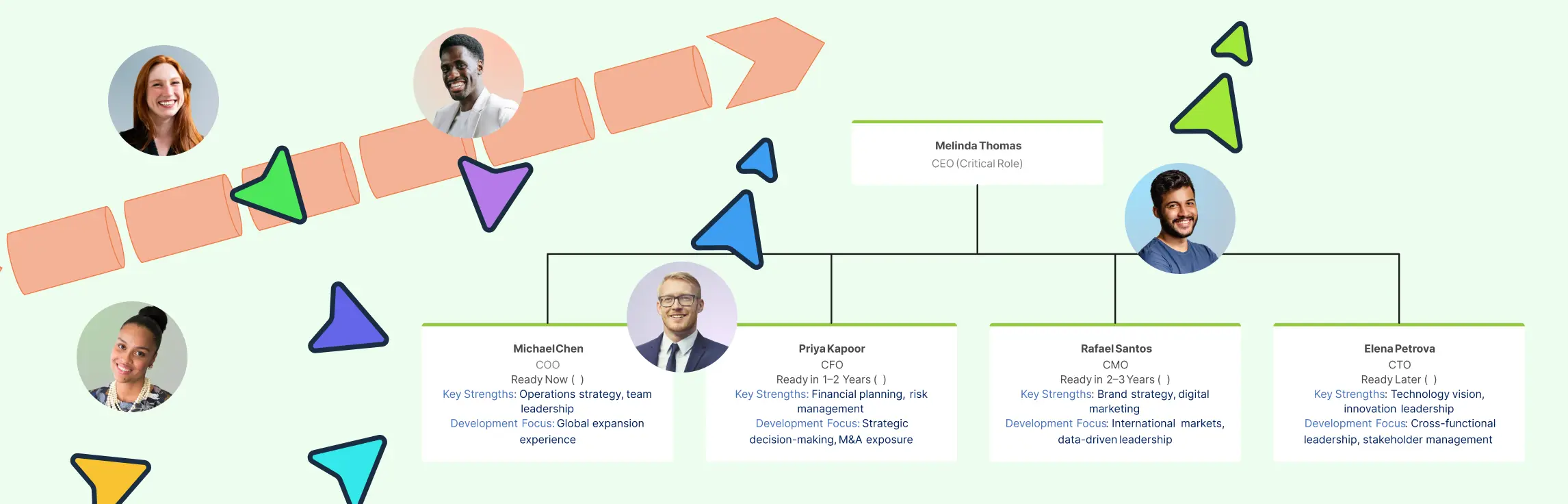
As organizations grow, best practices in succession planning expand to include deeper leadership pipelines and formal governance. CEO succession planning best practices emphasize long-term readiness, board oversight, and clearly defined emergency transitions. Board succession planning best practices focus on governance continuity, skills balance, and planned leadership rotation.
As organizations grow, these shifts reinforce the importance of aligning best practices with a clear, long-term succession planning strategy.
Common Mistakes and Anti‑patterns
Even with the right intentions, succession planning can quietly lose impact when common mistakes go unchecked. These anti-patterns don’t usually fail all at once, but erode trust, clarity, and momentum over time. Recognizing them early makes it easier to course-correct and keep succession planning best practices working as intended.
Treating Succession Planning as a One-Time Exercise
One of the most common mistakes is viewing succession planning as something to complete and move on from. When plans aren’t revisited, they quickly fall out of sync with changing roles, talent, and business priorities, leaving organizations exposed during transitions.
Focusing Only on Replacement, Not Readiness
Naming backups without assessing readiness creates a false sense of security. This anti-pattern overlooks development, timing, and capability gaps, increasing the risk that successors won’t be prepared when they’re needed most.
Unclear Ownership and Accountability
When no one clearly owns succession planning, it stalls. Reviews get delayed, updates don’t happen, and decisions lose credibility. Clear ownership is essential to keep succession planning active and trusted over time.
Inconsistent or Biased Evaluation
Without shared criteria, succession decisions can feel subjective or political. This undermines confidence in the process and can discourage high-potential talent who don’t see a fair or transparent path forward.
Poor Data Quality and Visibility
Outdated or incomplete information weakens every succession decision. When leaders don’t trust the data, succession planning becomes reactive, driven by opinion rather than insight.
Overlooking Role-Critical Positions
Focusing only on senior leadership while ignoring role-critical positions creates hidden risk. Operational disruption and knowledge loss often come from gaps in specialized or hard-to-replace roles, not just executive transitions.
You can use Creately’s succession planning software to visualize the process, keep information current, and collaborate across teams, making it easier to spot and avoid these anti-patterns early.
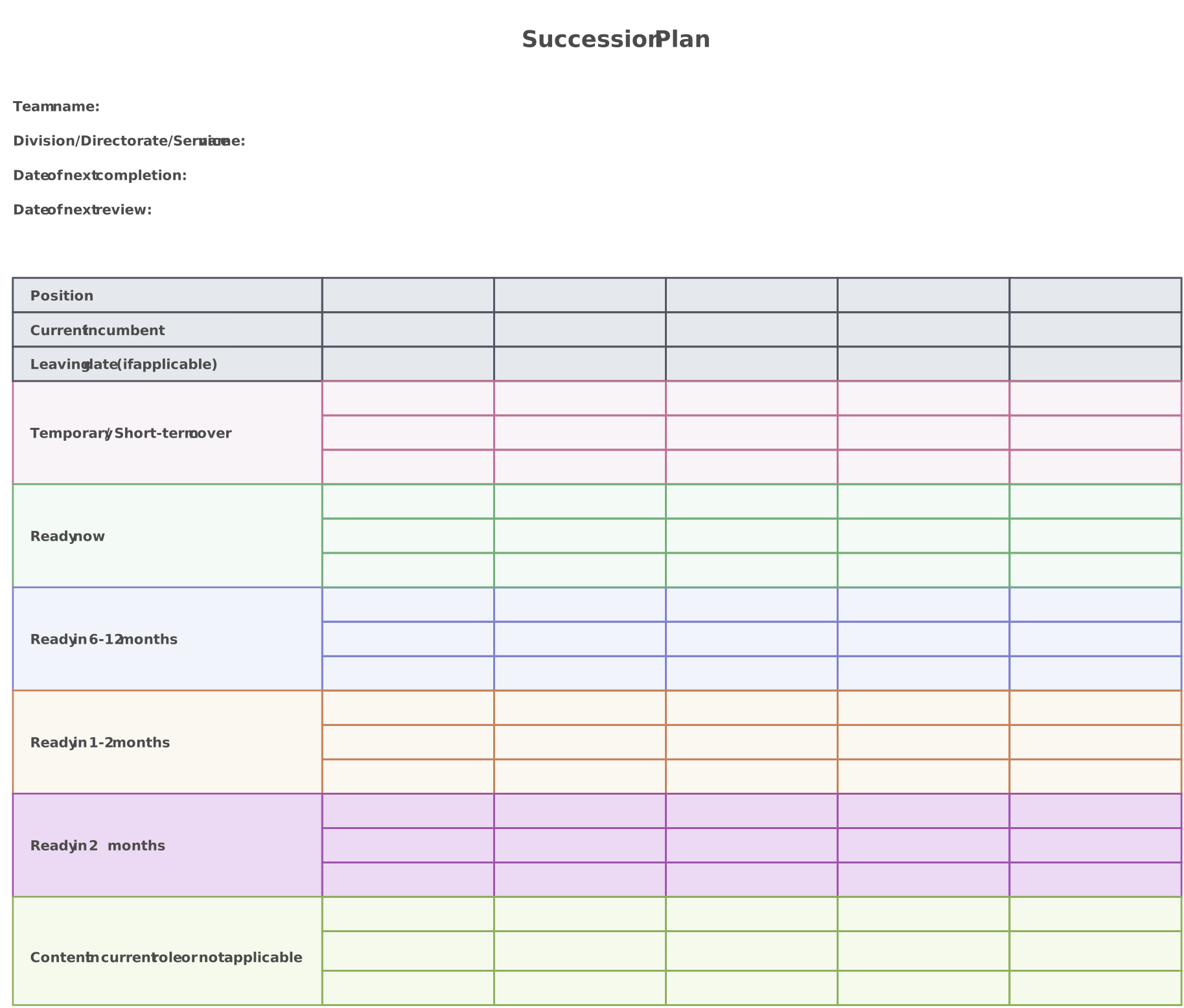
Free Succession Planning Templates to Get Started


Helpful Resources for Succession Planning
Discover real-world succession planning examples for different use cases.
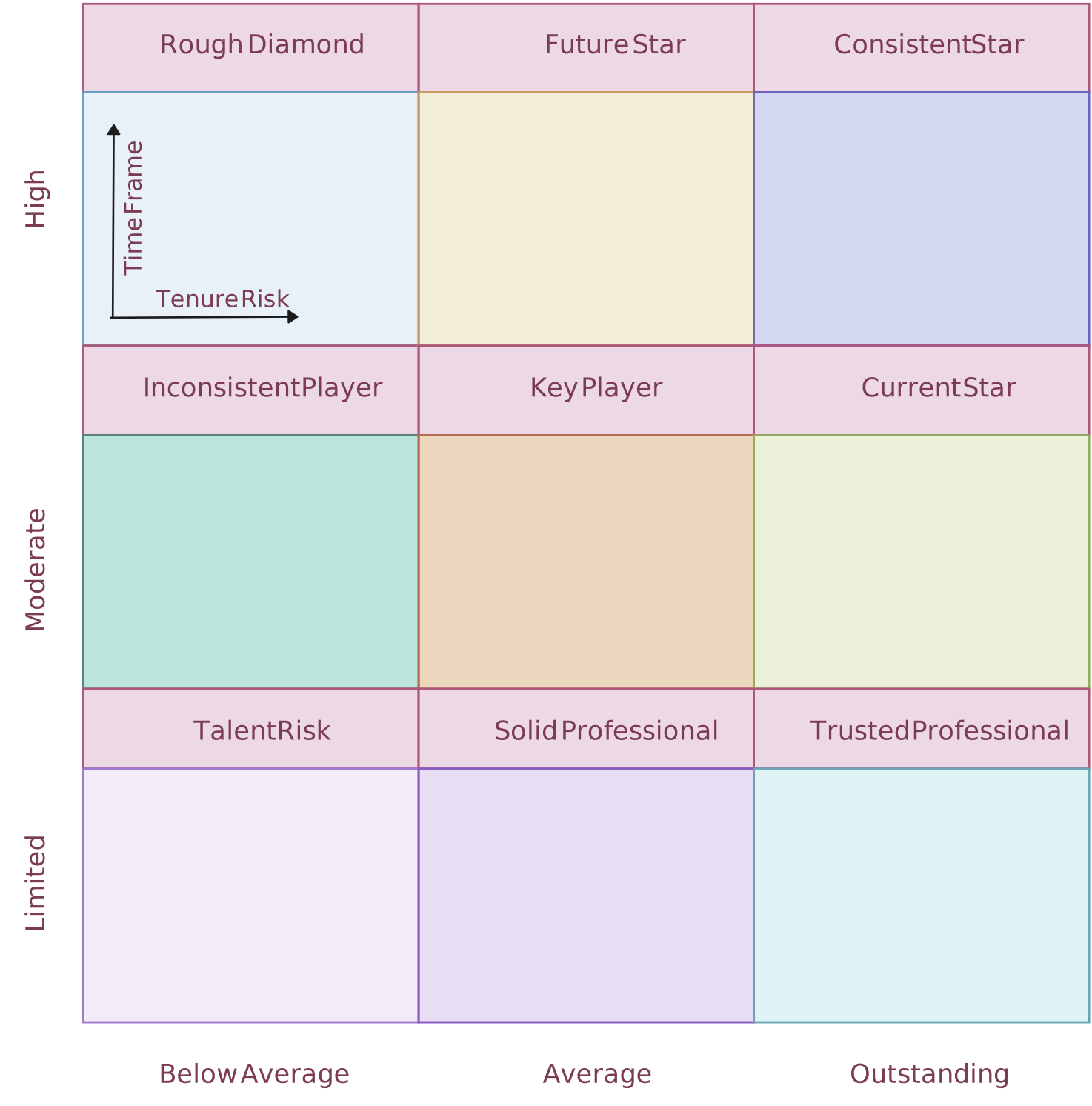
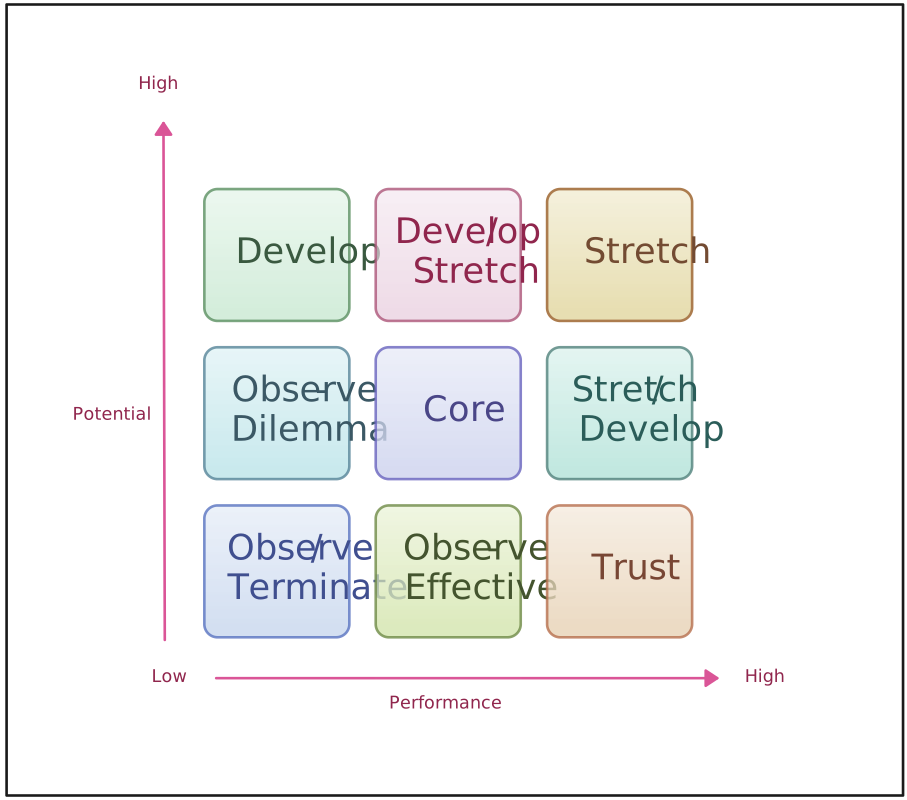
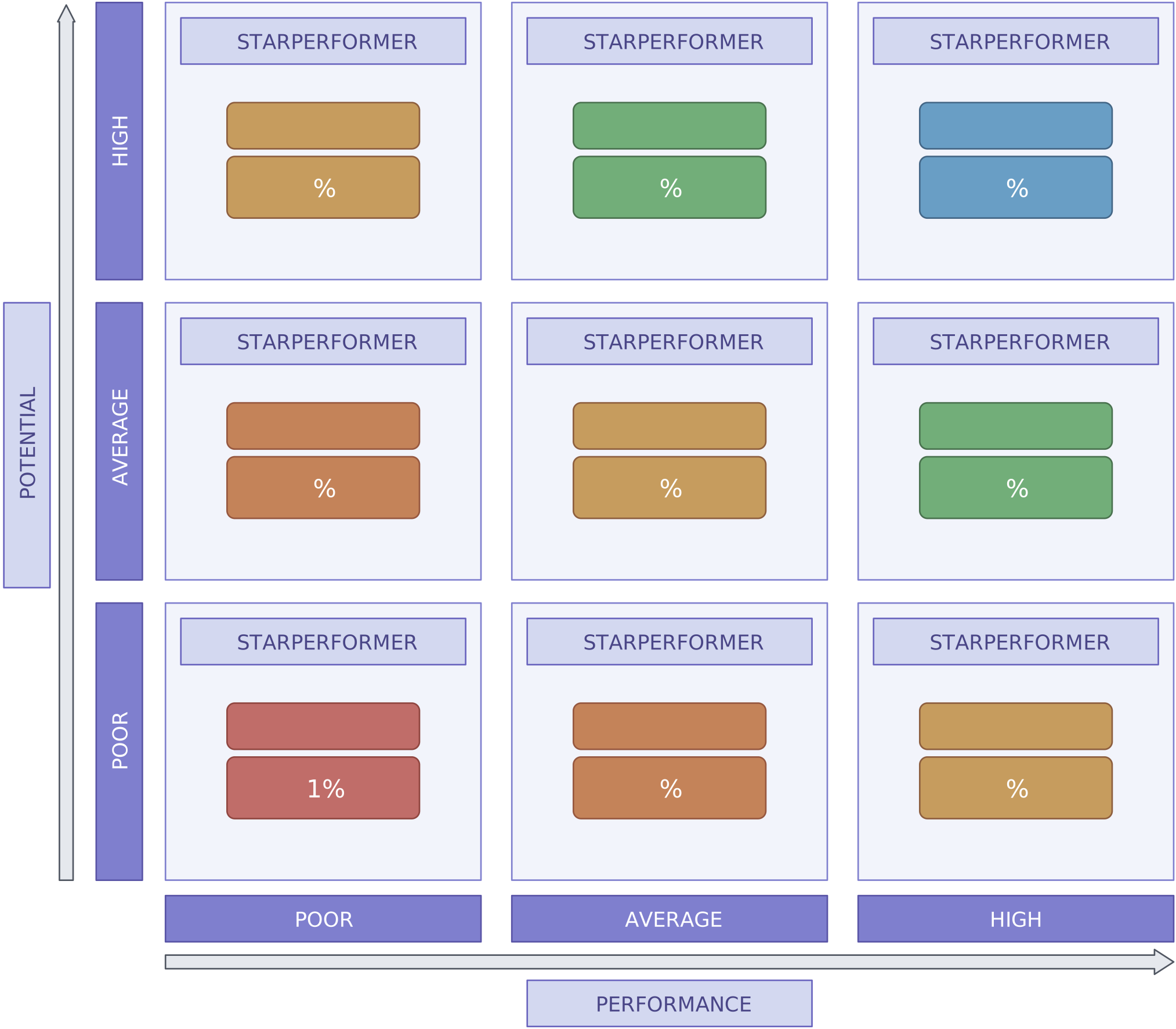
Learn how the talent review is done for 9-Box grid framework in succession planning.
Learn what the 9-Box grid framework is and how it is used for succession planning.
Learn about the differences between replacement planning and succession planning.
FAQs on Best Practices in Succession Planning
When is the right time to start succession planning?
Should succession plans be kept confidential?
How do we handle internal vs. external candidates?
How can we measure if the best practices in succession planning are successful?
Resources
Groves, Kevin S. “Integrating Leadership Development and Succession Planning Best Practices.” Journal of Management Development, vol. 26, no. 3, 27 Mar. 2007, pp. 239–260, https://doi.org/10.1108/02621710710732146.
Perrenoud, Anthony J. “Delphi Approach to Identifying Best Practices for Succession Planning within Construction Firms.” International Journal of Construction Education and Research, 9 Nov. 2018, pp. 1–14, https://doi.org/10.1080/15578771.2018.1544950.