Culturagram Template
Easily Assess Cultural Backgrounds for Social Work
Effectively visualize and assess cultural backgrounds of the clients you work with to facilitate better social work assessment.
- An infinite canvas to visualize social relationships
- Customizable culturagram templates to get a head start on the research
- Export as PNG, JPEG, PDF and SVG for easy sharing and presenting
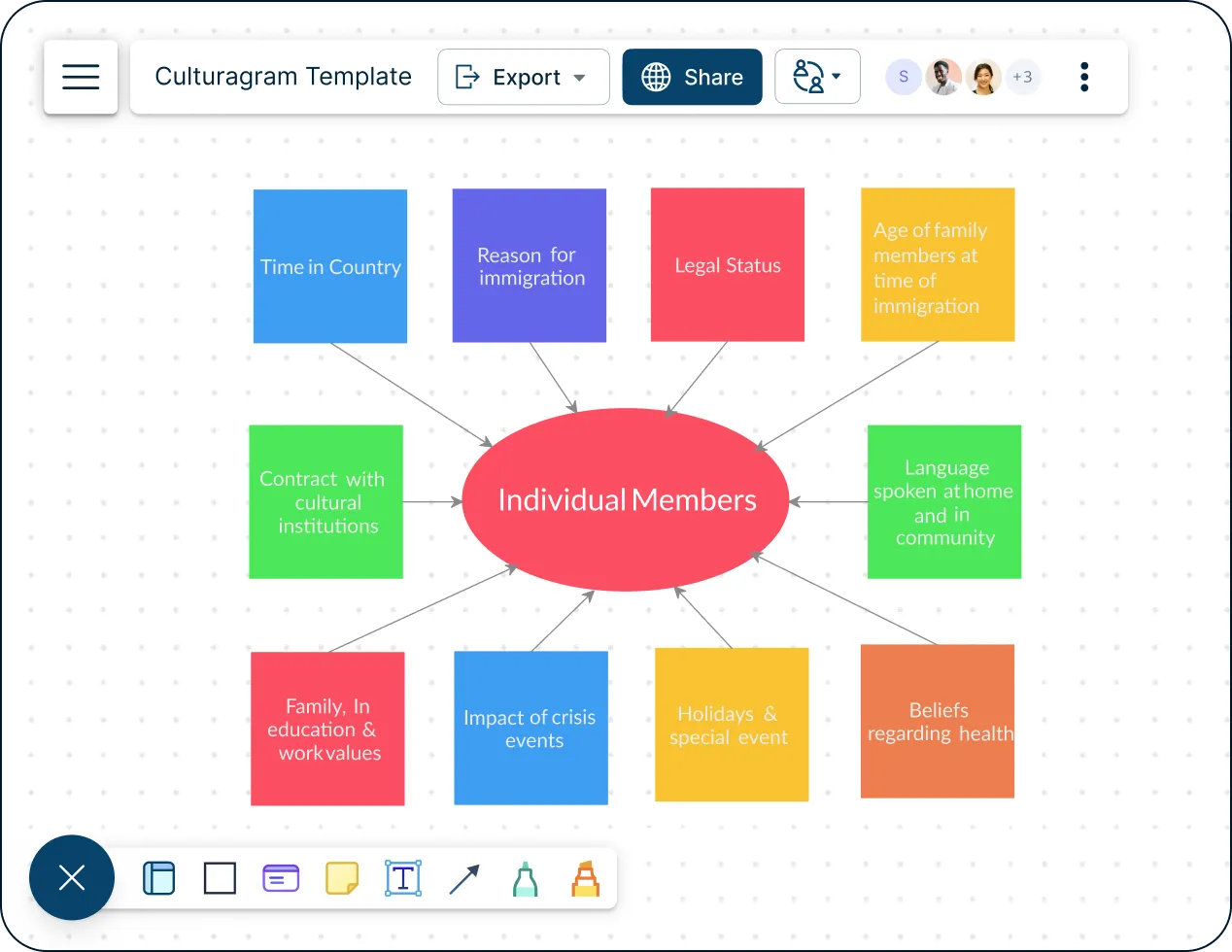
- An infinite canvas to visualize social relationships
- Customizable culturagram templates to get a head start on the research
- Export as PNG, JPEG, PDF and SVG for easy sharing and presenting
Over 10 Million people and 1000s of teams already use Creately
Free Culturagram Examples to Get Started
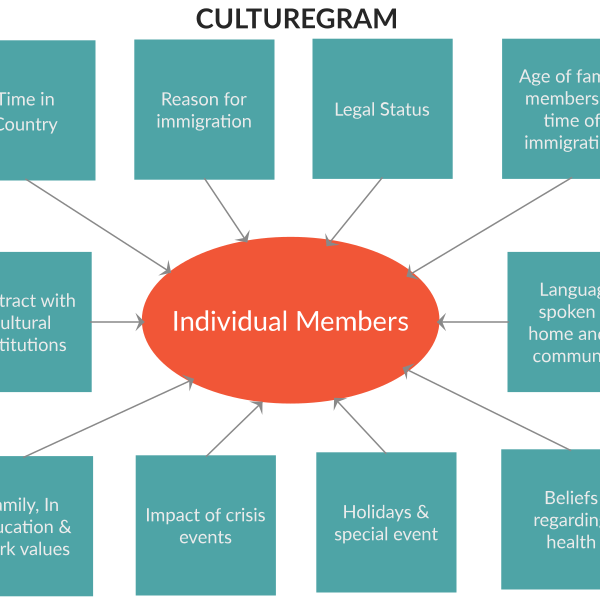
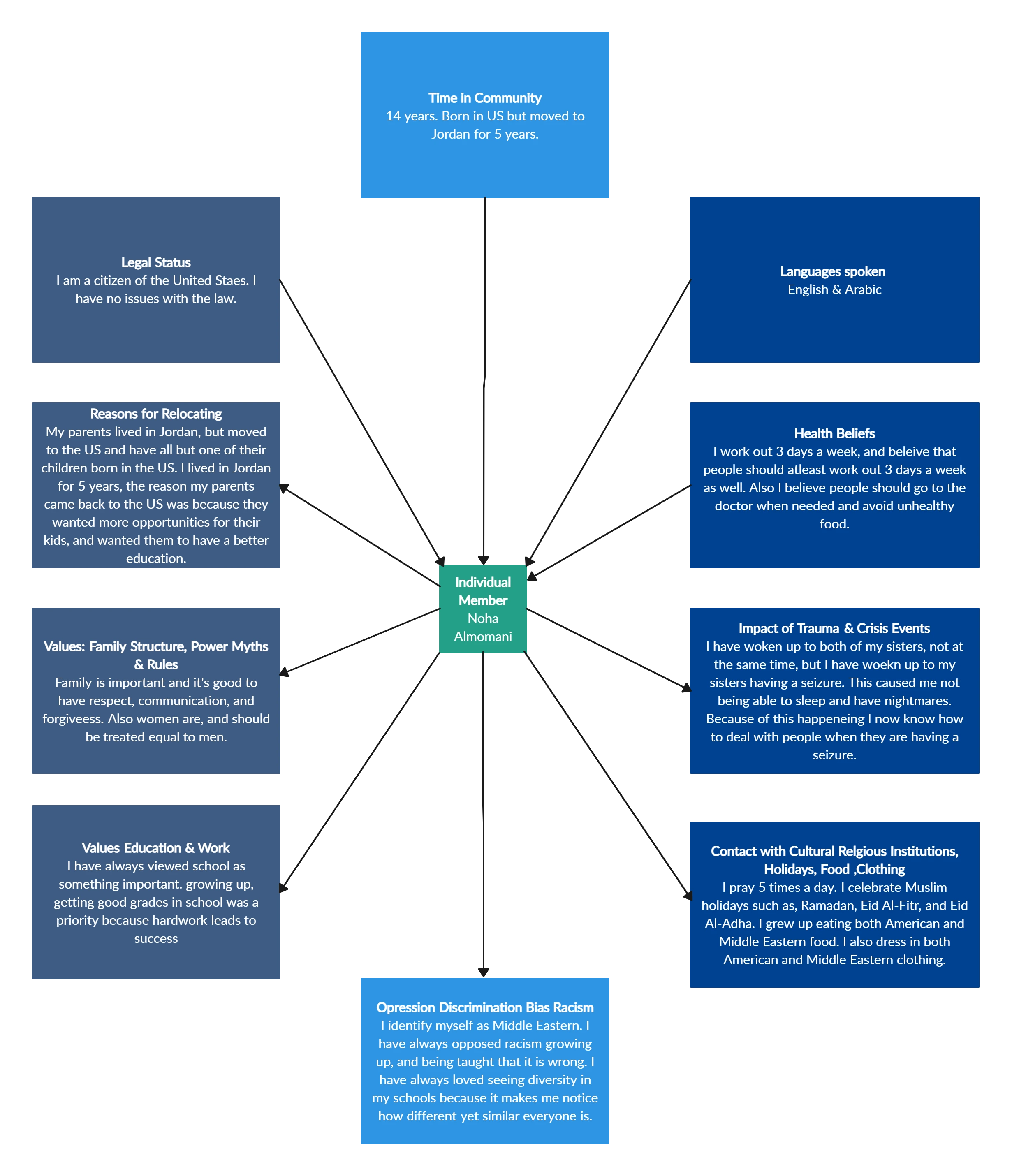
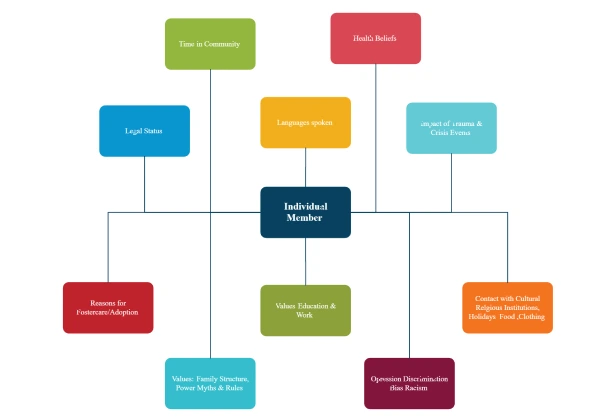
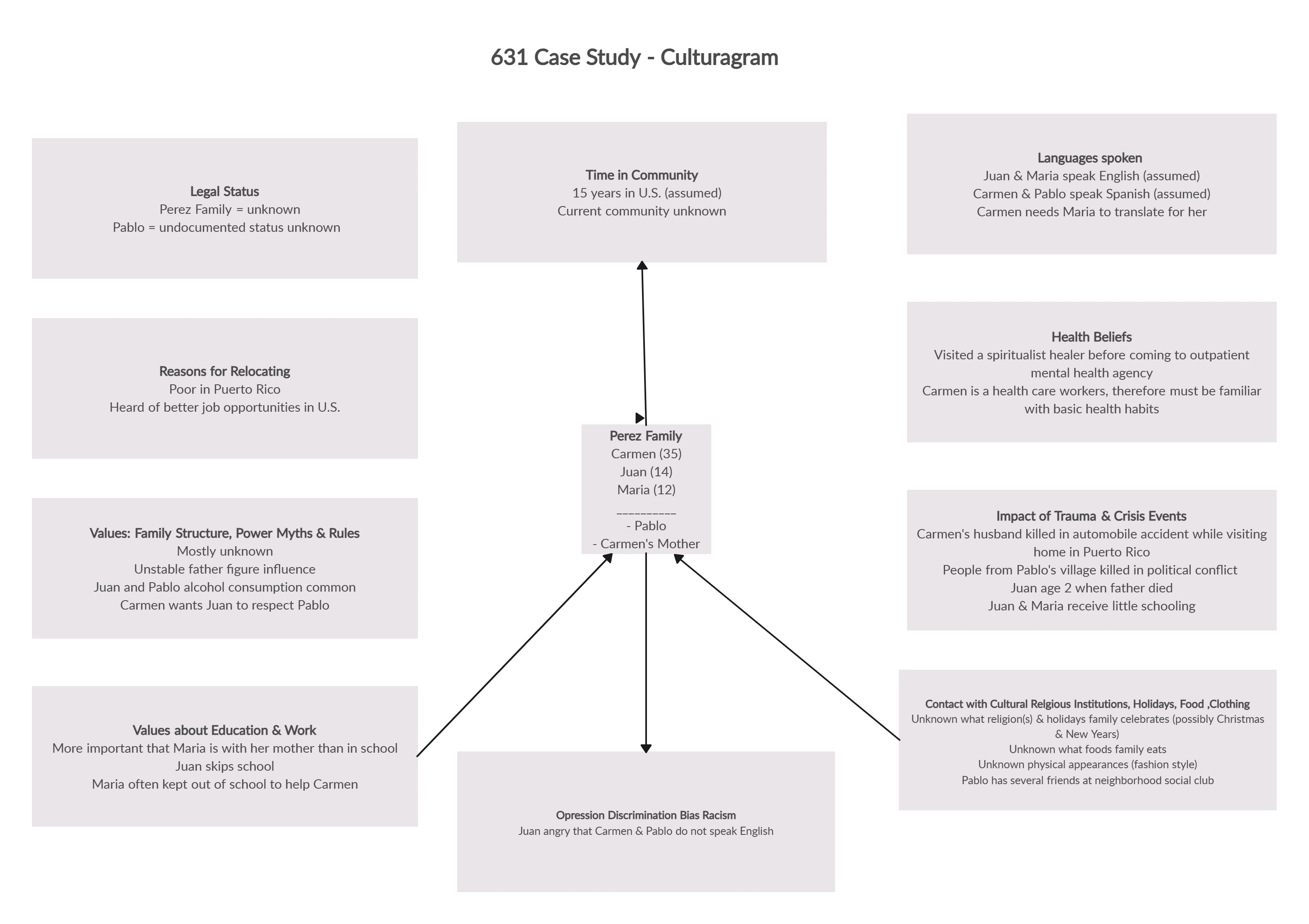
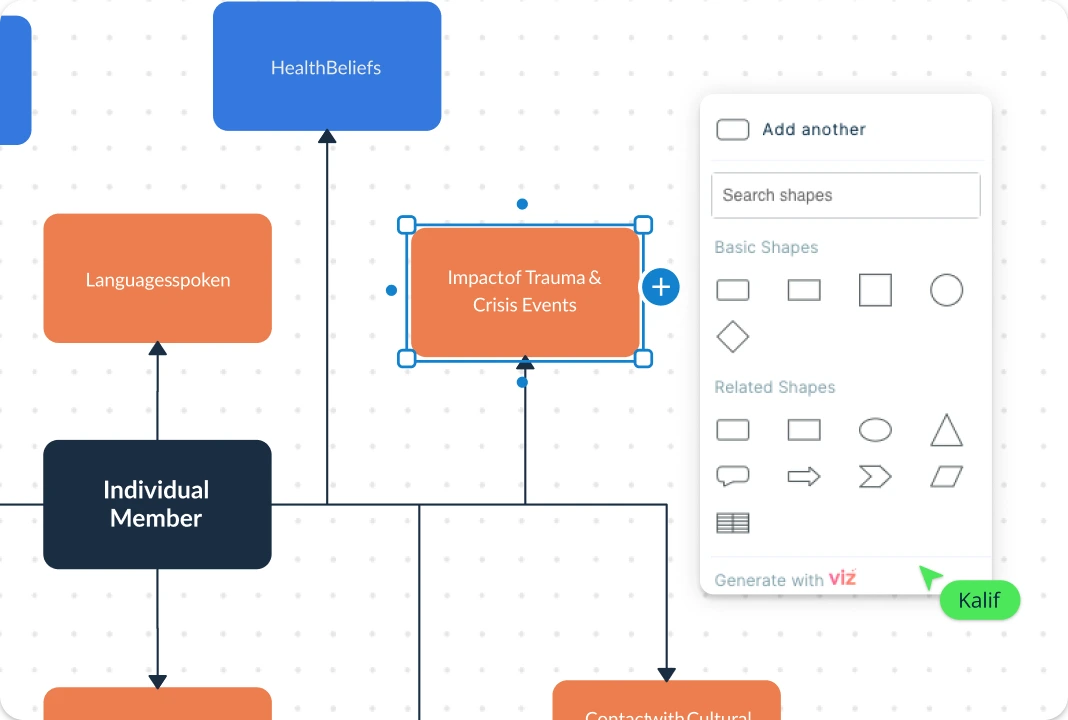
Create Detailed Social Work Assessments in Minutes
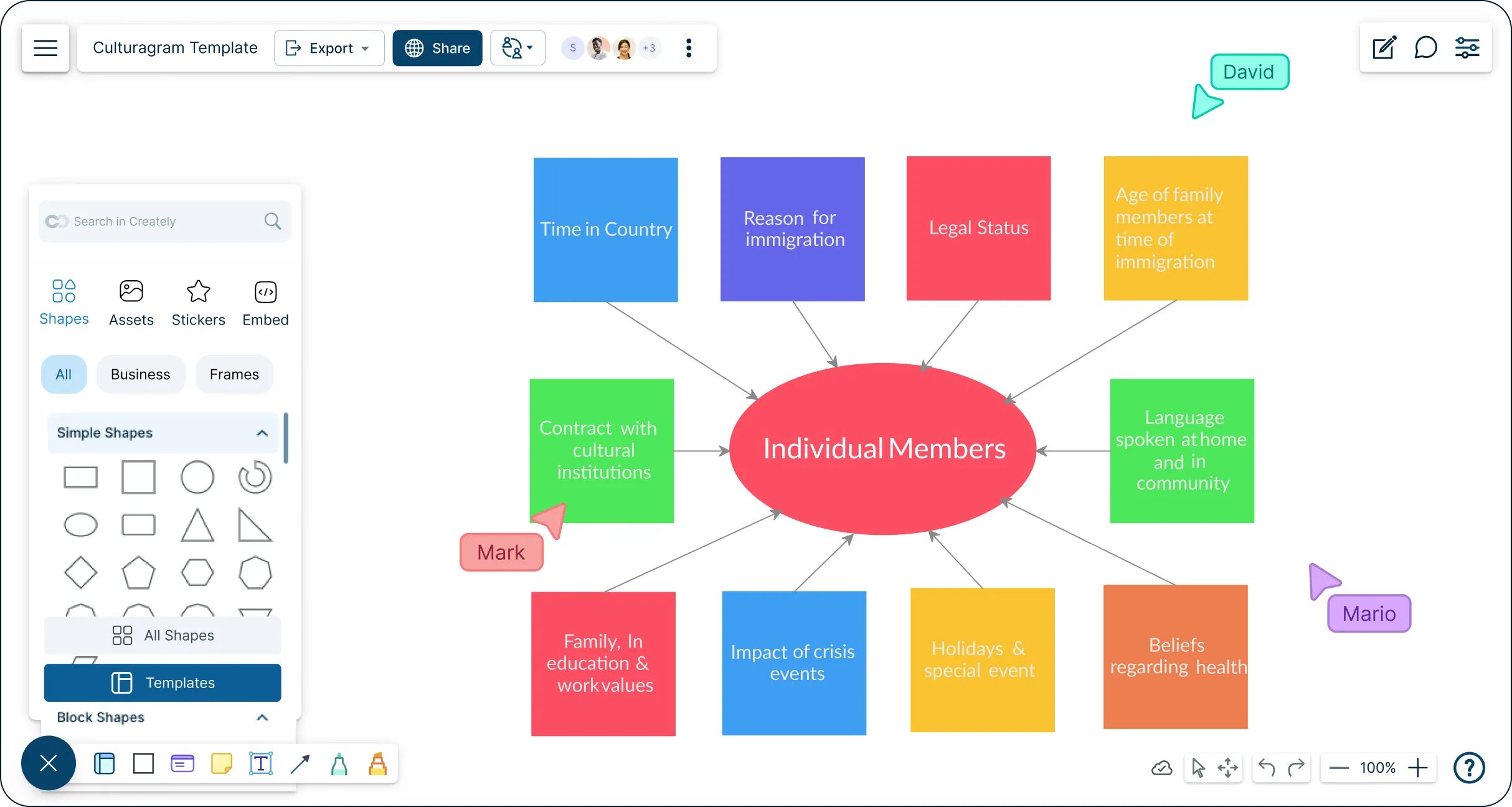
Use multiple ready-made templates to study and analyze the cultural backgrounds of individuals without starting from scratch. Use simple drag-and-drop tools, and Plus Create to build even complex culturagram social work assessments faster. Use dynamic connectors to easily draw connections between social relationships. Import data from multiple sources to conduct individual analyses on groups of people on a single workspace.
Centralize Your Research Data
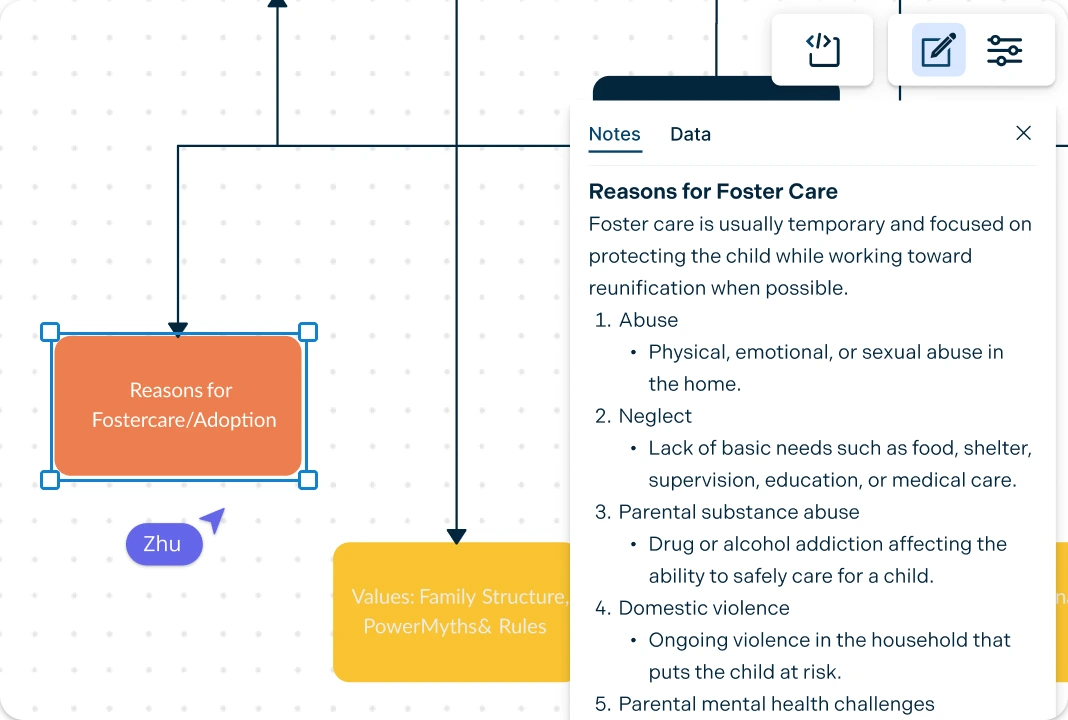
Add detailed docs, attachments and links with in-app previews using additional data fields, so analysis stays clear and organized. Import images, vectors, and more on to the canvas to create visually rich culturegrams online. Use the infinite canvas to scale up to thousands of items in a single view to gather research data around people and culture. Organize, share and present your insights instantly with built-in presentation tools.
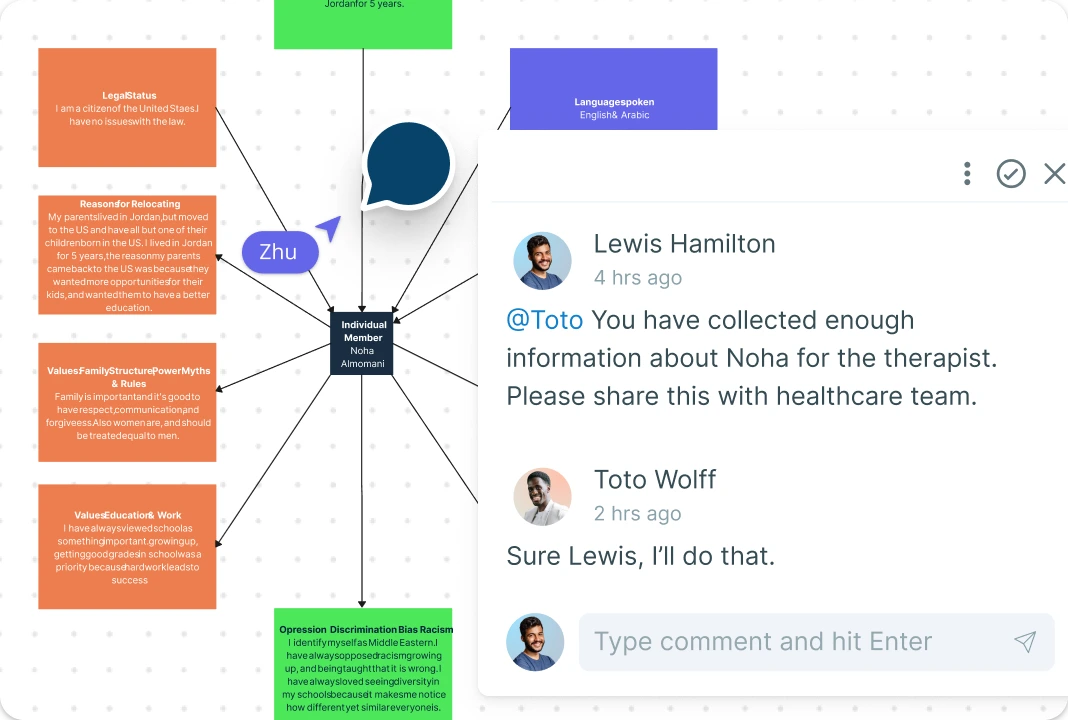
Work Together in Real-Time, Anytime, Anywhere
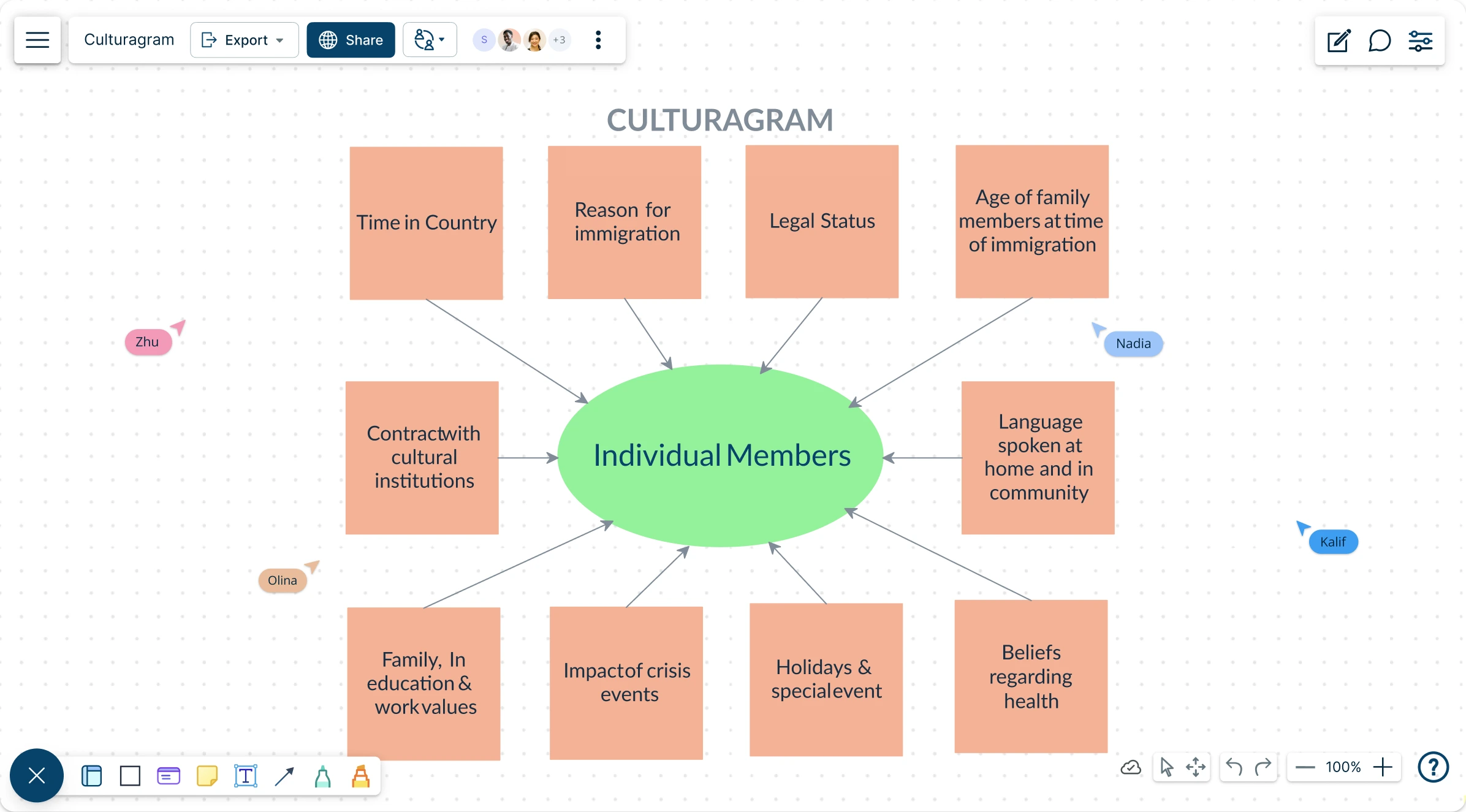
Collaborate with clients or colleagues on a shared canvas with real-time cursors, so everyone stays aligned. Add comments with context, keep discussions and follow-ups in one place, and move forward asynchronously. With multiple access levels and roles, the culturagram maker makes it easy to manage, share, edit, and review social work assessments with confidence.
What is a Culturagram?
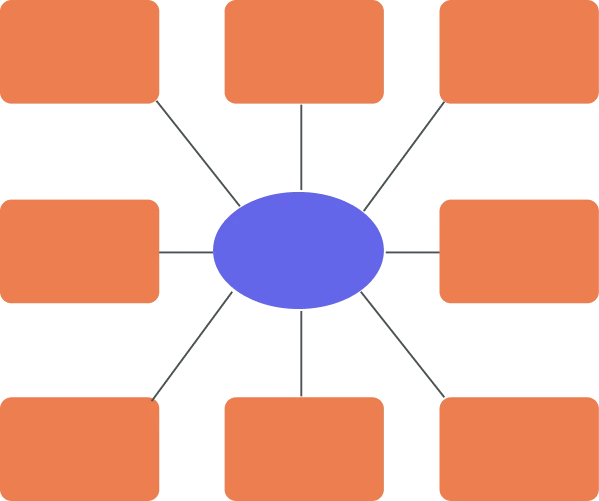
How to Make a Culturagram?
Open a Culturagram Template:
Start by opening a ready-made culturagram template in Creately’s workspace. This gives you a clear base structure to begin mapping the family system and cultural context.Add and Organize Family Details:
Use drag-and-drop shapes, sticky notes, and the notes panel to add family members’ names and key background details gathered during your interviews. This forms the foundation of the culturagram around which all other components connect.Customize and Visualize Relationships:
Connect the collected family and cultural data to the base structure using dynamic connectors. Customize colors, labels, and layouts to clearly visualize relationships, influences, and dynamics, using Creately’s aesthetic and layout tools.Collaborate in Real Time or Async:
Invite colleagues or clients to the same workspace to collaborate in real time. Use comments, real-time cursors, and built-in collaboration features to discuss, refine, and update the culturagram together. You can even do this remotely.Review, Update, and Share:
Review and update the culturagram as new insights emerge. Export the final diagram in JPEG, SVG, PNG, or PDF formats, or share it directly with colleagues to collect real-time feedback and present your assessment confidently.
More Culturagram Examples to Explore
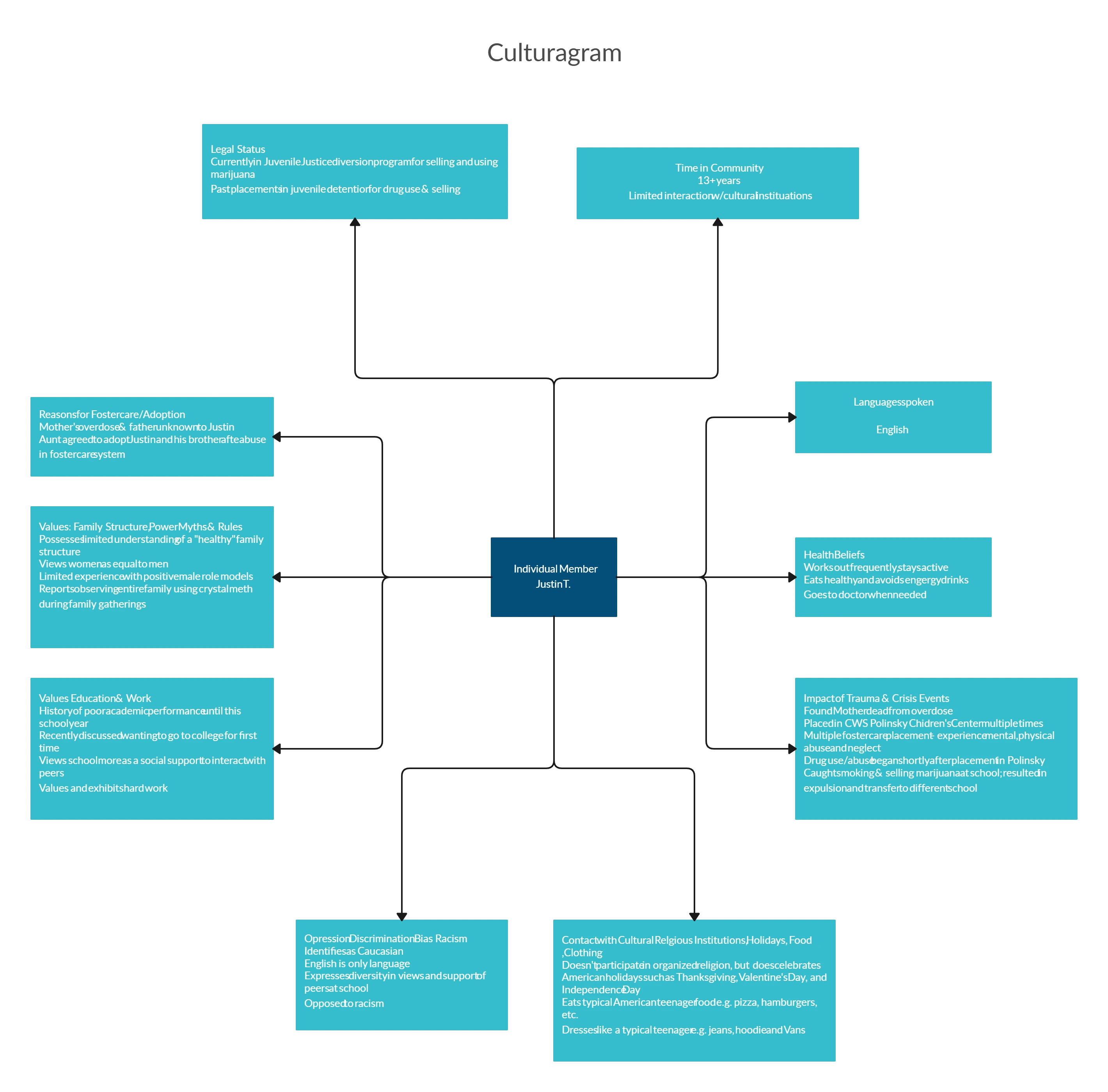
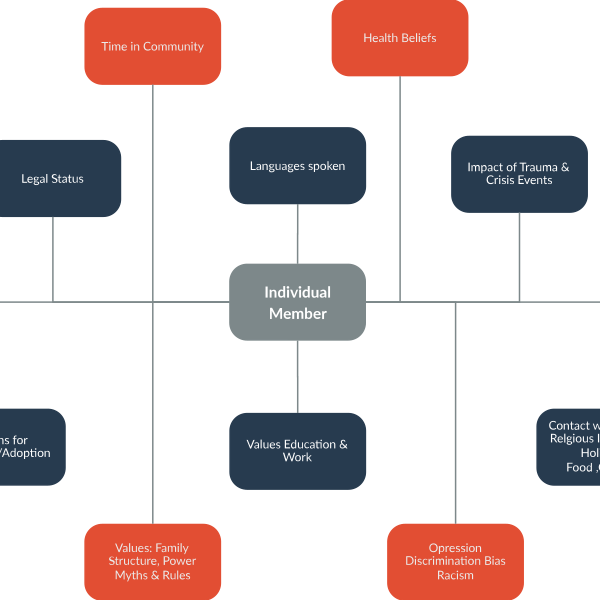
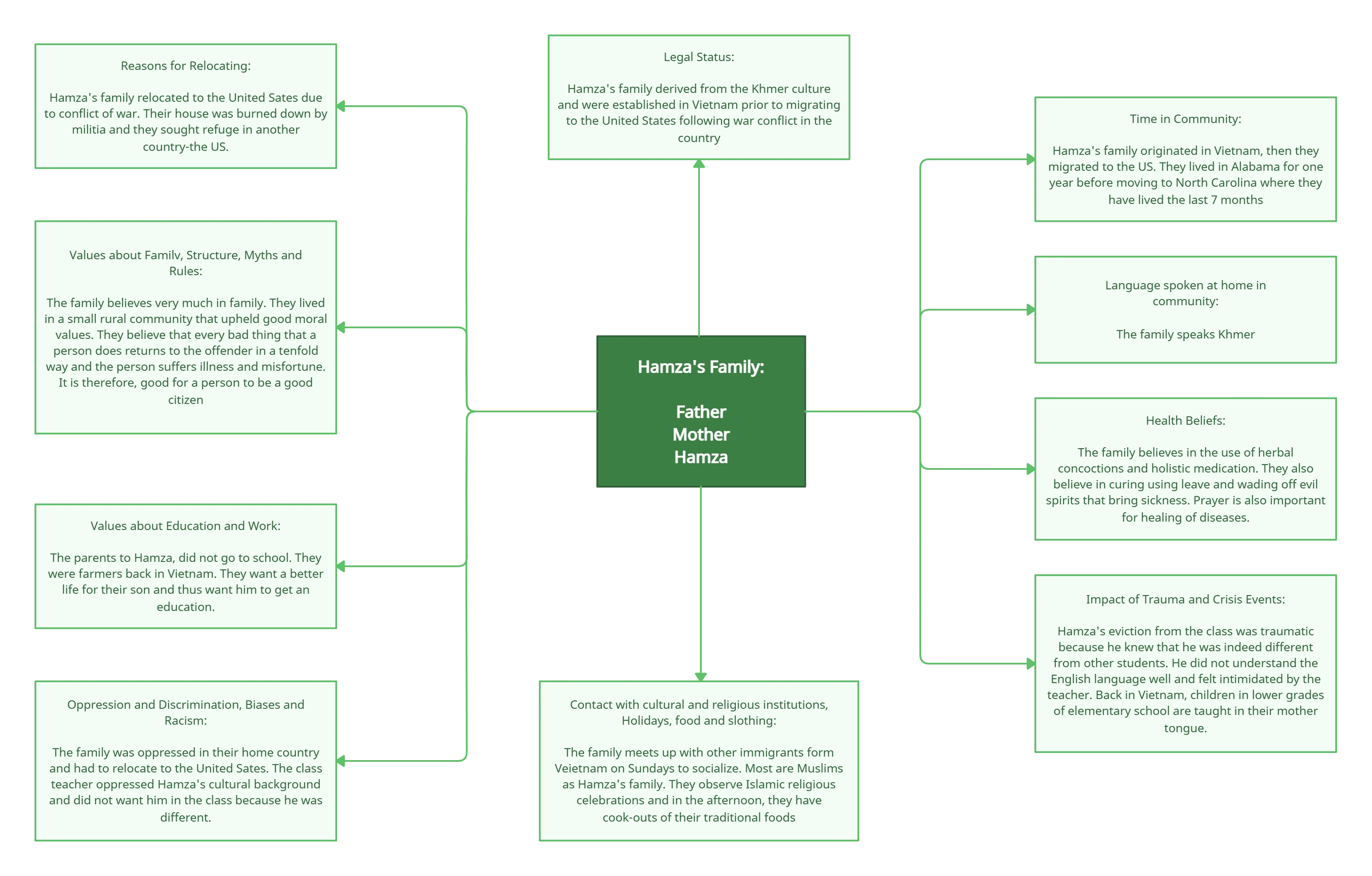
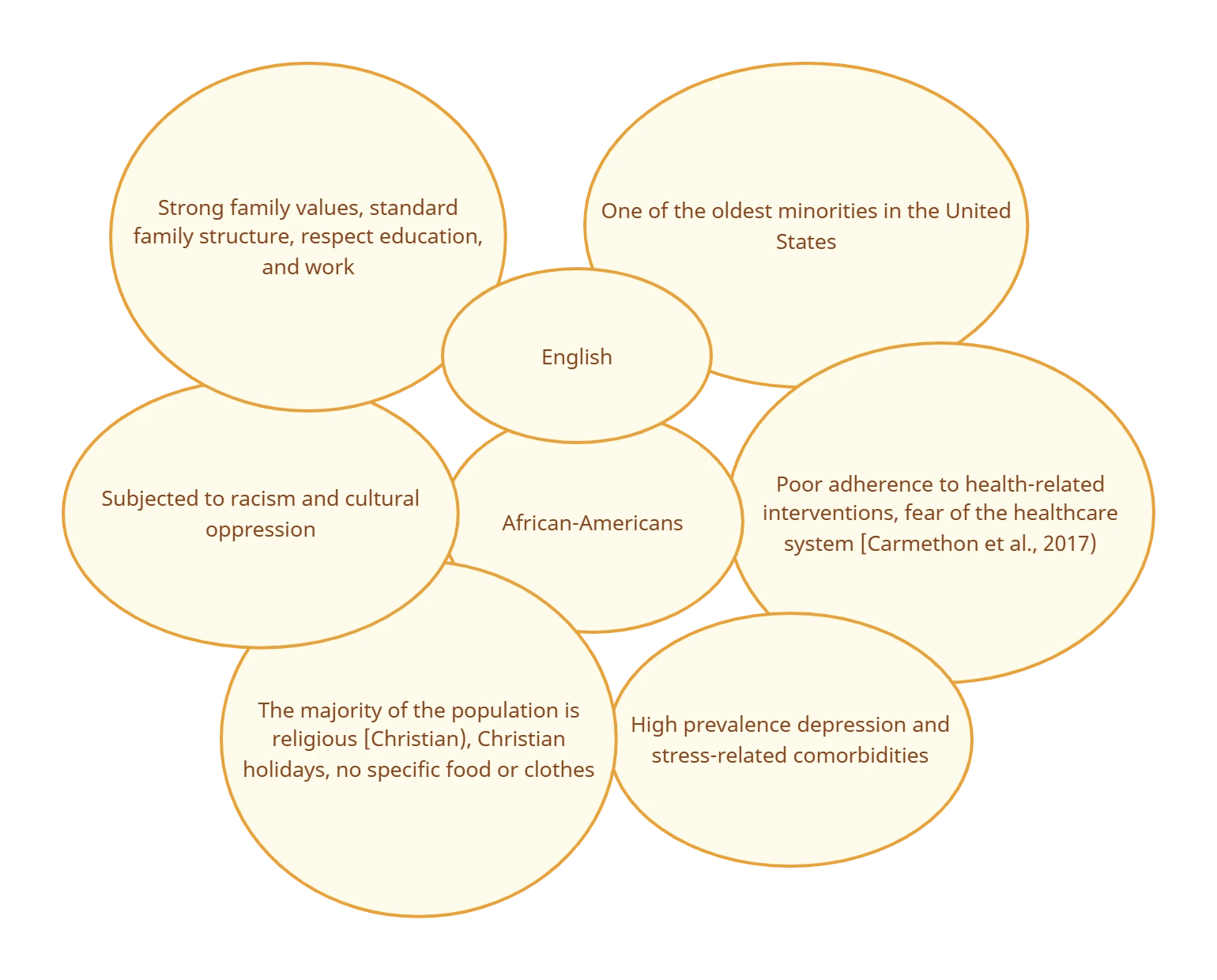
FAQs about the Culturagram Template
Does the culturagram template support qualitative data?
Can I reuse templates for multiple clients or cases?
Is the culturagram maker suitable for remote or virtual assessments?
Is my data secure when using the culturagram template?
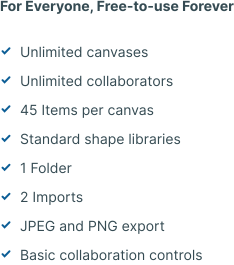
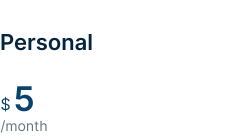
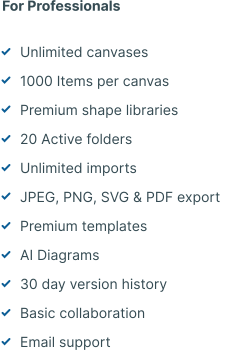
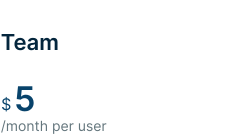
Is Creately’s culturagram creator free to use?