A Metropolitan Area Network (MAN) sits at the heart of modern, city-scale connectivity, linking offices, campuses, and critical services into one seamless network. But as networks grow beyond a single building, understanding how everything connects can quickly become complex. This guide explores what a MAN network diagram is, how it compares to LAN and WAN setups, when it makes sense to use one, and how to design it step by step. With practical examples and free templates, you can move from concept to clarity and confidently map networks that scale across an entire city.
What is a MAN Network Diagram?
The Metropolitan Area Network (MAN) is a computer network that spans a city or large campus and connects multiple local area networks (LANs) within a metropolitan region. A MAN network diagram is a visual representation of how buildings, offices, campuses, or branch locations are interconnected using high-speed communication links such as fiber-optic cables. It helps organizations, universities, government bodies, and service providers clearly understand network structure, data flow, and connectivity across a city, bridging the gap between smaller LAN diagrams and large-scale WAN architectures.
For more on other types of network diagrams and their uses, read our network diagram guide.
Key Elements in a MAN Network Diagram
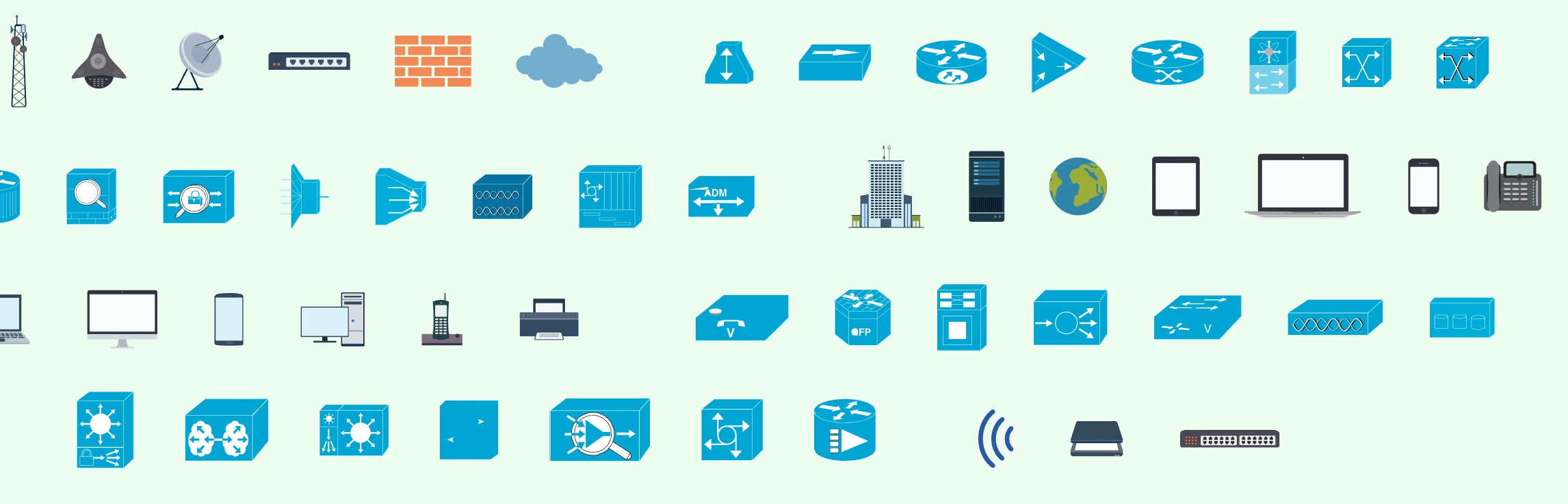
To clearly communicate the network design, a MAN diagram typically includes the following key elements:
Core / Backbone Network: The high-speed backbone (usually fiber optic) that interconnects all major locations within the metropolitan area. This is the central element of a MAN.
Distribution Nodes or Data Centers: Central facilities where routing, switching, servers, or cloud gateways are hosted. These nodes manage traffic between connected sites.
Local Area Networks (LANs): Individual building or campus networks (offices, branches, schools, hospitals) connected to the MAN backbone.
Routers: Used to route traffic between different LANs and the MAN backbone. Often placed at each site or aggregation point.
Switches: Handle internal traffic within buildings or campuses and connect end devices to the MAN.
Transmission Media: Represented as fiber links, leased lines, or wireless links (microwave, metro Ethernet) connecting locations across the city.
Internet / WAN Gateway: Shows how the MAN connects to external networks such as the internet or a wider WAN.
Security Components: Firewalls, IDS/IPS, or VPN gateways to protect data moving across the metropolitan network.
End Devices (optional, high-level diagrams): User devices, servers, CCTV systems, or IoT devices, often included for context rather than detail.
MAN Network Diagram Examples
Standard Metropolitan Area Network Diagram
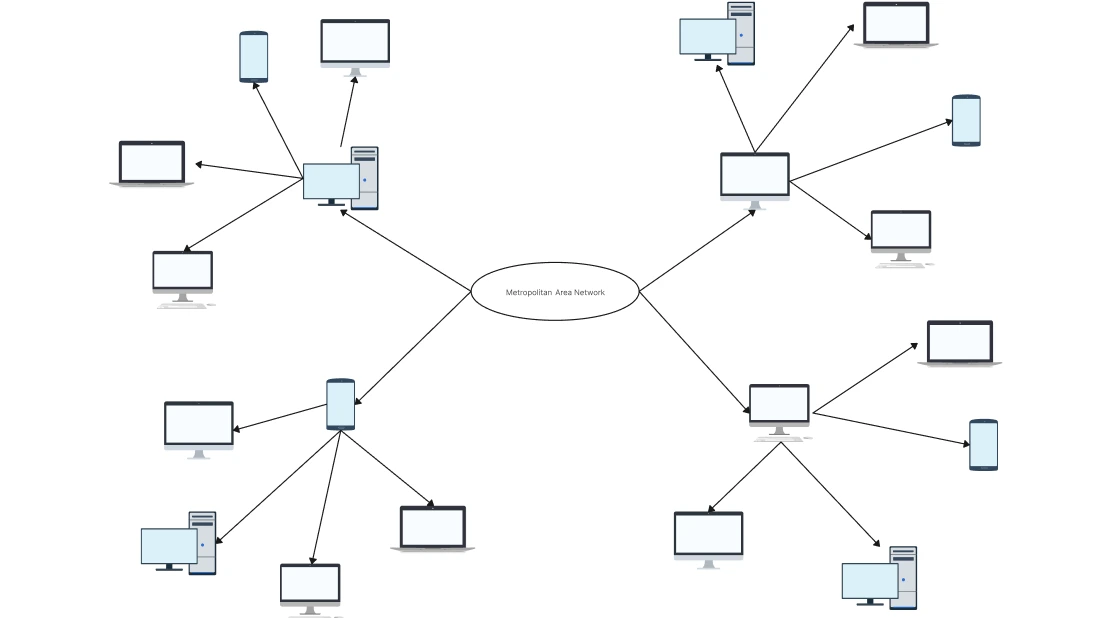
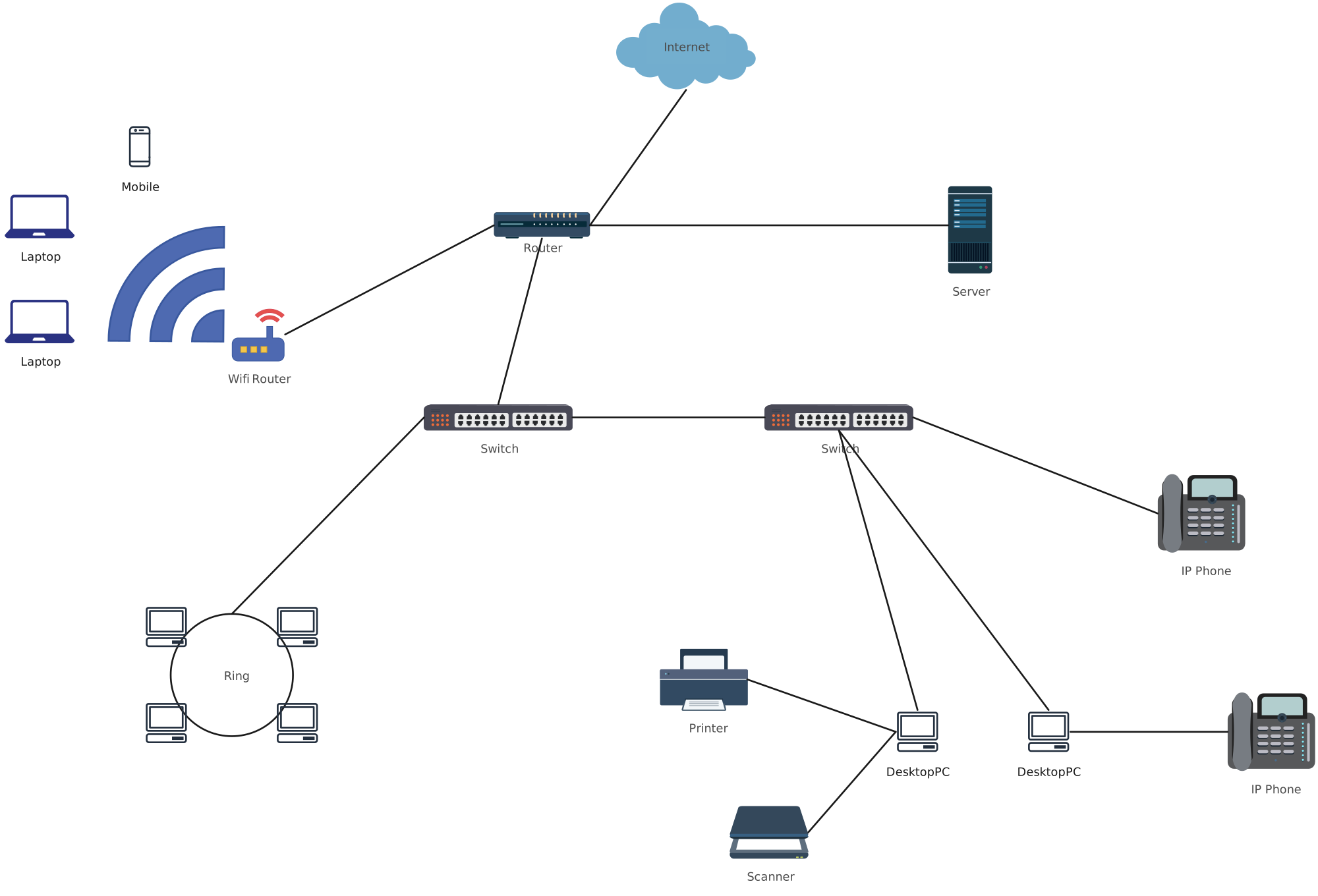
This example illustrates a standard MAN architecture that connects multiple local area networks (LANs) across a city or large campus. Individual buildings such as offices, schools, or hospitals have their own LANs, which are interconnected using high-speed point-to-point links, typically fiber optic. A central backbone network manages data flow between locations and provides shared access to core services such as the internet, servers, and data centers. This type of MAN is commonly used by universities, municipal authorities, and enterprises with multiple city-based facilities.

Enterprise Metropolitan Area Network Diagram
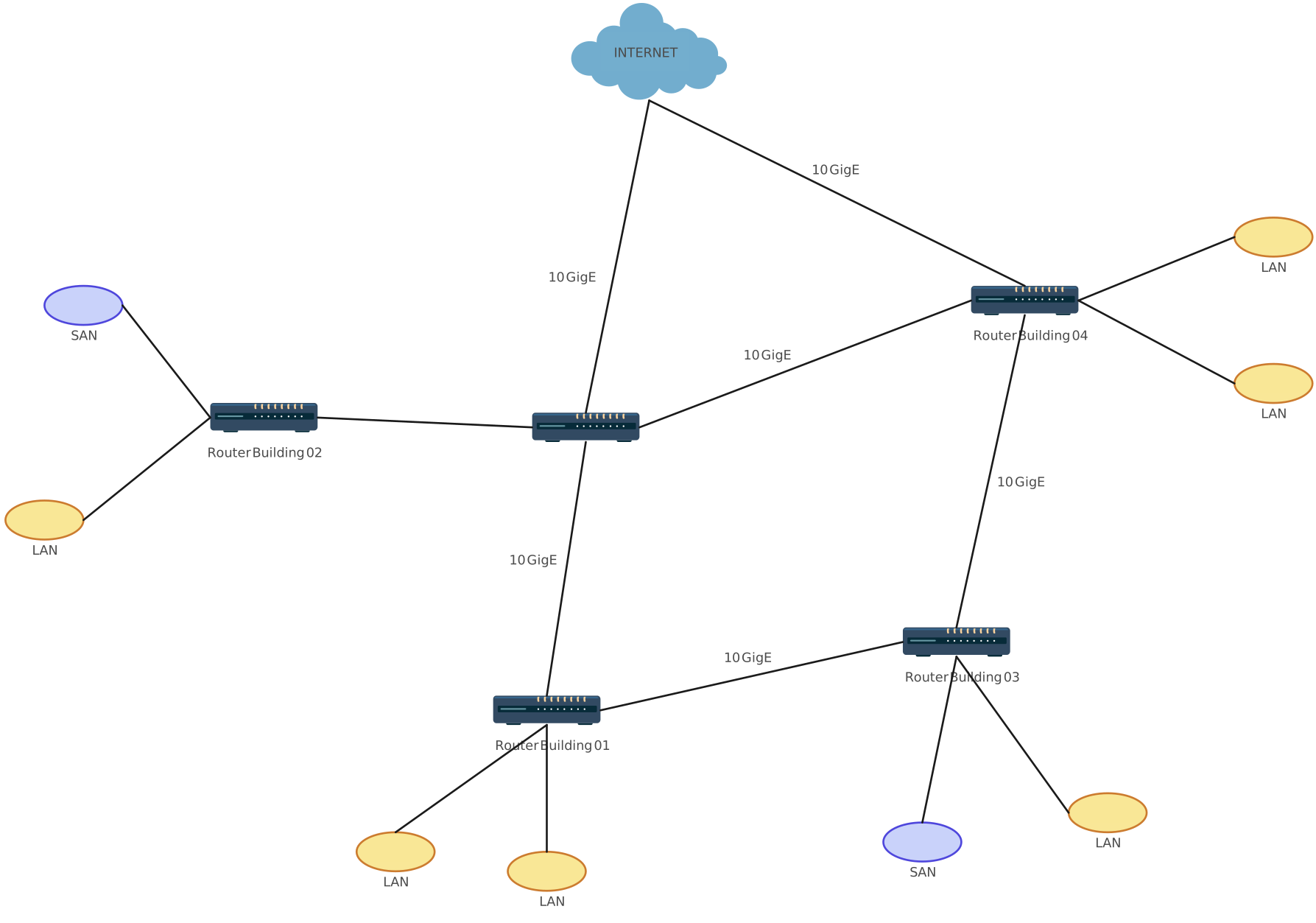
This MAN example focuses on an enterprise-wide metropolitan network designed to share centralized resources. Multiple branch offices across a city connect to a central data center that hosts applications, databases, authentication services, and backups. Compared to a basic MAN, this setup emphasizes high reliability, controlled ownership, and quality of service (QoS). It allows organizations to operate city-wide as a single network while maintaining centralized governance and security.
Wireless Metropolitan Area Network Diagram
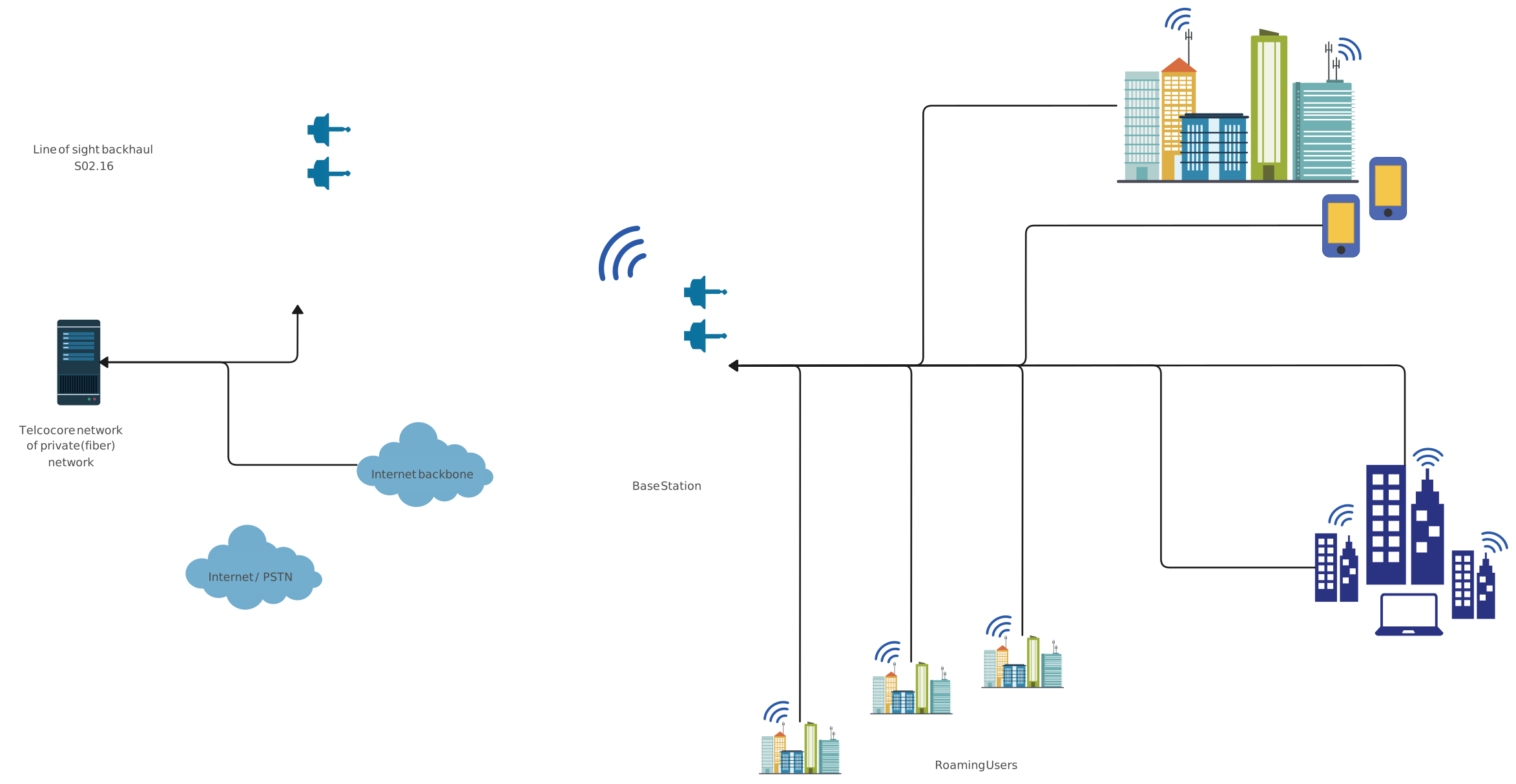
A Wireless Metropolitan Area Network (WMAN) uses wireless technologies instead of physical fiber links to connect locations across a city. It typically relies on standards such as WiMAX (IEEE 802.16) and includes both backhaul links and last-mile connections. WMANs are often owned and operated by ISPs, government bodies, or large enterprises. They are especially useful where laying fiber is expensive or impractical, such as in temporary setups, large campuses, or urban public networks.
Ethernet Metropolitan Area Network Diagram
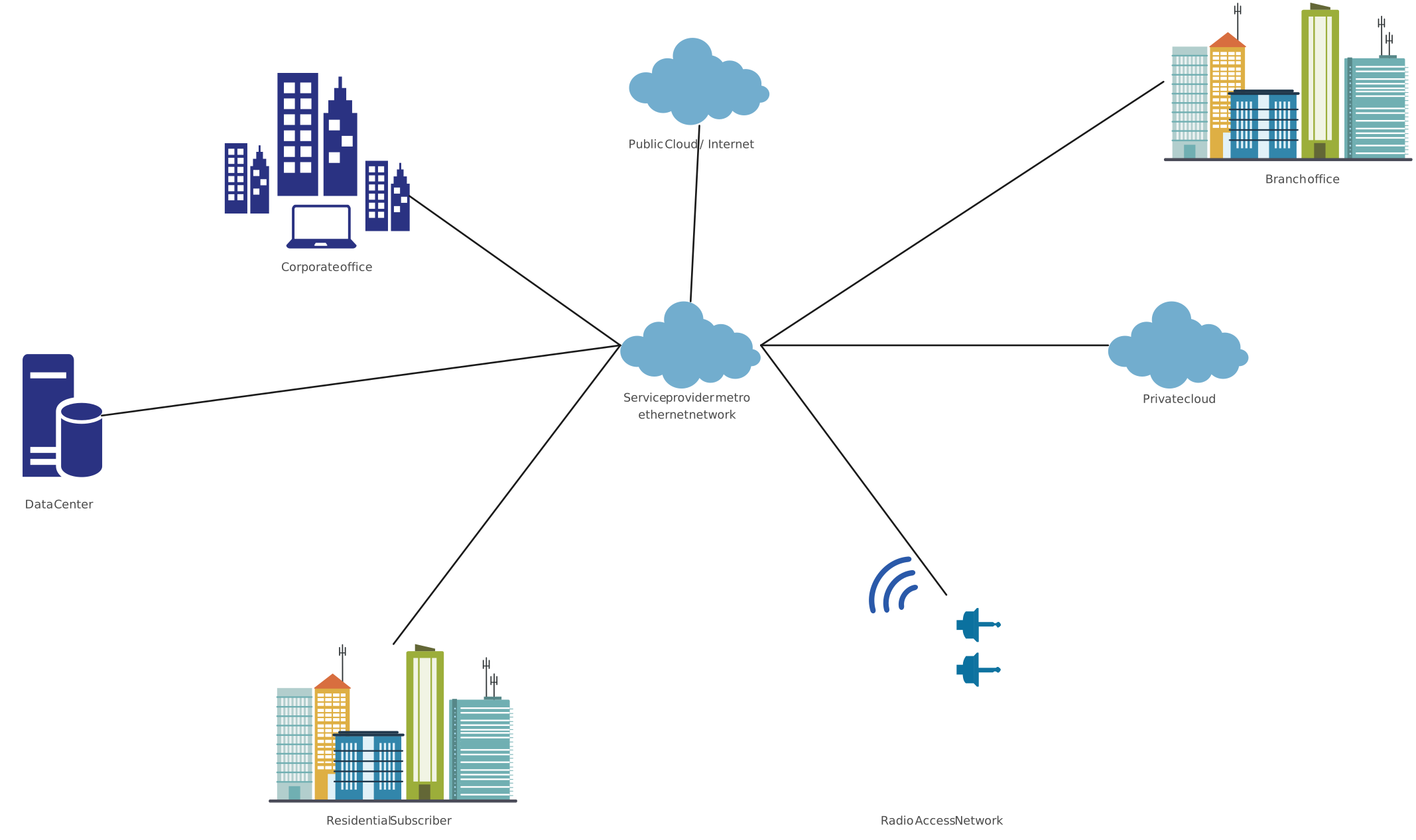
This example represents an Ethernet-based MAN, commonly known as Metro Ethernet. It extends standard Ethernet technology beyond LAN environments to connect multiple networks across a metropolitan area. Ethernet MANs are widely used because they are cost-effective, scalable, and easy to integrate with existing enterprise networks. Service providers and organizations use Metro Ethernet to connect offices, data centers, and customer sites to larger service or internet networks with predictable performance.
How to Draw a MAN Network Diagram
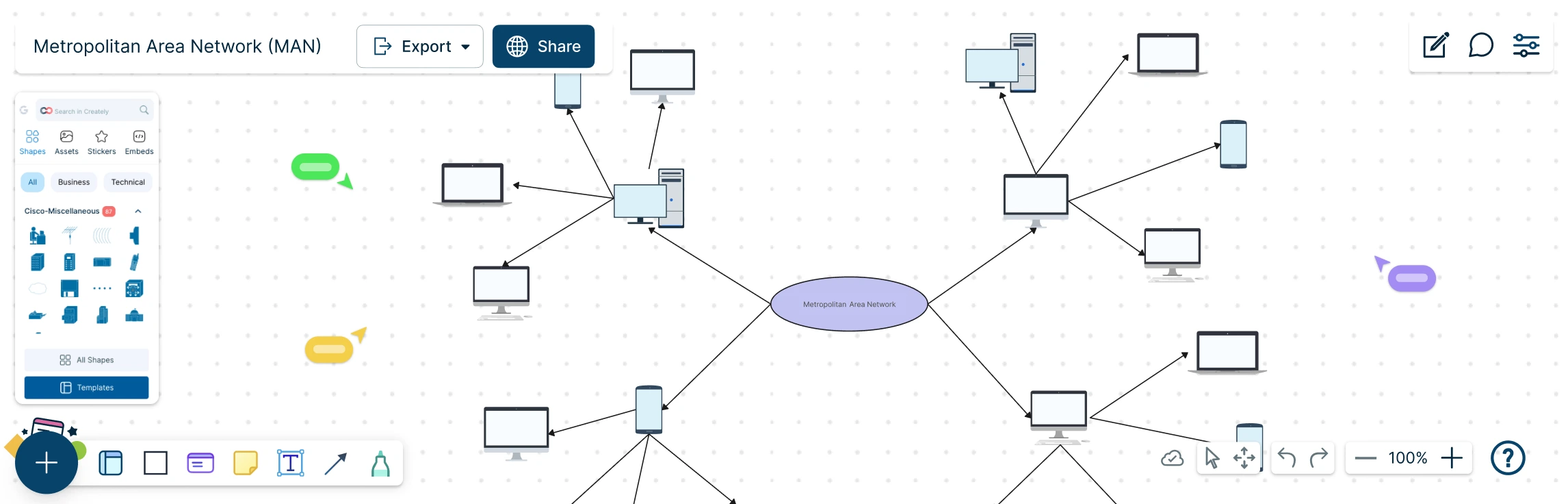
Follow these steps below using Creately’s network diagram software to create a clear and accurate Metropolitan network diagram that represents city-wide connectivity.
Step 1: Define the MAN scope
Identify the geographic area the network will cover (city, town, or large campus) and list all buildings or locations that need to be connected.
Step 2: Identify connected LANs
Mark each site such as offices, branches, campuses, or data centers as individual local area networks within the metropolitan region.
Step 3: Design the MAN backbone
Draw the high-speed backbone that interconnects all LANs. This is typically fiber optic or Metro Ethernet and represents the core of the MAN.
Step 4: Add network devices
Place routers, switches, and gateways at each location to show how traffic enters and exits the MAN backbone.
Step 5: Show transmission links
Indicate the type of connections used between locations, such as fiber, leased lines, microwave, or wireless links.
Step 6: Include internet, WAN, and security components
Add internet gateways, WAN connections, firewalls, VPNs, or IDS/IPS systems to show external access and security controls.
Step 7: Label, organize, and review the diagram
Use clear labels, consistent icons, and color coding, then review the diagram to ensure accuracy and easy understanding.
Advantages and Disadvantages of the Metropolitan Area Network
Here’s a quick comparison of the advantages and disadvantages of the MAN in networking.
| Advantages | Disadvantages |
| High-speed connectivity using fiber optics or Metro Ethernet | Higher setup and infrastructure costs compared to LANs |
| Cost-effective for connecting multiple sites within a metropolitan area | More complex to manage and maintain |
| Centralized access to servers, applications, and shared data | Limited to metropolitan-scale coverage |
| Scalable design that allows easy addition of new buildings or branches | Requires skilled IT staff for monitoring, performance, and security |
| Reliable performance with redundancy and failover options | Larger attack surface if security is not properly designed |
| Well suited for enterprises, universities, government bodies, and municipalities | May depend on third-party service providers for connectivity or infrastructure |
Differences between LAN, MAN and WAN Diagrams
LAN, MAN, and WAN diagrams are used to visually represent networks at different geographic scales. The comparison below highlights how LAN, MAN, and WAN diagrams differ in terms of coverage, performance, cost, ownership, and design complexity, helping you choose the right diagram based on your network planning or documentation needs.
Aspect | LAN Diagram (Local Area Network) | MAN Diagram (Metropolitan Area Network) | WAN Diagram (Wide Area Network) |
| Geographic coverage | Small area such as a room, building, or single campus | City or metropolitan area | Large regions, countries, or global |
| Typical size shown | Few meters to a few kilometers | Several kilometers across a city | Hundreds to thousands of kilometers |
| Primary purpose | Visualize connections within one location | Show how multiple LANs connect across a city | Illustrate interconnections across regions or countries |
| Speed & latency | Very high speed, very low latency | High speed, low latency at city scale | Lower speed and higher latency compared to LAN/MAN |
| Technologies shown | Ethernet, Wi-Fi, switches | Fiber optics, Metro Ethernet, microwave links | MPLS, leased lines, satellite, public internet |
| Diagram complexity | Simple and easy to design | Moderately complex | Highly complex with multiple layers |
| Common examples | Home network, office floor network | City-wide campus network, municipal network | Global enterprise network, the internet |
Check out the wide area network diagram and local area network diagram guides to learn more about these networks and their applications.
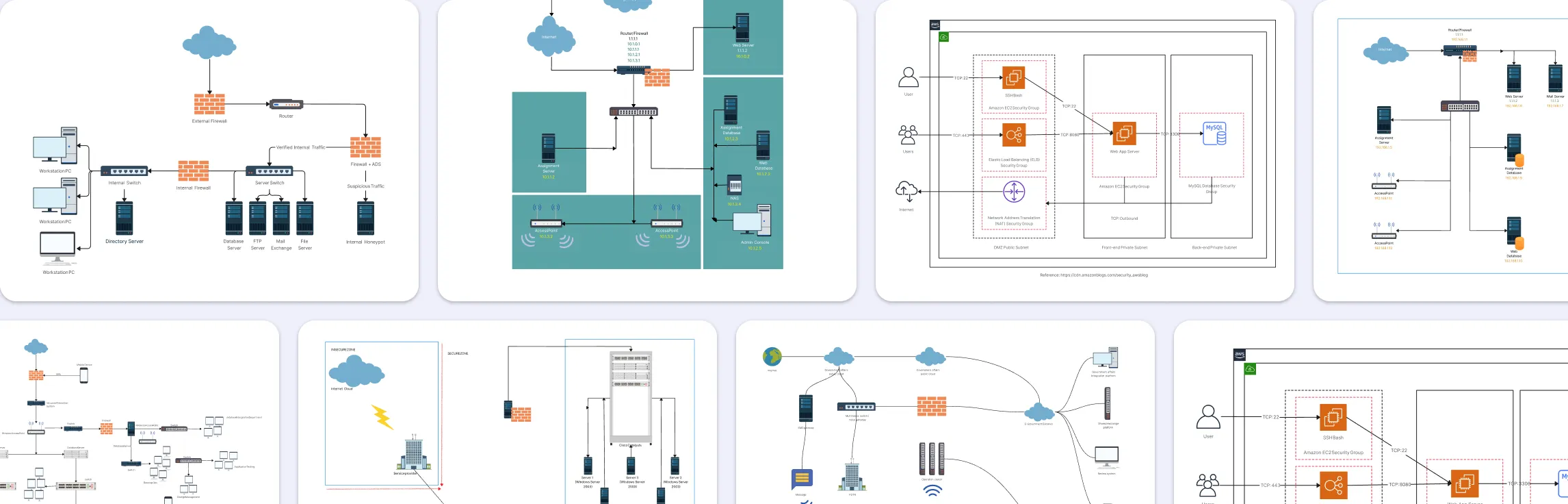
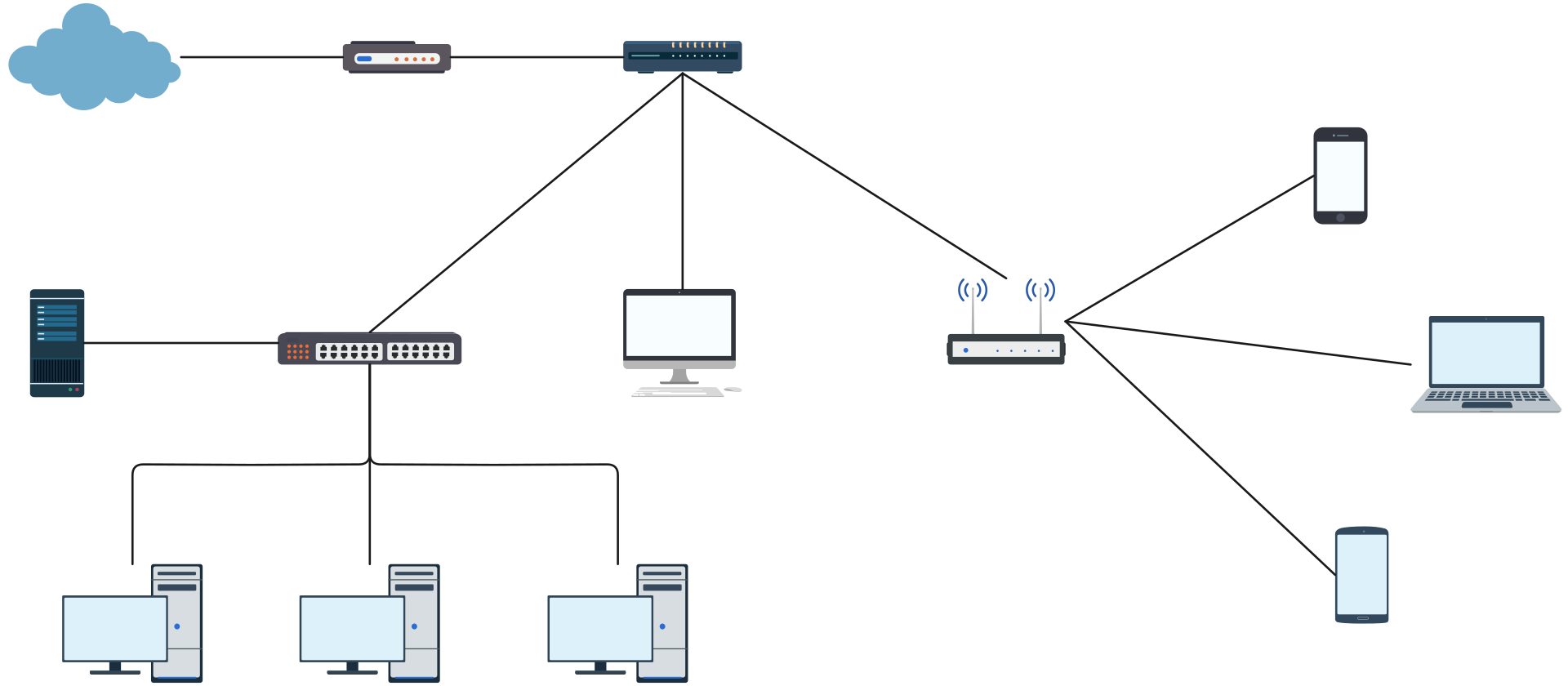
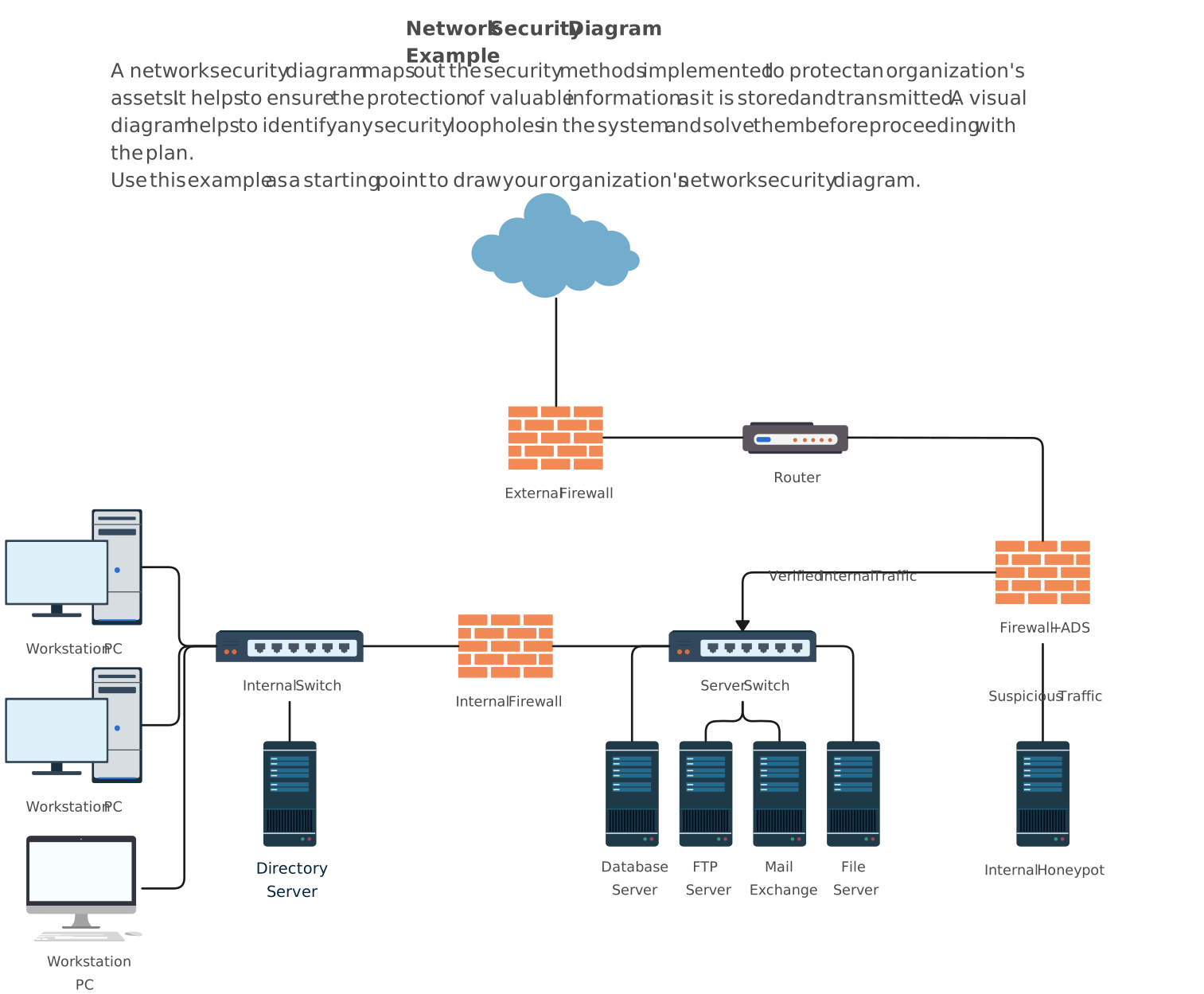
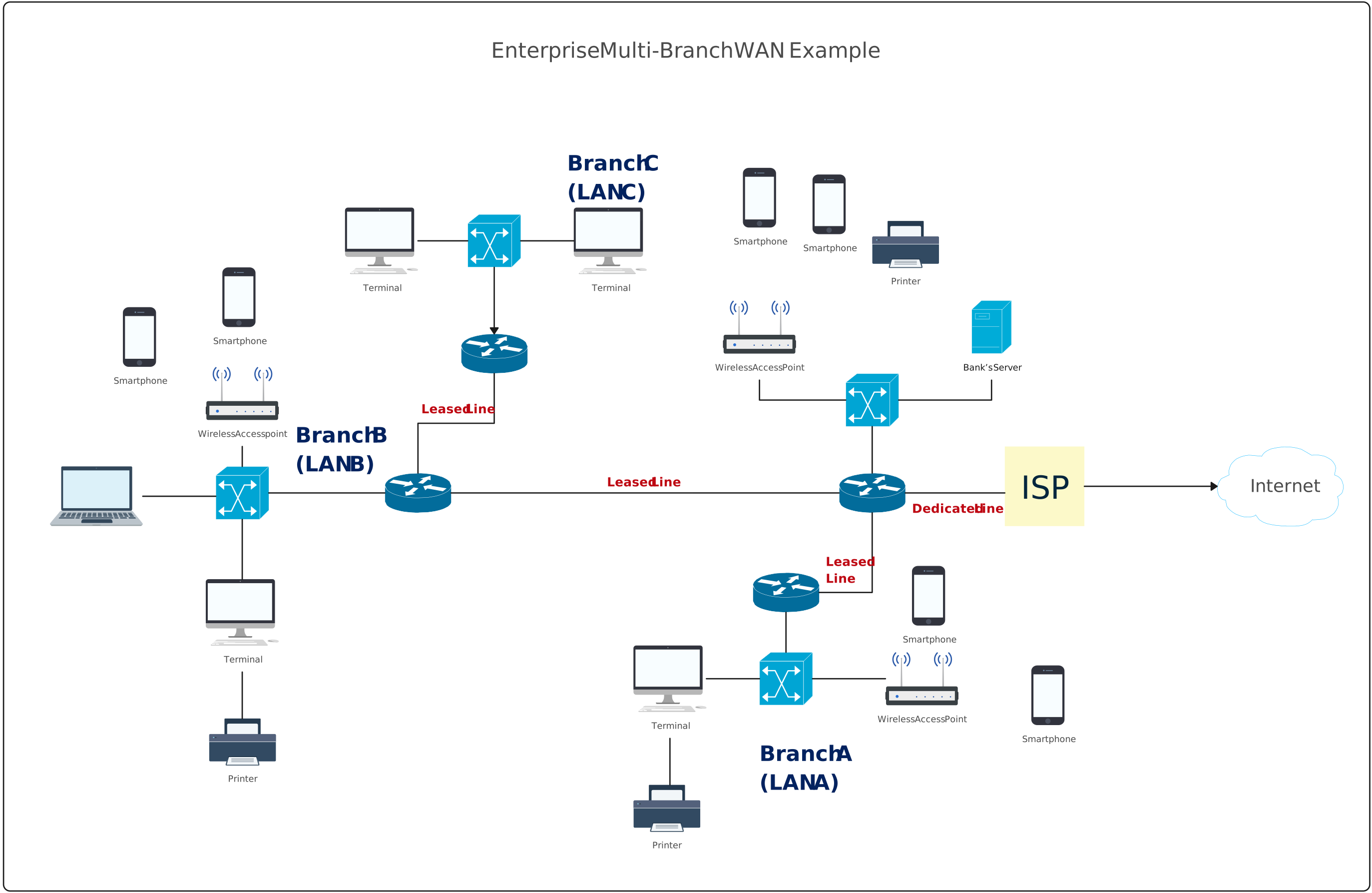
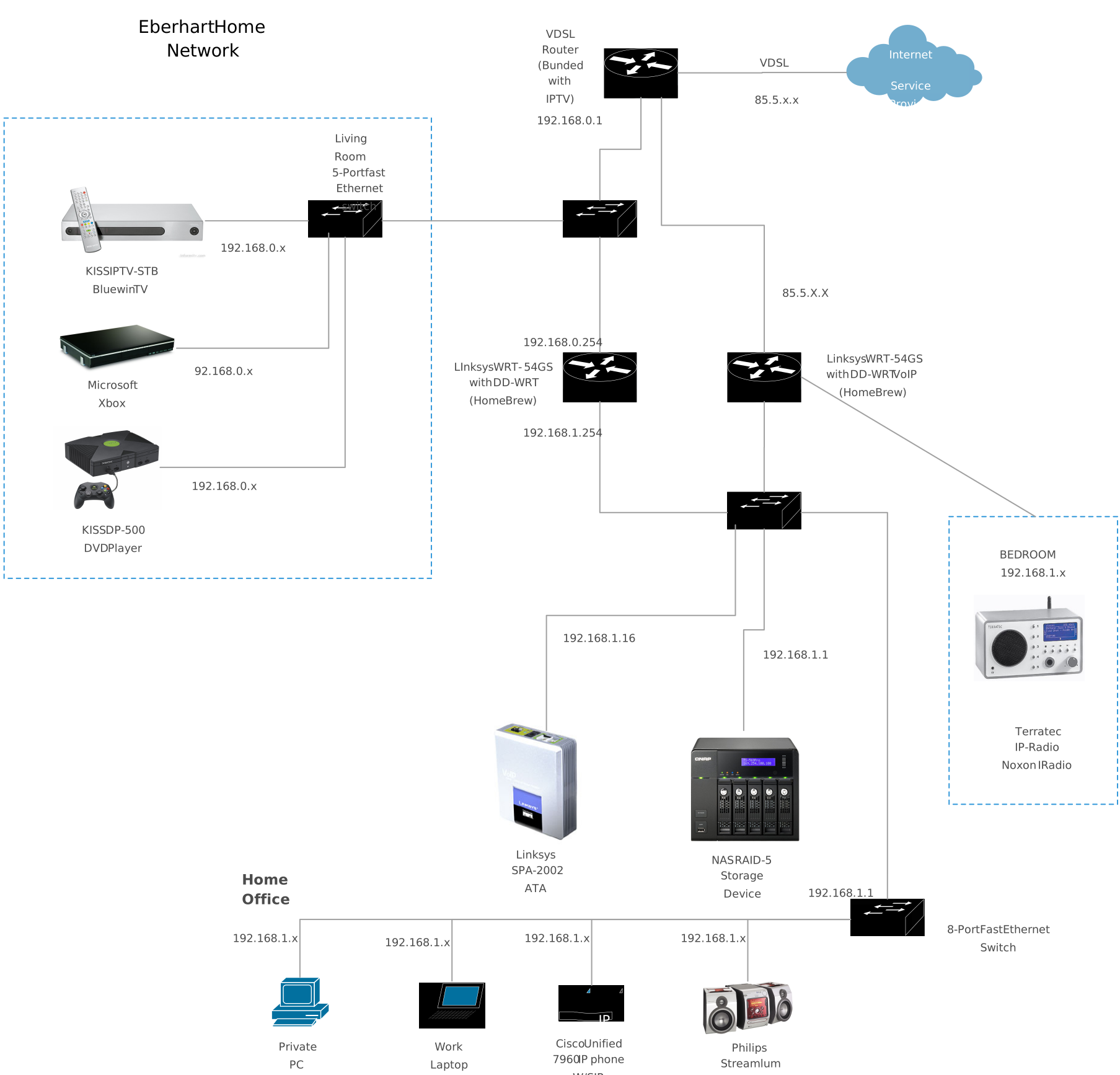
Free Network Diagram Templates to Get Started


Helpful Resources for Building Network Diagrams
Learn about the different types of network diagrams with examples.
Discover the different types of network topology and their use cases.
Learn about the Home Network Diagram and its applications.
Learn about the Wide Area Network Diagram and its applications.
FAQs about MAN Networking Diagrams
What is the typical range covered by a MAN diagram?
Can a MAN diagram show cloud services?
Is redundancy important in MAN design?
When should a MAN network diagram be used instead of a WAN?
What is the Purpose for the Metropolitan Area Network?
Resources
None Dong-Hoon Cho, et al. Performance Analysis of the IEEE 802.16 Wireless Metropolitan Area Network. 1 Apr. 2005, https://doi.org/10.1109/dfma.2005.41.
White, I.M, et al. “A Summary of the Hornet Project: A Next-Generation Metropolitan Area Network.” IEEE Journal on Selected Areas in Communications, vol. 21, no. 9, 1 Nov. 2003, pp. 1478–1494, https://doi.org/10.1109/jsac.2003.818838.