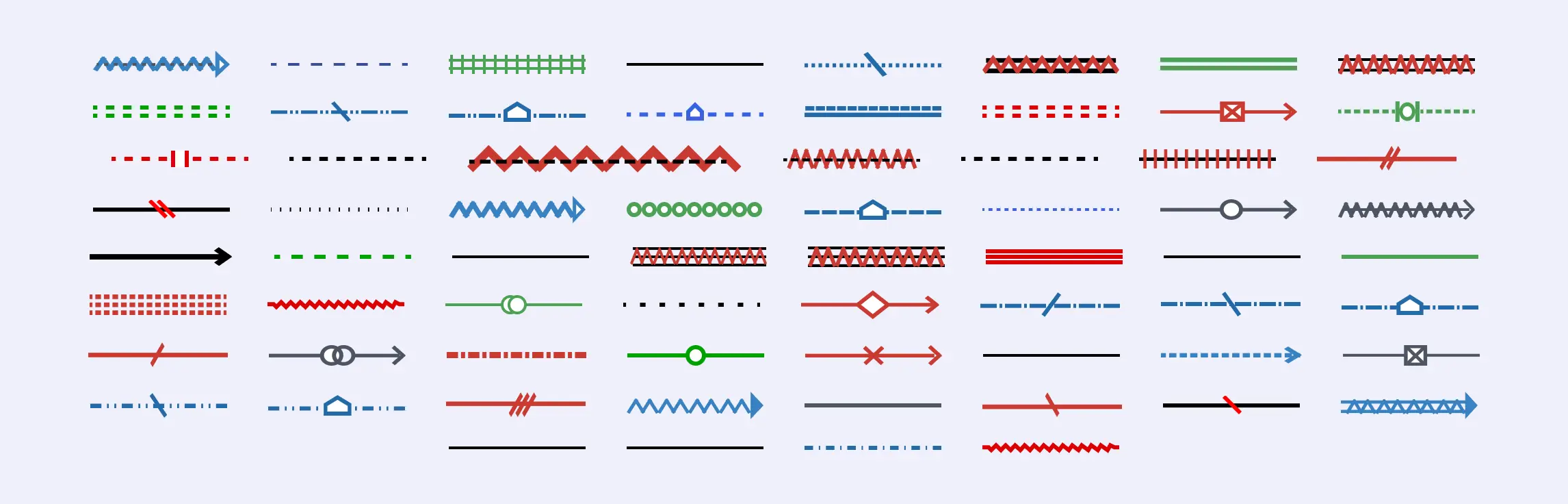
You may know the family story, but choosing the right genogram connector to represent it can be challenging. Genogram relationship types help show how people in a family are connected and how they relate to each other emotionally and socially—from marriages and parent–child links to close bonds, conflict, or estrangement. By mapping these connections, genograms reveal patterns and dynamics that shape families across generations. The modern genogram method was formalized in the 1980s by family therapists Monica McGoldrick and Randy Gerson, who introduced standardized genogram symbols to analyze family relationships and intergenerational patterns.
What Are Genogram Relationship Types?
Genogram relationship types show how individuals in a family are connected and how they relate to each other. Unlike a basic family tree, genograms capture both structural relationships (such as marriage, parent–child, or siblings) and emotional relationship types (such as closeness, conflict, or estrangement) and interpersonal relationship patterns. These connections are typically represented using different lines, symbols, and annotations, making complex family systems easier to understand.
Broadly, genogram relationships fall into two categories: structural relationships (family or legal connections) and emotional relationships (psychological or social dynamics). In this guide, we cover the main groups of relationship lines in genograms:
- Partner / legal and romantic relationships
- Parent–child relationships
- Sibling relationships
- Emotional relationship dynamics
- Harmony and positive emotional bonds
- Hostile emotional dynamics
- Violence and focus relationships
- General abuse relationships
- Manipulative or controlling relationships
Partner/ Legal & Romantic
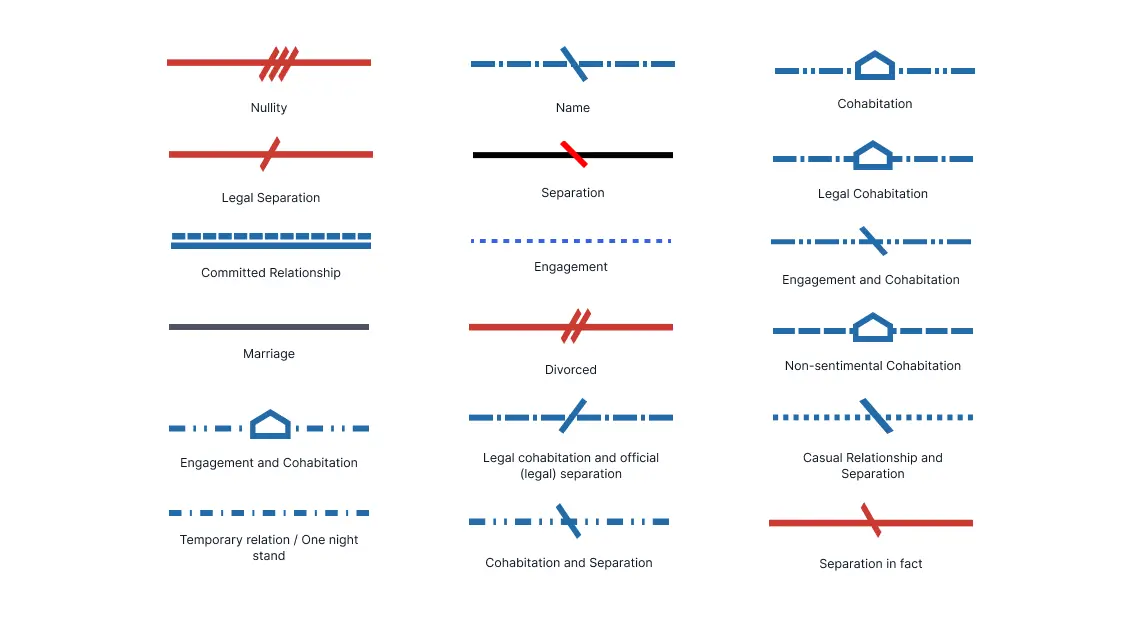
Partner relationships define how families form and change over time. In genograms, these types of genogram relationships show the legal status, romantic connection, and living arrangements between two individuals.
| Relationship Type | Description | When to Use |
|---|---|---|
| Marriage | Legally married partners, shown with a solid line connecting the couple. | Use when two individuals are legally married, such as parents in a nuclear family. |
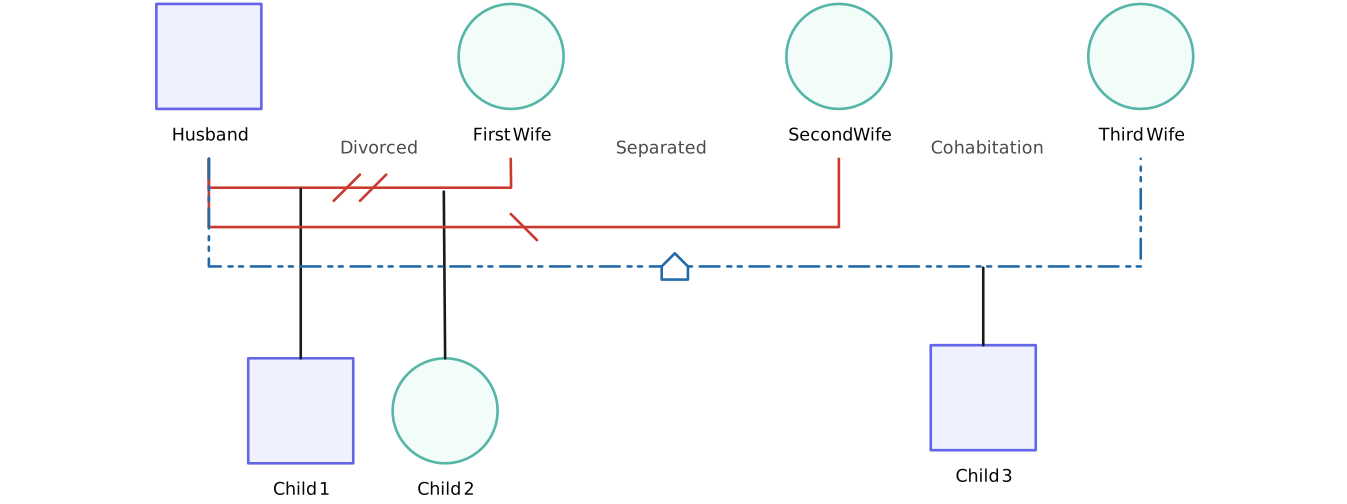
| Divorced | Formerly married partners whose marriage has ended legally, shown with a solid line crossed by two slashes. | Use when a couple was married but later legally divorced. |
| Separation | Partners who are no longer living together, shown with a solid line crossed by a single slash. | Use when a couple is separated but not legally divorced. |
| Legal Separation | Married partners who are legally separated, typically shown with a marriage line marked with separation notation. | Use when spouses are formally separated through a legal agreement. |
| Separation in Fact | Partners who have stopped living together without formal legal separation, shown with a marriage line marked as separated. | Use when a couple lives apart and functions independently but has not legally separated. |
| Nullity (Annulment) | A marriage declared legally invalid, usually indicated with a marriage line marked with annulment notation. | Use when a marriage has been legally annulled rather than divorced. |
| Engagement | Partners who intend to marry, shown with a dashed line connecting the couple. | Use when two individuals are engaged but not yet married. |
| Cohabitation | Romantic partners living together without marriage, shown with a dashed line between partners. | Use when a couple shares a household but is not legally married. |
| Legal Cohabitation | Partners in a legally recognized domestic partnership or civil union, shown with a dashed partner line with legal notation. | Use when two individuals share a legally recognized domestic partnership. |
| Engagement and Cohabitation | Engaged partners who also live together, shown with a dashed line indicating cohabitation and engagement. | Use when a couple is both engaged and sharing a household. |
| Cohabitation and Separation | Partners who lived together but later separated, shown with a dashed line crossed by a slash. | Use when a cohabiting couple has ended their relationship. |
| Legal Cohabitation and Separation in Fact | Legally recognized cohabiting partners who now live apart, shown with a dashed line marked with separation. | Use when partners in a civil partnership separate without formal legal action. |
| Legal Cohabitation and Official Separation | Legally recognized cohabiting partners who formally separate, shown with a dashed line with separation notation. | Use when a domestic partnership ends through legal separation. |
| Non-Sentimental Cohabitation | Individuals living together without a romantic relationship, shown with a dashed household line. | Use when people share housing for practical reasons such as finances or caregiving. |
| Non-Sentimental Cohabitation and Separation | Individuals who shared housing without a romantic relationship and later stopped living together. | Use when a non-romantic cohabitation arrangement ends. |
| Committed Relationship | Long-term romantic partners who are not legally married, shown with a solid or dashed partner line. | Use when two people consider themselves a committed couple without formal marriage. |
| Casual Relationship and Separation | A short-term romantic relationship that has ended, shown with a light dashed line with separation mark. | Use when individuals had a brief romantic relationship that later ended. |
| Temporary Relationship / One-Night Stand | A very brief romantic or sexual encounter, shown with a thin dashed connection line. | Use when a relationship occurred once or lasted only a short period. |
Parent–Child Relationships in Genograms
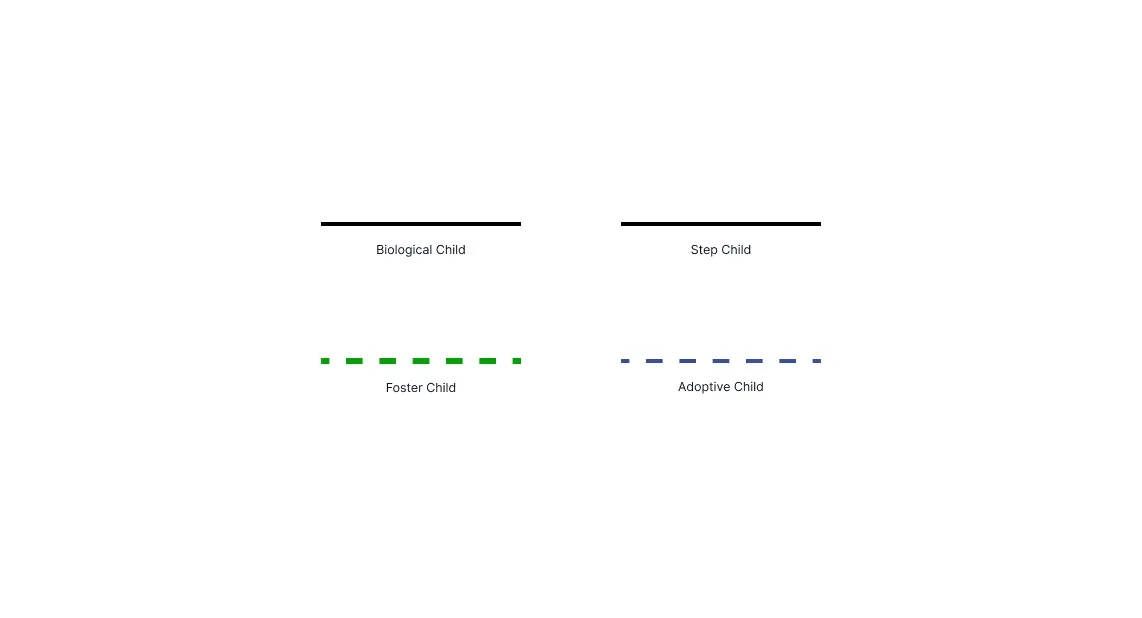
Parent–child relationships show how children are connected to parents within a family structure.
| Relationship Type | Description | When to Use |
|---|---|---|
| Biological Child | A child biologically related to the parent(s), shown with a solid vertical line from the couple or parent to the child. | Use when mapping a child born to one or both parents in the genogram. |
| Adoptive Child | A child legally adopted into the family, typically shown with a dashed vertical line indicating legal (non-biological) parentage. | Use when a child becomes part of the family through formal adoption. |
| Foster Child | A child placed in temporary care with a family, often shown with a dotted or dashed line to indicate non-permanent caregiving. | Use when representing children in foster care arrangements. |
| Step Child | A partner’s biological child from a previous relationship, shown with a solid line to the biological parent and a step-connection to the stepparent. | Use when mapping blended families formed through remarriage or partnership. |
Sibling Relationships in Genograms
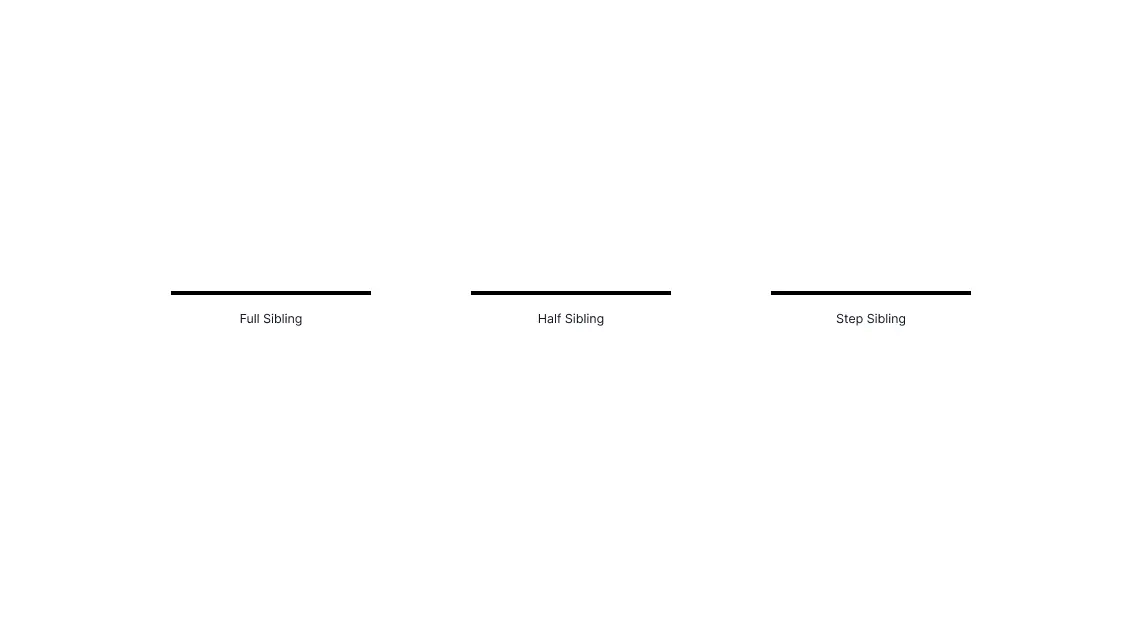
Sibling relationships show how children in a family are related to each other.
| Relationship Type | Description | When to Use |
|---|---|---|
| Full Sibling | Individuals who share the same biological parents, typically shown with a shared sibling line branching from the same parental line. | Use when two or more children are born to the same parents. |
| Half Sibling | Individuals who share one biological parent, shown with separate parental connections but linked on the same sibling line. | Use when children have one parent in common but different other parents. |
| Step Sibling | Individuals who become siblings through their parents’ marriage or partnership, shown with step-family connections rather than shared biological lines. | Use when children from different parental relationships form a blended family. |
Emotional Relationships in Genograms
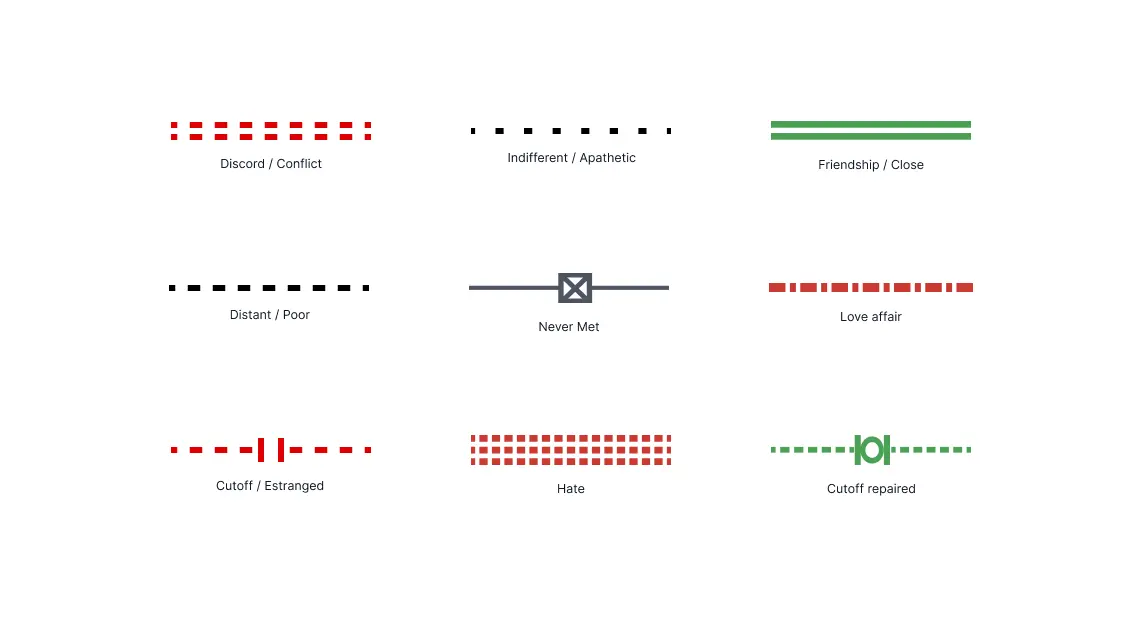
Emotional relationships capture the quality of interactions between individuals, not just their structural connection.
| Relationship Type | Description | When to Use |
|---|---|---|
| Friendship / Close | A warm, supportive relationship, shown with a solid double line between individuals. | Use when two family members share strong emotional closeness and mutual support. |
| Discord / Conflict | A tense or argumentative relationship, shown with a zigzag or jagged line. | Use when individuals frequently argue or experience ongoing tension. |
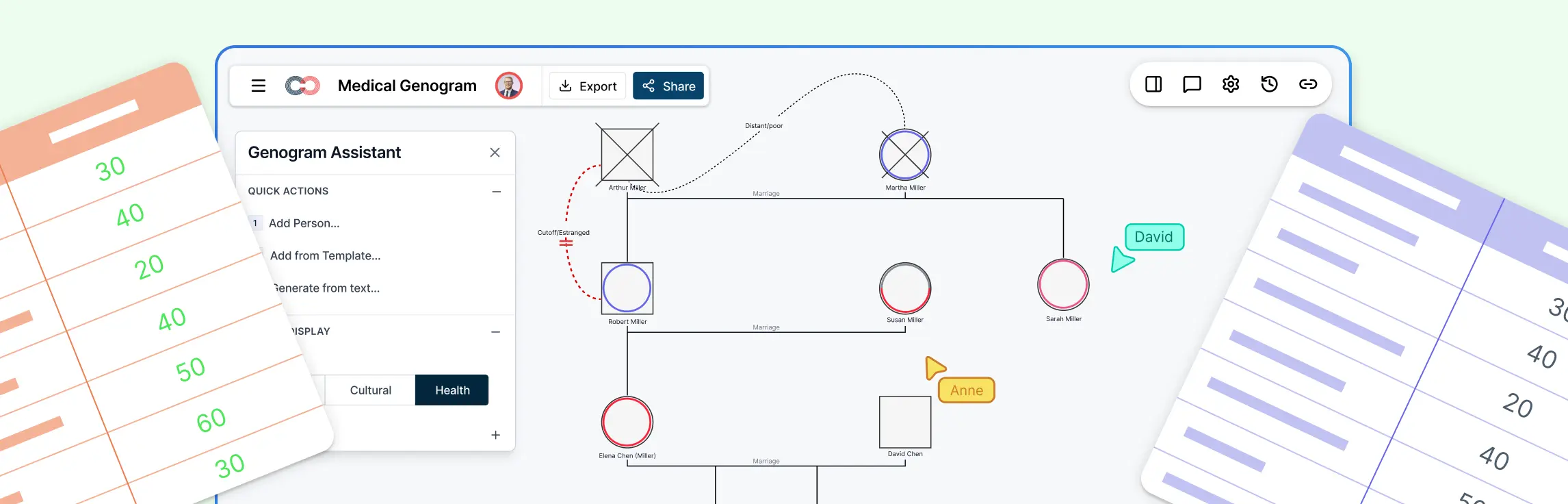
| Cutoff / Estranged | No contact between individuals, shown with a broken line or a line marked with a slash. | Use when family members have deliberately stopped communicating, such as an adult child who no longer speaks to a parent. |
| Distant / Poor | Limited interaction or emotional connection, shown with a dashed line. | Use when relatives rarely communicate or have a weak relationship. |
| Indifferent / Apathetic | Little emotional involvement, shown with a thin dashed line. | Use when individuals show minimal interest or concern for each other. |
| Love Affair | A romantic or intimate relationship outside a primary partnership, shown with a dashed romantic connection line. | Use when documenting extramarital or secret romantic relationships. |
| Cutoff Repaired | A previously estranged relationship that has resumed contact, shown with a broken line that reconnects. | Use when family members reconnect after a period of no communication. |
| Never Met | Individuals who are related but have had no direct interaction, shown with a dashed line and note. | Use when relatives are aware of each other but have never met. |
| Hate | A relationship marked by intense resentment or hostility, shown with a heavy zigzag line. | Use when strong negative feelings dominate the relationship. |
Harmony and Positive Emotional Relationships in Genograms
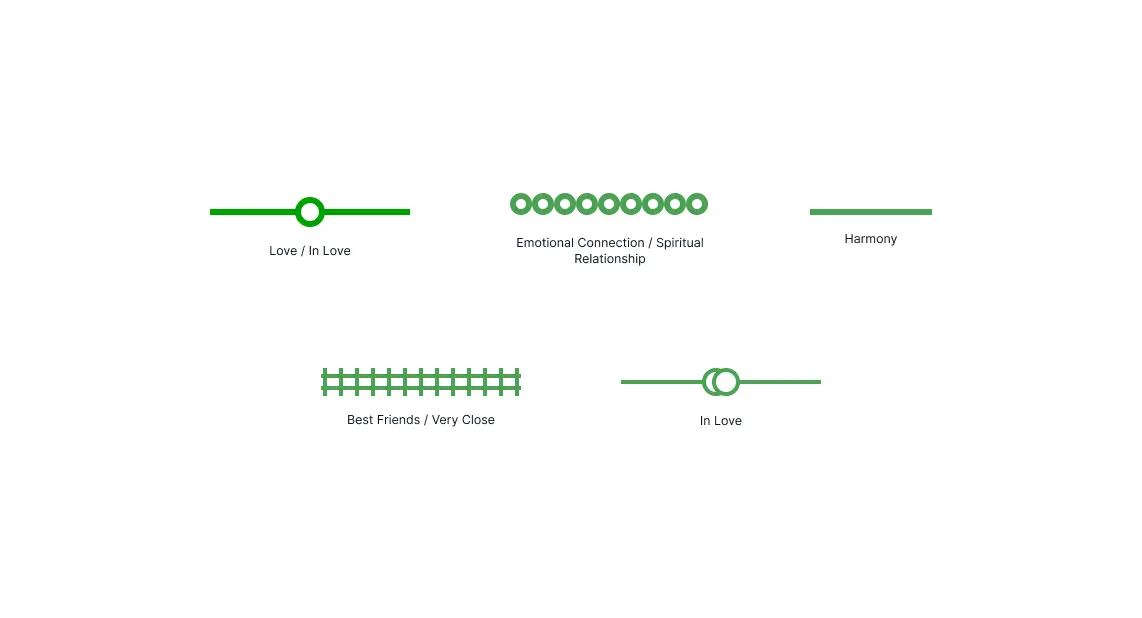
Harmony relationships represent strong, supportive emotional bonds between individuals.
| Relationship Type | Description | When to Use |
|---|---|---|
| Harmony | A balanced and cooperative relationship, shown with a solid line indicating positive connection. | Use when family members maintain a stable, respectful, and supportive relationship. |
| Love / In Love | A strong romantic or affectionate bond, shown with a double solid line or emphasized partner connection. | Use when individuals share deep romantic feelings or affection. |
| In Love | An intense romantic attachment, typically shown with a reinforced partner line. | Use when highlighting a deeply affectionate romantic relationship. |
| Best Friends | A very close friendship, shown with a double line indicating strong emotional closeness. | Use when two individuals share a highly supportive and trusting bond. |
| Emotional Connection / Spiritual Relationship | A deep emotional or spiritual bond, shown with a solid line often annotated to indicate strong connection. | Use when individuals feel closely connected beyond typical family interaction. |
Hostile Emotional Relationships in Genograms
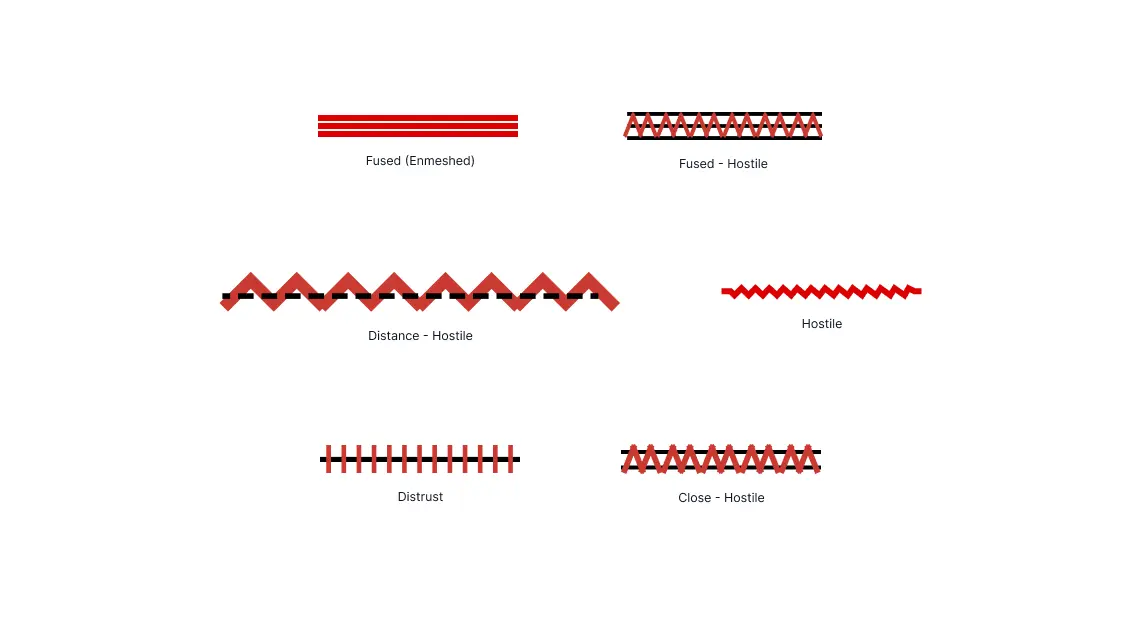
Hostile emotional relationships represent strained or unhealthy emotional dynamics between individuals.
| Relationship Type | Description | When to Use |
|---|---|---|
| Fused (Enmeshed) | Overly intense emotional involvement with blurred boundaries, shown with a thick or triple line between individuals. | Use when family members are excessively dependent or overly involved in each other’s lives. |
| Hostile | Ongoing anger or resentment, shown with a zigzag or jagged line. | Use when individuals frequently argue or display persistent hostility. |
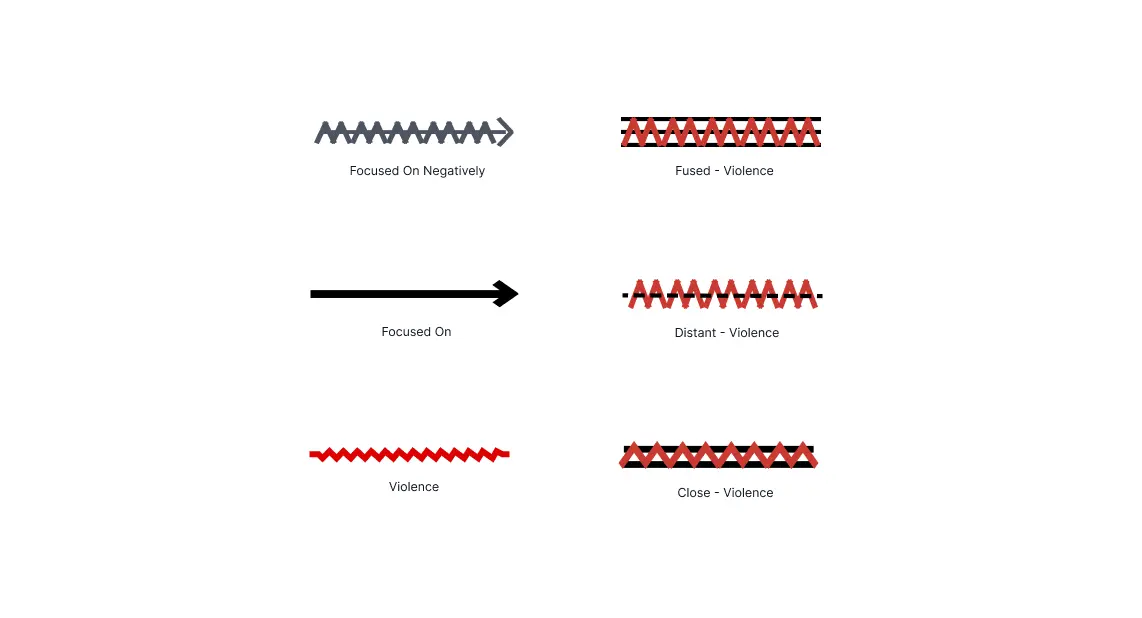
| Fused – Hostile | A relationship that is both emotionally intense and conflict-driven, shown with a thick zigzag line. | Use when individuals are highly involved with each other but also experience regular conflict. |
| Distance – Hostile | Emotional distance combined with underlying resentment, shown with a dashed zigzag line. | Use when family members keep their distance but still have unresolved hostility. |
| Close – Hostile | Emotional closeness mixed with tension, shown with a double line marked with conflict notation. | Use when individuals remain connected but frequently experience disagreements. |
| Distrust | A lack of trust or suspicion in the relationship, shown with a broken or lightly jagged line. | Use when one or both individuals feel uncertain or wary of the other. |
Violence and Focus Relationships in Genograms
Violence and focus relationships highlight power dynamics, aggression, or intense attention directed toward an individual within a family system.
| Relationship Type | Description | When to Use |
|---|---|---|
| Violence | Physical aggression between individuals, shown with a bold jagged or zigzag line. | Use when one person has been physically violent toward another. |
| Distant – Violence | Violence in a relationship that also involves emotional or physical distance, shown with a dashed jagged line. | Use when individuals are not closely connected but violence has occurred. |
| Focused On | One individual receives significant attention or pressure from another, shown with a solid directional line or arrow. | Use when a family member becomes the main focus of expectations, concern, or involvement. |
| Focused On Negatively | One individual is targeted with blame, criticism, or negative attention, shown with a directional line marked with conflict notation. | Use when a family member is repeatedly singled out in a negative way, such as being scapegoated. |
General Abuse Relationships in Genograms
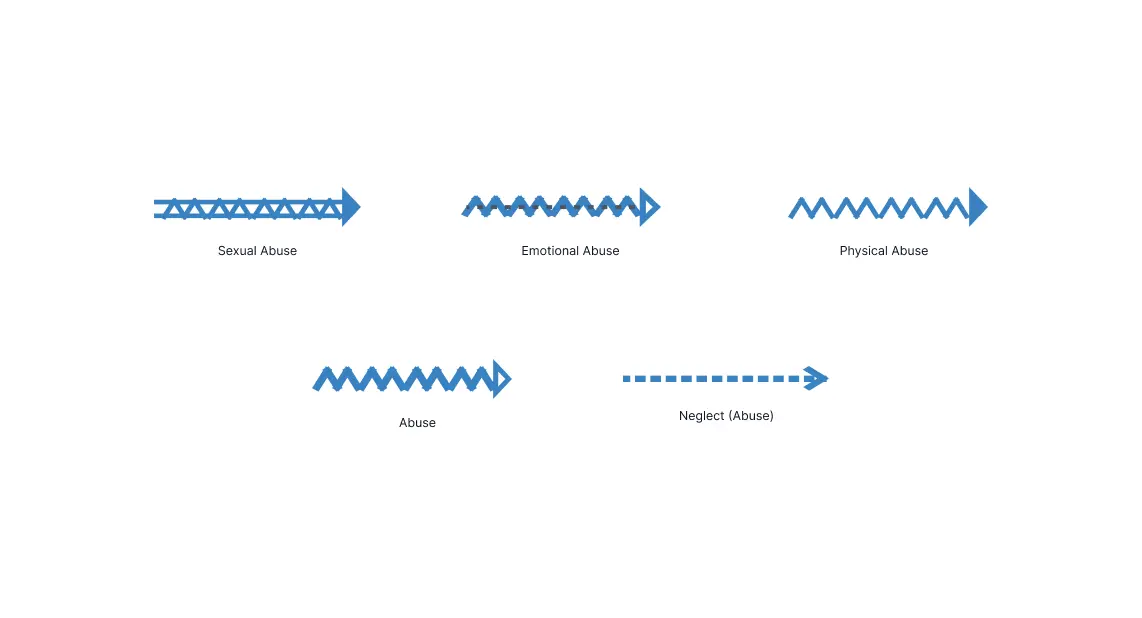
Abuse relationships represent harmful behaviors where one individual causes physical, emotional, or psychological harm to another.
| Genogram Relationship Categories | Description | When to Use |
|---|---|---|
| Abuse | General indication of ongoing mistreatment, shown with a bold jagged or marked line between individuals. | Use when abuse is known but the specific type is unclear or multiple forms of harm are present. |
| Physical Abuse | Physical harm or violence, shown with a heavy jagged line emphasizing aggression. | Use when one individual has caused bodily harm or used physical force against another. |
| Emotional Abuse | Psychological harm through intimidation, humiliation, or manipulation, shown with a jagged or broken line with emotional notation. | Use when a relationship involves persistent verbal attacks, control, or emotional distress. |
| Sexual Abuse | Unwanted or exploitative sexual behavior, shown with a distinct marked line indicating sexual harm. | Use when there is disclosure or evidence of sexual abuse in the relationship. |
| Neglect (Abuse) | Failure to provide necessary care or supervision, shown with a dashed or broken caregiving line. | Use when a caregiver does not meet a dependent’s basic physical or emotional needs. |
Manipulative and Controlling Relationships in Genograms
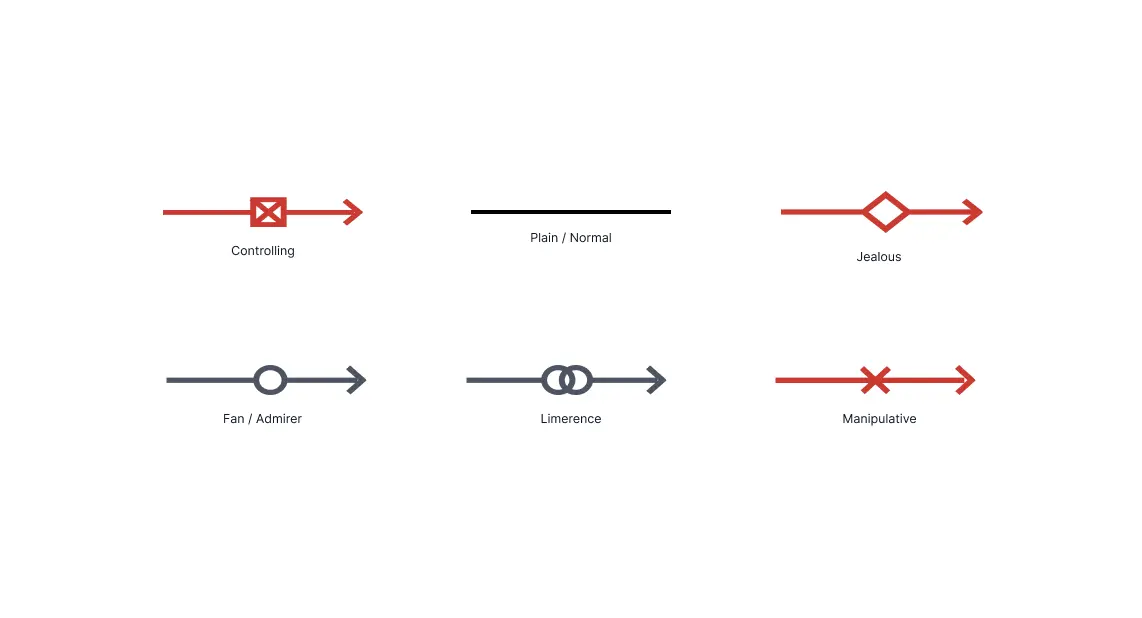
Manipulative relationships represent psychological influence or control dynamics between individuals.
| Relationship Type | Description | When to Use |
|---|---|---|
| Manipulative | Emotional pressure or influence by one person over another, shown with a marked directional or uneven line. | Use when one individual frequently uses guilt, persuasion, or psychological tactics to control outcomes. |
| Controlling | Dominance over another person’s decisions or behavior, shown with a bold directional line indicating authority. | Use when a family member restricts another’s independence or dictates their actions. |
| Jealous | Possessiveness or insecurity within the relationship, shown with a conflict-marked connection line. | Use when one individual shows recurring resentment toward another’s relationships or attention. |
| Fan / Admirer | Strong admiration or idealization of another person, shown with a light directional line indicating one-sided attachment. | Use when one individual looks up to or idolizes another in an emotionally significant way. |
| Limerence | Intense romantic obsession or emotional fixation, shown with an emphasized directional romantic line. | Use when a person experiences persistent, intrusive romantic attraction toward another. |
| Plain / Normal | A neutral relationship without notable emotional intensity, shown with a simple standard connection line. | Use when no strong closeness, conflict, or control dynamic is present. |
When to Use Each Genogram Relationship Type (Clinical Guidance)
Choosing the right relationship type in a genogram helps professionals accurately represent both family structure and interpersonal dynamics. In clinical practice, the goal is not to label every relationship but to highlight the connections that influence family functioning, emotional patterns, or potential risk factors. The following guidance explains when each category of relationship types is typically used.
1. Use Partner, Legal, and Romantic Relationships to Map Family Structure
These relationship types are used when documenting formal or romantic partnerships between individuals. They help clarify the foundation of the family system and show how households and family units are formed.
Use these when mapping:
- Marriage, engagement, or committed partnerships
- Divorce, separation, or annulment
- Cohabitation or domestic partnerships
- Casual or short-term romantic relationships when relevant to the family context
These relationships are especially important when analyzing blended families, remarriages, or relationship transitions across generations.
2. Use Parent–Child Relationships to Clarify Family Composition
Parent–child relationship types are used to show how children are connected to parents biologically or legally. These connections are critical when analyzing inheritance patterns, caregiving roles, and family responsibilities.
Use these when identifying:
- Biological children
- Adopted children
- Foster care arrangements
- Stepchildren within blended families
This category is often important in medical genograms, social work assessments, and family therapy.
3. Use Sibling Relationships to Show Family Hierarchy
Sibling relationship types help clarify how children in the same generation are related to each other. They are especially useful when documenting blended families or complex parent partnerships.
Use these when mapping:
- Full siblings
- Half siblings
- Step siblings
Understanding sibling structure can reveal family alliances, caregiving roles, or generational dynamics.
4. Use Emotional Relationships to Capture Family Dynamics
Emotional relationship types are used when the quality of interaction between individuals is clinically significant. These relationships help reveal patterns that influence behavior, communication, and emotional wellbeing.
Use these when identifying:
- Close or supportive relationships
- Conflict or tension between family members
- Estrangement or emotional distance
- Repaired relationships after conflict
These dynamics are commonly explored in therapy and counseling settings.
5. Use Harmony Relationships to Highlight Support Systems
Harmony relationships indicate healthy emotional bonds and strong support networks within the family. These connections often act as protective factors during stress or crisis.
Use these when mapping:
- Strong affection or love
- Deep friendship between family members
- Emotional or spiritual support connections
Identifying these relationships helps clinicians recognize sources of resilience in the family system.
6. Use Hostile Emotional Relationships to Identify Conflict Patterns
Hostile emotional relationships represent persistent tension or unhealthy emotional dynamics. They are used when conflict or boundary issues play a significant role in family interactions.
Use these when documenting:
- Hostility or ongoing resentment
- Distrust between individuals
- Enmeshed relationships with blurred boundaries
- Relationships that are both close and conflict-driven
These patterns may reveal long-standing relational stress within families.
7. Use Violence and Focus Relationships to Identify Power Dynamics
Violence and focus relationships are used when aggression, dominance, or intense attention influences family interactions.
Use these when identifying:
- Physical violence between individuals
- Situations where one family member is heavily targeted or scrutinized
- Cases where attention or pressure is directed strongly toward a single person
These relationships can highlight risk factors or unhealthy family roles.
8. Use Abuse Relationships to Document Harm
Abuse relationship types are used when there is clear evidence or disclosure of harmful behavior within the family.
Use these when documenting:
- Physical abuse
- Emotional or psychological abuse
- Sexual abuse
- Neglect by caregivers
In clinical and safeguarding contexts, accurately documenting abuse relationships helps professionals assess risk and provide appropriate support.
9. Use Manipulative or Controlling Relationships to Identify Psychological Influence
Manipulative relationship types are used when control, emotional pressure, or unhealthy attachment patterns shape interactions between individuals.
Use these when identifying:
- Controlling behavior in relationships
- Emotional manipulation or coercion
- Intense admiration or fixation on another individual
- Jealousy-driven interactions
These patterns can reveal dependency, dominance, or unhealthy relational dynamics within the family system.
Genogram Templates to Visualize Family Relationships
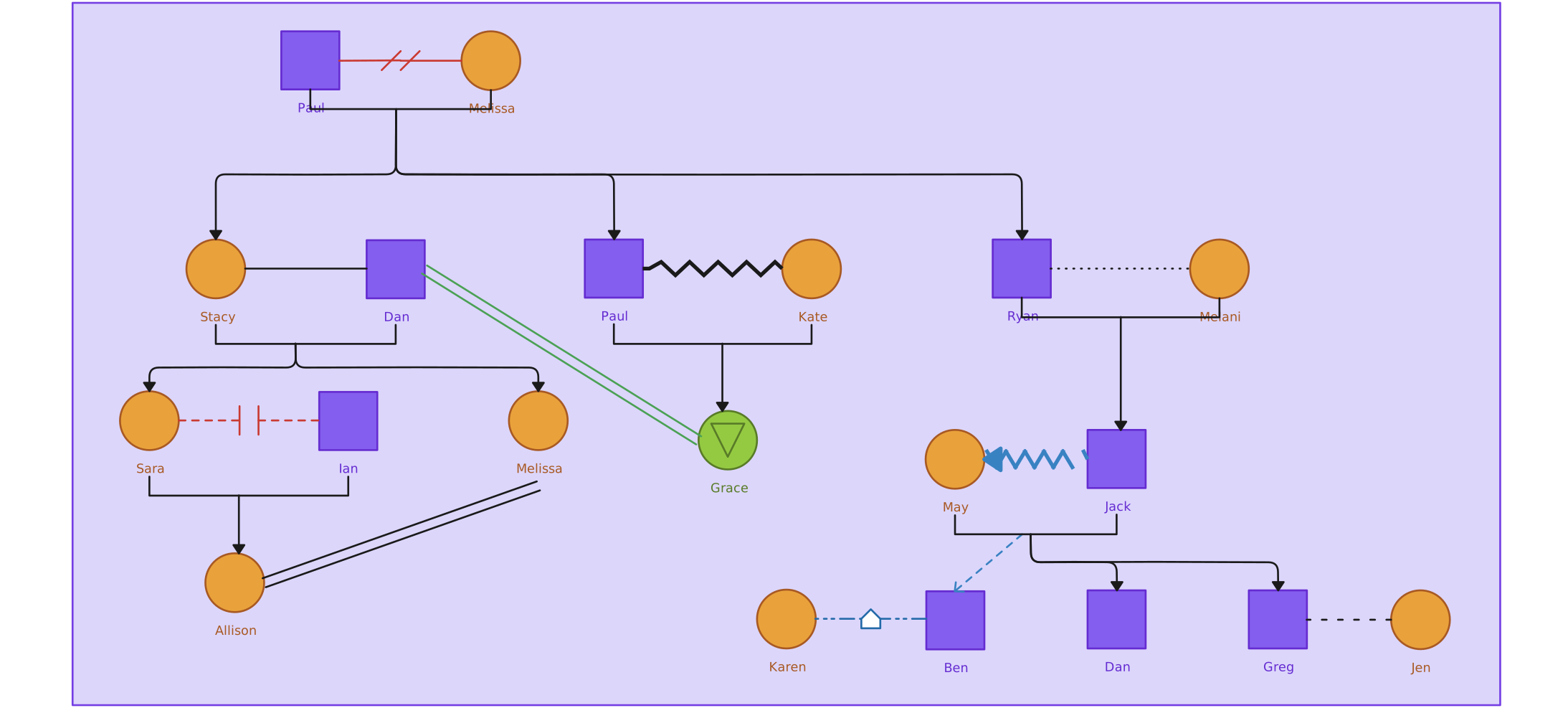
Genogram Template Relationship Types
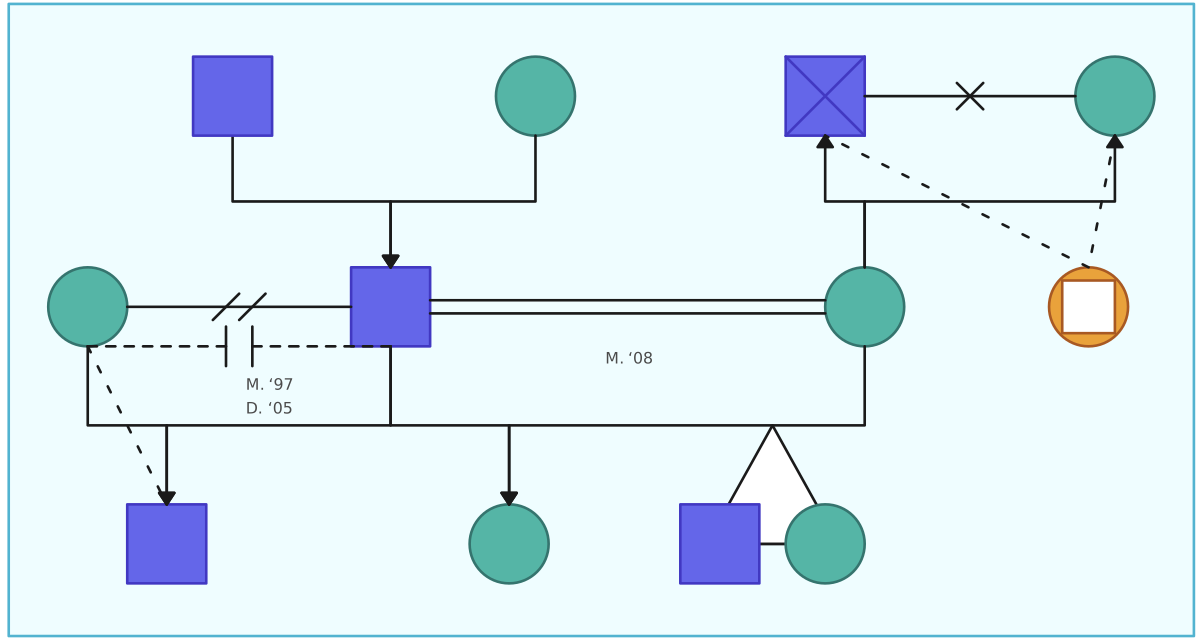

Genogram Example
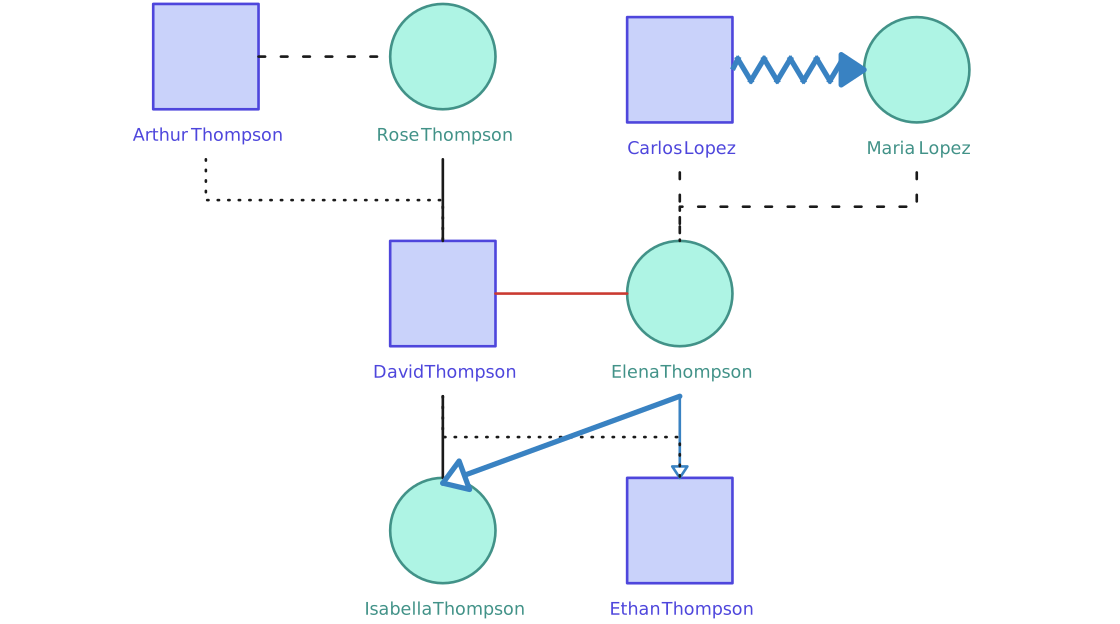
Substance Abuse and Addiction Genogram

Attachment Style Genogram
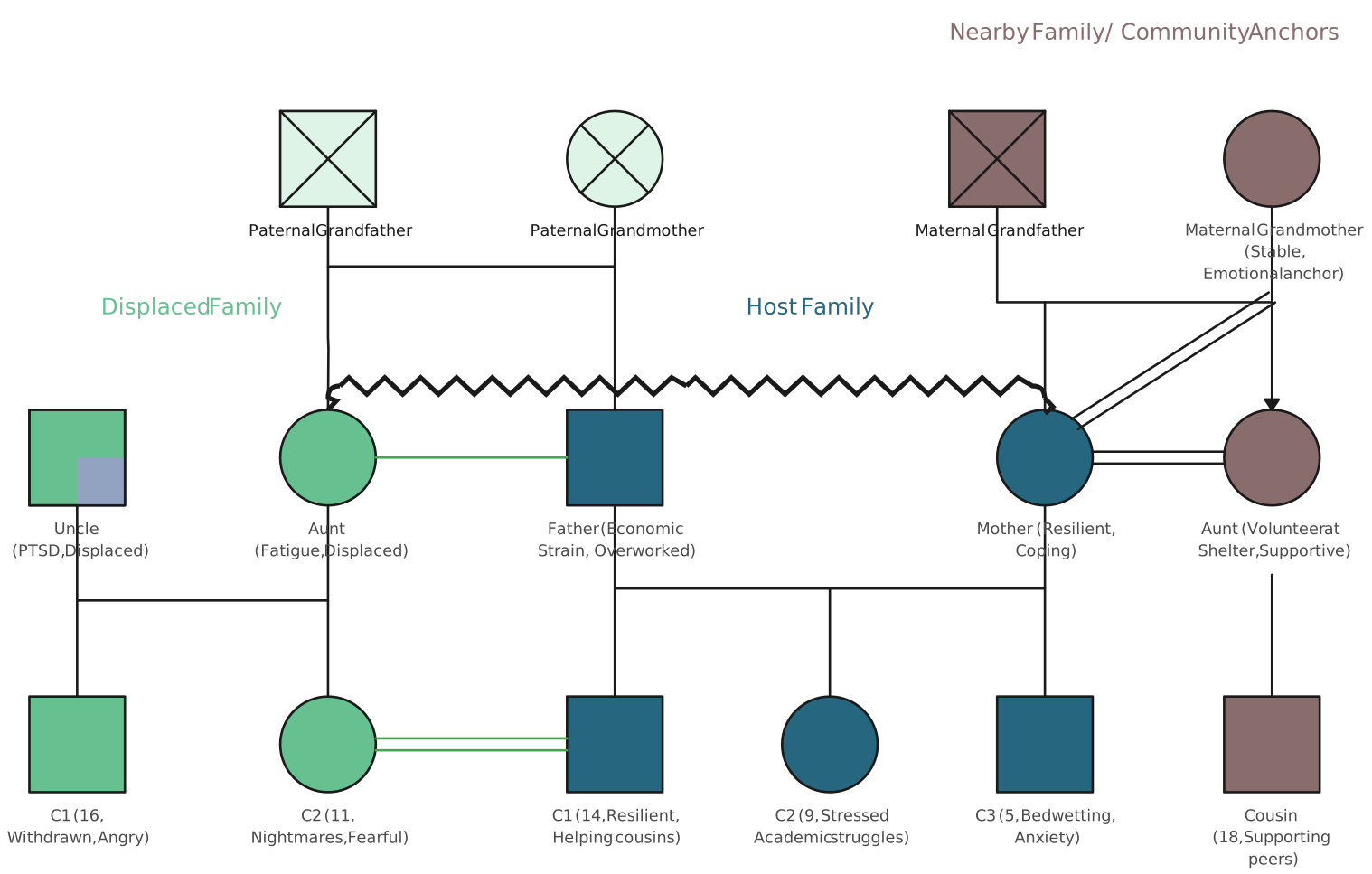
Disaster Trauma Genogram Example
Multiple Marriages Genogram
References
McGoldrick, M. and Gerson, R., 1985. Genograms in family assessment. New York: W. W. Norton & Company. Available at: https://www.scribd.com/document/342849530/Genograms-in-Family-Assessment-Monica-McGoldrick (Accessed: 6 March 2026).
McGoldrick, M., Gerson, R. and Petry, S., 2008. Genograms: Assessment and intervention. 3rd ed. New York: W. W. Norton & Company. Available at: https://www.scribd.com/document/342849680/Genograms-Third-Edition-Monica-McGoldrick (Accessed: 6 March 2026).