In today’s fast-paced business environment, you don’t necessarily need to wait until an employee leaves to start hiring new team members. A solid talent pipeline can expedite the hiring process and help attract the best talent into the company.
This blog post aims to shed light on why you need a talent pipeline and how it can improve the quality of candidates. It will also guide you through the steps in building an effective talent pipeline.
- What is a Talent Pipeline?
- How to Build a Talent Pipeline for Your Business
- Difference Between Talent Pipeline and Succession Planning
- Benefits of a Talent Pipeline
- Common Mistakes to Avoid When Creating a Talent Pipeline
- Why Do You Need a Talent Pipeline?
What is a Talent Pipeline?
Talent pipelines refer to a company’s requirement to have a continuous pool of qualified candidates who can be potentially hired to fill positions at various levels in the organization. Since different positions demand varied skills and competencies, the company must develop appropriate programs to develop the required skills sets.
Your talent pool should ideally consist of candidates whose competencies are desirable to the organization. Thus, having a talent pipeline propels the need for continual grooming and cultivating top talent from both inside and outside the company.
A healthy recruiting pipeline enables you to forge strong relationships with potential candidates.
How to Build a Talent Pipeline for Your Business
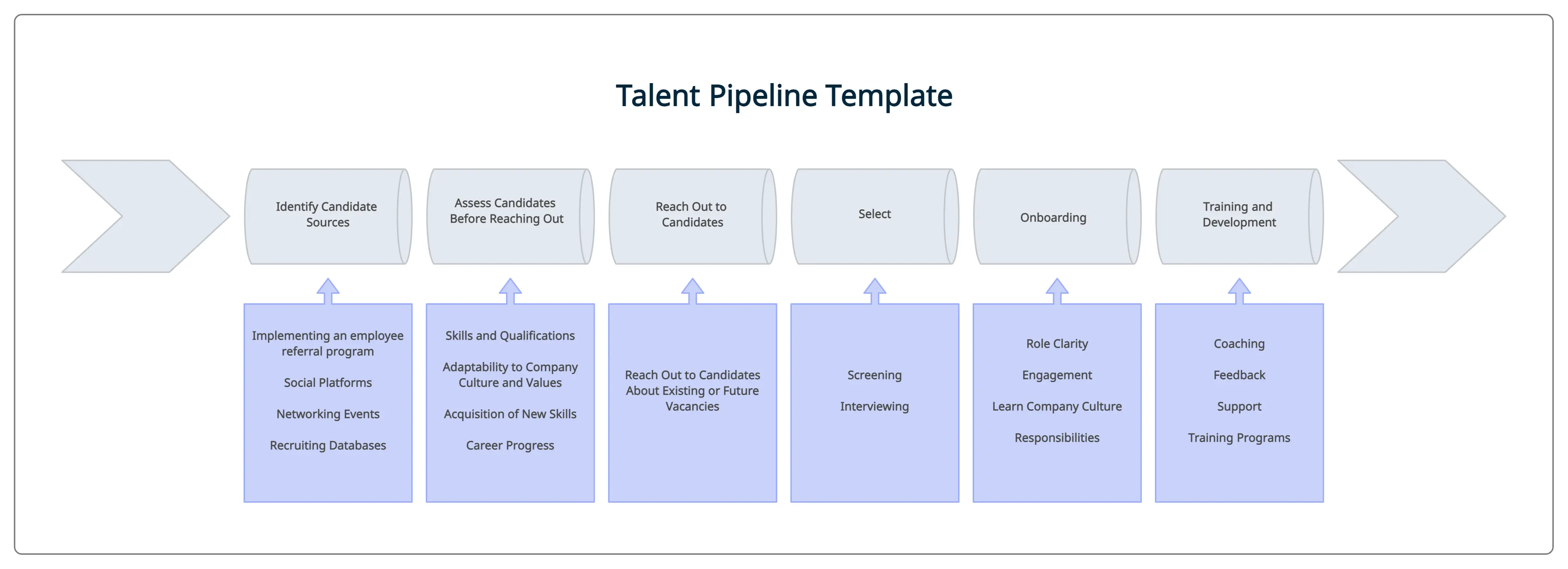
We broke down the process of building a talent pipeline into the following steps.
- Assess the Current Skill Requirements of Your Organization
- Identify Talent Sources
- Reach out to Potential Candidates
- Focus on Training and Development
Now let’s take a look at each of the above points in detail.
Assess the Current Skill Requirements of Your Organization
The first step in building a recruitment pipeline is to assess whether there are existing skill gaps and talent needs in the organization.
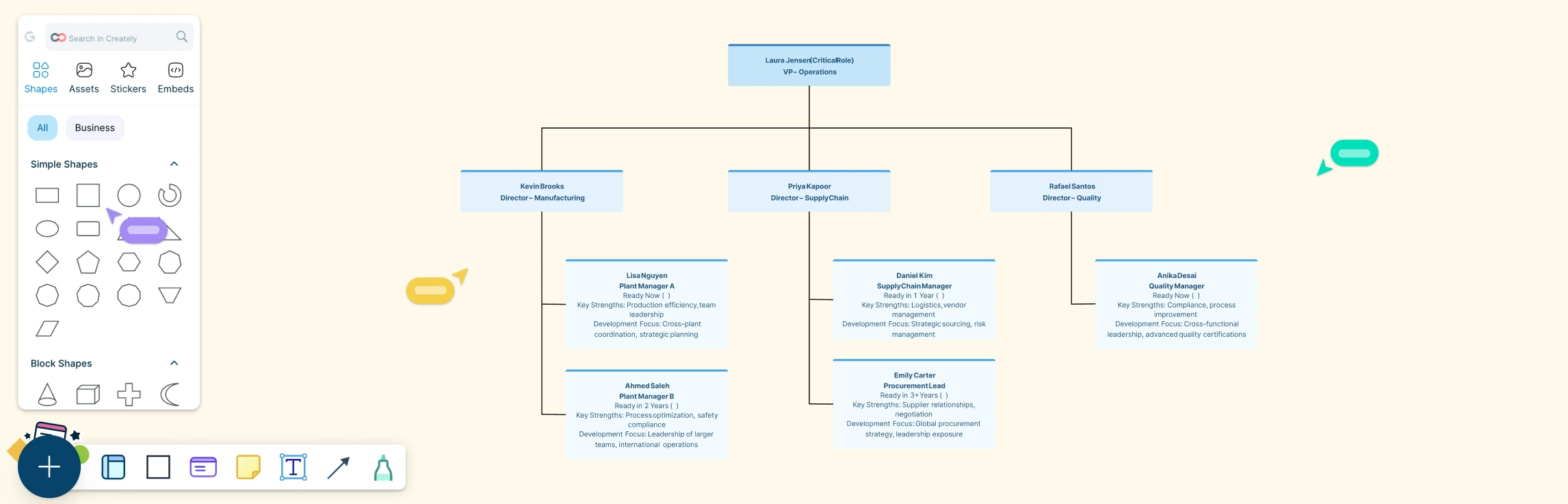
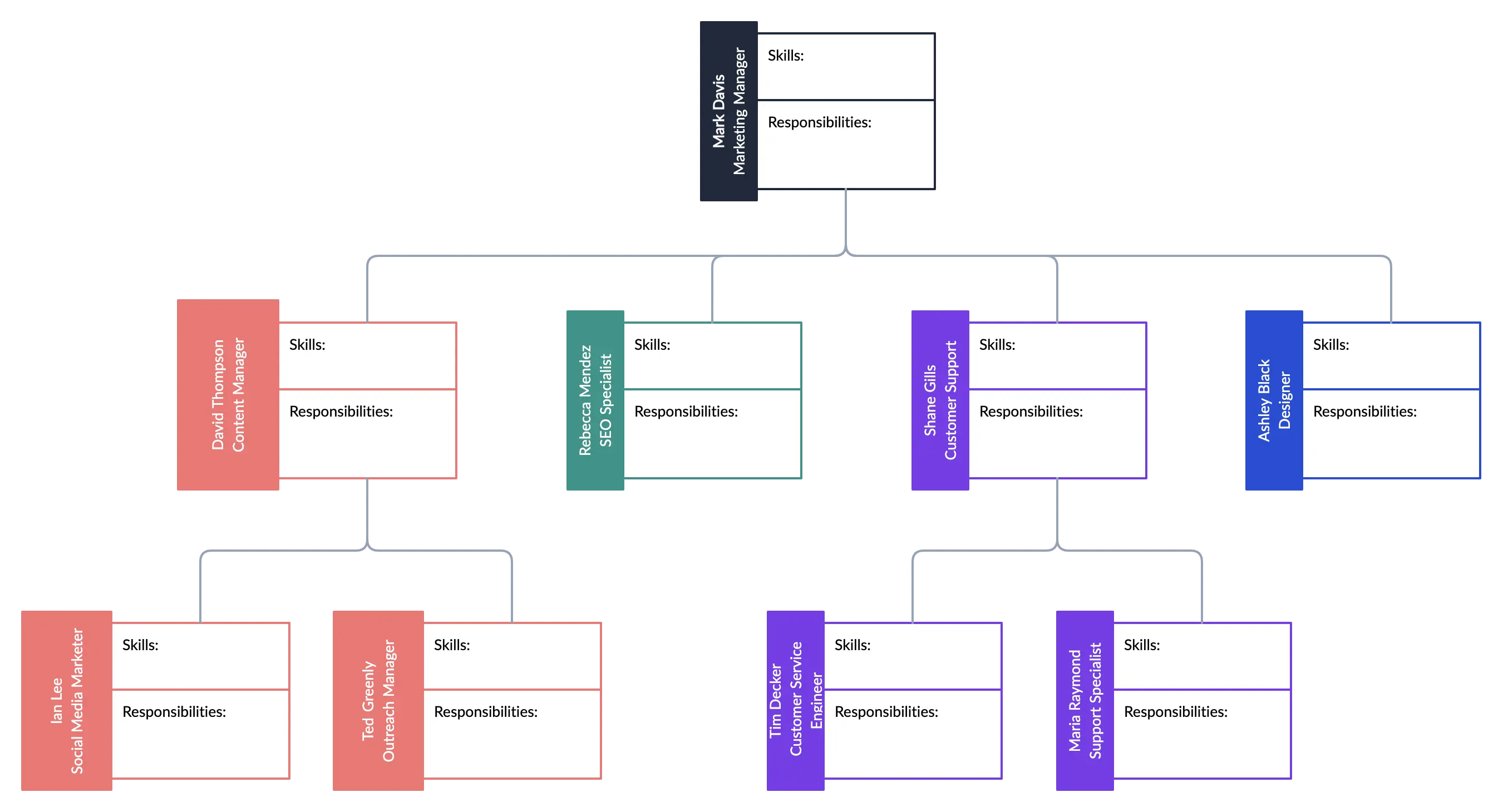
You can do this by visualizing an org chart and analyzing the critical roles in operations management. Once the roles are identified, conduct an assessment of the skills required by each position.
Map out organization charts for each department of the company on a single canvas to identify existing skill gaps. This knowledge can help plan an effective talent pipeline since it gives you a clear idea on the type of candidates to approach.
Creately is already armed with multiple customizable templates of org charts that help you analyze the most important roles in the company.
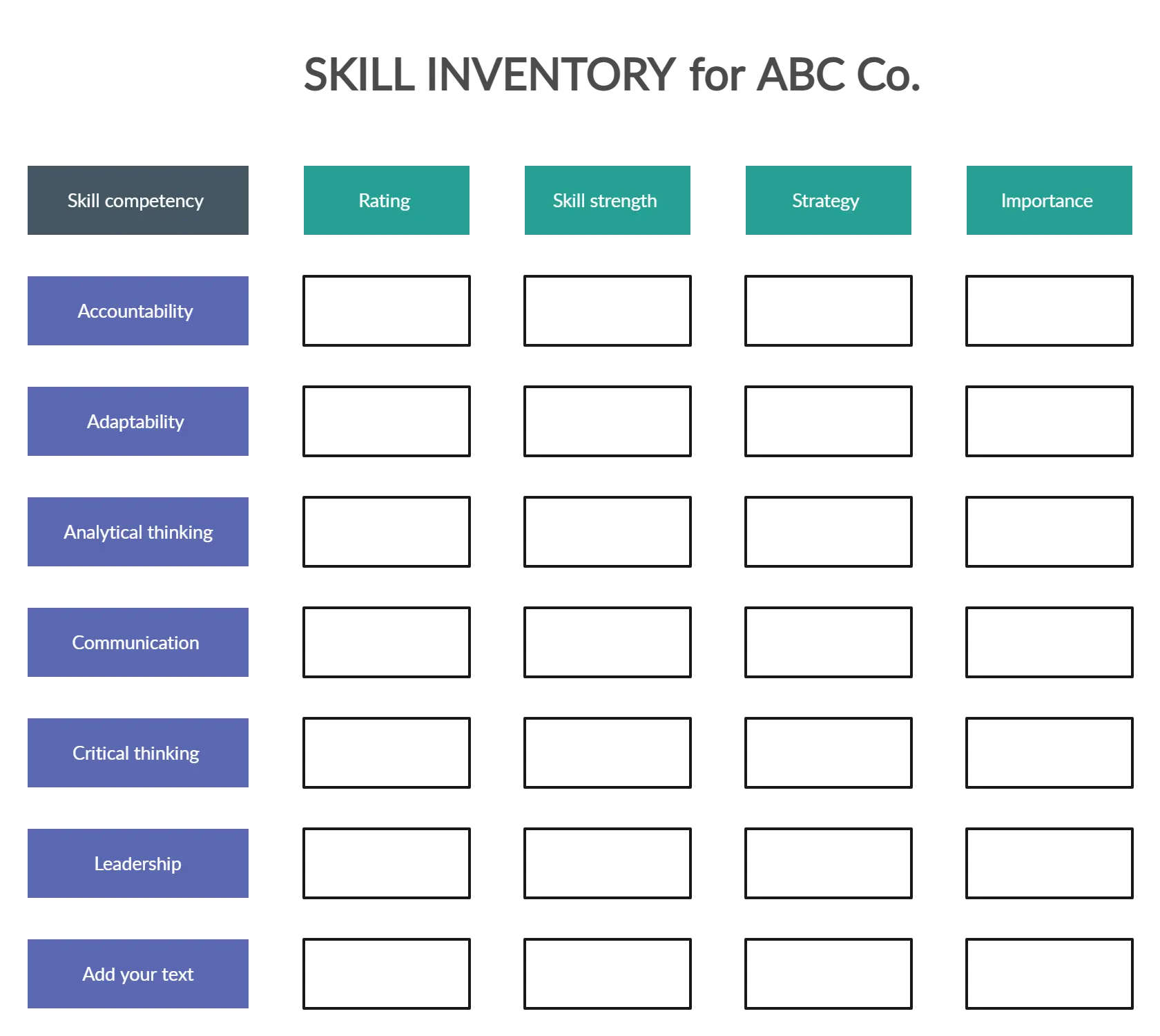
Another useful template is the skills inventory template that helps to organize each employees skill to identify gaps and requirements for future job roles.
Identify Talent Sources
If you have conducted a successful skill assessment, then move on to identifying potential internal and external talent sources.
Referrals from current employees is an internal talent source. Encourage your team members to refer potential candidates for future opportunities. You can even develop a strategy to reward employees whose referrals lead to hires.
Social platforms such as LinkedIn are great external sources to approach potential candidates. These platforms allow you to get an idea of the skills of potential candidates and go a step further to engage with them.
Networking events too provide opportunities to identify prospective candidates and build relationships and maintain a channel of communication with them. This practice enables you to approach them whenever there is an opportunity within the company.
Recruiting databases are another source to gain instant access to a large number of applicants so that you have a wider selection.
Reach out to Potential Candidates
Once you have identified the sources, you can start reaching out to prospective applicants. Firstly, assess the candidates that you came across on all the above platforms. Use the following questions to base your assessment.
Does the applicant have the necessary skills/qualifications and/or experience suited for a particular position in the company?
Will he/she fit in with the company culture?
What new skills will he/she be able to acquire if selected?
Will he/she have a career progression pathway within the organization?
Engage with prospective candidates and let them know about potential opportunities in the organization. Since most candidates in your talent pool will be passive candidates, maintain a fine balance of meaningful interactions without irritating them with too much information.
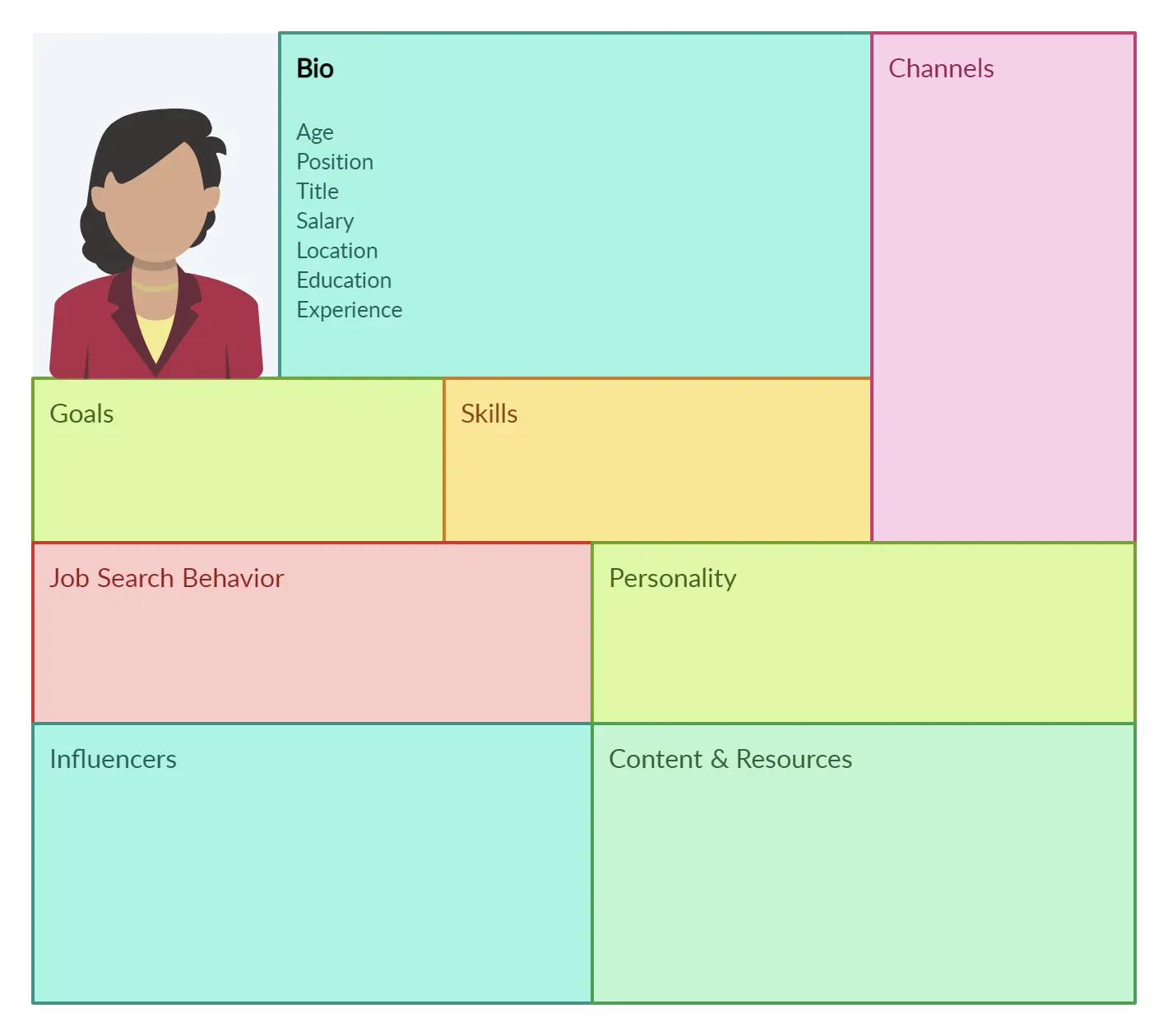
Note: Before reaching out to candidates, it would be best if you detail out the ideal potential candidate for the given job role. For this exercise, you can use a candidate persona template.
Focus on Training and Development
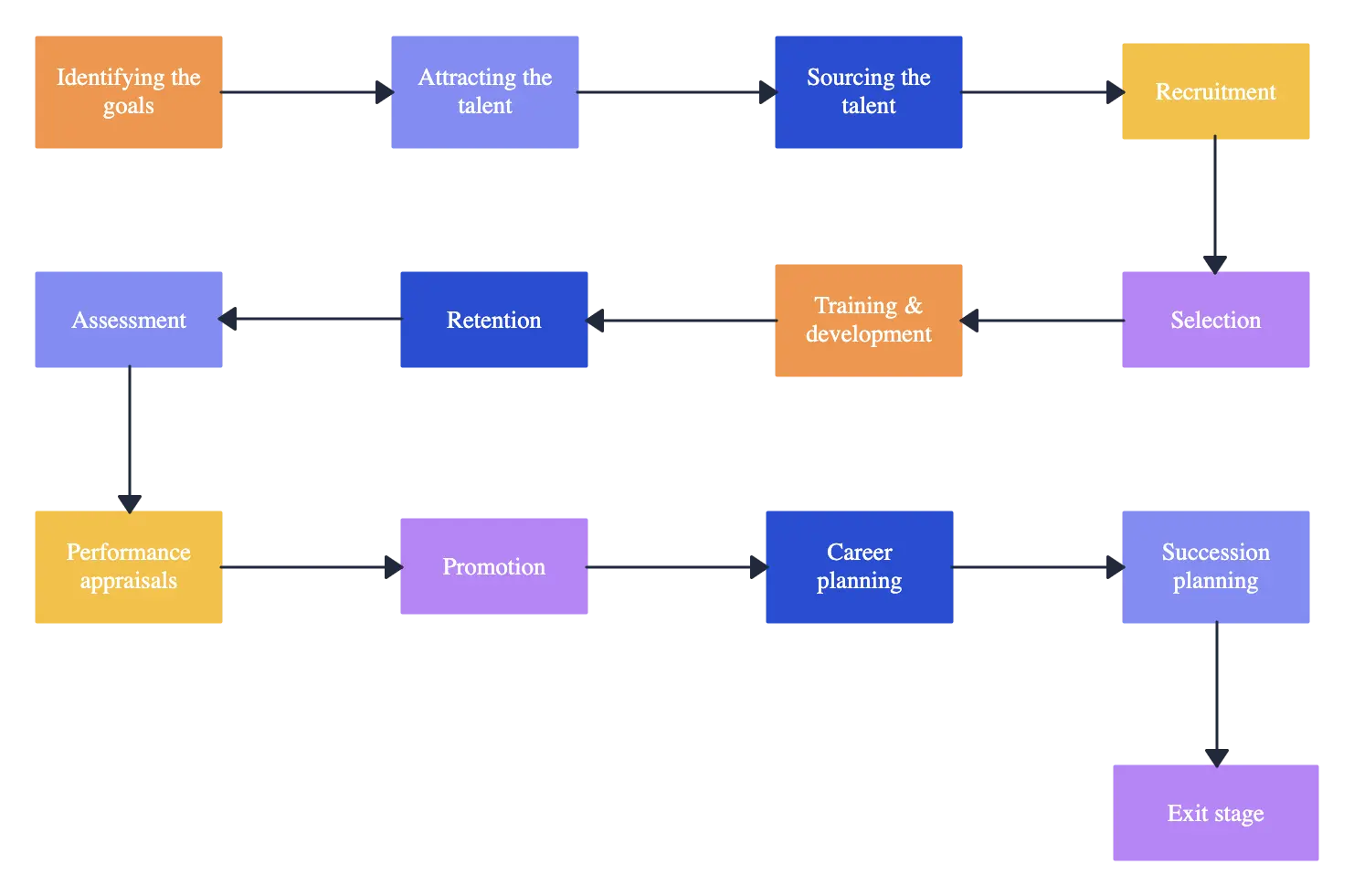
Building a talent pipeline goes beyond merely building and maintaining it. Once you hire candidates from within the pipeline, make sure to continuously nurture them through appropriate training.
Training and development motivate employees to perform better and contribute to employee retention as it enhances employee engagement and satisfaction.
Difference Between Talent Pipeline and Succession Planning
Talent pipeline and succession planning have a similar objective – that is to fill a vacant position. However, the difference of each process lies in their implementation.
A talent pipeline is primarily used to attract newer or in most cases junior talent into the business. Succession planning, however, is utilized to identify and groom new leaders who can become successors for senior leadership positions.
Benefits of a Talent Pipeline
Engaging Passive Candidates
Imagine a scenario where you meet a potential candidate for an existing or future vacancy in your company. Now this candidate may not be actively searching for a job. Having a talent pipeline allows you to maintain relationships with a prospective candidate who may be re-approachable later down the line. Moreover, the familiarity of the first interaction will prove to be advantageous and there is a higher likelihood that the candidate will respond.
Cost-Effective
Gone are the days when you had to spend on vacancy advertisements. Now you can have a pool of approachable candidates who are skilled and well-suited for the role. A talent pool can reduce the cost of advertising. More importantly, it can eliminate the initial screening of candidates because you already completed that when you entered candidates to the talent pool.
This also reduces the risk of a bad hire, potentially saving you time and money.
Hire Right Candidates
As mentioned earlier, a talent pipeline allows you to maintain a pool of candidates who are suited for current or future positions within the company. This not only reduces the time taken to recruit an employee but also prevents you from making hasty or ill-advised hiring decisions.
Since you have already engaged with the potential hires, you are already somewhat familiar with their skills and qualifications. A talent pipeline also enables you to plan in advance and be strategic about filling the existing skill gaps.
Improves Candidate Experience
The traditional process of posting job vacancies and waiting for applicants can be somewhat disengaging for the candidates. A talent pipeline provides an engaging experience for prospective employees and helps cultivate a positive perspective towards the organization.
The interaction that a recruiter carries out with an applicant along the talent pipeline allows the candidate to engage in his/her own terms. It enables him/her to have a more informative experience throughout the hiring process.
Common Mistakes to Avoid When Creating a Talent Pipeline
It’s important to be aware of mistakes that are frequently made when building a talent pipeline, as they may undermine your efforts.
- Neglecting workforce planning: Failing to conduct proper workforce planning can lead to gaps in your talent pipeline. It’s critical to assess your organization’s future talent demands and match them with its strategic objectives.
- Not defining clear criteria: A lack of clear criteria for evaluating candidates can result in inconsistent hiring decisions. To ensure a more efficient talent pipeline, define the skills, qualifications, and characteristics you are looking for in possible candidates.
- Relying solely on external recruitment: While hiring externally can open up new perspectives, it’s crucial to balance this process with internal talent development. Neglecting internal talent and focusing solely on external hiring can lead to demotivation among existing employees and hinder succession planning.
- Overlooking diversity and inclusion: Your organization’s capacity to recruit and retain a varied variety of talent may be hampered if diversity and inclusion are not given top priority in your talent pipeline. Make sure that your hiring and selection procedures actively encourage diversity.
- Ignoring employer branding: The reputation and brand perception of your company are key factors in attracting top talent. Employer branding must be prioritized, or it may be difficult to recruit quality people. Make an investment in creating a positive employer brand through a variety of platforms, including social media, business culture, and employee reviews.
- Lack of proactive sourcing: Waiting for positions to be vacant before conducting a talent search can limit your options and slow down the hiring process. Use proactive sourcing techniques such as talent scouting, networking, and managing a talent pool, to continually find and connect with possible candidates.
- Inadequate candidate engagement: Candidates may have a bad experience as a result of poor involvement and communication. To maintain candidates’ attention and create a solid talent pipeline, keep them updated throughout the hiring process, give them timely feedback, and make sure they have a great candidate experience.
- Failure to assess future needs: Creating a talent pipeline based solely on current needs without considering future requirements can lead to talent shortages. Anticipate future skill gaps and industry trends to ensure your talent pipeline is equipped to meet the evolving needs of your organization.
- Neglecting employee development: Talent pipelines should prioritize internal employee growth in addition to external hiring. In order to develop and upskill your current staff and promote a culture of constant learning and advancement, offer training, mentorship, and growth opportunities.
- Lack of data-driven decision-making: Relying on intuition rather than data-driven insights can lead to biased or suboptimal hiring decisions. Utilize data analytics and metrics to assess the efficiency of your talent pipeline, pinpoint areas that need improvement, and arrive at reasoned judgments.
Why Do You Need a Talent Pipeline?
A talent pipeline is beneficial for both teams and organizations as it helps them meet their current and future talent needs.
For Teams
- Continuity and stability: A talent pipeline provides a steady supply of qualified candidates, reducing the risk of sudden vacancies and disruptions within the team.
- Succession planning: It helps identify and groom high-potential employees for future leadership positions, ensuring a smooth transition when key team members leave.
- Skill development: A talent pipeline focuses on nurturing internal talent and bridging skill gaps, leading to a more capable and skilled workforce.
- Increased team morale and motivation: Opportunities for growth and advancement within the organization boost motivation and job satisfaction among team members.
For Organizations
- Strategic workforce planning: A talent pipeline aligns talent acquisition strategies with long-term organizational goals, ensuring the right talent is available when needed.
- Cost and time efficiency: It reduces the time and costs associated with external hiring by tapping into an existing talent pool and engaging interested candidates.
- Competitive advantage: A strong talent pipeline enables quick responses to business opportunities and challenges, giving organizations a competitive edge.
- Diversity and inclusion: Actively sourcing candidates from diverse backgrounds promotes a more inclusive and innovative work environment.
- Organizational resilience: A talent pipeline prepares organizations for unforeseen events and enhances their ability to adapt and thrive in dynamic environments.
Who Needs a Talent Pipeline
A talent pipeline benefits various stakeholders within a team or organization.
- Team Leaders and Managers: A talent pipeline provides team leaders and managers with pre-screened, qualified candidates, saving time and effort in the hiring process and facilitating smooth transitions within their teams.
- Existing Team Members: The talent pipeline offers growth, advancement, and skill development opportunities, boosting motivation, job satisfaction, and engagement among existing team members.
- HR and Talent Acquisition Professionals: HR and talent acquisition professionals benefit from a structured approach to talent acquisition, proactive identification of candidates, streamlined recruitment processes, and improved metrics.
- Executives and Senior Leaders: Executives and senior leaders gain confidence in the organization’s ability to meet business objectives, secure competent successors, and adapt to market conditions with a talent pipeline.
- The Organization as a Whole: A talent pipeline ensures business continuity, attracts and retains top talent, promotes diversity and inclusion, and fosters a culture of learning and development, leading to enhanced competitiveness and organizational performance.
Create a Pipeline for a Smooth Flow
Creating a recruiting pipeline does require a fair amount of work upfront, but it can be one of the most important assets that your company may possess. It effectively reduces the time taken to hire new employees and allows you to plan ahead in terms of selecting the best candidates.