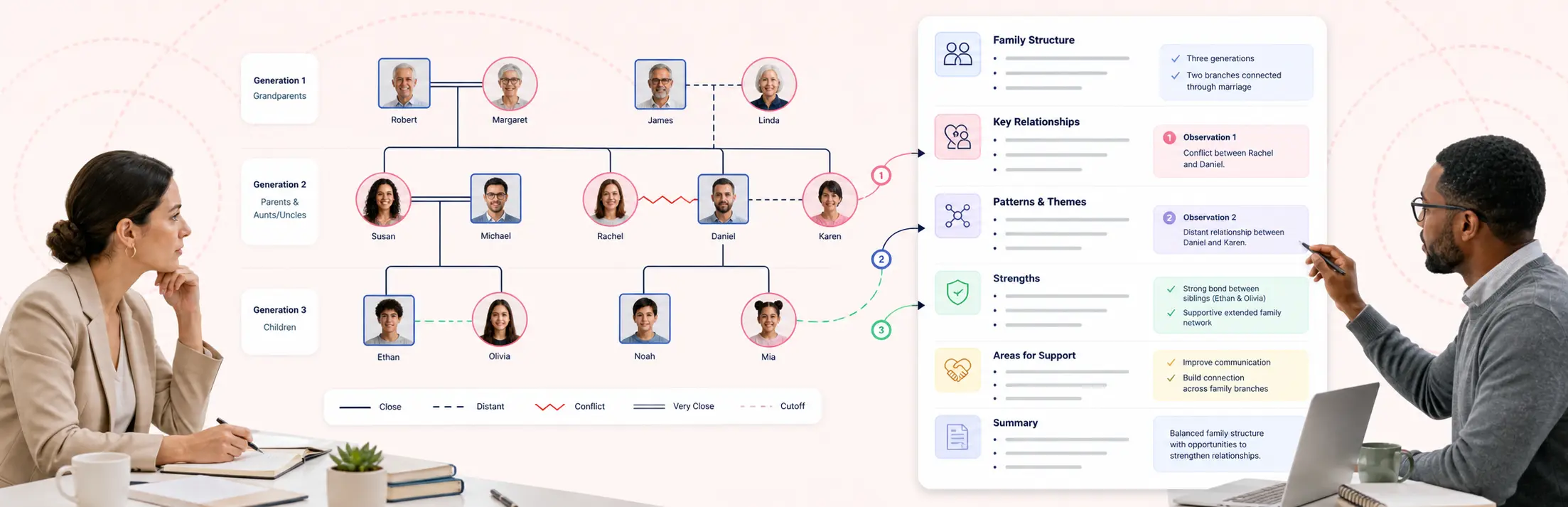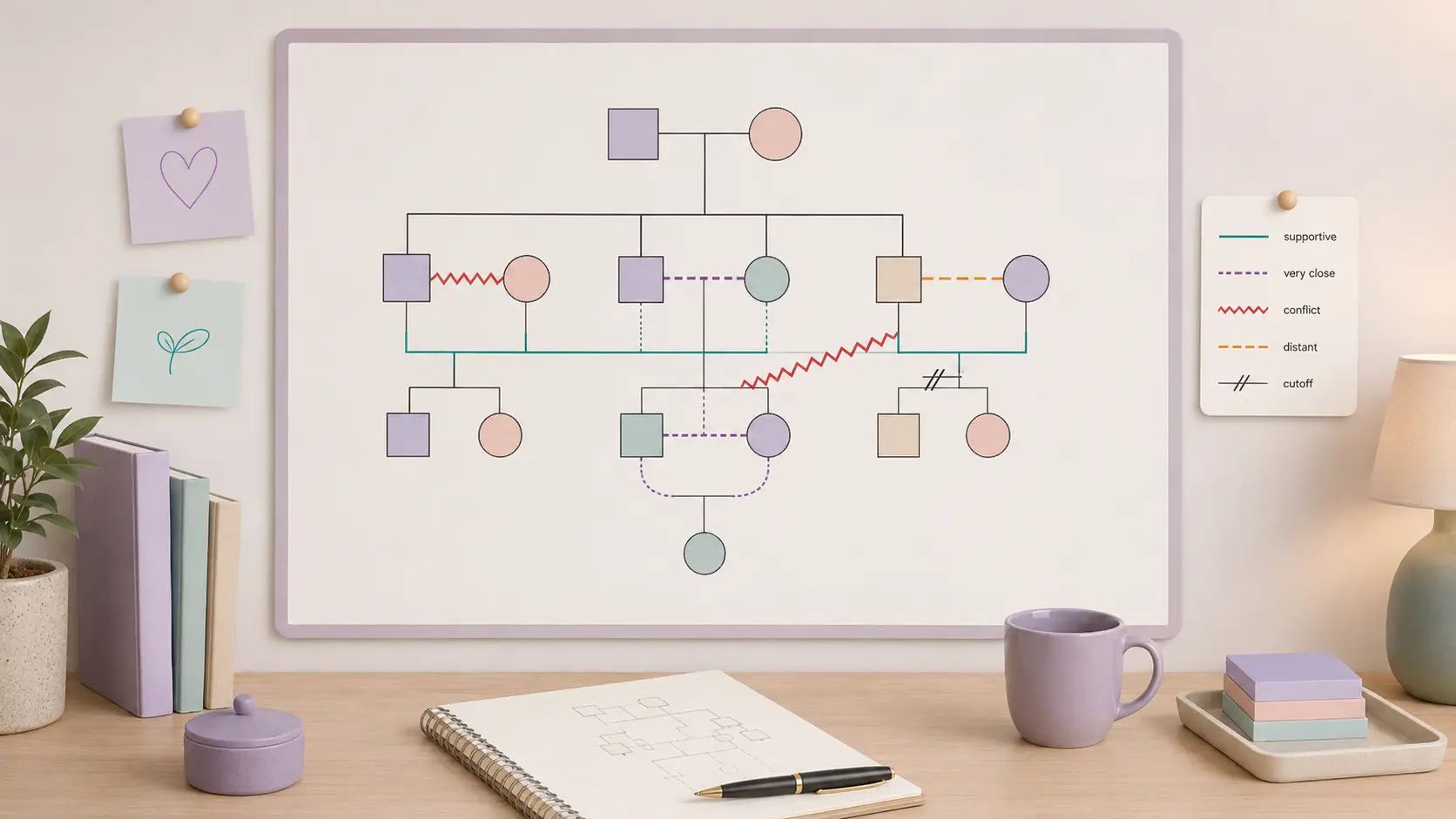
Emotional relationships are often harder to understand than family structure alone. These emotional genogram examples show how to map closeness, support, conflict, distance, cutoff, fusion, and other relationship patterns across a family. Use them to choose the right structure for a counseling case, social work assessment, family studies assignment, or personal reflection, then replace the sample information with the relationships relevant to your purpose.
What Is an Emotional Genogram?
An emotional genogram is a family diagram that shows:
- Who belongs to the family or relationship system
- How people are structurally connected
- The emotional quality of important relationships
- Patterns that repeat across generations
- Relationships that may influence a person’s current experiences
An emotional genogram does not diagnose a family. It organizes reported or observed relationship information so it can be explored more clearly.
Emotional Relationships Commonly Shown in a Genogram
| Relationship | What it may show |
| Close | A strong emotional bond or regular mutual support |
| Very close | A particularly strong or highly involved relationship |
| Supportive | Reliable emotional, practical, or caregiving support |
| Distant | Limited emotional connection or communication |
| Cutoff | Emotional or physical distance used to manage unresolved tension |
| Conflictual | Frequent disagreement, tension, or hostility |
| Close and conflictual | A strong bond combined with recurring conflict |
| Fused | High emotional dependence or difficulty functioning separately |
| Hostile | Open anger, antagonism, or an intensely negative relationship |
| Abusive | Reported emotional, physical, sexual, financial, or other harm |
Line styles vary between textbooks, universities, professional settings, and genogram software. Always include a legend explaining the symbols used in your diagram.
Examples of Emotional Genograms
Each example focuses on a different relationship pattern. You do not need to show every emotional connection in one diagram. Select the example closest to your purpose and add only the relationships needed to understand that pattern.
1. Basic Emotional Relationship Genogram
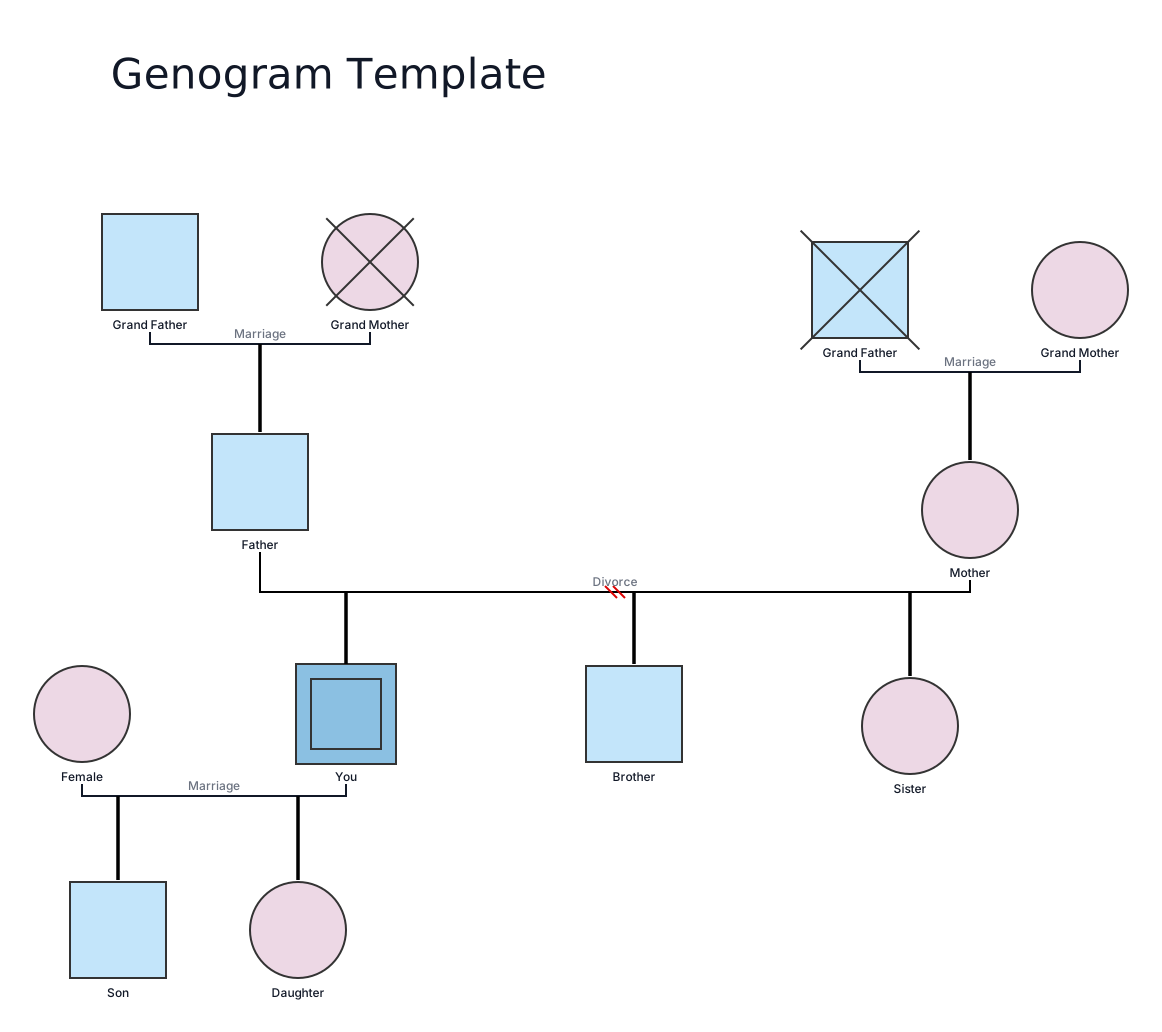

Use This Example When
You need a general overview of the most important emotional relationships within a family.
Include
- The index person
- Parents or caregivers
- Siblings
- Partner and children
- Grandparents when relevant
- The emotional relationship lines most relevant to the purpose of the genogram
- A legend for every emotional line used
- Dates or short notes when a relationship has changed
What to Look For
- Who provides emotional or practical support
- Which relationships create stress
- Whether one person appears isolated
- Differences between emotional closeness, frequency of contact, and practical support
- Whether different family members describe the same relationship differently
- Relationships that combine more than one quality
Questions to Explore
- Who does the person turn to for help?
- Which relationships feel supportive, difficult, or unpredictable?
- Whose perspective is represented by each relationship line?
2. Close and Supportive Family Genogram
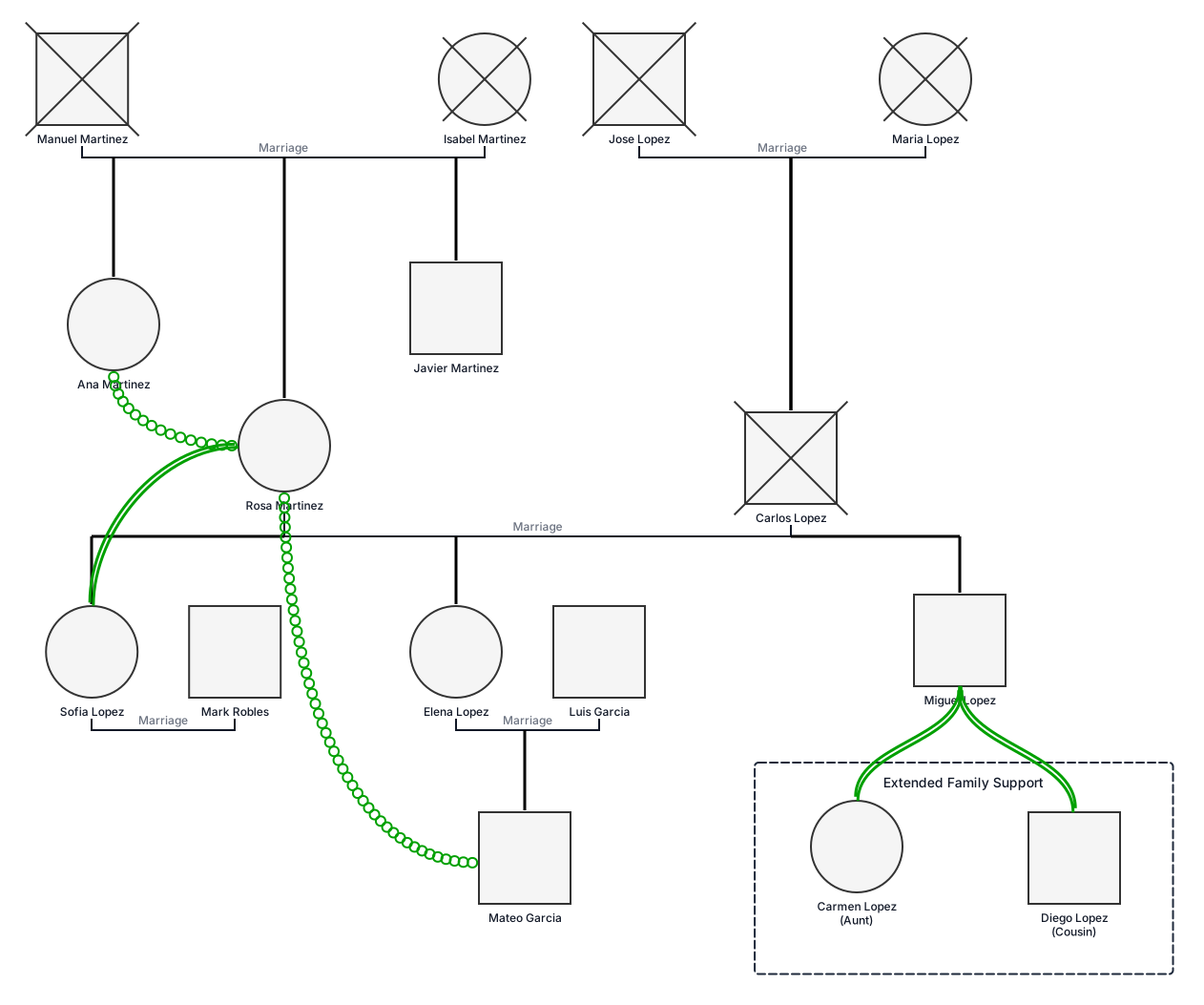
Use This Example When
The purpose is to identify family strengths, trusted relationships, and available support.
Emotional closeness and practical support are not always the same. Someone may provide dependable help without sharing a deeply emotional bond, while another person may feel close but be unable to offer regular practical support.
Include
- Close and very close relationships
- Practical caregiving support
- Trusted relatives
- Chosen family or significant non-relatives
- Relationships that became stronger during a difficult period
What to Look For
- Whether support is mutual or mainly provided by one person
- People carrying most of the caregiving or emotional responsibility
- Support available outside the immediate household
- Relationships that remain dependable during difficult periods
- Family strengths that could support coping or change
Questions to Explore
- Who provides emotional or practical support during difficult periods?
- Is support mutual or mainly one-sided?
- Are important sources of support located outside the biological family?
3. Conflictual Family Relationship Genogram
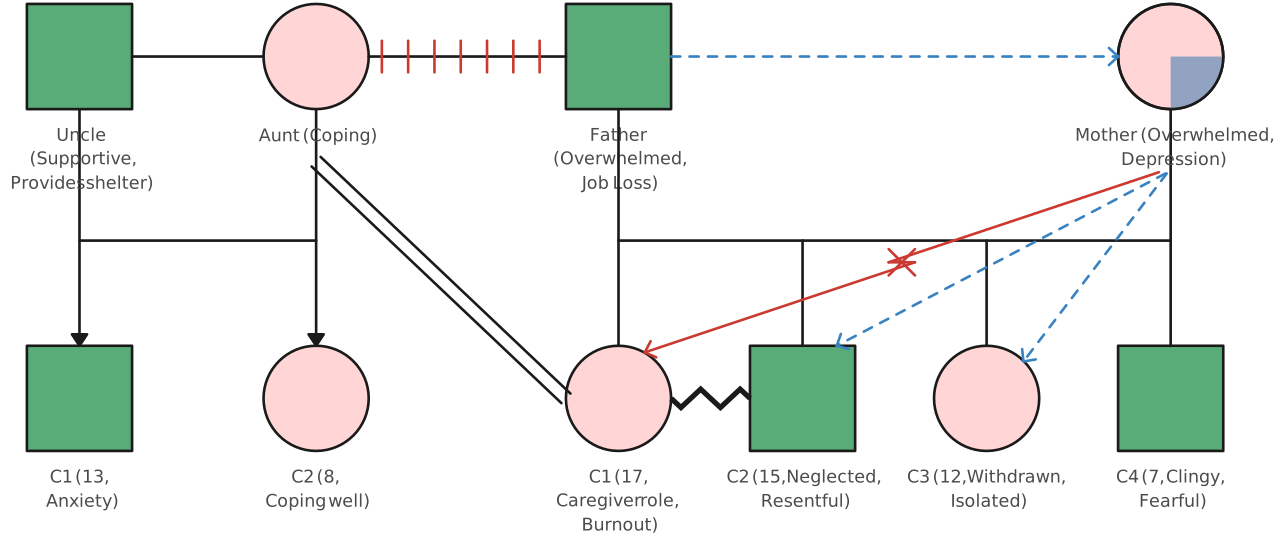
Use This Example When
The family experiences frequent arguments, tension, hostility, or unresolved disagreements.
Include
- Conflict between partners
- Parent-child conflict
- Sibling rivalry
- Intergenerational disagreements
- Other relatives who are repeatedly drawn into the conflict
- Events or periods associated with increased conflict, when known
What to Look For
- Conflict that repeats across relationships or generations
- One person repeatedly becoming the focus of family tension or blame
- Whether conflict increases during stress or major transitions
- Common subjects of disagreement, such as caregiving, money, parenting, inheritance, or culture
- Patterns of escalation, avoidance, repair, or reconciliation
Questions to Explore
- When did the conflict begin, and what tends to intensify it?
- Is the conflict continuous or mainly associated with stressful periods?
- Does it remain between the two people, or are others repeatedly drawn in?
4. Distant and Emotionally Disconnected Family Genogram
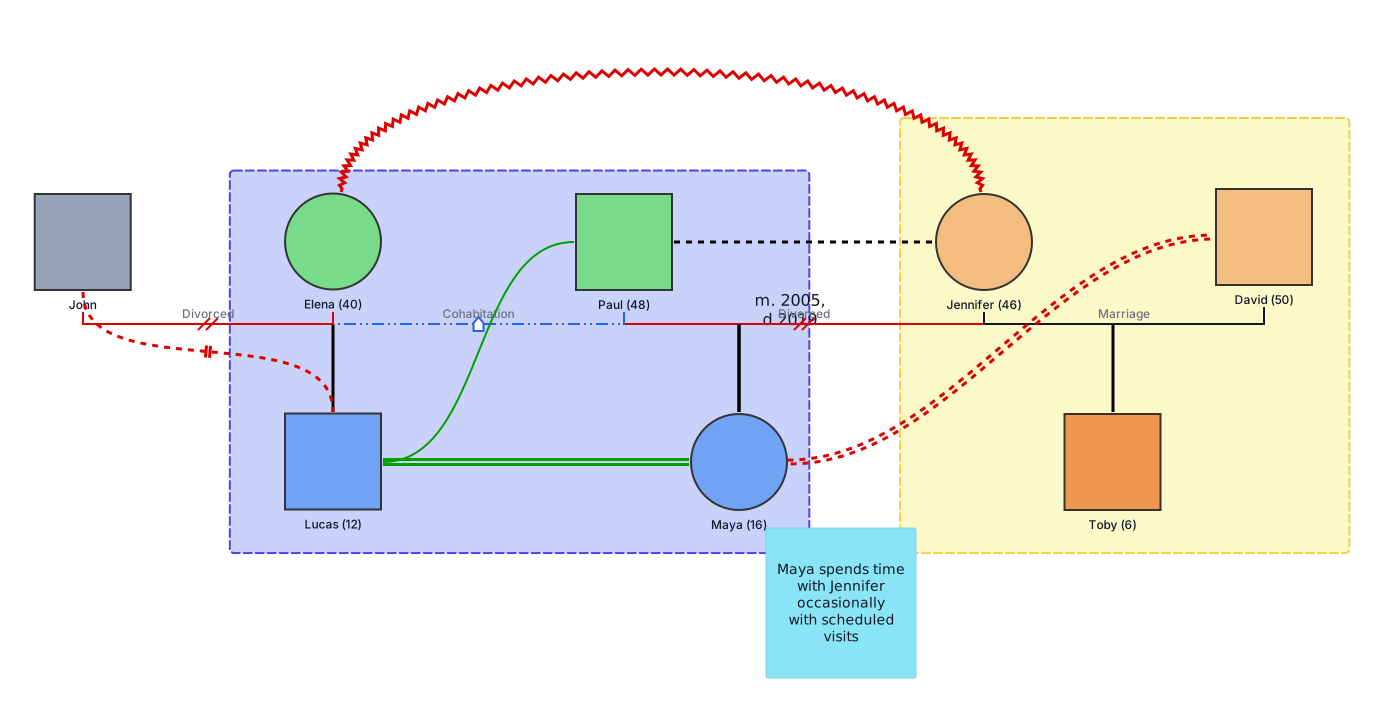
Use This Example When
Family members have limited communication, emotional availability, or involvement with one another.
Include
- Emotionally distant relationships
- Frequency or method of contact, when relevant
- Physical or geographical separation
- Important periods of withdrawal or reduced communication
- Relatives who remain structurally connected but have limited emotional involvement
What to Look For
- Distance used to manage tension or discomfort
- Repeated emotionally distant parent-child relationships
- Limited emotional expression across generations
- People who are geographically close but emotionally disconnected
- People who remain emotionally close despite infrequent contact
Questions to Explore
- Has the relationship always been distant, or did it change after a particular event?
- Is the distance emotional, physical, or both?
- Is it experienced as painful, neutral, or protective?
Geographical separation or infrequent contact does not automatically mean emotional distance. Some relatives remain emotionally close despite living far apart, while people in the same household may have little emotional connection.
5. Emotional Cutoff and Estrangement Genogram
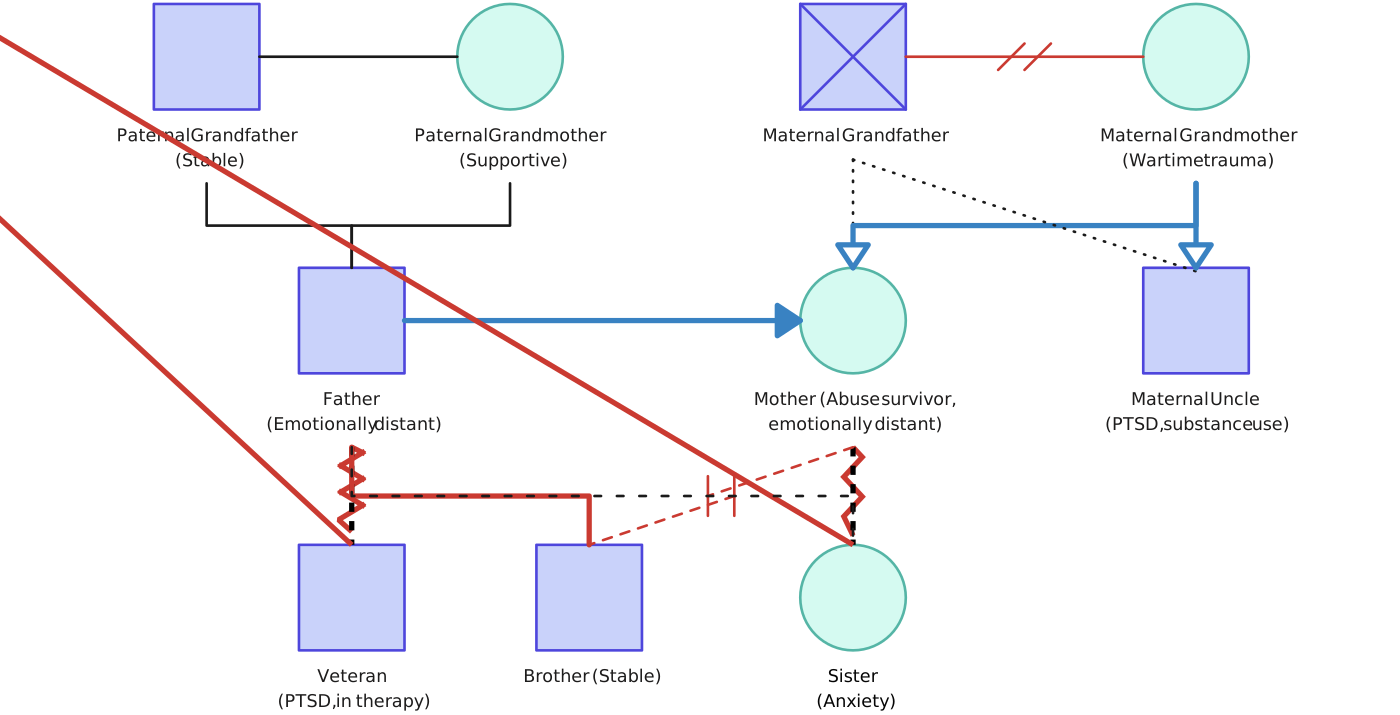
Use This Example When
One or more relatives have significantly reduced emotional or physical contact, avoid sensitive subjects, or ended contact altogether.
Emotional cutoff is not always the same as complete estrangement. In Bowen family systems theory, it may involve ending contact, reducing contact, moving away, or avoiding emotionally sensitive topics to manage unresolved tension.
Include
- Who is cut off from whom
- The approximate date or life stage when contact changed
- Events connected to the distancing, when known
- Relatives who maintain contact with both sides
- Previous cutoffs or estrangements in earlier generations
What to Look For
- Cutoff recurring as a response to family tension
- Unresolved issues continuing despite reduced contact
- Relatives acting as intermediaries or carrying messages
- Similar patterns between parents and adult children across generations
Questions to Explore
- What tension or event preceded the distancing?
- Is the cutoff complete, partial, or limited to certain subjects?
- Does anyone carry messages between the people involved?
- Is the distance intended to reduce tension, maintain safety, or both?
Important: Do not describe every low-contact relationship as emotional cutoff. Contact may be limited because of geography, culture, practical circumstances, personal preference, or safety. Reconciliation should not be treated as the automatic goal when distance protects someone from harm.
6. Fused or Highly Enmeshed Family Genogram
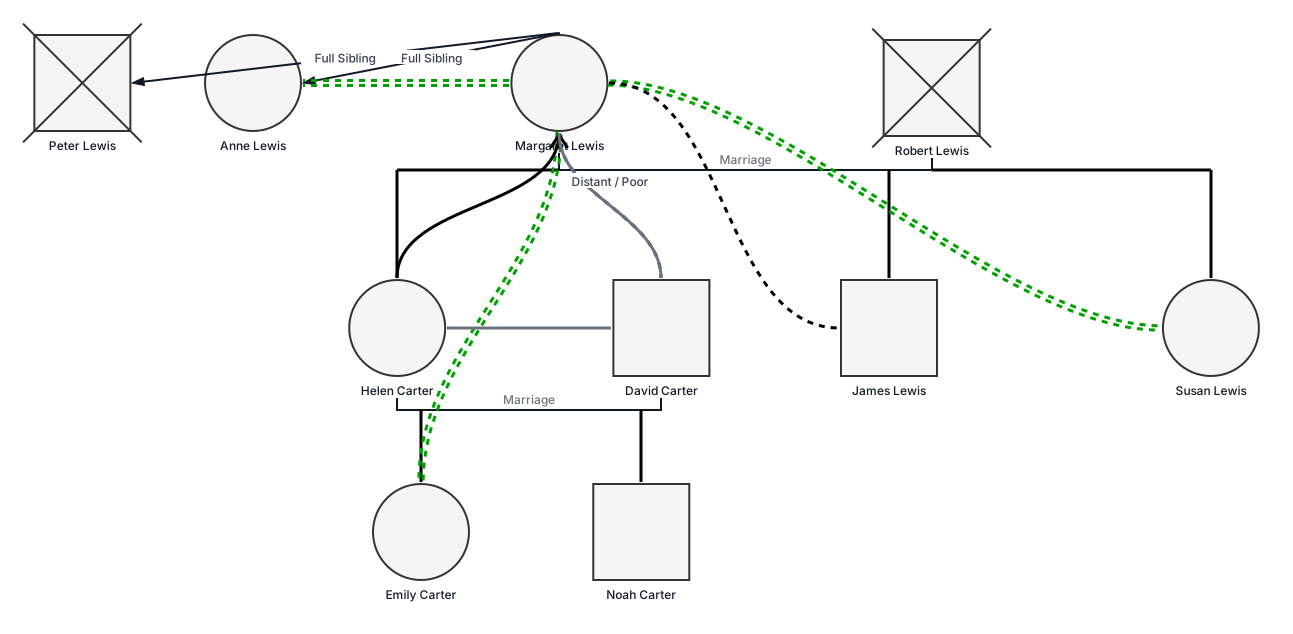
Use This Example When
The assignment or case focuses on blurred boundaries, overinvolvement, dependency, or difficulty functioning independently.
Fusion and enmeshment are related concepts used in different family-systems approaches. Both may draw attention to limited boundaries or difficulty functioning independently, but follow the terminology required by your course or professional framework.
Include
- Fused or highly enmeshed relationships
- Family members heavily involved in one another’s decisions
- Parent-child role confusion
- Limited privacy or independence
- Conflict that appears when someone tries to establish a boundary
What to Look For
- One person feeling responsible for another’s emotional stability
- Guilt or pressure around independence
- A child being expected to meet a parent’s emotional needs
- Difficulty making decisions without approval
- Family members speaking on behalf of one another
- Privacy or independence being interpreted as rejection
- Distress when someone establishes a boundary
Questions to Explore
- Can family members disagree without fearing rejection?
- Are personal decisions and privacy respected?
- Who is expected to manage another person’s emotions?
- What happens when someone creates distance or sets a boundary?
Use careful, nonjudgmental language. Close relationships are not automatically enmeshed.
7. Close but Conflictual Relationship Genogram
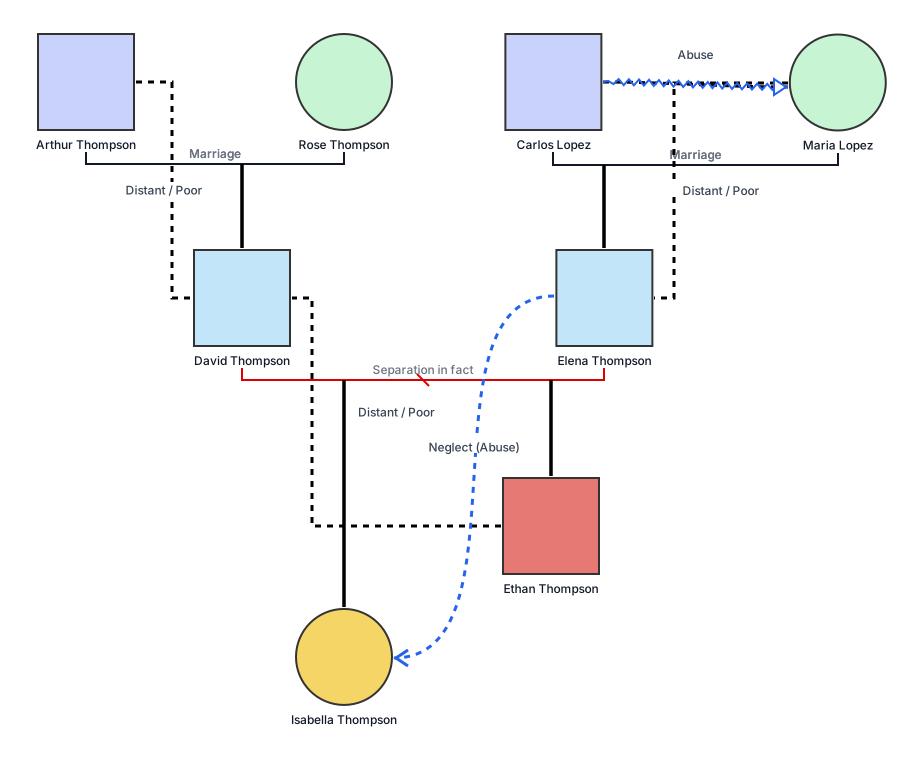
Use This Example When
Two people remain strongly emotionally connected while also experiencing recurring disagreement, tension, or instability.
Include
- Close-conflictual relationships
- Cycles of disagreement and reconciliation
- Breakups and reunions where relevant
- Emotional, practical, or financial reliance
- Events that intensify the pattern
What to Look For
- Relationships in which a strong attachment and recurring conflict exist at the same time
- What maintains the connection despite recurring conflict
- Whether conflict is followed by repair, avoidance, or temporary reconciliation
- Emotional, practical, or financial dependence affecting boundaries
- Similar close-conflictual patterns elsewhere in the family
- Whether the pattern becomes stronger during stressful periods
Questions to Explore
- What keeps the relationship emotionally close?
- What issues repeatedly lead to conflict?
- How is conflict repaired, if at all?
- Does the same pattern appear elsewhere in the family?
8. Family Triangle Genogram
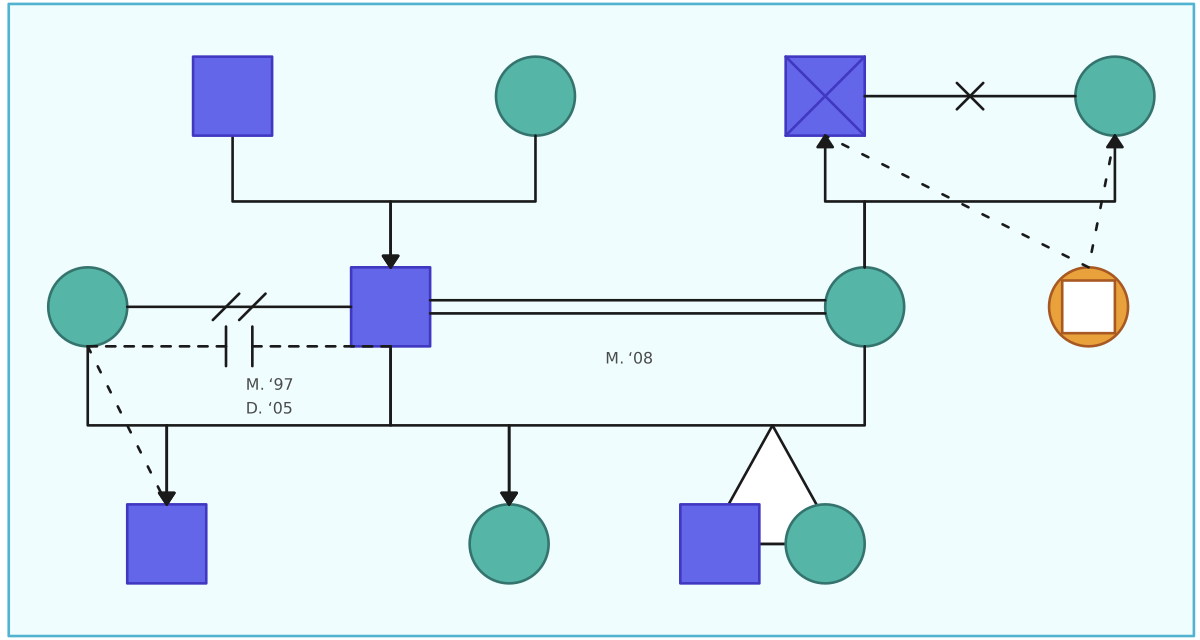
Use This Example When
Tension involving two people repeatedly shifts toward, focuses on, or draws in a third person.
A triangle is a three-person relationship system. In Bowen theory, it is considered a basic unit for managing tension rather than simply an alliance or an automatically unhealthy pattern. As pressure rises, attention or emotional involvement may shift among the three people.
Include
- The three people involved and the relationships among them
- How involvement changes during calm and stressful periods
- Whether one person is blamed, protected, consulted, or expected to mediate
- A child who becomes the focus of parental anxiety, when relevant
- Other connected triangles carrying similar tension
What to Look For
- Two people becoming closer while a third becomes more distant
- Attention shifting to a child when couple tension rises
- One person repeatedly mediating or carrying messages
- A relative becoming the focus of concern when tension increases elsewhere
- Several connected triangles distributing the same tension through the family
Questions to Explore
- Which relationships become more tense or more aligned when pressure rises?
- What role does each person take within the triangle?
- How do the other two relationships change when one person becomes less involved?
9. Intergenerational Emotional Pattern Genogram
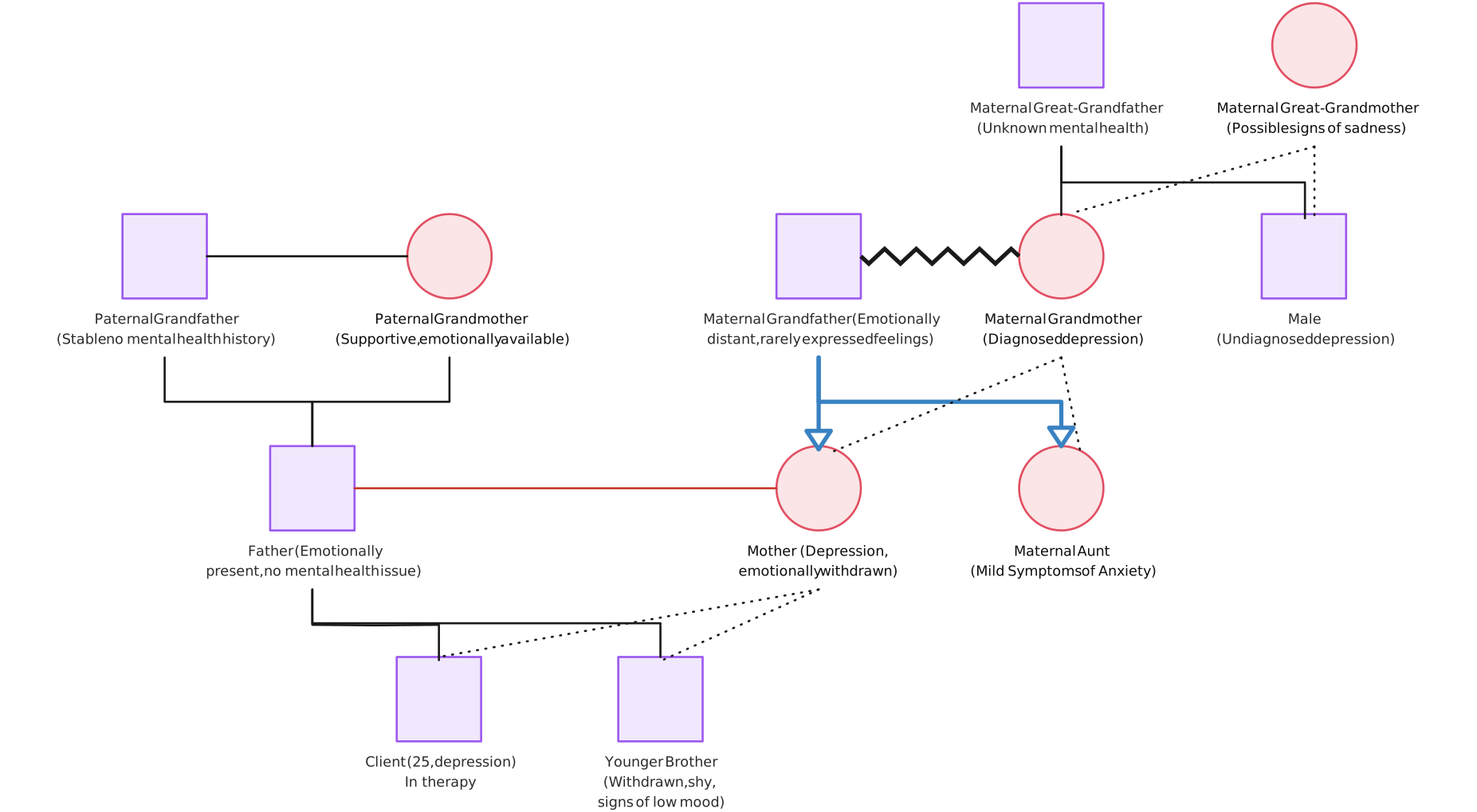
Use This Example When
You want to compare how relationship patterns appear across parents, grandparents, and the current generation.
Include
- At least three generations
- Repeated conflict, distance, cutoff, fusion, or caregiving roles
- Similar partner or parent-child dynamics
- Major births, deaths, separations, migrations, illnesses, or crises
- Dates or life stages connected to major relationship changes
- Sources of support, resilience, and change across generations
What to Look For
- Relationship patterns appearing in more than one generation
- Repeated caregiving, peacemaking, or intermediary roles
- Family reactions that recur during stress, loss, or transition
- Patterns that weaken, stop, or change in later generations
- Different responses to similar family pressures
- Supportive relationships and coping resources passed between generations
Questions to Explore
- Which relationship patterns appear in more than one generation?
- Under what conditions do they become stronger?
- Who responds differently from earlier generations?
- Which relationships interrupt rather than repeat the pattern?
- Which strengths have also been passed down?
A repeated pattern is an observation to explore, not proof that one relationship caused another.
10. Trauma and Safety-Focused Emotional Genogram
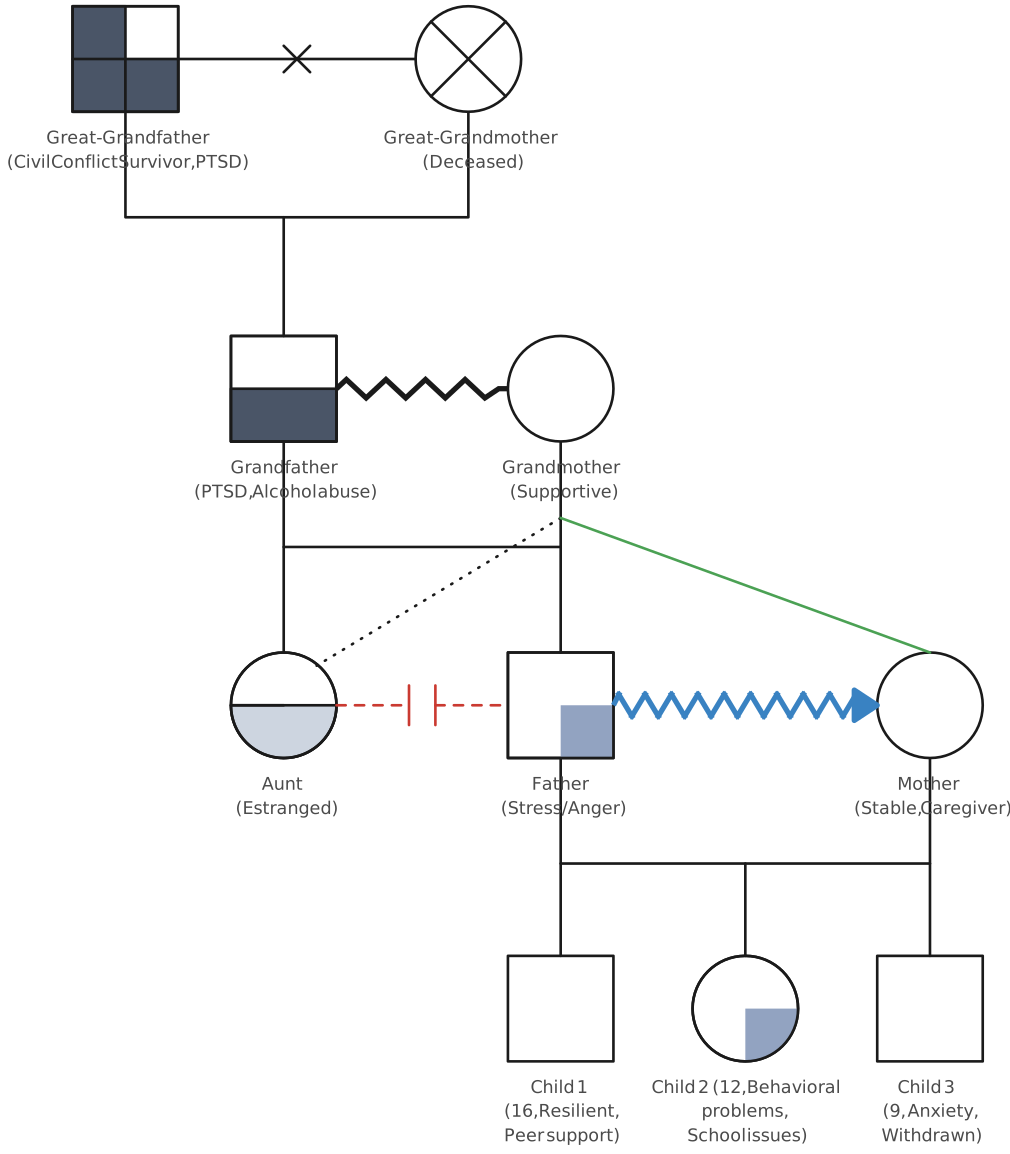
Use This Example When
The case or assignment involves trauma, abuse, family violence, coercive control, neglect, or unsafe relationships.
Create this type of genogram using trauma-informed, confidential, and professionally appropriate practices. Do not pressure anyone to disclose experiences or record details that are unnecessary for the purpose of the diagram.
Include
- Reported abuse, violence, coercive control, or neglect when relevant
- Current safety concerns
- Protective relationships and safe adults
- No-contact arrangements or other safety boundaries
- Trusted professionals, caregivers, or community supports
- Current living or contact arrangements when necessary
- Who reported or documented the information, where appropriate
- Dates only when safe and relevant
What to Look For
- Immediate or continuing safety concerns
- People who provide protection, support, or validation
- Family members who protect, minimize, deny, or excuse harm
- Safe boundaries established by survivors
- Pressure to resume unsafe contact
- Children or dependent adults who may require safeguarding support
- Patterns of harm across generations, without assuming causation
Questions to Explore
- Is there a current safety concern?
- Who does the person consider safe?
- What protective boundaries are already in place?
- What support is available outside the family?
- What information is necessary to record, and what should remain private?
- Are there professional reporting or safeguarding duties?
Do not describe abuse, violence, or coercive control as ordinary mutual conflict. Protective distance or no contact may be an appropriate safety response.
Why Choose Creately to Draw Your Emotional Genograms
The right emotional genogram tool should help you move from family information to a clear, accurate, and useful diagram. Creately supports each part of that process with AI generation, specialized relationship types, structured fields, pattern review, collaboration, and reporting.
A Faster Way to Start
Instead of building every person and connection manually, you can paste written family information into Creately’s AI text-to-genogram tool to generate a first draft.
You can also begin with a blank canvas, a two- or three-generation template, or a specialized Conflict, Legacy, or Fusion Map. Quick-add shortcuts and the right-click menu make it easier to expand the family as new information is discussed.
Clear Separation Between Family Structure and Emotional Dynamics
A useful emotional genogram should show both who is related and how those people relate emotionally.
Creately lets you map marriages, partnerships, separations, parent-child connections, adoption, foster care, and stepfamily relationships first. You can then add emotional lines separately, keeping the diagram clear and easier to interpret.
Detailed Emotional Relationship Types
Generic connectors are not enough for complex family dynamics.
Creately includes 71 relationship subtypes across nine categories, including close, supportive, distant, cutoff, conflictual, fused, hostile, abusive, and controlling relationships. Combined relationship types can also show dynamics such as close and conflictual without adding overlapping lines.
Structured Space for Relationship Context
An emotional line may not explain when a relationship changed, whose perspective is shown, or what events shaped it.
Creately’s Family Therapy and Social Work field packs let you record family roles, trauma history, coping strategies, risk factors, sources of support, and uncertain information without filling the canvas with long notes.
Support for Perspective and Evidence
Different family members may describe the same relationship differently.
Creately allows you to add notes and structured details showing whose perspective is represented and whether information was reported, observed, or documented. This makes it easier to separate established information from assumptions or areas that still need clarification.
AI-Assisted Pattern Review
Once the emotional relationships are mapped, Creately’s Genogram Assistant can help review the diagram for:
- Repeated conflict or cutoff
- Fused relationships
- Family triangles
- Recurring caregiving roles
- Supportive relationships
- Missing connections
- Evidence gaps
- Changes across generations
The Assistant can also suggest follow-up questions. These observations should support further review rather than be treated as diagnoses.
Consistent Genogram Notation
Creately supports McGoldrick/Gerson-style person shapes and distinct visual encodings for structural and emotional relationships.
Person shapes update automatically based on recorded information, helping maintain consistency as the genogram grows.
Easier Collaboration and Review
Emotional genograms may need to be discussed with clients, supervisors, instructors, or care teams.
Creately supports real-time collaboration, comments, live cursors, and role-based permissions. This makes it easier to review the same genogram together while controlling who can view or edit sensitive information.
Simple Updates as Relationships Change
Emotional genograms should not be treated as permanent descriptions of a family.
Creately auto-saves changes and makes it easy to update relationship lines, notes, dates, and family details as new information becomes available.
Flexible Reporting and Export
Creately can generate PDF or DOCX case files containing the diagram, profiles, relationship details, AI observations, and a symbol legend.
You can also export the genogram as PNG, JPEG, SVG, or JSON for assignments, presentations, documentation, or further analysis.
By combining AI-assisted creation, detailed relationship mapping, structured context, pattern review, collaboration, and reporting, Creately supports the full emotional genogram workflow in one place.
FAQs About Emotional Genograms
Can One Relationship Have More Than One Emotional Quality?
Yes. A relationship may be close and conflictual, supportive but emotionally distant, or strong while also involving dependency.
Use a combined relationship type where one is available, or explain the relationship clearly in the legend.
How Do I Show That a Relationship Changed Over Time?
Add a date, life stage, or short note explaining when the relationship changed.
For example, two siblings may have been close during childhood and distant in adulthood.
Is Emotional Cutoff the Same as No Contact?
Is a Close Relationship the Same as an Enmeshed Relationship?
How Many Generations Should an Emotional Genogram Include?
Three generations are useful for examining intergenerational patterns, but a smaller genogram may be enough for a focused relationship issue.
Follow the assignment instructions or professional requirements when a specific number is requested.