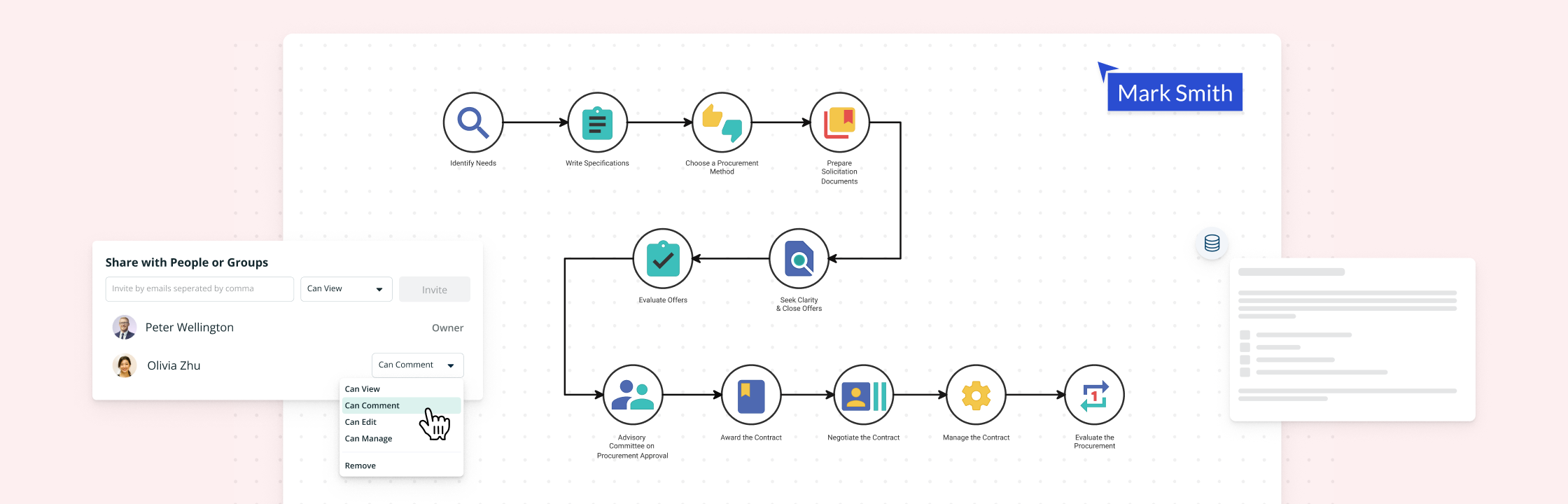
Project execution turns an approved plan into coordinated work, while change management prepares and supports the people affected by a new process, system, role, or behavior. This guide provides editable templates and practical guidance for defining scope, ownership, milestones, impacts, communication, training, adoption, and review.
- What Is Project Execution?
- What Is Change Management?
- Project Execution Plan Template
- Change Management Plan Template
- Best Practices for Effective Project Execution
- Change Management Best Practices
What Is Project Execution?
Project execution is the phase in which the team performs the approved work to produce project deliverables. Project managers and team members coordinate tasks, resources, dependencies, communication, quality activities, risks, issues, decisions, and changes while comparing progress with the plan.
Execution does not guarantee delivery within scope, budget, schedule, or quality targets. Its purpose is to make work and variance visible so accountable people can respond, escalate, replan, or use formal change control when required.
Key Elements to Effectively Carry Out Project Execution
Planning and Organization: A well-defined project plan serves as a roadmap for execution. It outlines project objectives, deliverables, timelines, and resource allocation. Organizing project tasks, establishing dependencies, and setting clear milestones are crucial elements of effective execution.
Resource Management: Identify the people, skills, equipment, materials, budget, availability, and constraints required for the work. Resolve or escalate gaps and competing demands rather than assuming the requested resources will be available.
Communication and Collaboration: Define who needs which information, when it is needed, where decisions are recorded, and how teams handle questions and handoffs. Choose meetings, reports, dashboards, or contextual comments according to the audience and purpose.
Monitoring and Control: Compare actual progress, cost, quality, and risk with the approved baselines and thresholds. Record variances and decide whether corrective action, escalation, replanning, or a change request is appropriate.
Risk Management: Identify and assess uncertainty, assign risk owners, plan proportionate responses, monitor triggers, and record what happens. Risk management reduces exposure where responses are effective; it does not eliminate uncertainty.
Potential Benefits of Effective Project Execution
When execution practices fit the project and are used consistently, they can support:
- Earlier visibility into variance: Teams can compare actual progress, cost, quality, and risk with the plan.
- Clearer ownership and coordination: Defined roles, dependencies, and communication routes make handoffs easier to manage.
- More informed decisions: Current evidence helps accountable people decide whether to correct, escalate, replan, or request a change.
- Quality control: Planned reviews and acceptance criteria help teams evaluate deliverables against requirements.
- Organizational learning: Decision records, outcomes, and lessons can inform future projects.
These are potential benefits, not guaranteed outcomes. Review the project against its approved success measures and constraints.
What Is Change Management?
Change management prepares, equips, and supports people affected by a planned change in processes, systems, structures, roles, or ways of working. It focuses on stakeholder impact, communication, readiness, learning, adoption, feedback, and reinforcement as the organization moves from the current state toward a future state.
This is distinct from project change control, which evaluates and authorizes proposed changes to project scope, schedule, cost, quality, or baselines. A project may need both: change control governs alterations to the project plan, while change management supports the people expected to adopt the resulting change.
Key Aspects of Project Change Management
Change management in projects typically involves the following key aspects:
Change Planning: Develop a change management plan that outlines the objectives, scope, stakeholders, communication strategies, and resources required to manage the change effectively.
Stakeholder Engagement: Identifying and engaging key stakeholders throughout the project lifecycle to build awareness, gather feedback, address concerns, and secure their support for the proposed changes.
Impact Assessment and Analysis: Conduct a thorough assessment of the potential impacts of the change on various aspects of the organization, including processes, roles, responsibilities, and culture. This analysis helps identify risks, dependencies, and areas that require special attention.
Communication and Education: Develop a communication plan that defines audiences, messages, owners, channels, timing, accessibility, and feedback routes. Provide affected groups with relevant information, learning, practice, and support, then check whether these activities address their actual needs.
Change Implementation: Executing the planned change activities while actively managing and addressing resistance, conflicts, and other challenges that may arise. This involves closely monitoring the progress of the change, making adjustments as needed, and ensuring alignment with the overall project objectives.
Benefits of Change Management
Appropriate change management can help teams:
- Understand stakeholder impact: Identify how roles, workflows, skills, access, and expectations may change.
- Improve readiness: Provide relevant information, learning, practice, and support before and during rollout.
- Surface concerns and risks: Create feedback routes that reveal operational, customer, workload, policy, or adoption issues.
- Coordinate adoption activities: Connect communication, training, leadership, support, and reinforcement to the rollout plan.
- Learn from evidence: Compare intended adoption and outcomes with observed behavior and feedback, then adjust the approach.
Change management cannot guarantee acceptance, adoption, benefits realization, or a disruption-free transition. Those outcomes also depend on the design of the change, leadership decisions, resources, incentives, systems, and operating context.
Project Execution Plan Template
A project execution plan documents how the team intends to deliver the approved scope. It creates a shared reference for objectives, deliverables, work, milestones, resources, responsibilities, controls, communication, and governance.
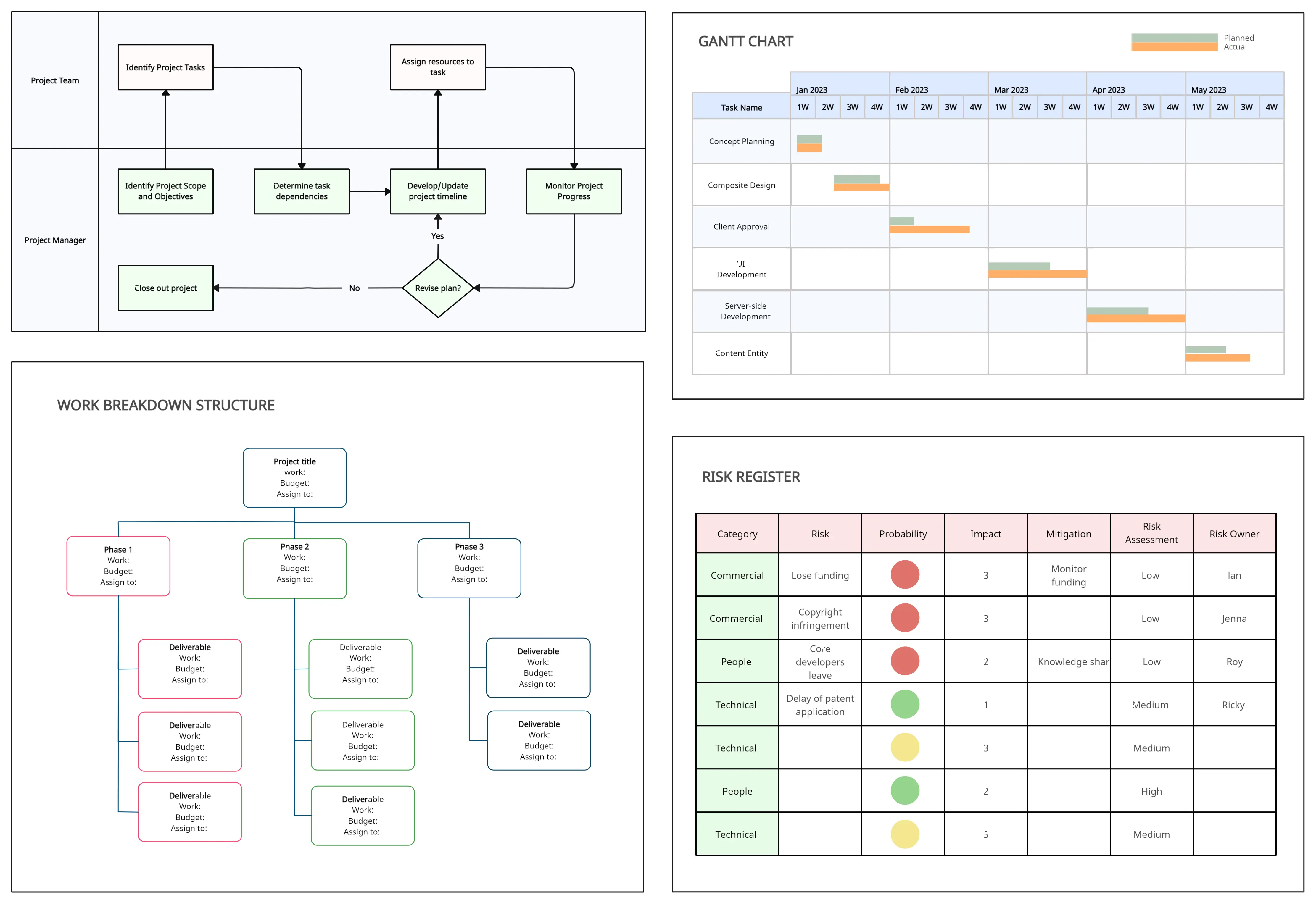
The following sections are typically included in a project execution plan template:
Overview and Objectives
This section provides an overview of the project, including its purpose, goals, and expected outcomes. It sets the context for the project and helps stakeholders understand its relevance and importance.
Scope and Deliverables
Clearly defining the project scope and deliverables is crucial for project success. This section outlines the boundaries and extent of the project work, specifying what will be included and excluded. It also identifies the key deliverables and milestones that will mark progress throughout the project.
Work Breakdown Structure (WBS)
The work breakdown structure breaks down the project into smaller, manageable work packages or tasks. This section presents the hierarchical structure of the project tasks, providing a visual representation of the project’s components and their relationships. It helps in organizing and assigning responsibilities, estimating effort and resources, and tracking progress.
Project Timeline and Milestones
The project timeline outlines the sequence and duration of project activities. It includes start and end dates for each task and identifies critical milestones. This section helps stakeholders understand the project’s timeline, dependencies, and key dates, allowing for effective scheduling and coordination.
Resource Allocation and Management
This section identifies the people, equipment, materials, budget, and other resources required for the work. Record availability, constraints, acquisition, allocation, and ownership rather than assuming that every requested resource will be available.
Change Management Plan Template
A change management plan documents how affected people and stakeholders will be prepared, informed, supported, and involved. If the document also covers changes to project baselines, label that part as change control so the approval and adoption workflows are not confused.

You can include the following sections in a change management plan template:
Change Request Process
This change-control section defines how proposed changes to scope, schedule, cost, quality, or other baselines are submitted, assessed, authorized, recorded, and communicated. Specify decision rights, thresholds, required evidence, and the system that holds the authoritative request and approval record.
Impact Assessment and Analysis
Assess both project impact and people impact. Project change control considers scope, schedule, cost, quality, resources, dependencies, and risk. Organizational change management considers affected roles, workflows, capability, readiness, communication, training, support, and adoption.
Communication and Stakeholder Engagement
Define stakeholder groups, information needs, message owners, channels, timing, feedback routes, and accessibility requirements. Communication should explain what is known, what is still being decided, how people are affected, and where questions or concerns will be handled.
Training and Adoption Strategies
Identify the knowledge, skills, access, practice, coaching, and support each affected group needs. Define how readiness and adoption will be assessed, and use the evidence to adjust training or support rather than assuming attendance equals adoption.
Best Practices for Effective Project Execution
These practices can make project execution more transparent and controlled. Adapt them to the project’s size, delivery approach, risk, governance, and regulatory context.
Develop a clear project plan: Start by creating a detailed project plan that outlines the project objectives, scope, deliverables, timelines, resources, and dependencies. This plan will serve as a roadmap for the project execution.
Define roles and responsibilities: Clearly define roles and responsibilities for each team member involved in the project. Ensure that everyone understands their specific tasks and expectations. This clarity promotes accountability and collaboration.
Communicate effectively: Establish open and transparent communication channels among project team members, stakeholders, and sponsors. Regularly share project updates, progress reports, and any changes or risks that may impact the project. Effective communication helps manage expectations and fosters a collaborative environment.
Set measurable goals and milestones: Break down the project into smaller, measurable goals and milestones. This approach helps track progress, maintain motivation, and enables the team to celebrate achievements along the way.
Manage project scope: Define what is included and excluded, validate requirements, and route proposed baseline changes through the agreed change-control process. Uncontrolled scope change can affect cost, schedule, quality, resources, and risk.
Monitor project risks: Create a risk management plan, assign owners, monitor triggers and exposure, and implement agreed responses. Review the plan as assumptions, conditions, or risks change.
Prioritize tasks and manage resources: Use project management techniques such as prioritization, resource allocation, and scheduling to ensure tasks are executed efficiently. Regularly monitor resource utilization and make adjustments as needed to avoid bottlenecks or overburdening team members.
Foster collaboration and teamwork: Encourage collaboration and teamwork among project team members. Promote a positive and supportive work environment where team members can openly communicate, share knowledge, and help each other.
Track and measure progress: Establish a system for tracking project progress and regularly monitor key performance indicators (KPIs). This allows you to identify any deviations from the plan and take corrective actions promptly.
Conduct regular project reviews: Schedule regular project reviews to assess progress, identify lessons learned, and make necessary adjustments. Use these reviews as opportunities for continuous improvement and knowledge sharing.
Celebrate successes and recognize achievements: Acknowledge and celebrate milestones, achievements, and the hard work of the project team. Recognizing accomplishments boosts morale and motivation, fostering a positive project environment.
Together, these practices help teams understand progress, ownership, variance, and risk. Outcomes still depend on project context, decisions, available resources, and how consistently the team uses the plan.
Change Management Best Practices
The following best practices can guide the change management process effectively.
Explain the purpose and intended outcomes: Communicate why the change is being considered, what problem it addresses, what is known, and which decisions remain open. Avoid presenting uncertain benefits as guaranteed.
Develop a change management strategy: Formulate a well-defined plan that outlines the objectives, scope, timeline, resources, and communication strategies for the change. This strategy should consider potential risks and mitigation measures.
Engage affected stakeholders: Involve relevant leaders, managers, employees, customers, partners, or other affected groups at appropriate points. Use feedback to test assumptions and improve the approach, not merely to seek agreement.
Communicate effectively: Establish a robust communication plan to keep employees informed about the change initiative. Clearly articulate the reasons, benefits, and potential impact of the change. Use multiple communication channels and ensure messages are consistent and timely.
Provide learning and support: Match training, practice, documentation, coaching, and support to the needs of each affected group. Measure capability and adoption rather than relying only on training completion.
Understand concerns and constraints: Investigate the reasons people question or cannot adopt a change. Concerns may reveal missing information, workload, access, safety, policy, customer, or operational risks. Address valid issues and involve affected people where they can influence the design or implementation.
Monitor progress and adapt: Regularly monitor the progress of the change initiative and evaluate its effectiveness. Collect feedback from employees and adjust the approach as needed. Celebrate successes and recognize individuals and teams for their contributions.
Foster a culture of continuous improvement: Encourage a culture that embraces change and continuous learning. Promote innovation, provide opportunities for employees to contribute ideas and reward experimentation.
Learn from experience: After implementing a change initiative, analyze the outcomes and lessons learned. Identify successes, challenges, and areas for improvement to inform future change management efforts.
Change management is iterative. Review readiness, feedback, adoption, operational measures, and unintended effects, then adapt the communication, learning, support, rollout, or design as evidence requires.
Wrapping Up
Project execution coordinates the approved work, while organizational change management supports the people affected by what the project introduces. Keep both aligned with project change control so alterations to scope, schedule, cost, and baselines follow the required authorization path.
Creately’s process mapping software and the editable templates in this guide can help teams visualize execution and change workflows. Add structured details such as owners, status, duration, systems, and tags to relevant process steps; connect supporting instructions and subprocess diagrams; and use real-time editing, threaded comments, and @mentions for contextual feedback.
An accountable owner should maintain the map as living documentation when plans, roles, handoffs, or adoption activities change. Keep formal approvals, task execution, project baselines, regulated evidence, and authoritative status in the designated project, change-control, or records system.


![What is a Project Initiation Document (PID)? [with Free Template]](/static/assets/guides/project-initiation-document-explained/hero.webp)