What Are Spiritual Genograms?
spiritual genograms are a visual representation of an individual’s or family’s spiritual and religious history across multiple generations. It maps out significant spiritual events, denominational affiliations, religious beliefs, practices, and spiritual orientations within a family. Much like a family genogram, which focuses on family relationships, a spiritual genogram emphasizes the spiritual connections and influences that shape a person’s worldview and spiritual identity.
How to Create a Spiritual Genogram on Creately in Simple Steps
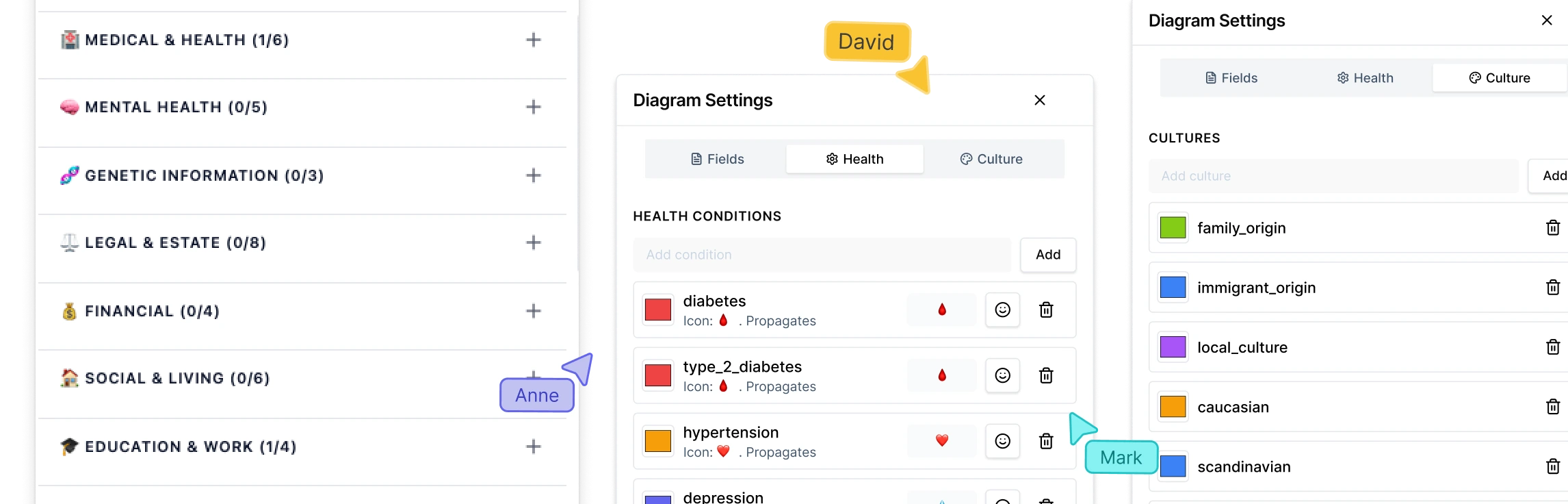
Creating a spiritual genogram on Creately is faster with AI-powered text-to-genogram generation, editable templates, clinical relationship notation, and collaboration tools. You can start from a written family or spiritual history, refine the structure visually, and add details such as beliefs, traditions, conversions, conflicts, spiritual roles, and cultural influences.
Step 1: Sign in or Create a Free Creately Account
Head over to Creately and sign in or create a free account to start building your spiritual genogram. Once inside the workspace, you can use AI generation, templates, quick-add controls, and genogram symbols to map family relationships and spiritual patterns.
Step 2: Generate a Spiritual Genogram From Text
Start by pasting a written description of your family’s spiritual or religious history into Creately’s AI text-to-genogram tool. Include details such as family members, relationships, faith traditions, denomination changes, spiritual practices, conversion events, conflicts, leadership roles, rituals, or major life events.
Creately can generate a starter genogram from the text by identifying people, relationships, dates, cultural heritage, and other clearly stated details. You can then edit and expand the output instead of building the entire genogram manually.
Step 3: Choose a Template or Start From Scratch
If you prefer a visual starting point, browse Creately’s genogram template gallery and choose a template that fits your purpose. You can use a blank, 2-generation, 3-generation, couple, or relationship-focused genogram template, then customize it for spiritual and religious mapping.
You can also start from scratch by adding people and relationships directly to the workspace.
Step 4: Add Family Members, Relationships, and Spiritual Details
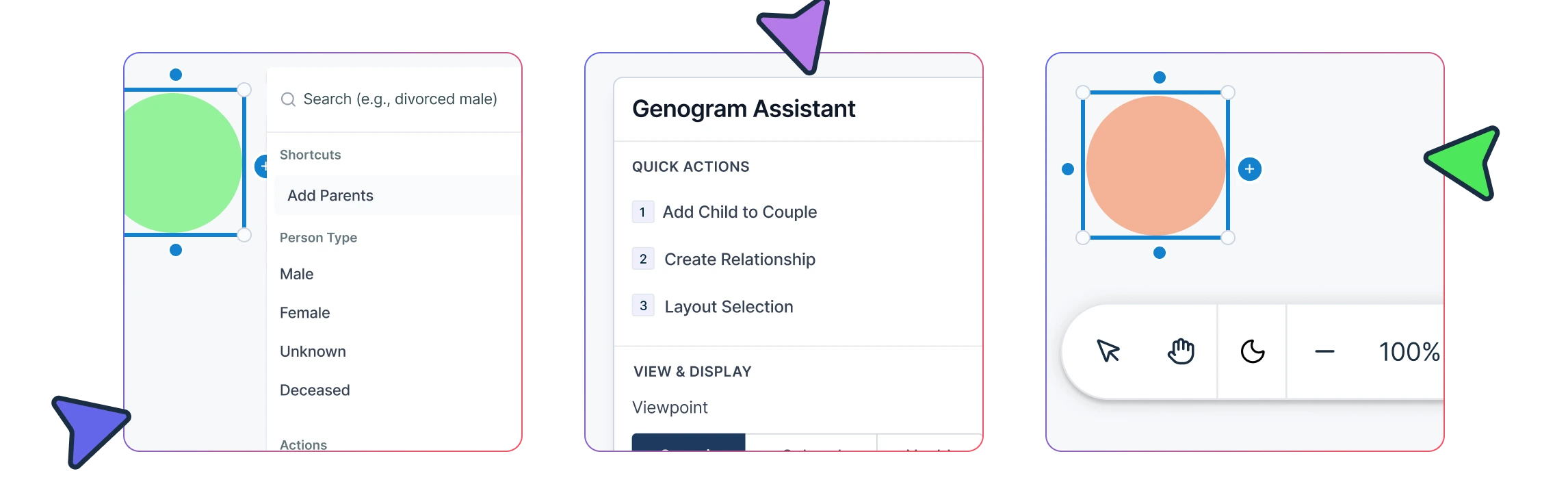
Use Creately’s quick-add controls to add partners, children, parents, parents, or siblings faster. You can also right-click a person to add relatives in a few steps.
Add spiritual details to each person, such as religious background, faith practices, spiritual identity, cultural heritage, conversion history, important rituals, community roles, or significant spiritual turning points. Use structured fields, notes, and labels to keep the information organized.
Step 5: Map Spiritual Relationships and Family Dynamics
Use Creately’s relationship types with clinical notation to show more than basic family connections. You can map marriages, separations, divorces, adoptive or foster relationships, emotional closeness, conflict, distance, cutoff, or other relational dynamics that may influence spiritual beliefs and practices.
This is especially useful when exploring how faith, values, traditions, or spiritual conflict move across generations.
Step 6: Use Color, Fields, and Views to Highlight Patterns
Customize your spiritual genogram with colors, labels, and visual markers to show faith traditions, denominations, spiritual roles, rituals, or major changes in belief over time.
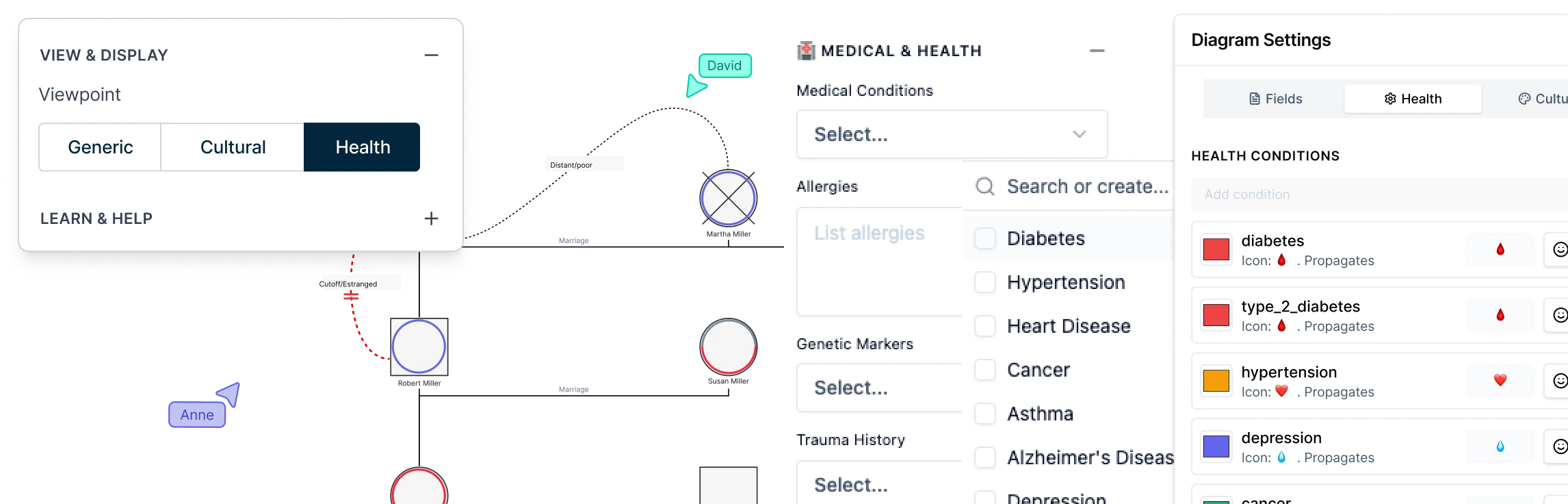
You can also use cultural heritage fields and culture view to visualize diaspora, migration, and cross-cultural family patterns when they are part of the spiritual story. Creately’s field packs and view modes help keep complex details easier to organize and analyze.
Step 7: Collaborate, Review, and Export
Invite family members, therapists, counselors, educators, or spiritual care professionals to collaborate in real time. Creately supports live co-editing, comments, auto-save, and role-based permissions, so you can control who can view, edit, or review the genogram.
When your spiritual genogram is ready, export it as PDF, DOCX, PNG, JPEG, SVG, or JSON, depending on whether you need it for reflection, therapy, teaching, reporting, or documentation.
Spiritual Genogram Examples with Free Templates
In this section, we will explore various spiritual genogram examples with templates you can edit right away.
1. Basic Spiritual Genograms
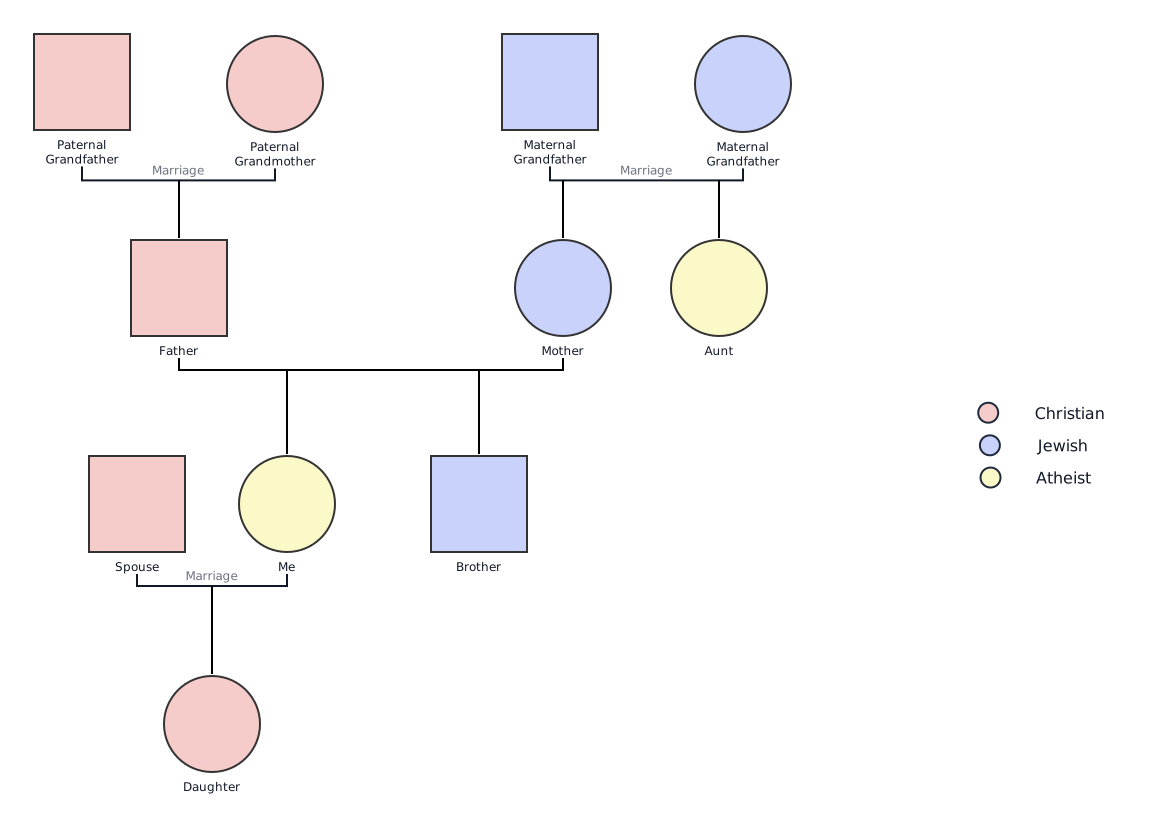
A basic spiritual genogram is an excellent starting point for those new to the concept of spiritual genograms. This helps beginners and counseling students map out fundamental spiritual information, such as denominational affiliation, belief systems, and religious practices. It provides a clear, easy-to-understand structure that helps individuals begin exploring the spiritual aspects of their family history.

Key Features of Basic Spiritual Genograms
- Simple yet essential genogram symbols representing spiritual affiliations (e.g., Christian, Muslim, Buddhist).
- Notations for spiritual orientation (e.g., agnostic, atheistic).
- Records of significant religious practices or rituals (e.g., prayer, fasting, meditation).
- Space to document major spiritual events or milestones (e.g., baptisms, religious rites of passage).
- Tracks significant life changes influencing the family’s spiritual beliefs or practices.
2. Multi-Faith Family Spiritual Genograms
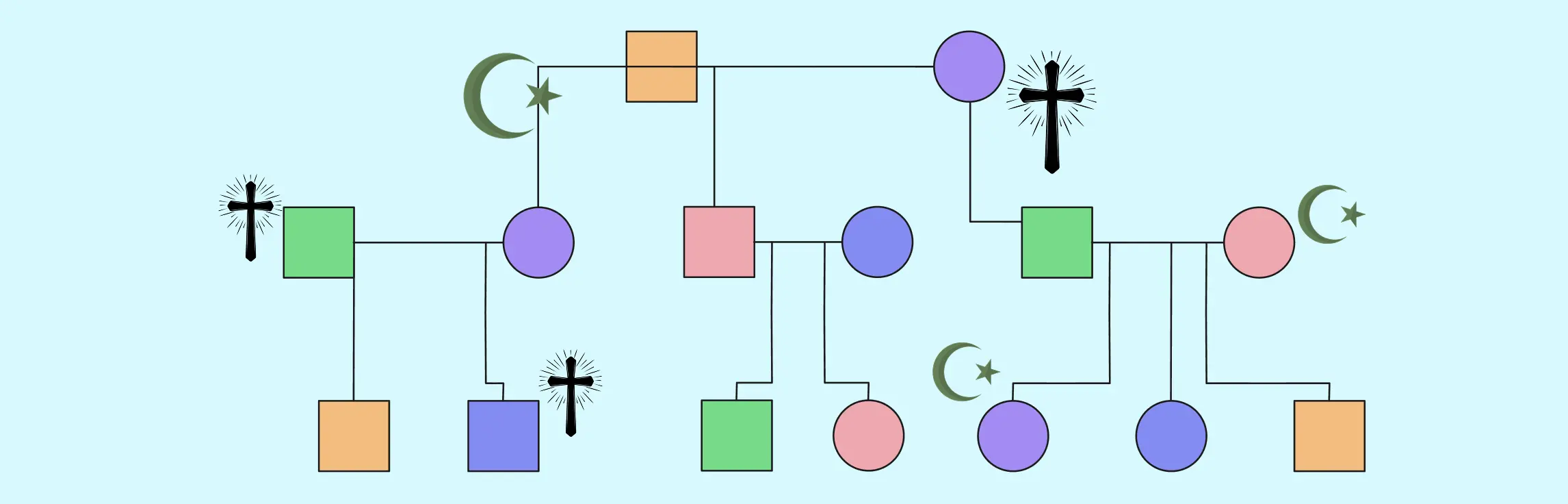
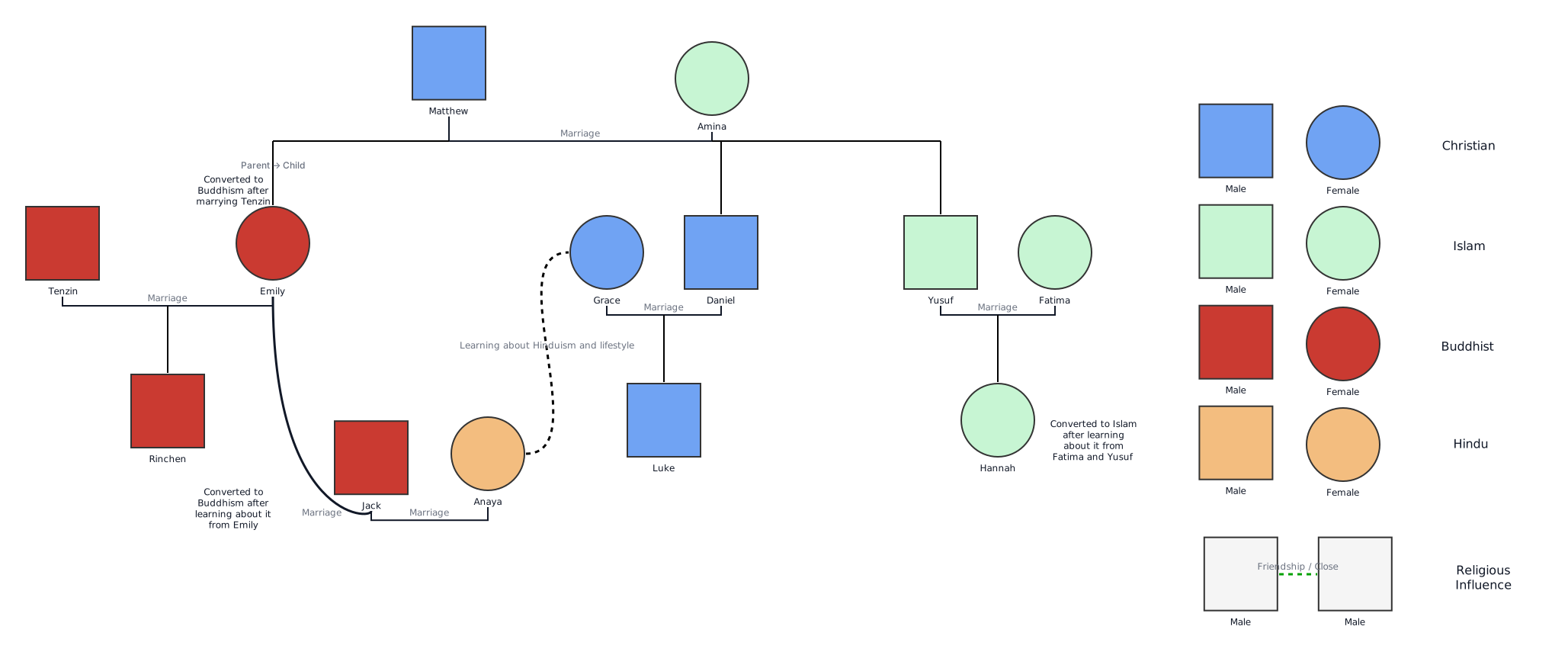
Multi-faith family spiritual genograms are specifically designed for families with mixed religious backgrounds, such as Christian-Muslim marriages or other interfaith unions. This template helps map out the diverse spiritual beliefs and practices that coexist within a family, offering a comprehensive view of how different faiths influence family dynamics and relationships.
Key Features of Multi-Faith Family Spiritual Genograms
- Visual representation of faith transitions, interfaith tensions, and spiritual compromises within the family.
- Tracks family members’ conversions, spiritual conflicts, and adaptations to diverse beliefs.
- Uses distinct symbols to represent various religious affiliations and influences.
- Highlights key events such as religious ceremonies, spiritual milestones, and faith-related disagreements.
- Maps the impact of spiritual events on family relationships and emotional dynamics.
3. Denominational Transition Spiritual Genograms
Denominational transition spiritual genograms are designed to track changes within the same religion, such as a shift from Catholicism to Evangelical Christianity, or from one denomination to another within the same faith tradition. This template is ideal for mapping the spiritual transitions that occur over generations, helping individuals understand how changes in religious doctrine, values, or community affiliations impact family dynamics.
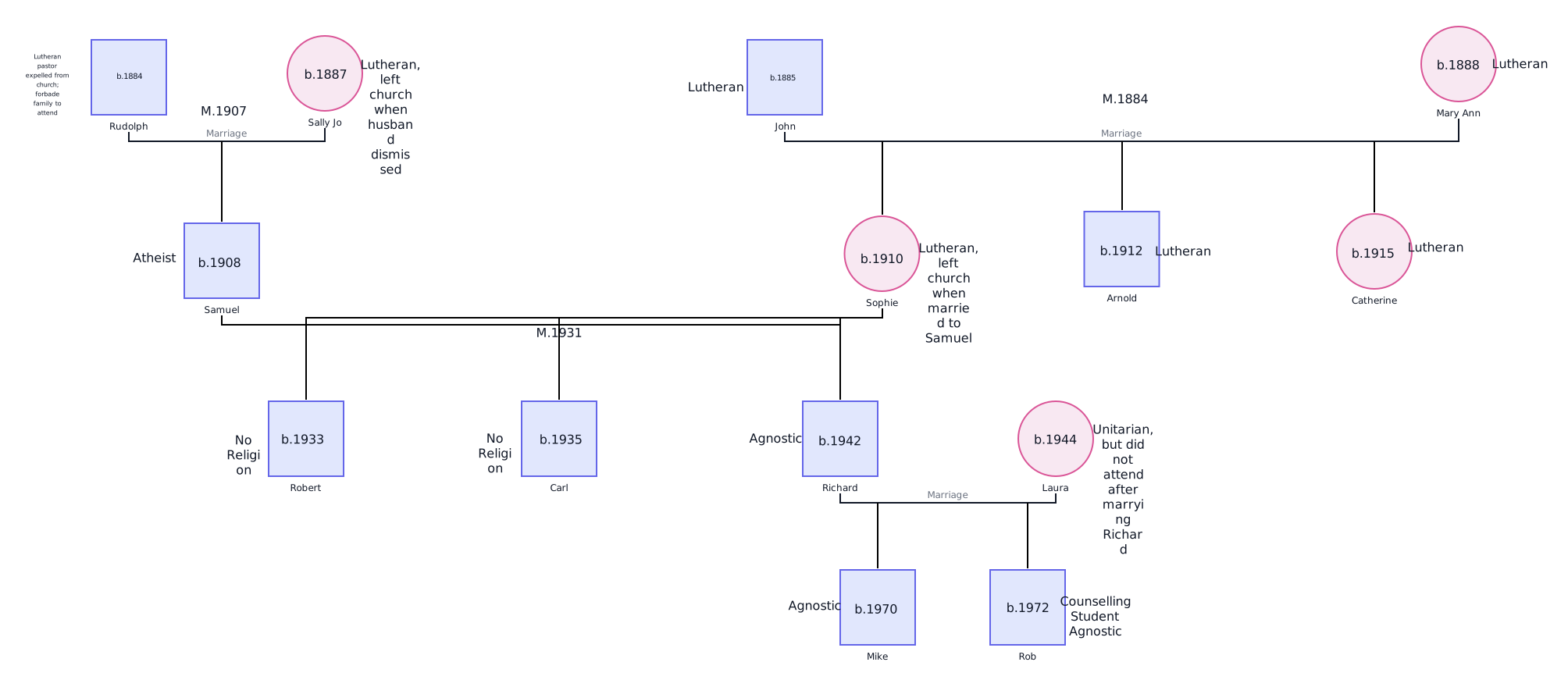
Key Features of Denominational Transition Genograms
- Highlights shifts in religious doctrine, values, and community affiliations within the family.
- Visualizes family members’ transitions between different denominations or faith communities.
- Records spiritual milestones or life events that triggered denominational changes.
- Captures both voluntary transitions (e.g., changing faith communities) and those influenced by external factors (e.g., migration, social pressure).
- Identifies tensions or conflicts arising from generational belief differences or disagreements about spiritual practices.
4. Religious Trauma Spiritual Genograms
Religious trauma spiritual genograms are used for identifying patterns of spiritual abuse, dogmatic rigidity, or religious shaming that may have been passed down through generations. This template focuses on the emotional and psychological impact of negative spiritual experiences, providing a detailed visual representation of how these traumas affect family dynamics and individual well-being.
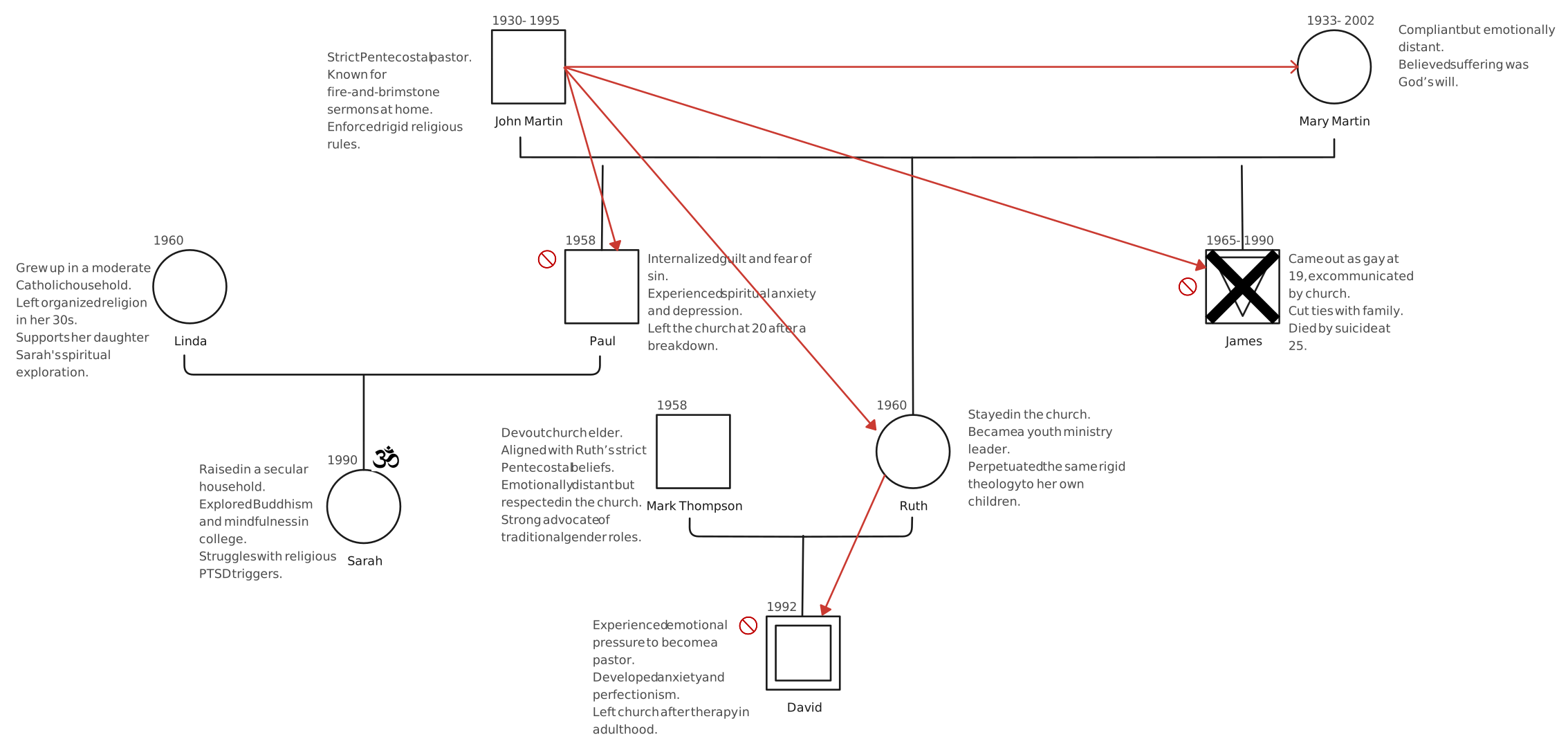
Key Features of Religious Trauma Spiritual Genograms
- Highlights significant events linked to religious trauma, such as spiritual abuse, harsh teachings, or religious shaming.
- Uses visual cues to represent conflict, disconnection, and emotional fallout within the family.
- Identifies how past religious experiences continue to influence present behaviors, beliefs, and relationships.
- Maps patterns of controlling or punitive religious practices contributing to emotional and spiritual wounds.
- Tracks how trauma is passed down through generations, potentially leading to mistrust in religious institutions or rejection of faith.
5. Virtue and Values-Based Spiritual Genograms
Virtue and values-based genograms focus on mapping out the positive spiritual qualities, such as compassion, humility, and service, that are passed down through generations. This type of spiritual genogram highlights the moral and ethical values that have shaped a family’s spiritual practices, helping individuals recognize their spiritual strengths and how these virtues influence family dynamics.
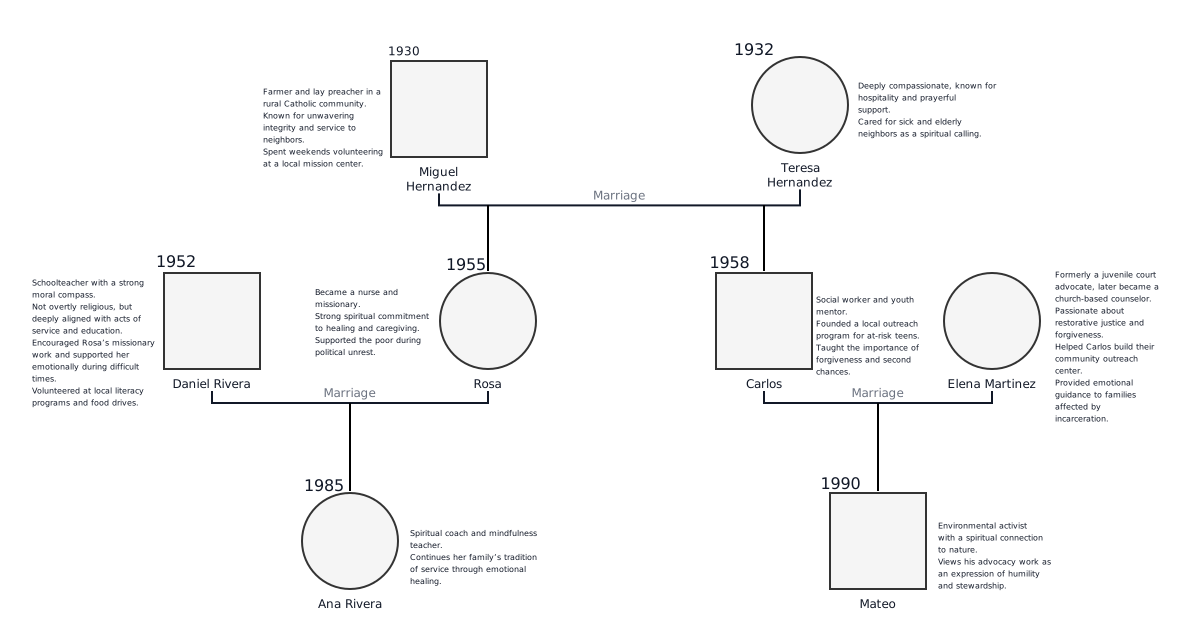
Key Features of Virtue and Values-Based Spiritual Genograms
- Highlights key spiritual virtues, such as kindness, empathy, forgiveness, and humility, central to a family’s spiritual history.
- Uses symbols to represent values modeled by family members and passed down through generations.
- Identifies positive spiritual practices that have helped family members navigate challenges and build emotional resilience.
- Showcases how virtues like service to others and humility guide family decisions, relationships, and personal growth.
6. Ritual and Practice Spiritual Genograms
Ritual and practice spiritual genograms map out the family traditions and spiritual behaviors that have been practiced over generations. It tracks important rituals such as prayer, fasting, pilgrimages, or meditation, offering a detailed visual record of how spiritual practices have shaped the family’s collective spiritual life. This genogram emphasizes the role of shared spiritual experiences in building and maintaining familial bonds.
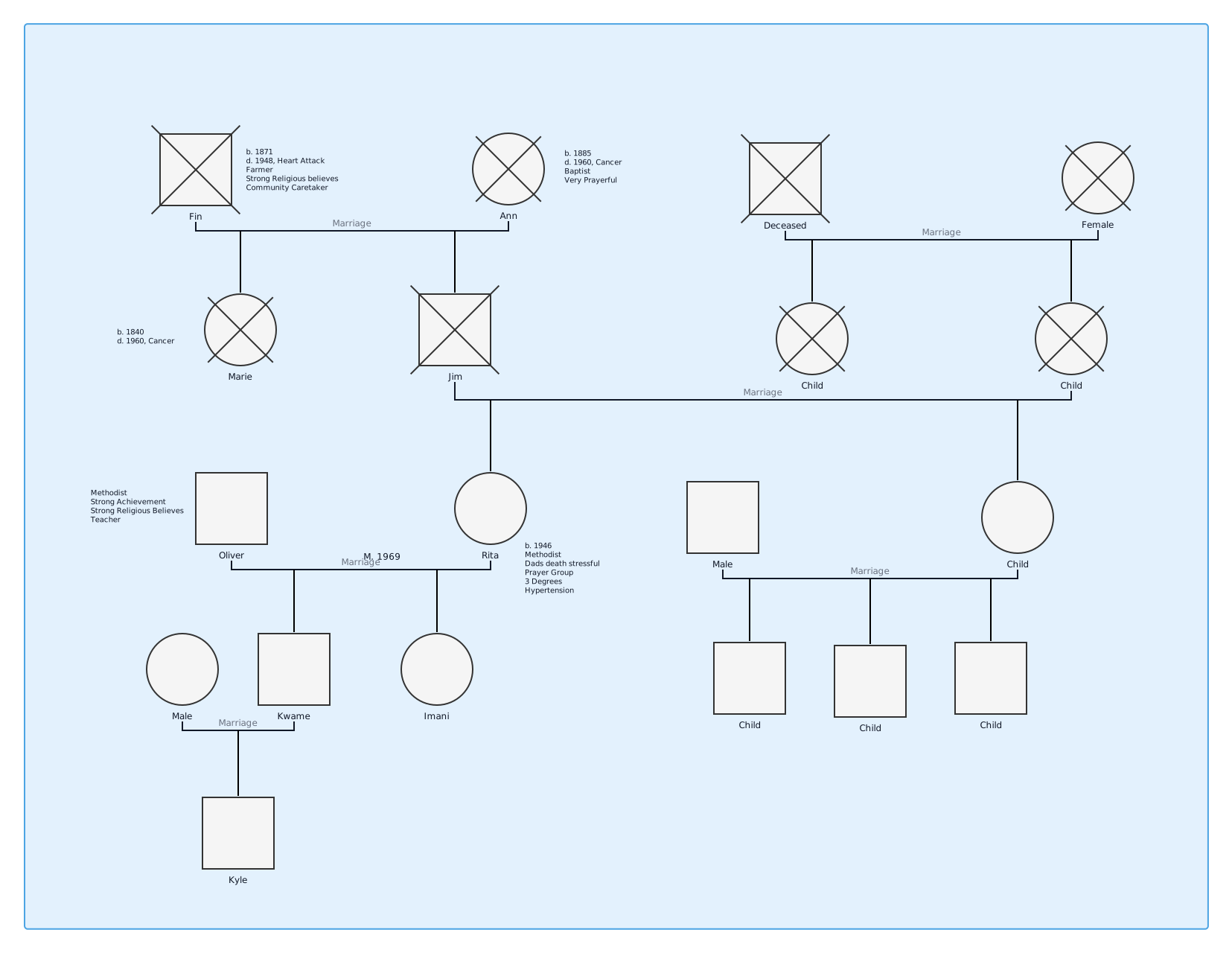
Key Features of Ritual and Practice Spiritual Genograms
- Highlights key spiritual rituals central to the family’s spiritual life, such as daily prayers, fasting, pilgrimages, or meditation.
- Uses symbols to track spiritual practices passed down, adapted, or abandoned across generations.
- Captures the evolution of the frequency, significance, and meaning of these practices within the family.
- Shows how spiritual behaviors were emphasized in each generation, providing insight into how family spiritual routines influence identity.
7. Spiritual Crisis Genograms
Spiritual crisis genogram is designed to map out key moments of conversion, loss of faith, or existential questioning that significantly impact an individual’s spiritual journey. This template highlights major turning points where family members undergo profound shifts in their beliefs or spiritual identities, tracking the emotional and psychological fallout of these crises.
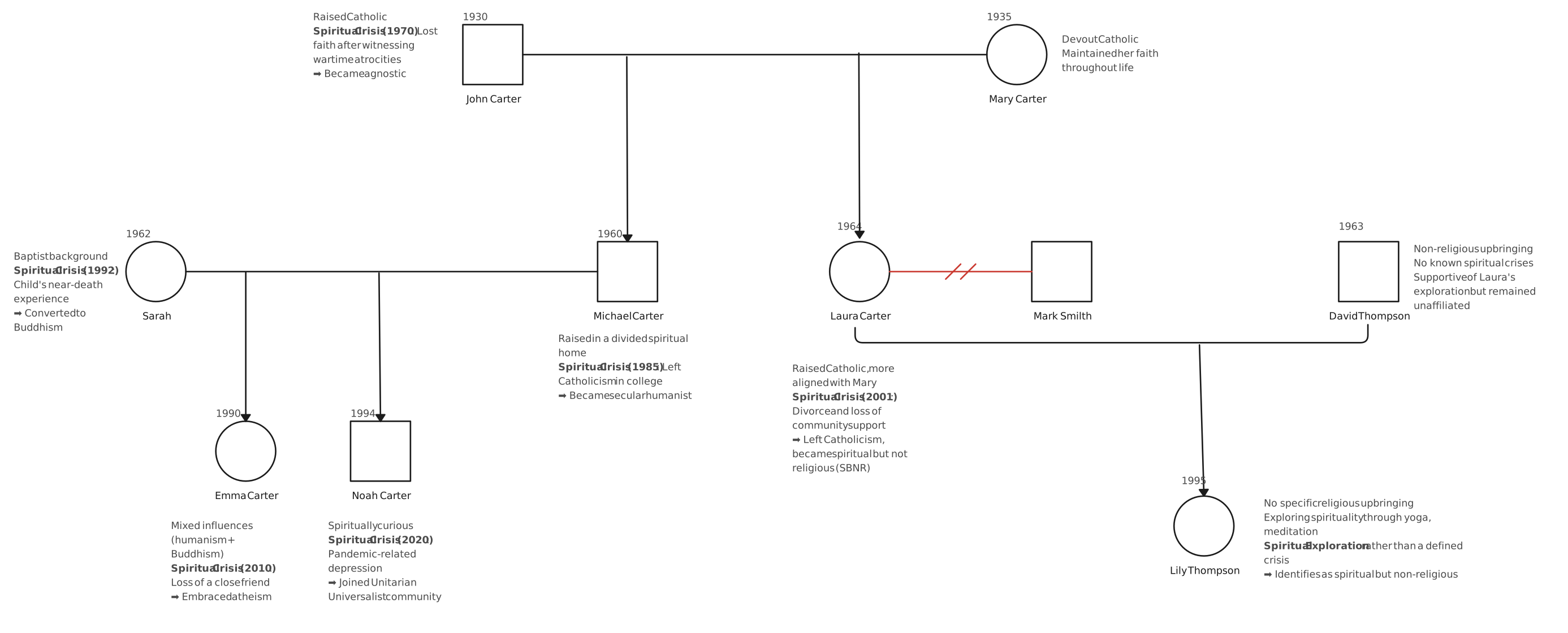
Key Features of Spiritual Crisis Genograms
- Visual representation of major spiritual turning points, including conversion, loss of faith, and existential questioning.
- Symbols mark when and how these spiritual crises occurred within the family.
- Tracks resulting identity shifts, both spiritual and personal, caused by these crises.
- Documents how individuals respond to spiritual upheaval, such as returning to original faith, adopting a new spiritual path, or embracing atheism or agnosticism.
8. Religious Roles & Leadership Spiritual Genograms
Religious roles & leadership spiritual genograms are designed to map out the presence and influence of spiritual leaders within a family, including figures like priests, pastors, elders, gurus, and other spiritual leaders. This template provides a clear view of how these influential religious roles have shaped family dynamics, belief systems, and the spiritual trajectory of each generation.
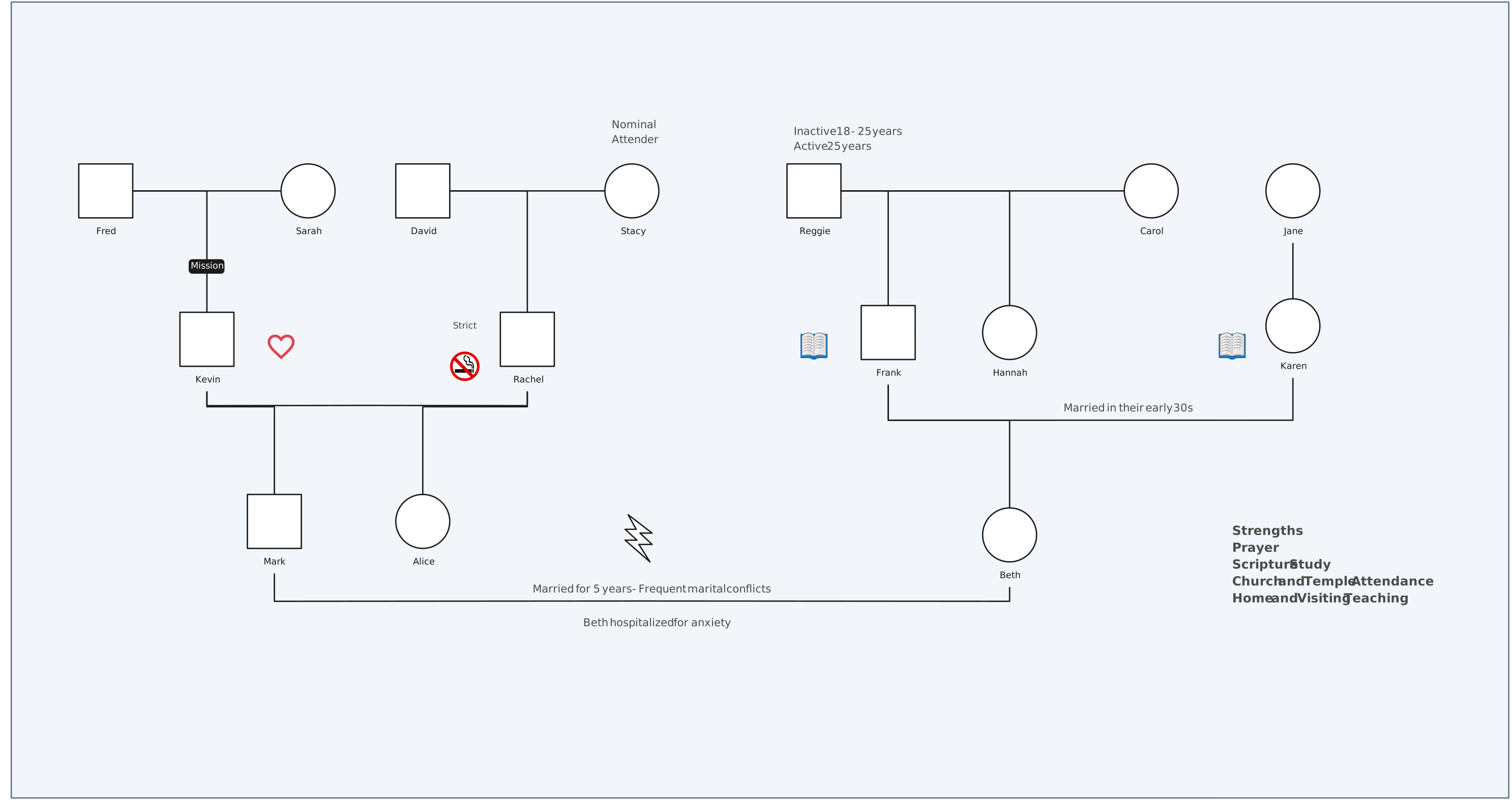
Key Features of Religious Roles & Leadership Spiritual Genograms
- Highlights religious leadership positions held by family members, such as clergy, elders, and other spiritual leaders.
- Uses symbols to represent influential religious figures within the family’s spiritual community.
- Tracks how leadership roles were passed down or filled by different family members, providing insight into spiritual guidance and influence.
- Documents the impact of religious leadership on family relationships, revealing both positive development and potential tensions.
- Shows how religious roles affect personal dynamics, family expectations, and spiritual practices.
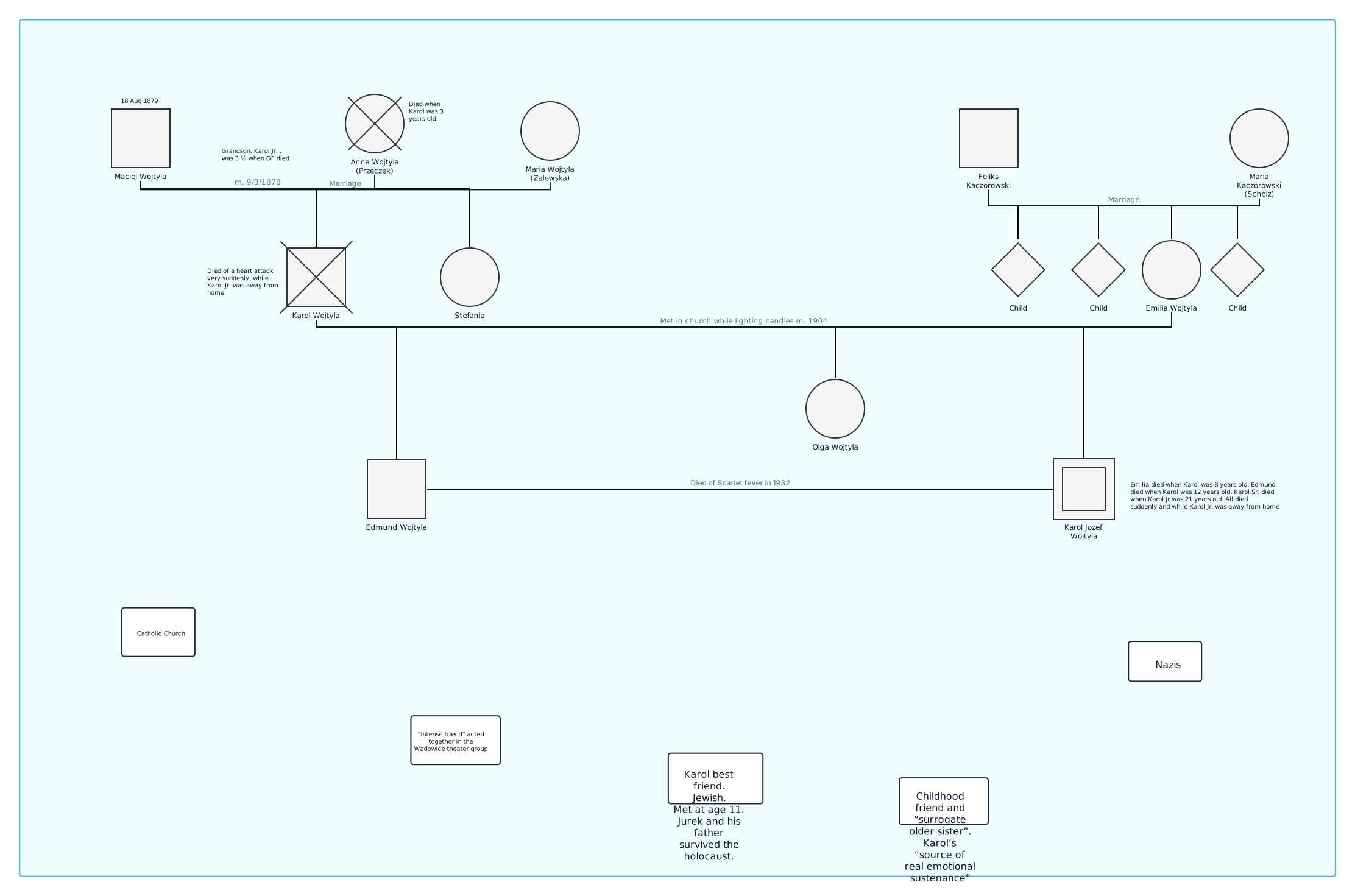
9. Intergenerational Spiritual Genograms
Intergenerational spiritual genograms are designed to map out the spiritual mentors, blessings, prophetic words, or legacy callings that have been passed down through generations. This genogram focuses on the positive aspects of spiritual inheritance, highlighting how spiritual guidance, blessings, and callings have influenced and shaped a family’s spiritual journey across multiple generations.
Key Features of Intergenerational Spiritual Genograms
- Highlights spiritual blessings and positive influences passed down within the family, such as prophetic words, mentorship, or a sense of legacy calling.
- Tracks how these spiritual influences guide family members toward their purpose and foster spiritual growth.
- Uses symbols to represent key figures who impart blessings through mentorship, prayer, or significant spiritual guidance.
- Documents the impact of blessings on the spiritual paths of descendants, showing the continuity of positive spiritual inheritance across generations.
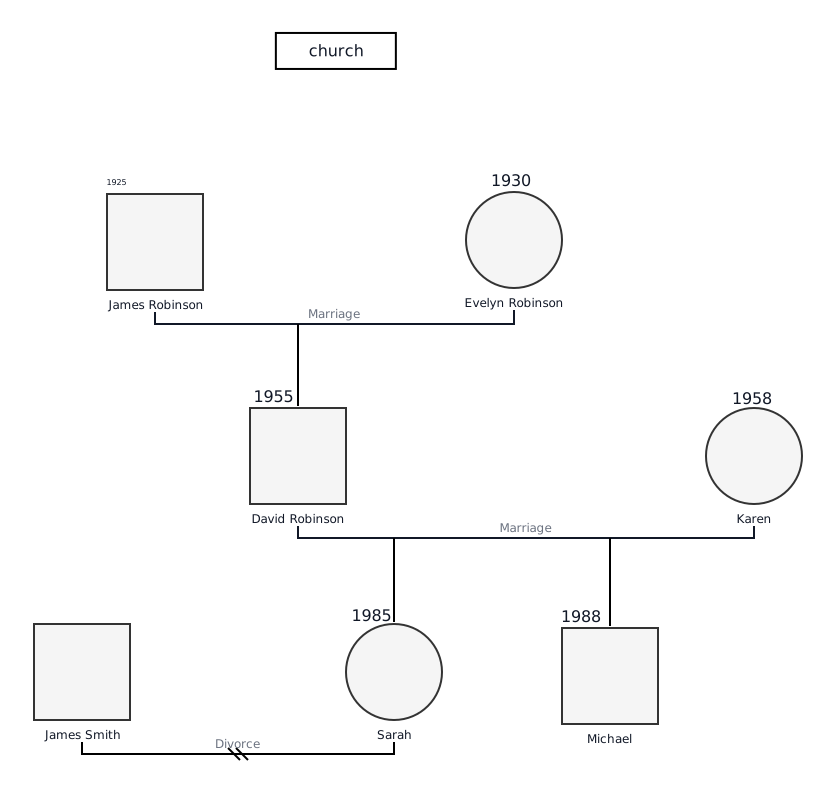
10. Spiritual Coping Genogram
A spiritual coping genogram captures how different generations within a family have used their faith to navigate significant crises, such as war, illness, or other traumatic life events. This genogram highlights the faith-based survival mechanisms and resilience patterns that have helped family members endure hardship, providing a visual representation of how faith has been a source of strength in times of crisis.
Key Features of Spiritual Coping Genogram
- Tracks how family members have relied on spiritual beliefs and practices during times of crisis, such as war, death, illness, or economic hardship.
- Uses symbols to represent faith-based coping strategies like prayer, scripture reading, and community support.
- Reveals patterns of resilience passed down through generations, showing how faith helped individuals cope with adversity.
- Highlights how spiritual practices have enabled family members to survive and find meaning in difficult circumstances.
Helpful Resources
Discover everything you need to know about genograms, from what they are, how to create a genogram, to how to understand what they mean.
Explore our collection of genogram templates.
Learn how different types of genograms can help visualize important aspects of life.
Explore the essential symbols used in genograms to represent everything from basic family structures to complex emotional and medical relationships.
Conclusion: Map Your Spiritual Journey with a Genogram
Spiritual genograms help you visualize how faith, beliefs, traditions, conflicts, and spiritual turning points move across generations. They make it easier to understand your family’s spiritual history, recognize meaningful patterns, and reflect on the values that shape your identity. With Creately, you can start from a template or generate a first draft with AI, then customize relationships, spiritual details, and visual markers as your story becomes clearer.
FAQs About Spiritual Genograms
How can spiritual genograms help in therapy?
What are the uses of spiritual genograms in counseling?
How do spiritual genograms differ from traditional family genograms?
Can I use spiritual genograms for personal exploration?
What is a spiritual genogram in training and supervision?
Resources:
Işık, E., Akbaş, T., Kırdök, O., Avcı, R. and Çakır, İ. (2012). Use of the Genogram Technique in Counseling With Turkish Families. Journal of Family Psychotherapy, 23(2), pp.131–137. doi:https://doi.org/10.1080/08975353.2012.67990 .
Limb, G.E., Hodge, D.R., Ward, K., Ferrell, A. and Alboroto, R. (2018). Developing cultural competence with LDS clients: Utilizing spiritual genograms in social work practice. Journal of Religion & Spirituality in Social Work: Social Thought, 37(2), pp.166–181. doi:https://doi.org/10.1080/15426432.2018.1448033.
McCullough-Chavis, A. (2004). Genograms and African American Families: Employing Family Strengths of Spirituality, Religion, and Extended Family Network. Michigan Family Review, [online] 09(1), p.30. doi:https://doi.org/10.3998/mfr.4919087.0009.104.
Willow, R.A., Tobin, D.J. and Toner, S. (2009). Assessment of the Use of Spiritual Genograms in Counselor Education. Counseling and Values, 53(3), pp.214–223. doi:https://doi.org/10.1002/j.2161-007x.2009.tb00127.x.