If your team is comparing genogram tools, pricing is only the first filter. The real buying decision usually comes down to whether the tool can support collaborative genogram work, structured documentation, and the rollout expectations your team has around training, support, and governance. This guide breaks down what Creately Genogram pricing makes clear, what its shipped capabilities already support, and what buyers should verify before they commit.
This is a decision-stage guide for teams already considering Creately, not a broad market comparison. If you are still building a shortlist across vendors, start with our best genogram software guide first, then come back here to validate pricing, rollout, and support fit.
The short answer
Creately is a strong fit for teams that need clinical or professional genogram work in a shared workspace. It already supports real-time collaboration, 71 relationship types across 9 categories, 6 field packs with 66+ fields, and PDF or DOCX case-file exports.
The pricing side is simple at a public level. Creately shows a Free plan, Starter and Team plans at $8 per month or $5 per month billed annually, Business at $149 per month or $89 per month billed annually, and an Enterprise path through sales. The gap buyers still need to close is not basic pricing visibility. It is whether their support, compliance, training, and rollout needs match what is actually documented and available.
What public pricing already tells you
Creately does not publish a separate genogram-only pricing table. Buyers evaluating genogram use cases start from the broader platform plans that appear across current genogram pages and supporting content.
| Pricing question | What the public site makes clear |
|---|---|
| Is there a free entry point? | Yes, a Free plan is available. |
| Are there self-serve paid tiers? | Yes, Starter and Team plans are listed at $8 per month or $5 per month billed annually. |
| Is there a business tier? | Yes, Business is listed at $149 per month or $89 per month billed annually. |
| Is enterprise handled separately? | Yes, Enterprise goes through sales. |
| Is there a genogram-specific price page? | No, buyers infer genogram pricing from the shared platform pricing structure. |
That is enough for an early buying screen. A team can quickly tell whether the evaluation should start as a self-serve trial or move directly to a higher-touch conversation.
What teams evaluating Creately should validate
Pricing matters less if the product cannot handle real genogram workflows. In that respect, Creately Genogram already covers the core questions many professional teams ask during evaluation. The focus here is not whether genogram software is useful in general. It is whether Creately has the collaboration, documentation, and rollout depth a team buyer would expect before standardizing on it.
Relationship depth
Creately Genogram supports 71 relationship types across 9 categories. That matters because team workflows in therapy, social work, and genetic counseling often depend on more than simple partner or parent-child lines.
Structured data
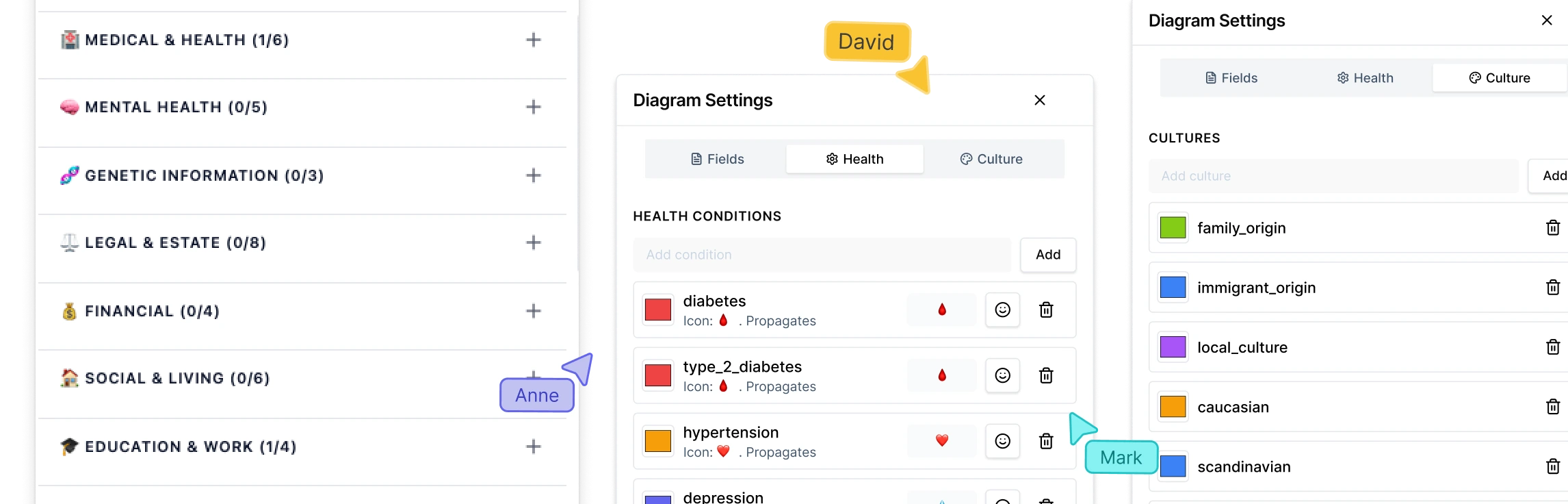
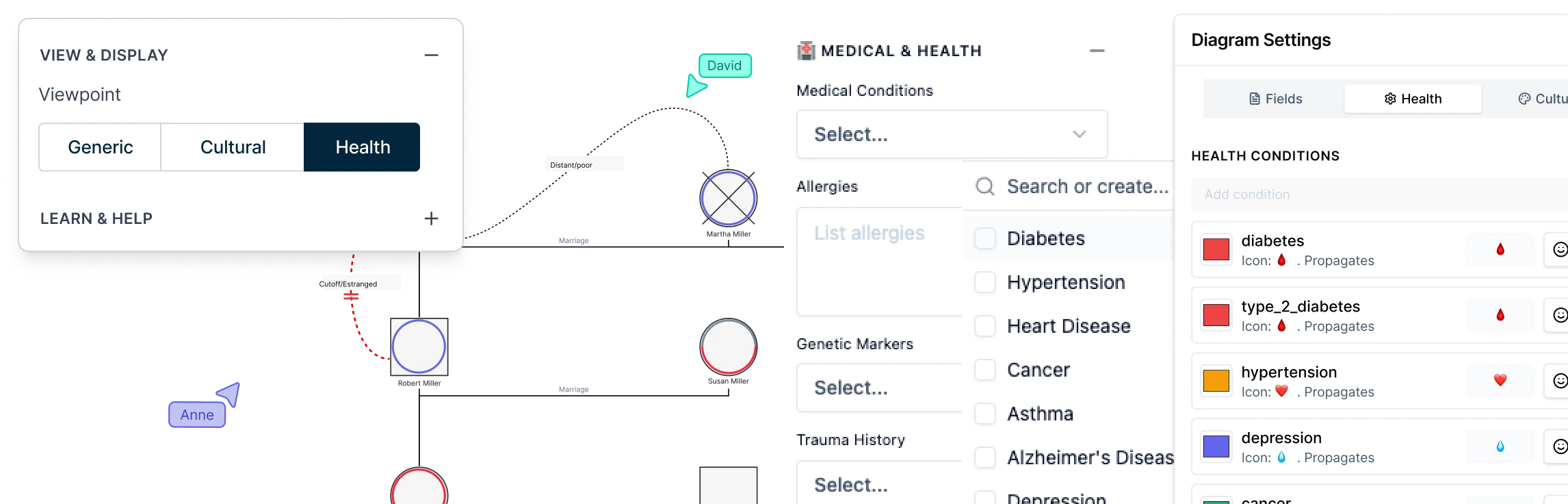
Creately includes 6 field packs with 66+ fields. Teams can use them to capture family therapy details, medical and genetic information, social-work context, legal and estate notes, or research-oriented data without flattening everything into freeform text.
Reporting and export
Creately supports PDF and DOCX clinical case-file exports, along with PNG, JPEG, SVG, and JSON. That is important for teams that need to move from diagramming into supervision, review, documentation, or presentation.
Collaboration
Creately supports real-time collaboration with live cursors, comments, and role-based sharing. If more than one person needs to review, refine, or present the same genogram, that is one of the clearest reasons to shortlist it.
Faster setup
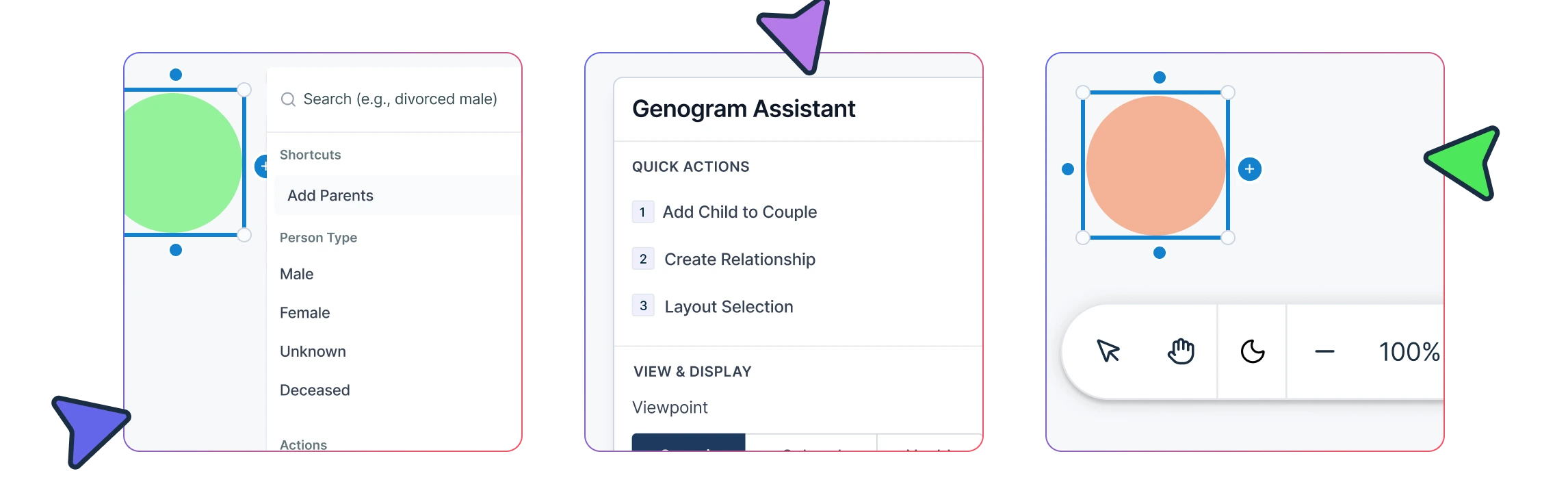
Teams can start from family genogram templates, use AI genograms, or deepen their setup with the genogram field packs guide. That lowers the effort needed to get from trial to a realistic pilot.
Where buyers should slow down and verify details
The public product and pricing story is good enough to start an evaluation. It is not detailed enough to answer every rollout question for every team.
Here are the main areas to validate before you standardize on the tool:
Training expectations: The site clearly supports self-serve onboarding through templates, AI-assisted setup, and public guidance. It does not publish a detailed packaged training model on the pages we verified.
Support scope: Creately clearly offers live in-app support. If your team needs formal implementation support, managed onboarding, or specific response expectations, confirm those directly.
Governance and procurement: Buyers with internal review requirements should verify the exact procurement, admin, and governance path they need rather than inferring it from feature copy.
Compliance interpretation: Security and compliance language appears in the genogram product references and related pages, but high-stakes teams should still confirm the exact requirements relevant to their environment before rollout.
Large-diagram readability: Creately is built to handle large multi-generational structures, including diagrams with 200+ people, but the safest buying move is still to test a real sample case during evaluation.
When Creately is the right fit
Creately is usually the right choice when the team needs more than a static family tree. It is a better match when:
- multiple people need to co-edit or review the same genogram
- structured documentation matters as much as the visual diagram
- the workflow spans therapy, social work, genetic counseling, research, or case review
- the team wants AI-assisted generation and editable structured outputs in one place
If that is your use case, Creately is closer to a professional genogram workspace than a simple diagramming add-on.
When it may not be the right fit
Creately is a weaker fit if the main requirement is consumer genealogy research or ancestry discovery rather than professional genogram work. It is also worth pausing if your team cannot move forward without published rollout commitments that the public pages do not currently spell out.
That does not automatically rule the tool out. It just changes the next step from “start a trial” to “validate the rollout details first.”
A practical buyer checklist
Before your team commits, walk through this checklist:
- Confirm that the public pricing path matches how your team prefers to evaluate software.
- Test a real genogram use case, not a toy example.
- Check whether your reviewers need comments, co-editing, structured fields, or formal exports.
- Verify support and onboarding expectations if your team needs more than self-serve ramp-up.
- Validate procurement, governance, or compliance requirements before standardization.
If those five items line up, Creately is easy to defend as a practical team choice.
Recommendation
Creately is a good buying decision for teams that need collaborative, professional genogram workflows and want to move quickly from creation to documentation. Its public pricing gives enough clarity to start evaluation, and its shipped capabilities are strong for real team use.
The main caution is not capability. It is rollout certainty. If your team needs formal training, strict governance review, or enterprise-level process clarity before adoption, confirm those details before you treat the public pricing page as the whole buying story.
Helpful Resources
See how Creately supports collaborative family genogram work with templates, reporting, and structured fields.
Explore Creately's AI-assisted text-to-genogram workflow for faster drafting and review.
Review the therapy-focused workflow, collaboration model, and exports for clinical teams.
Compare Creately with other genogram tools if your team is still building a shortlist.
Understand how structured fields support therapy, medical, social-work, legal, and research genograms.
See how therapy teams use genograms in live sessions, case review, and structured documentation.