A strong product organizational structure can make the difference between teams that thrive and products that stall. It’s more than a chart—it’s the backbone that aligns roles, responsibilities, and collaboration so your team can innovate faster, move smarter, and scale effectively. In this guide, we’ll explore models, roles, and best practices to help you build a structure that actually works for your products and people.
What Is a Product Organization?
A product organization is a way of structuring a company around its products or product lines, rather than around traditional functions like marketing, engineering, or sales. In this model, teams and resources are aligned to each product, giving them ownership and accountability for its success. Each product acts almost like a mini‑company, with dedicated people from product management, engineering, design, marketing, and support working together to achieve its goals.
A product organization is different from other models. In a functional structure, teams are grouped by role, which can slow decisions and create silos. Matrix structures split reporting between function and product, which can cause confusion. Product organizations prioritize the product, align resources to its needs, speed up decisions, and hold teams accountable for outcomes.
When businesses typically adopt a product organization
Companies with multiple products or product lines needing dedicated focus.
Organizations that require speed and autonomy for faster decision-making.
Businesses driven by product innovation and growth.
Companies with diverse products that a one-size-fits-all functional structure can’t support.
Key roles and responsibilities in a product organization
Leadership: Chief Product Officer or Head of Product
Product managers/owners: Drive roadmaps and priorities
Cross-functional teams: Engineering, design, marketing, support
Shared services (optional): Finance, HR, platform teams
What Is a Product Org Structure?
A product organizational structure is the blueprint that shows how a company organizes teams and roles around its products. It ensures each product or product line has a dedicated, cross-functional team responsible for its success, with clear reporting lines and decision-making authority.
Key components:
Product divisions: Each product or product line has its own unit, focused on strategy, development, marketing, and support.
Cross-functional teams: Teams include product managers, engineers, designers, marketers, and support staff working together.
Leadership: A Chief Product Officer (CPO) or product head guides strategy and ensures alignment across products.
Decision-making authority: Clear ownership allows teams to make fast, accountable decisions for their product.
A product organizational structure helps teams move faster, stay aligned, and focus on delivering successful products.
Types of Product Team Org Structures
When a company organizes around products, there are several common ways to structure teams. Each has its own advantages depending on product mix, company size, and business goals.
By Product or Product Line
Teams are grouped around entire products or product lines. Each major product has its own dedicated cross-functional team, handling everything from development and design to marketing and support. This gives teams full ownership, allowing them to move fast and stay closely aligned with the product vision. Best for companies with multiple distinct products or product lines.
Example: A tech company offers three distinct products: a CRM tool, a marketing automation tool, and a customer-support dashboard. They create three separate product teams — one for CRM, one for marketing automation, and one for support dashboard. Each team owns its product end-to-end (development, UX, launch, support).
By Feature
Teams are organized around specific features or components of a product, such as UI, backend, payments, or search. This approach allows teams to develop deep expertise in their area and iterate quickly. It works well for complex products but can risk losing the big-picture view if coordination across feature teams is not managed.
Example: A large software platform has one team working only on the search and recommendation feature used across multiple products; another team handles the payments module (billing, subscriptions), and another team handles user interface and design aspects. These feature teams collaborate across different product lines.
By Market Segment or Customer Segment
Teams focus on specific customer groups or market segments instead of products or features. This structure is ideal when customer needs differ significantly, such as enterprise versus small business users or different geographic regions. It enables tailored product experiences but can create duplication of effort and make maintaining a consistent product vision more challenging.
Example: A SaaS company serves both small businesses (SMBs) and large enterprises. They have a “SMB team” focused on features and pricing for small companies, and an “Enterprise team” focused on scalability, advanced security, and custom integrations for large clients.
Hybrid or Mixed Models
Many companies combine elements of the above structures depending on product complexity, company size, and market demands. For example, a company might have product-based divisions for certain offerings, feature teams for complex modules, and segment-focused teams for specific customer groups. Hybrid models provide flexibility but require clear governance and communication to avoid confusion and duplication.
Example: A tech firm has three product divisions (Product A, Product B, Product C). Within Product A, they have a feature team dedicated to the payments module, a UI/UX team, and a customer support team. Meanwhile, there’s a segment-focused subteam handling enterprise clients requiring custom onboarding.
Roles and Responsibilities in a Product Organizational Structure
A product organizational structure relies on clearly defined roles to ensure smooth collaboration, accountability, and product success.
| Role | Who | Responsibilities | Purpose / Impact |
| Leadership | Chief Product Officer (CPO) or Head of Product |
| Guides overall direction, prioritizes investments, and keeps the organization focused on business objectives |
| Product-Level Roles | Product Manager / Product Owner |
| Ensures products meet market needs, align with strategy, and are delivered effectively |
| Business Analysts / Product Analysts | Analysts who work closely with PMs |
| Helps product teams make data-driven decisions and identify opportunities |
| UX Researchers / Customer Experience Specialists | User researchers, UX specialists |
| Ensures products are user-friendly and aligned with customer expectations |
| Cross-Functional Delivery Teams | Engineering, Design/UX, Marketing, Customer Support |
| Provides the skills and execution power needed to deliver and support products successfully |
| Quality Assurance / Test Engineers | QA engineers or testers |
| Maintains product reliability and performance before release |
| Technical Leads / Architects | Engineering leads, solution architects |
| Keeps technical direction aligned with product and business goals |
| Shared Services / Central Functions (Optional) | Finance, HR, Platform Engineering |
| Maintains efficiency and consistency across teams while allowing product teams to focus on their product |
How to Create a Product Team Organizational Structure
Creating a product team organizational structure involves designing teams, roles, and reporting lines to ensure products are delivered efficiently and effectively. Here’s how to do it:
Step 1. Define Your Product Strategy and Goals
Understand your product portfolio, business objectives, and market needs.
Decide which products, features, or customer segments require dedicated focus.
Align the structure with your company’s strategic priorities.
Step 2. Identify Key Roles and Responsibilities
Determine the leadership roles (e.g., Chief Product Officer or Head of Product).
Define product-level roles (Product Managers / Product Owners).
Identify cross-functional team members: engineering, design/UX, marketing, support.
Consider supporting roles like business analysts, UX researchers, QA engineers, and technical leads.
Decide if any shared services (finance, HR, platform engineering) will remain centralized.
Step 3. Choose the Right Team Structure
By product: Each product has its own team/division.
By feature: Teams focus on key product features or components.
By market segment: Teams focus on specific customer groups.
Hybrid: Combine different approaches based on complexity and company needs.
Step 4. Define Reporting Lines and Decision-Making Authority
Clearly map who reports to whom and who makes which decisions.
Ensure product teams have enough autonomy to act quickly while staying aligned with overall strategy.
Step 5. Establish Collaboration and Communication Mechanisms
Set up regular meetings, product reviews, and cross-team communication channels.
Use tools like product roadmaps, project management platforms, and shared documentation to maintain transparency.
Step 6. Review and Adjust Regularly
As products evolve or the company grows, revisit the structure.
Adapt team composition, roles, or reporting lines to improve efficiency, speed, and product outcomes.
Product Organizational Structure Templates
Now that you know what a product organization chart is, here are some ready-to-use templates to inspire your own or get you started.
Product Organizational Structure

Nike Organizational Structure
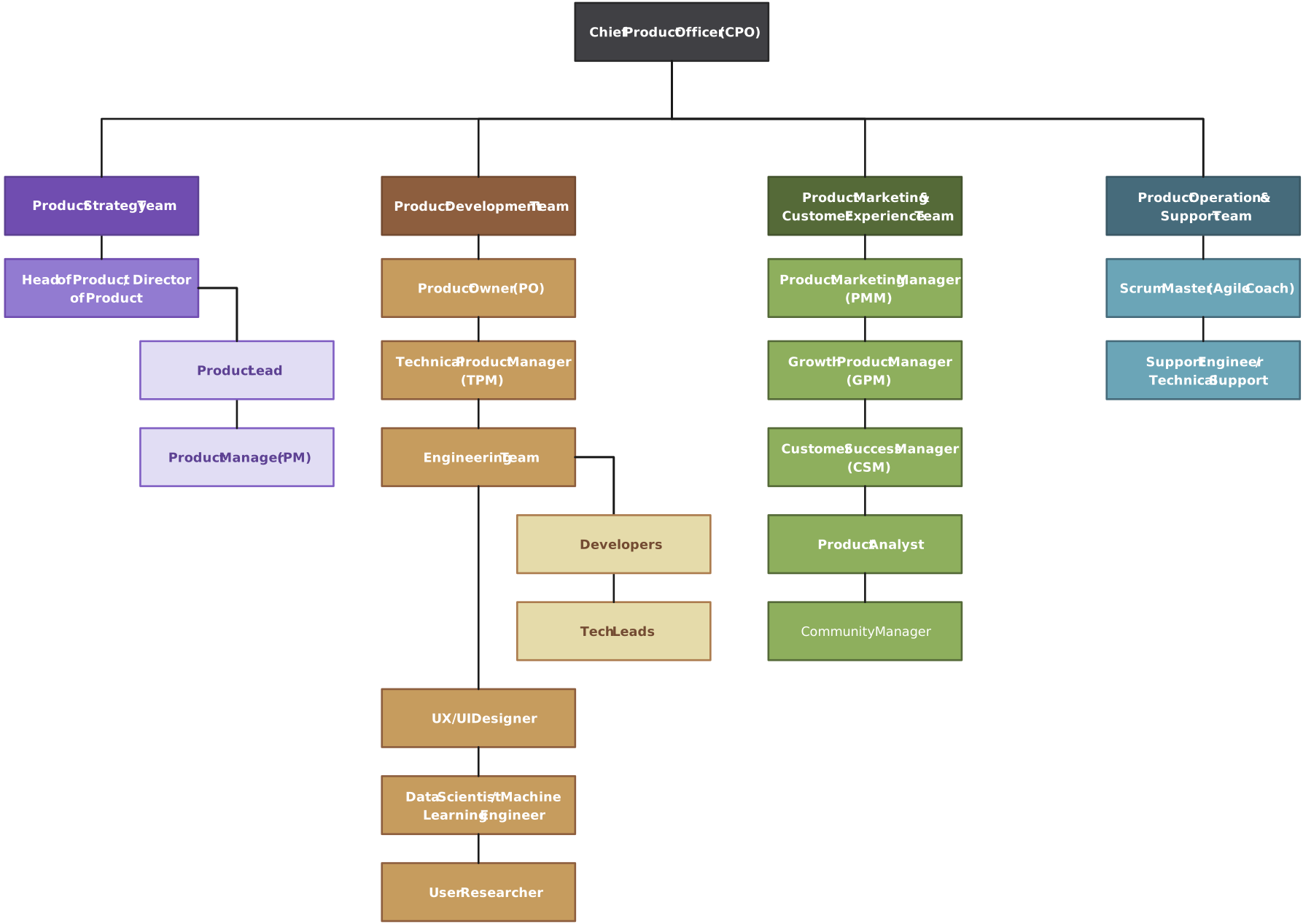
Product Team Org Chart
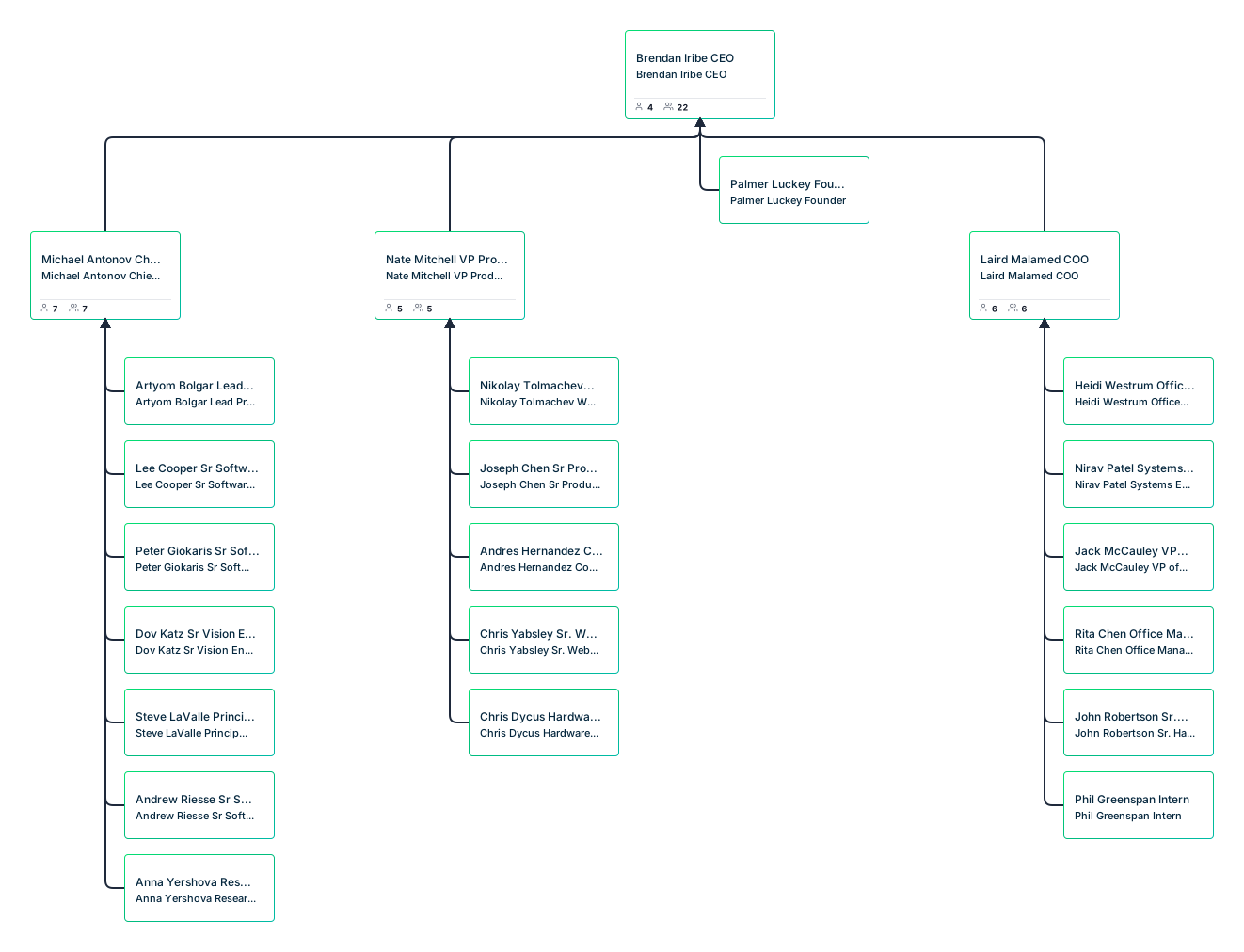
Oculus VR Organization Chart
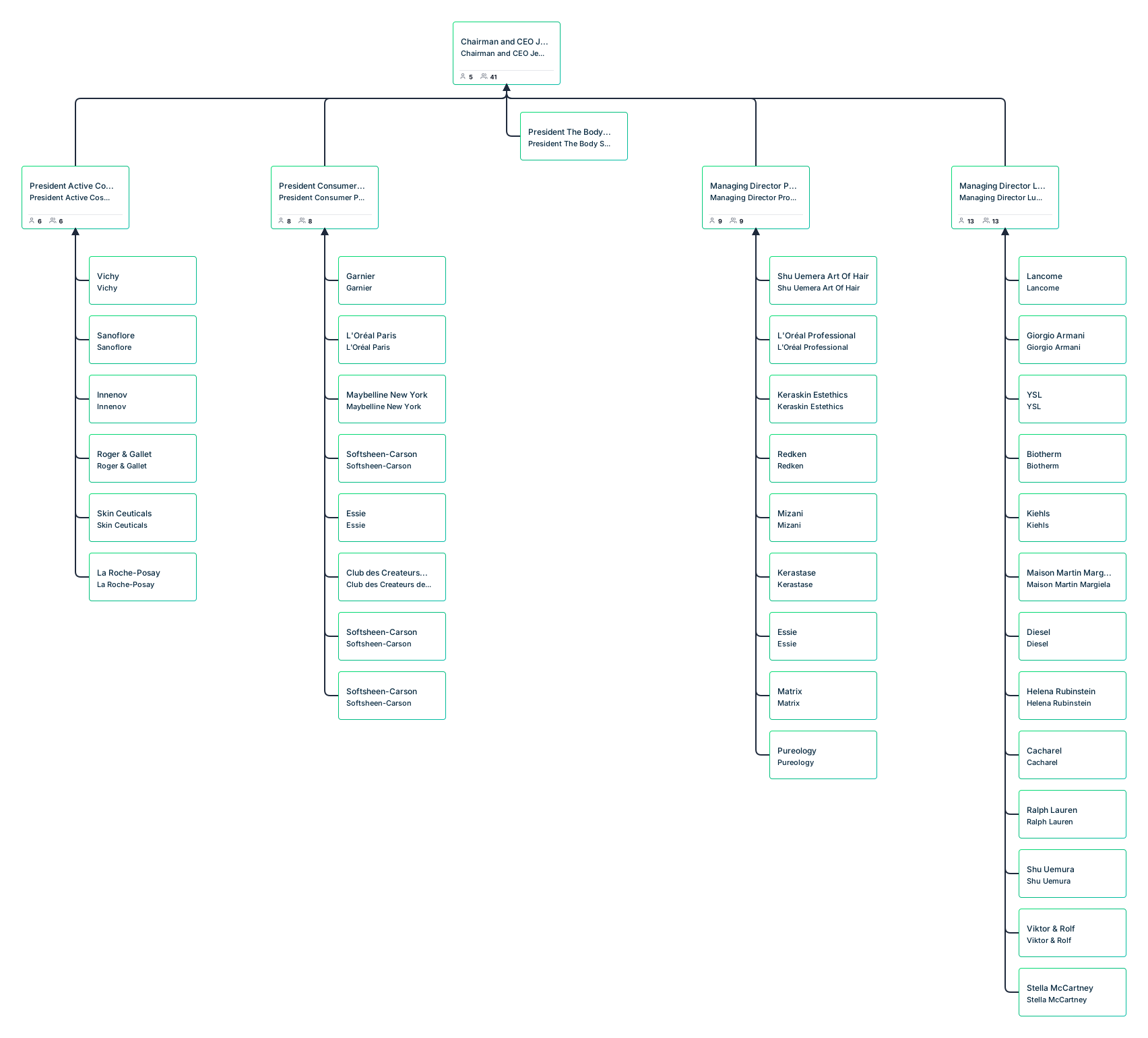
L’Oréal Organization Chart
Helpful Resources
Discover 10 practical matrix org chart examples to visualize dual reporting lines, improve collaboration, and streamline your matrix organizational structure in project management.
Easily make organizational charts to visualize the reporting structure of your organization for effective HR planning and management with org chart maker.
Org chart best practices you need to follow to effectively make use of them and the data within org charts. Learn to create org charts like a pro.
Learn the difference between functional and divisional organizational structures, with examples, pros & cons, a comparison table and guidance on which to choose.
Advantages and Disadvantages of a Product Organization Structure
| Advantages | Disadvantages |
| Teams are fully focused on their product or product line, improving alignment and accountability. | Can create silos between product teams, reducing collaboration across the company. |
| Faster decisions because teams have autonomy and clear ownership. | Risk of inconsistent decisions if teams are not aligned with overall company strategy. |
| Teams can tailor products closely to customer needs or specific market segments. | Duplication of effort if multiple teams work on similar solutions for different products or segments. |
| Encourages innovation and end-to-end responsibility for product success. | Resource-intensive: maintaining separate teams for each product can increase overhead. |
| Promotes close collaboration within product teams between engineering, design, marketing, and support. | Coordination across multiple products can be challenging without strong governance. |
| Easier to scale individual product teams as the product or company grows. | May require complex management structures for large portfolios, increasing management overhead. |
FAQs About Product-Based Organizational Structure
Can a company use multiple product organizational structures at the same time?
How do you decide which structure is best for your company?
How do product teams interact with central functions like finance or HR?
What are the common challenges in a product org structure?
Can small startups use a product based organizational structure?