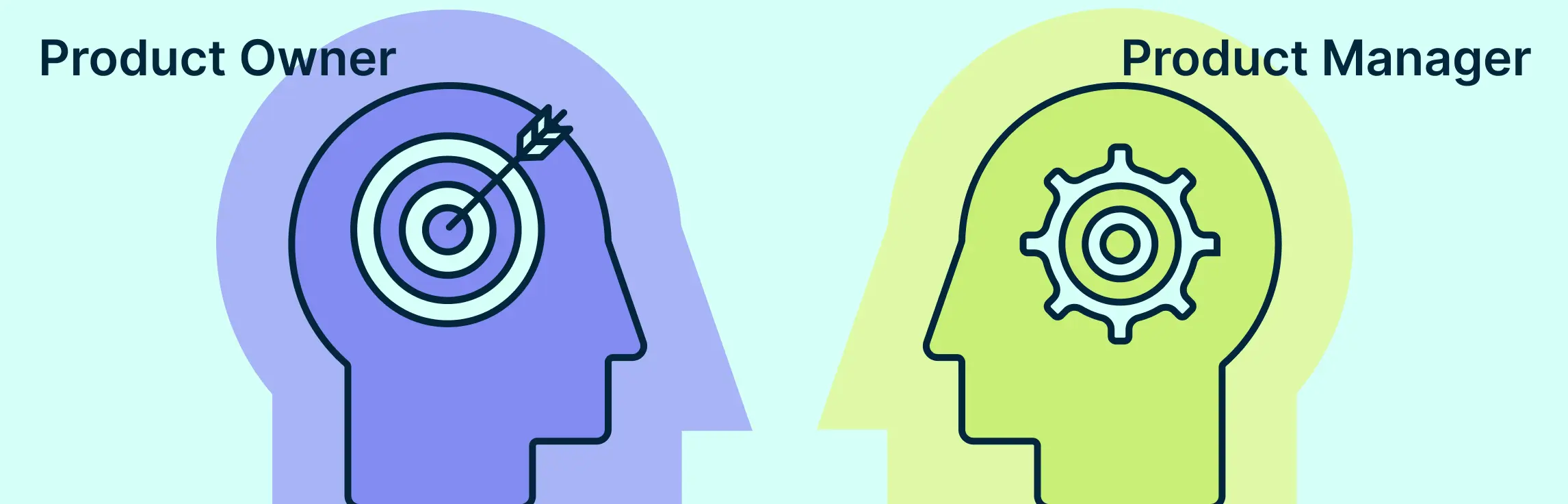
In the world of product development, the titles “Product Manager” and “Product Owner” are often used interchangeably, but they actually represent two distinct roles. While both are essential to the success of a product, they focus on different aspects of the product lifecycle. Understanding the differences between product manager vs product owner can help clarify responsibilities, improve teamwork, and ultimately lead to better products.
In this guide, we’ll break down the key differences between a product manager vs product owner, explore their specific responsibilities, and explain how they work together to bring a product from concept to reality. Whether you’re a product professional, hiring manager, or just curious about the roles, this guide will help you understand how each position contributes to product success.
Summary: Product Manager vs Product Owner
| Aspect | Product Manager | Product Owner |
| Definition | Finds product opportunities and creates the product vision and strategy. | Breaks down the vision into actionable tasks and manages the product backlog. |
| Primary Focus | Long-term strategy, business goals, customer needs. | Day-to-day product development and task management. |
| Goals | Build products that meet customer needs and business objectives. | Ensure product features align with customer needs and business goals. |
| Tools and Methods | Market research, customer interviews, usability testing, defining product success metrics. | Project management tools, writing user stories, managing product backlog. |
| Role in Development | Leads product vision, roadmap, and execution. | Focuses on execution, managing backlog, sprint planning. |
| Key Skills | Communication, problem-solving, market analysis, leadership, decision-making. | Communication, problem-solving, project management, agile frameworks, decision-making. |
| Training/Education | Experience over formal education; some may have business or tech backgrounds. | Often requires experience plus formal education (business, tech, or related). |
| Average Salary (US) | $146,980 | $125,809 |
Product Manager Role Definition
A Product Manager (PM) is like the captain of a product’s journey. They are responsible for setting the vision and direction of a product, making sure it aligns with customer needs, business goals, and market trends. Think of them as the bridge between the customer, the company, and the development team.
The PM’s job starts with understanding what problem the product will solve and then creating a strategy to solve it. They define and create the product roadmap, prioritize features, and make sure the right resources are in place to bring the product to life. They also track the product’s performance, making adjustments as needed to ensure it continues to meet customer expectations and drives business success.
In short, a product manager focuses on the big picture. They steer the product from start to finish, ensuring it delivers value to users while achieving the company’s goals.
Product Owner Role Definition
A Product Owner (PO) is the key person who makes sure a product is built the right way, based on the vision set by the product manager. They work closely with the development team, breaking down the product’s features into smaller, manageable tasks and ensuring that the team is building the product according to the priorities.
The PO’s role is hands-on and focused on the details. They prioritize and manage the product backlog—a list of tasks and features that need to be worked on. They are the voice of the customer, making sure the product meets user needs and expectations. The PO also collaborates with the development team, answering questions and making quick decisions to keep things moving smoothly.
In simple terms, the product owner ensures that the right product is being built, and that it’s being built in the right way—by guiding the team through the day-to-day work of development.
Product Manager vs Product Owner: Quick Overview
| Responsibility | Product Manager | Product Owner |
| Main Focus | Defines product strategy, vision, and roadmap | Manages product backlog, ensures development team follows priorities |
| Customer Interaction | Conducts market research, advocates for customer needs | Listens to customer feedback, creates user stories |
| Strategic Planning | Develops long-term vision, drives product goals | Ensures the backlog reflects product vision and priorities |
| Collaboration | Works with executives, marketing, and sales teams | Works closely with the development team |
| Decision Making | Makes high-level decisions about features and priorities | Makes day-to-day decisions on what the development team works on next |
| Lifecycle Involvement | Involved from conception to launch, focusing on overall strategy | Focuses on product details during the development phase |
Product manager responsibilities
The PM is responsible for the overall direction of the product. They focus on understanding customer needs, the market, and business goals to create a product vision. The PM defines the product roadmap, setting priorities for what features should be developed and when. They work closely with executives, marketing, and sales teams to make sure the product aligns with the company’s strategy and goals. The PM’s role is all about long-term planning and ensuring the product delivers value to both customers and the business.
Product owner responsibilities
The PO takes the product vision set by the PM and makes it actionable. They manage the product backlog, which is a list of tasks and features that need to be built. The PO works with the development team, prioritizing these tasks and ensuring the team is working on the right things at the right time. They make decisions on the day-to-day details of development, ensuring the product is being built according to the PM’s strategy. The PO is also the key point of contact for the development team, answering questions and making quick decisions to keep progress moving.
Product Manager vs Product Owner: Key Differences
While the roles of product manager and product owner often overlap, they focus on different aspects of product development. Here’s a breakdown of their key differences:
| Aspect | Product Manager | Product Owner |
| Focus Area | Focuses on why and what of the product; ensures alignment with customer needs, business objectives, and market opportunities. | Focuses on how and when of product development; manages the product backlog and priorities for the development team. |
| Interaction with Stakeholders | Works with external stakeholders (customers, market analysts, sales teams) to gather insights and ensure market fit. | Works with internal stakeholders (primarily the development team) to translate vision into actionable tasks. |
| Role in Agile Framework | May participate in Agile but is not deeply involved in day-to-day processes. | Plays a central role in Agile, managing the backlog and attending daily stand-ups, sprint planning, and review meetings. |
| Decision-Making Authority | Makes broad strategic decisions about product features, pricing, and positioning. | Makes tactical decisions on the product’s features and priorities at the development level. |
| Level of Involvement in Development | Less involved in day-to-day development discussions; provides high-level guidance. | Directly involved in development, clarifying requirements and priorities for the team. |
| Reporting Structure | Typically reports to senior leadership or executives; responsible for product strategy and alignment with business goals. | Typically reports to the Product Manager and works closely with the development team on execution. |
How Product Managers and Product Owners Work Together
While product managers and product owners have different roles, they work closely together to make sure a product is successful. Their collaboration is key to turning a product vision into a reality. Here’s how they team up:
1. Aligning on vision and strategy
The product manager sets the overall product vision and strategy. They define what the product will be, why it matters, and how it fits into the market. Once the PM has a clear vision, the product owner takes that vision and breaks it down into specific tasks for the development team. They work together to make sure the product’s features align with both business goals and customer needs.
2. Communicating priorities
The product manager decides what features are most important for the product based on market needs and business goals. The product owner takes those priorities and manages the backlog—listing the tasks in order of importance. They communicate these priorities clearly to the development team, ensuring everyone is focused on the right tasks at the right time.
3. Ensuring product success
Throughout the product management process, the product manager keeps an eye on the product’s success in the market, making adjustments as needed. The product owner ensures that the product team is delivering the right features and maintaining quality. They work together to make sure the product meets customer needs and business expectations.
4. Solving problems together
When problems arise—whether it’s about a feature not working as planned or changing market conditions—the product manager and product owner collaborate to find a solution. The PM focuses on strategic adjustments, while the PO ensures the development team is on track with new priorities.
Helpful Resources
Learn the essentials of agile product management, a flexible approach that prioritizes adaptability, customer feedback, and continuous improvement.
Discover the 7-step product management process to effectively develop, launch, and refine products that meet customer needs and drive business growth.
Understand the key differences between product management and project management. Learn their unique roles, responsibilities, and how they work together to drive business success.
Discover the key responsibilities of a director of product, their role in product strategy, team leadership, and business growth.
Explore top product management frameworks that help teams streamline development, prioritize tasks, and create successful products.
Conclusion: Product Manager vs Product Owner
Understanding the key differences between a product manager and a product owner is essential for creating successful products. Both roles are important, but they focus on different aspects of the product journey. The product manager handles the overall strategy, vision, and market fit, ensuring that the product delivers value to customers and meets business goals. Meanwhile, the product owner ensures that the development team is building the product correctly, prioritizing tasks and maintaining focus on day-to-day progress.
By working closely together, the product manager and product owner ensure that the product not only stays on track but also evolves to meet customer needs and business objectives. Whether you’re a product professional or just learning about these roles, understanding the differences between product manager vs product owner will help you navigate the world of product development more effectively and achieve better results.
References
McDaniel, C. and Gray, D.A. (1980). The Product Manager. California Management Review, 23(1), pp.87–94. doi:https://doi.org/10.2307/41164908.
Kadenic, M.D., de Jesus Pacheco, D.A., Koumaditis, K., Tjørnehøj, G. and Tambo, T. (2023). Investigating the role of Product Owner in Scrum teams: Differentiation between organisational and individual impacts and opportunities. Journal of Systems and Software, [online] 206, p.111841. doi:https://doi.org/10.1016/j.jss.2023.111841.
Judy, K.H. and Krumins-Beens, I. (2008). Great Scrums Need Great Product Owners: Unbounded Collaboration and Collective Product Ownership. Proceedings of the 41st Annual Hawaii International Conference on System Sciences (HICSS 2008). doi:https://doi.org/10.1109/hicss.2008.186.
FAQs: Product Manager vs Product Owner
What is the main difference between a product manager and a product owner?
Do product managers and product owners work together?
Can a product manager also be a product owner?
Which role is more focused on customer needs?
Does a product owner make business decisions?
Which role is more involved in Agile development?