Visual process documentation explains how work moves between people, teams, decisions, and systems. Flowcharts and process maps make that sequence easier to review, while connected instructions and ownership details help people understand how to perform and maintain the process. Creately provides a shared visual workspace for building this documentation collaboratively. See Using a Visual Collaboration Tool for Visual Documentation for more information.
Using Creately to Draw Flowcharts & Process Maps For Visual Documentation
Templates Templates are a great way to save time and create professional-looking flowcharts and process maps. Creately provides a variety of templates, including flowcharts for common processes, such as decision trees and swimlane diagrams.
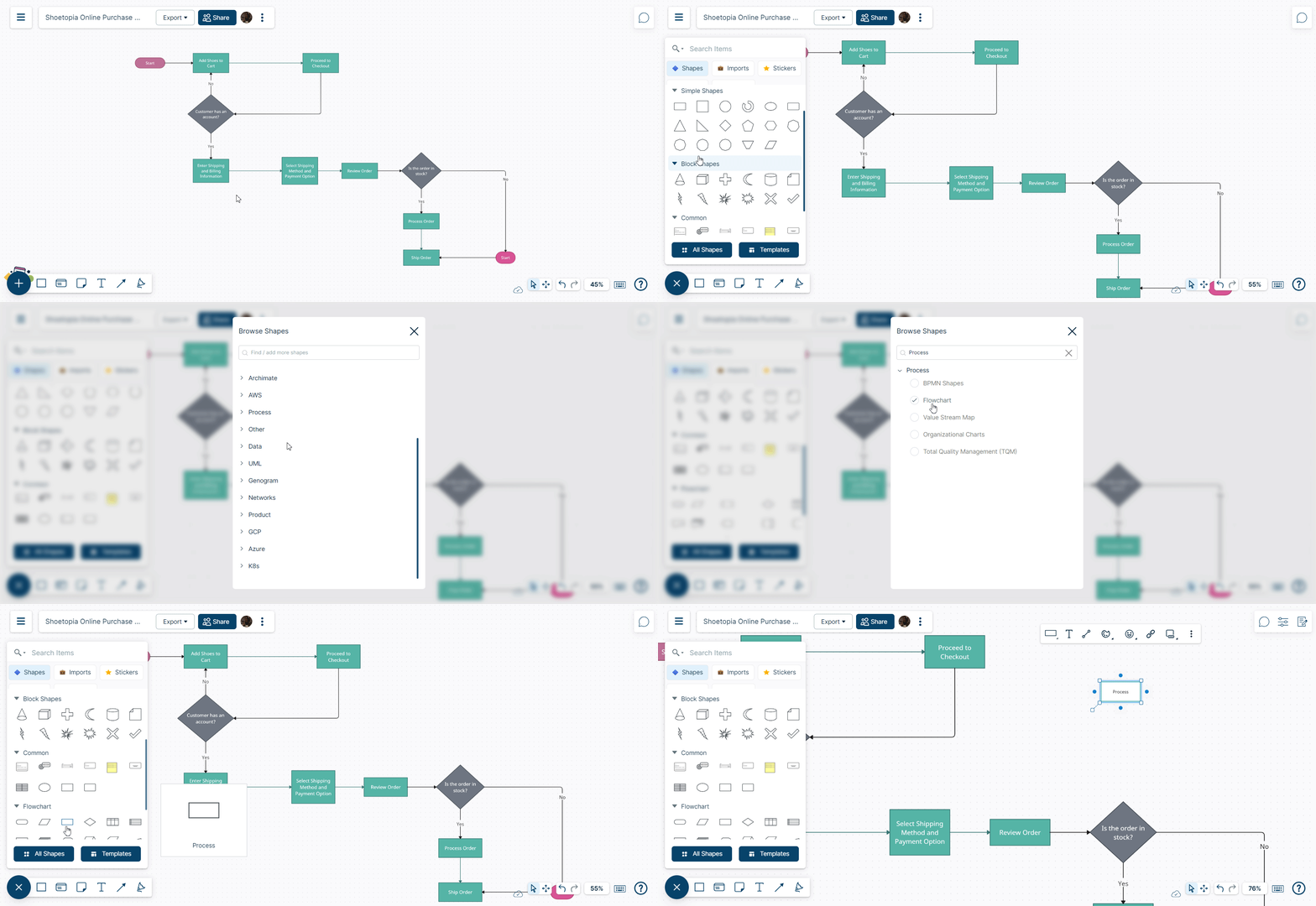
- To use a template, select the Plus button and open the Templates tab:

Shapes Shapes are the basic building blocks of flowcharts and process maps. They represent the different steps or elements of a process. Creately provides various shapes, including rectangles, ovals, diamonds, and arrows. You can also create your custom shapes.
- You can access the Flowchart and Process Mapping shapes by customizing the categories shown in the Shape Library.
- To add a shape to your flowchart or process map, simply drag and drop it from the shapes library onto the canvas. You can then resize and position the shape as needed.
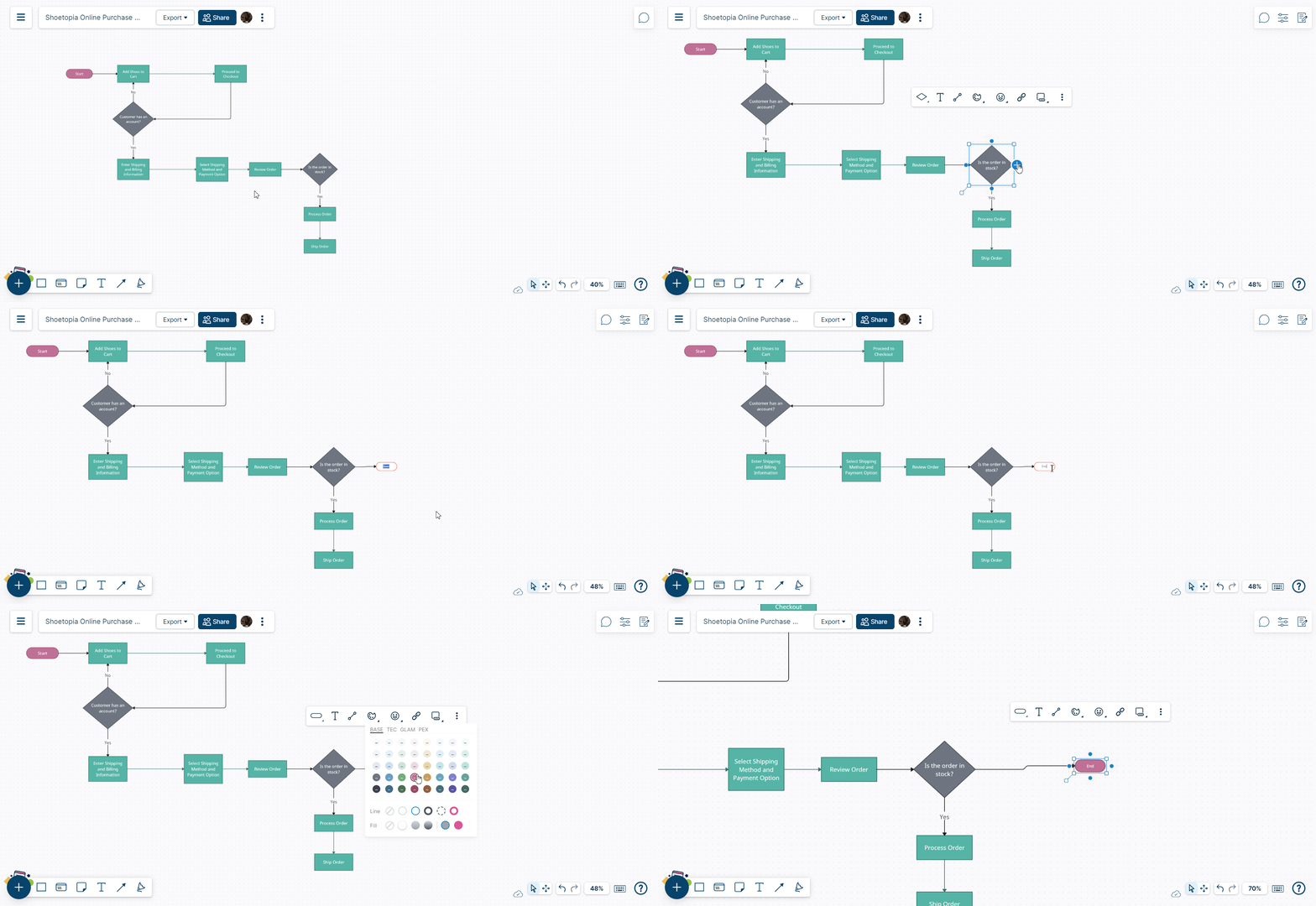
- To add a shape to the flow, you can use Plus Create as well:
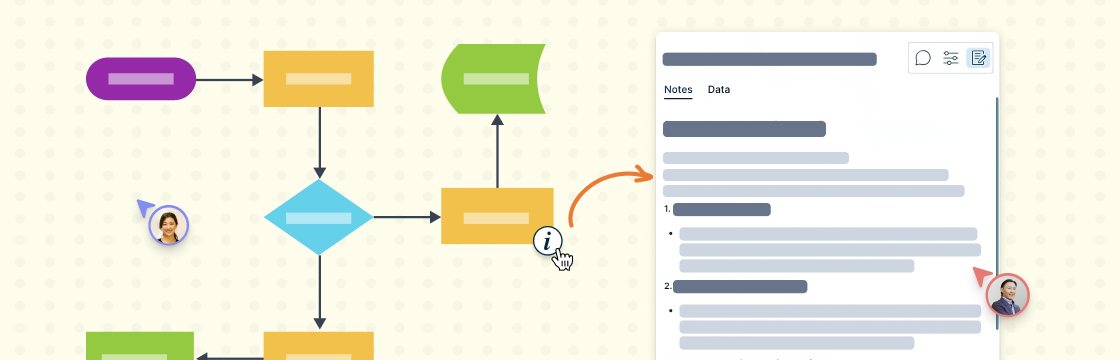
Shape Notes Shape notes keep supporting context connected to relevant steps in a flowchart or process map. Use them for instructions, definitions, links, or other reference material that would make the canvas difficult to read if displayed directly on it.
- Use the Shape Notes panel to add supporting content and attachments. Select a shape, then open its Shape Notes panel to add or review the connected information.
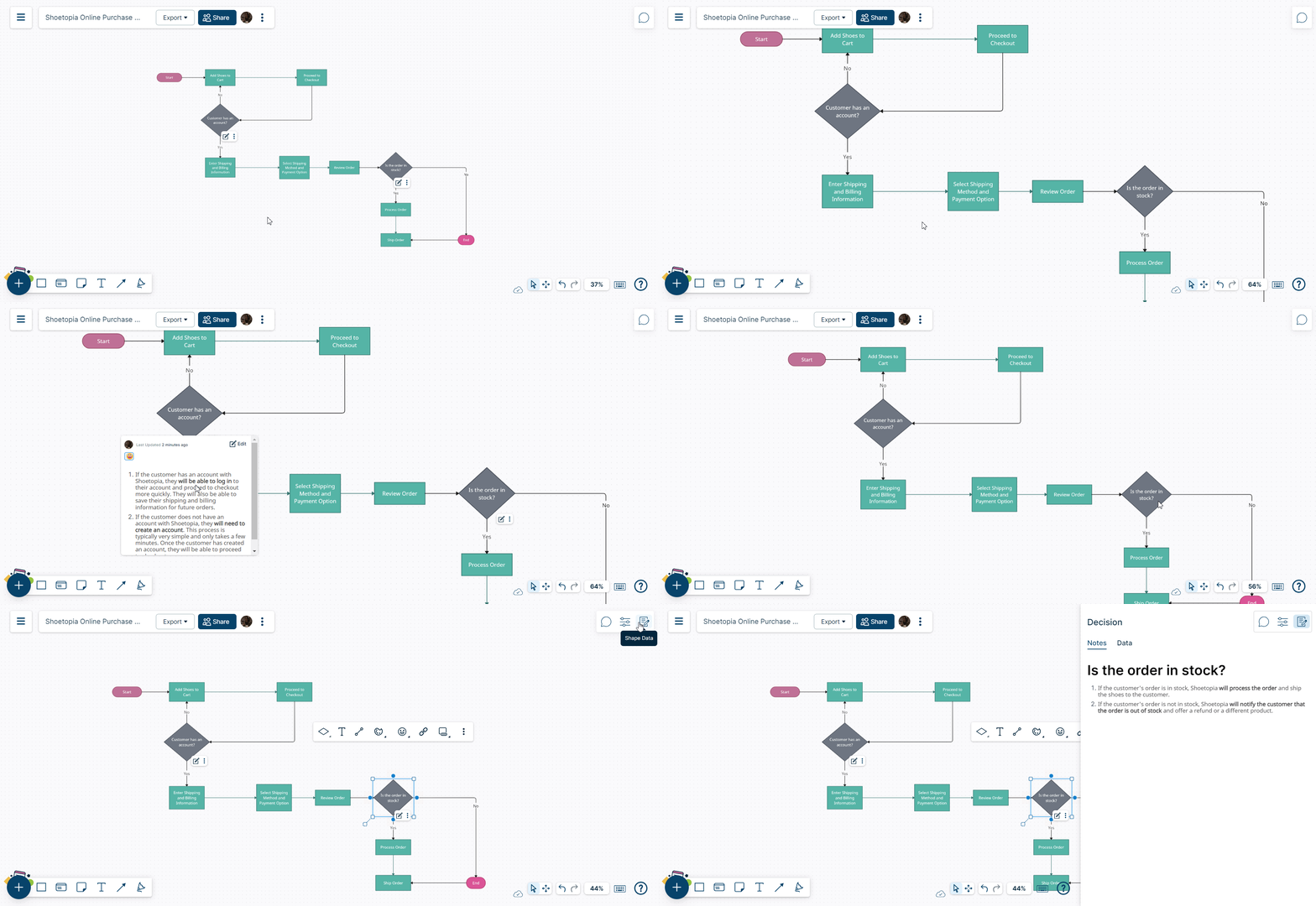
- Enable Shape Indicators to see which shapes contain additional information. You can show or hide the indicators on the canvas using the quick toolbar.
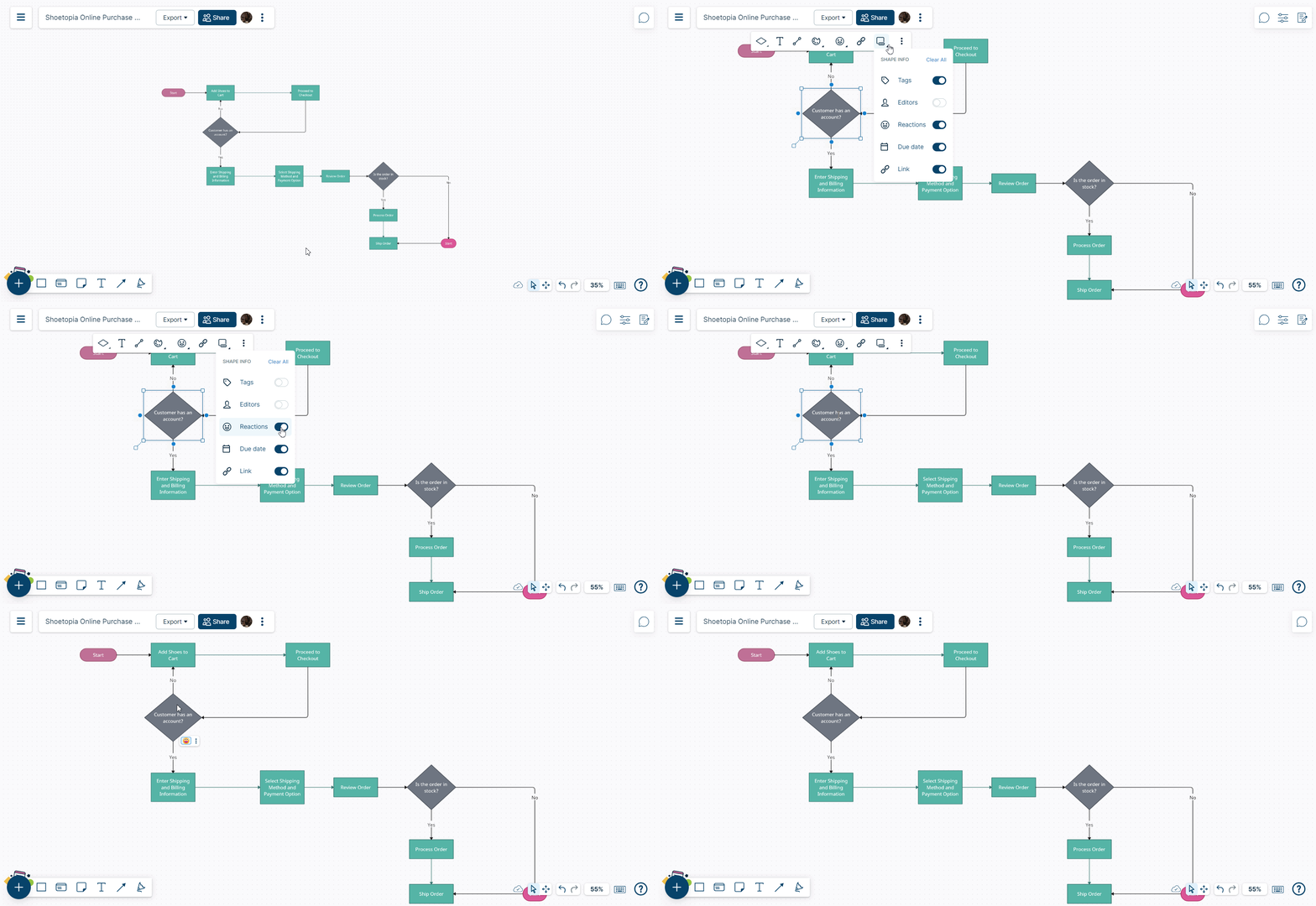
Connectors Connectors are used to connect shapes and show the flow of the process. Creately provides a variety of connectors, including straight lines, curved lines, and arrows. You can also change the style of the connector, such as the thickness and color.
- To connect two shapes, simply click on the start point of the connector and then drag and drop it to the endpoint.
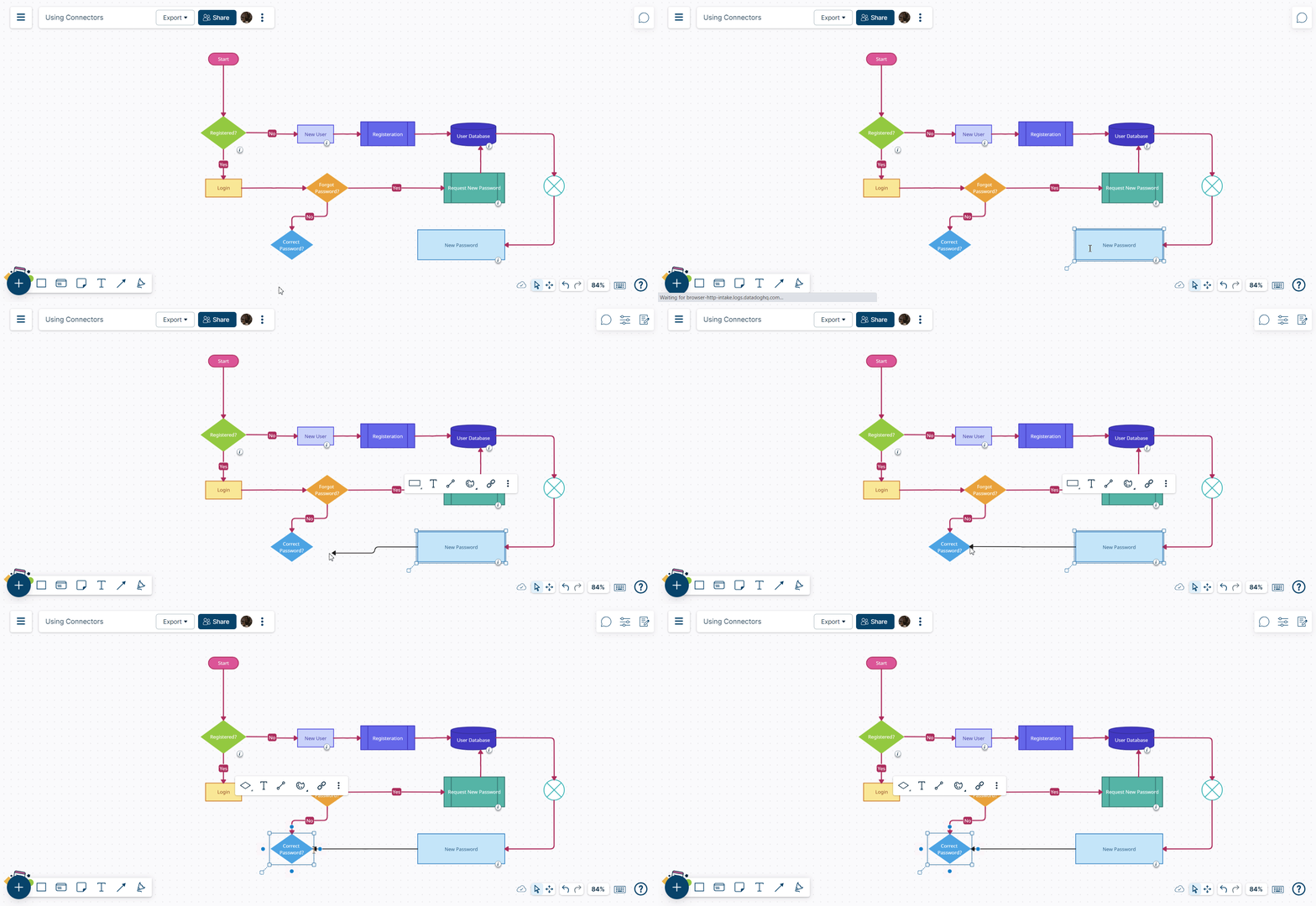
- Add connector labels to explain decisions, conditions, messages, or handoffs. Use consistent line and arrow styles so viewers can distinguish the main sequence from exception or supporting flows.
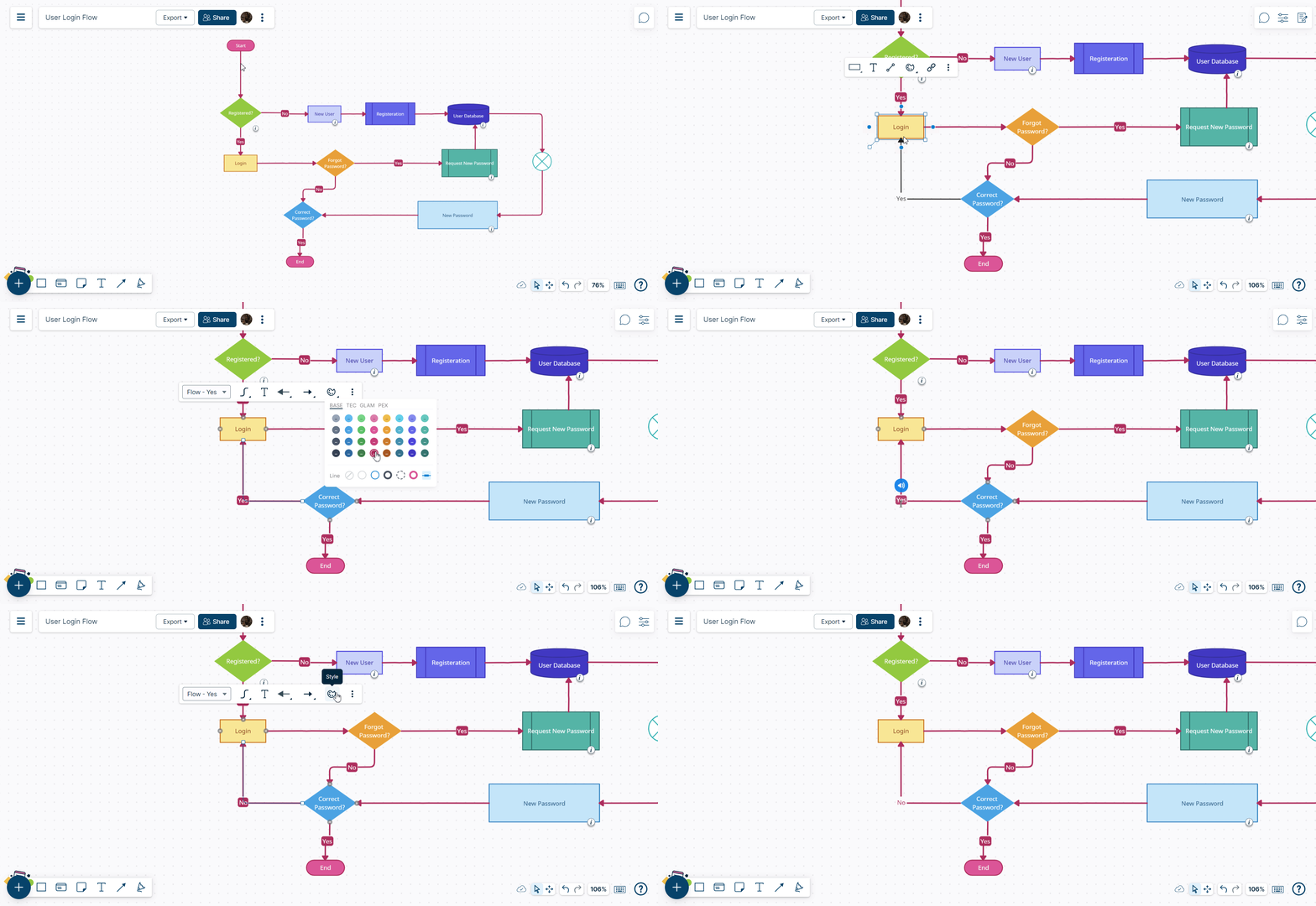
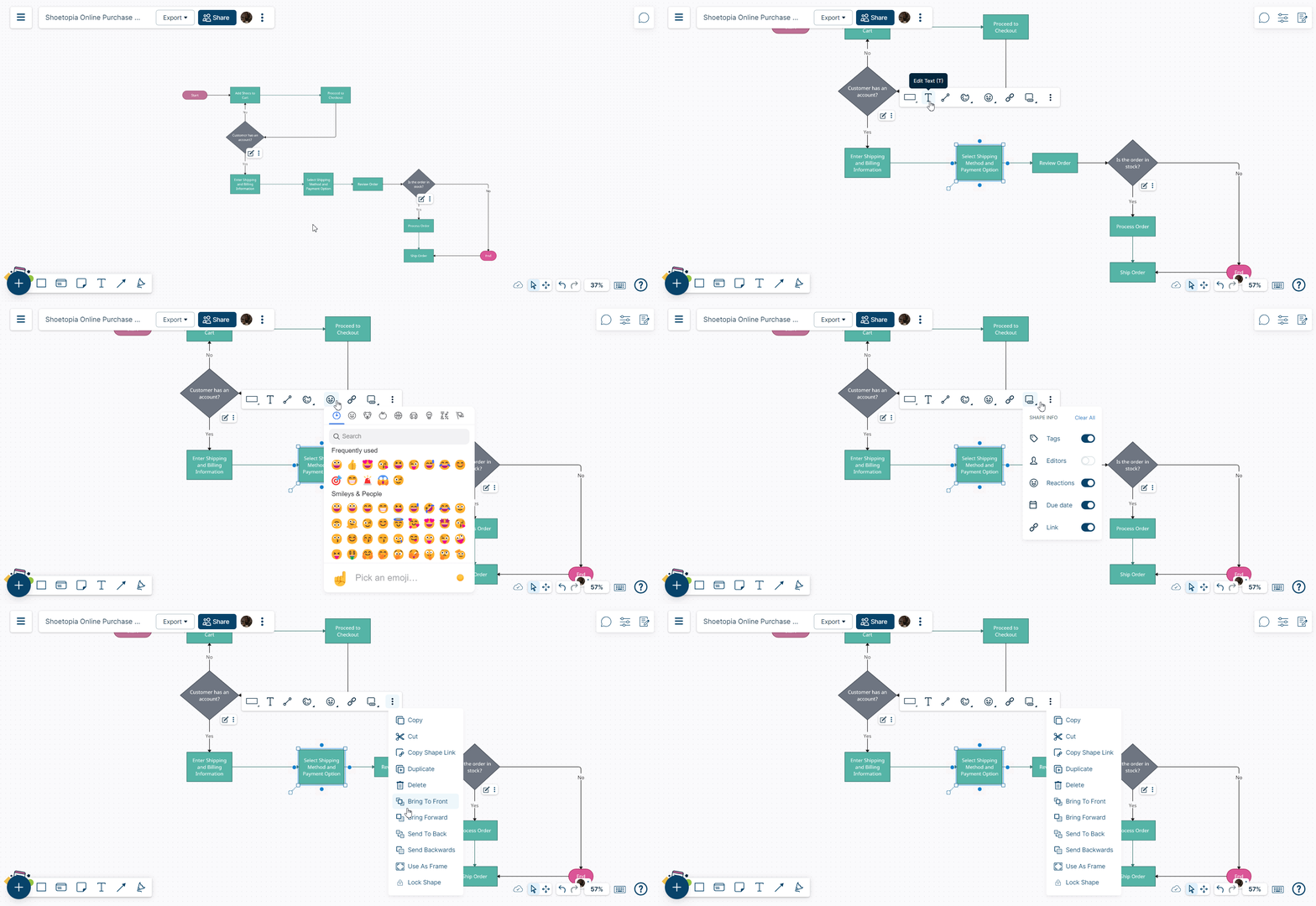
Formatting Formatting is important for making your flowcharts and process maps look professional and easy to read. Creately provides a variety of formatting options, including font size, font color, and line style. You can also format individual shapes and connectors.
- To format the styling of a shape, use the Quick Tools toolbar.
Why Use Creately for Flowcharts & Process Maps Visual Documentation?
Creately supports flexible diagramming: Use drag-and-drop shapes, connectors, formatting tools, and templates to create flowcharts, process maps, and other visual documents at the level of detail the audience needs.
Creately supports multiple visual formats: Create flowcharts, mind maps, wireframes, Gantt charts, and other diagrams in the same workspace. Templates and shape libraries provide a starting point, while custom formatting helps teams apply shared conventions.
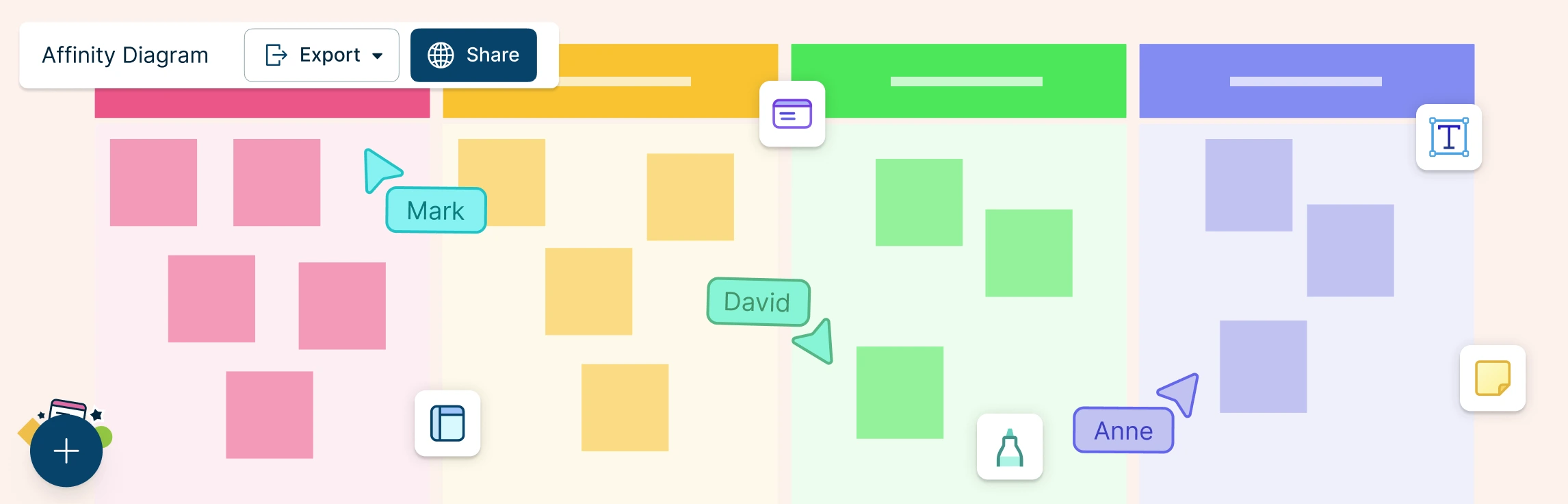
Creately supports collaborative review: Invite stakeholders to view, edit, and comment on visual documentation in real time. An accountable process owner can incorporate agreed feedback and keep the published process context current.
Creately keeps process context connected: Add notes, links, files, owners, status details, and linked diagrams where they are relevant. This helps teams maintain a visual overview without separating every instruction or reference from the process.
Creating AI Flowcharts with Creately
The Creately AI flowchart tool can turn a plain-language process description into a structured flowchart with appropriate steps, decision points, and connections. Use the generated diagram as a first draft, then verify the sequence, labels, responsibilities, and exceptions with the people who know the process.
AI-assisted drafting is useful when a team needs to move quickly from a written description to a visual starting point. It does not replace process discovery or approval: stakeholders should review the generated flow, add the supporting context needed to perform the work, and assign an owner to maintain it.
Getting Started:
- Open a Creately workspace and start an AI-assisted flowchart.
- Describe the process, including its start and end points, important decisions, and any known exception paths.
- Review the generated structure and correct any missing, ambiguous, or inaccurate steps.
- Add owners, systems, timing or status details, and links to supporting instructions where they are needed.
- Ask stakeholders to comment on the relevant steps, then have the process owner incorporate agreed changes.
- Maintain the diagram as living documentation and use version history to understand how it changes over time.
Conclusion
Creately helps teams maintain visual documentation in a shared workspace. Real-time editing and contextual comments support review, while shape notes, links, files, owners, status details, and linked diagrams keep supporting process context close to the visual flow. Teams can use Creately’s process mapping software to keep the visual, ownership details, and supporting references together while the process owner incorporates agreed changes, confirms that instructions remain valid, and manages the diagram’s status and version so people know which documentation to follow. This makes the flowchart or process map a living operational reference without implying that the canvas automatically updates every external source. See Leveraging Creately for Ultimate Clarity for more information.