Business Process Modeling (BPM) is a critical practice for organizations striving to improve efficiency, streamline operations, and ensure continuous improvement across all departments. By providing a visual representation of business processes, BPM helps organizations understand how work flows, identify bottlenecks, and optimize processes for better performance.
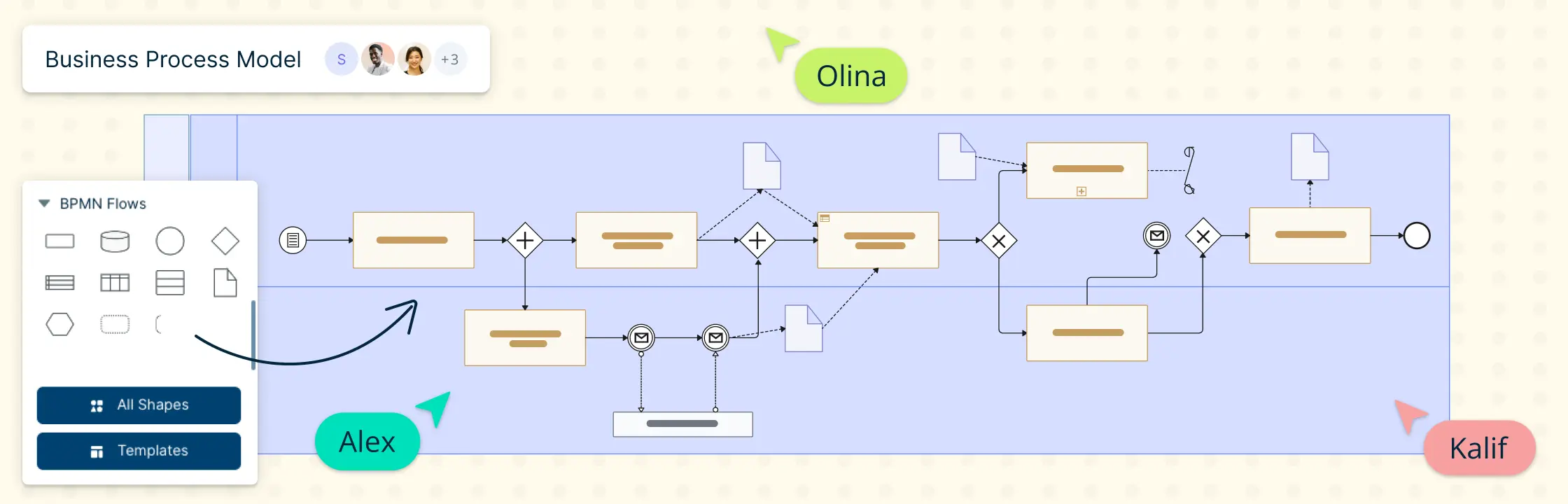
In this guide, we will delve into what BPMN is, including its history, when and how to use it, and the benefits it brings to process work. We’ll explore BPMN diagram elements and business process modeling notation symbols, provide examples of practical use, and show how tools like Creately help teams keep BPMN diagrams connected to their supporting process context.
Business process modeling gives teams a shared way to understand how work moves across roles, systems, and decisions. A useful model should make ownership and handoffs clear, connect the process to its supporting context, and remain maintainable as the work changes. The following tips will help you design an effective Business Process Model..