Six Sigma gives project teams a way to improve a repeatable process with evidence rather than guesses. A team might use it to reduce order errors, shorten approval delays, or make service quality more consistent. The improvement effort has a defined scope, owner, measures, and review points, just like a project. Its outcome is a better process that continues to perform after the project ends.
This guide focuses on deciding whether Six Sigma fits, selecting an improvement project, and governing its results. For the detailed Define, Measure, Analyze, Improve, and Control workflow, use Creately’s DMAIC problem-solving guide.
What Does Six Sigma Mean in Project Management?
Six Sigma is a data-driven approach to reducing defects and unwanted variation in a process. In project management, it provides the improvement goal and method; project management provides the structure for coordinating people, time, decisions, and resources. The two work together when a team runs a time-limited project to improve an ongoing process. The Project Management Institute’s discussion of process improvement projects describes this combination in more detail.
That distinction matters. A new website launch, for example, needs a delivery plan, but its one-time tasks are not themselves a repeatable process to optimize with Six Sigma. If the same release approval step repeatedly causes defects or delays, that workflow may be a suitable improvement project. The project management methodologies guide covers broader ways to organize project delivery.
When Is Six Sigma a Good Fit?
Choose it when a process repeats often enough to measure, has a quality or consistency problem, and has an owner who can change how the work is done. Good candidates include recurring handoffs, inspections, support requests, and transaction processing.
Before launching a project, ask:
- Is the problem measurable? Define what counts as an error, delay, or defect and how often it occurs.
- Is the process stable enough to compare? Teams need a meaningful current baseline and enough observations to see whether a change helped.
- Is the cause still uncertain? If the cause and fix are already known, a direct corrective action may be faster than a full DMAIC project.
- Can the team influence the process? Name the process owner and the people needed to test and sustain a change.
Six Sigma is less useful as a blanket label for every project. Use it for a specific process-performance problem, while continuing to manage schedule, budget, dependencies, and stakeholder decisions with the appropriate project practices.
How to Choose and Govern an Improvement Project
Define the problem before choosing a solution
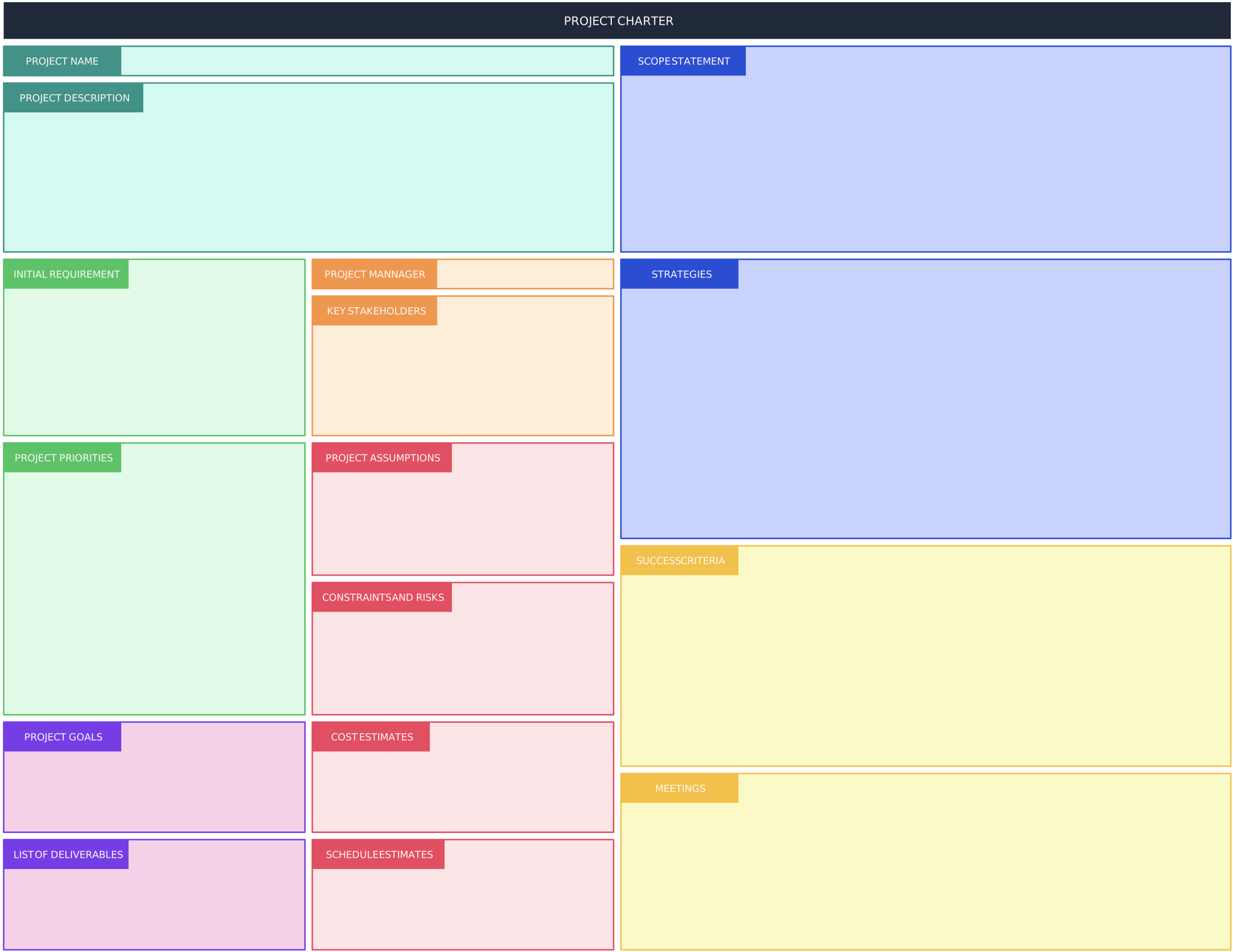
Write a project charter that names the customer or user affected, the process boundary, the current problem, the target outcome, the sponsor, and the process owner. Keep the target separate from a proposed fix. “Reduce incorrect invoices” is a problem to investigate; “buy new billing software” is already a solution.
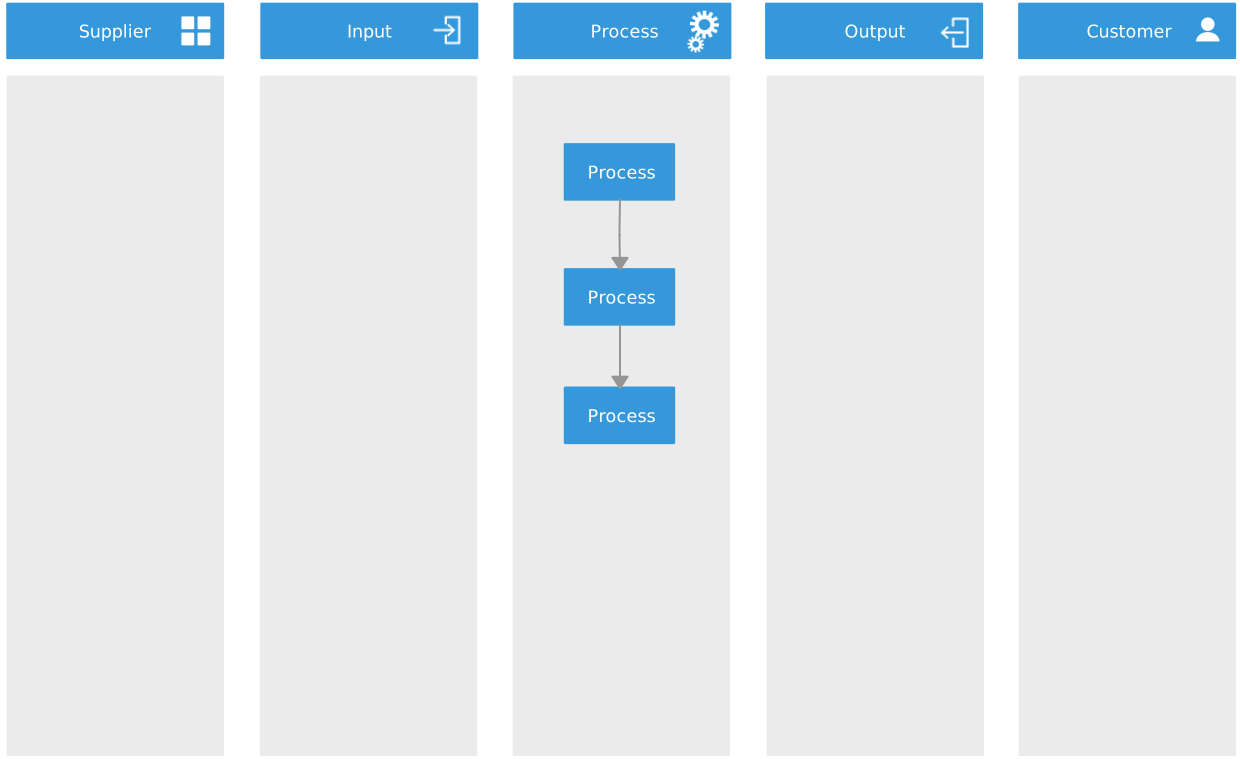
Compare candidate projects by customer impact, frequency, available data, likely benefit, and the team’s ability to act. A SIPOC diagram can establish which suppliers, inputs, steps, outputs, and customers belong within the chosen process.

Agree on measures and decision owners
Select one primary outcome measure, such as the share of invoices that need correction. Record its definition, baseline, target, data source, and collection frequency so the team compares like with like. Add a balancing measure when a faster process could create another problem, such as shorter review time leading to more errors.
The sponsor approves the goal and resources; the project lead coordinates the investigation; subject-matter experts help test causes and changes; and the process owner accepts the handoff when the improvement is ready to run. The people in these roles may differ by organization. What matters is that the team knows who makes each decision and who will monitor the result after the project closes.
Review evidence before approving each change
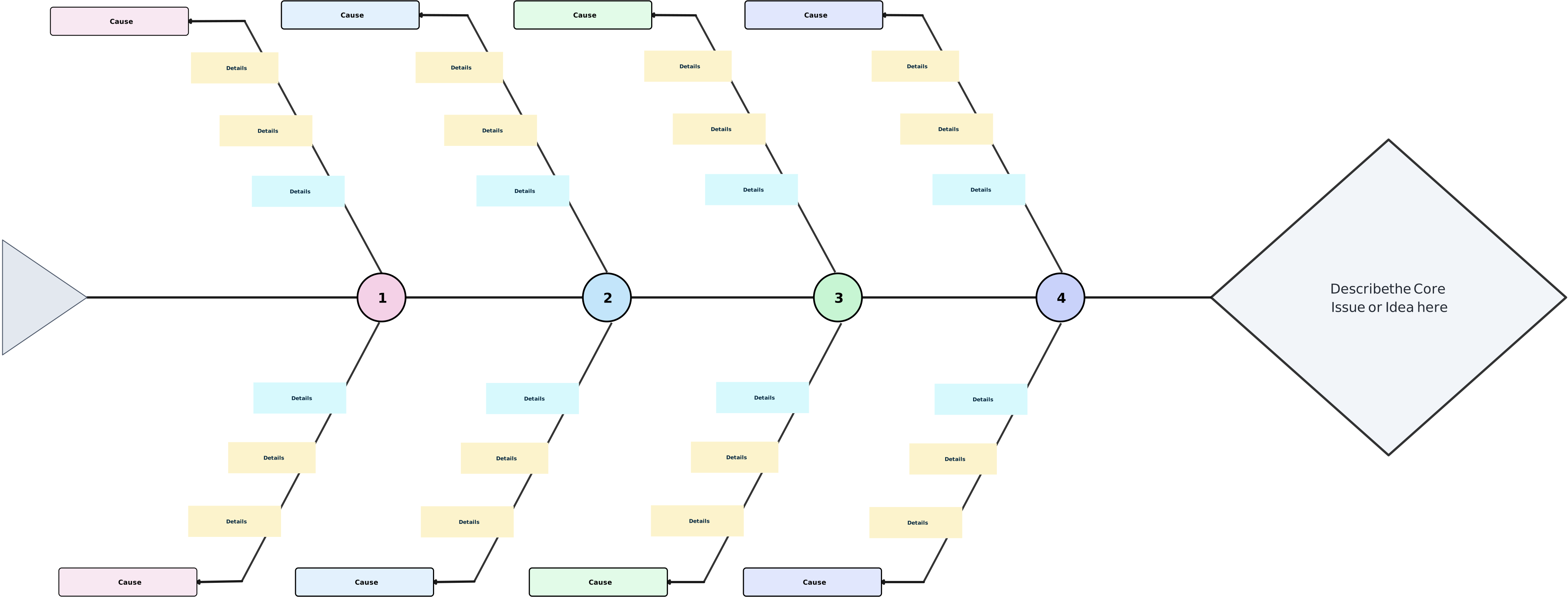
Set review points for the baseline, likely causes, proposed change, test results, and ongoing controls. A process map can show where work and handoffs actually occur. A Pareto chart can show which error categories account for most recorded cases; a fishbone diagram helps the team organize possible causes. Neither diagram proves a cause on its own. Check the underlying data or test the hypothesis before redesigning the process.
Once a change works, document the new steps, assign the ongoing measure to the process owner, and agree on what action to take if performance slips. That handoff is part of the project outcome, not an optional afterthought.
Where DMAIC Fits
DMAIC provides the sequence for investigating and improving an existing process: Define the problem, Measure current performance, Analyze causes, Improve the process, and Control the result. The project charter, SIPOC map, process map, Pareto chart, and fishbone diagram support different questions along that route. The ASQ overview of DMAIC explains its use for existing processes. Use the full Creately DMAIC guide for phase-by-phase instructions and editable templates; this guide focuses on the project decisions around that work.
If the goal is to design a new process rather than improve an existing one, first clarify customer requirements and the design approach. Do not force an existing-process DMAIC workflow onto a process with no baseline to measure.
Example: Reducing Invoice Corrections
Suppose a finance team receives 1,000 invoices a month and finds that 80 need correction before payment. Its proposed improvement project aims to reduce the correction rate from 8% to 4% without increasing payment delays. These figures are illustrative.
| Project decision | What the team records |
|---|---|
| Scope | Invoices received through the standard purchasing workflow; exceptional contracts are tracked separately. |
| Baseline and target | Corrections per 1,000 invoices, plus median time to payment as a balancing measure. |
| Investigation | A process map locates rework, and error categories show whether missing purchase-order details account for most corrections. |
| Change and review | The team tests a clearer intake check, compares results with the baseline, and asks the process owner to monitor both measures after handoff. |
If the data points elsewhere, the team should revise its hypothesis rather than commit to the intake check. A result that improves for one week but slips after handoff also needs more work. The project succeeds when the process owner can maintain the improvement using the agreed measure and response plan.
Using Creately to Plan the Work
Creately’s editable project charter and SIPOC templates help a team agree on the problem and process boundary. In a shared workspace, the team can map the current workflow, add notes to steps, and discuss possible causes in context. Use its visual Six Sigma tools to organize the investigation, then record the agreed owner, measure, and follow-up actions in the team’s project documentation.
For detailed problem-solving templates, follow the DMAIC guide. A separate process improvement plan can help coordinate implementation and sustainment when the change spans several teams.