Performance feedback models give managers a structure for discussing work clearly and fairly. Some help you describe one observed behavior. Others gather perspectives, focus on future actions, or guide a coaching conversation. Choosing the right one depends on the purpose of the conversation, the evidence you have, and what the employee needs next.
This guide compares six approaches, shows what each sounds like in practice, and explains how to turn a conversation into an agreed action.
What Makes Performance Feedback Useful?
Useful feedback names a specific action, explains its effect, and gives the other person room to add context. It can recognize something worth repeating or address something that needs to change. Avoid guessing at someone’s intentions or turning one event into a judgment about their character.
Prepare one or two examples, choose a private and timely setting when the topic is sensitive, and end with a clear next step. A model helps organize the message; listening and follow-through make it a conversation. The Center for Creative Leadership’s SBI guidance likewise recommends describing observable behavior and asking about intent rather than assuming it.
Performance Feedback Models at a Glance
| Approach | Best used for | What it structures | Watch for |
|---|---|---|---|
| SBI | A recent behavior with a clear impact | A short, evidence-based feedback message | It does not by itself agree on a future action. |
| STAR | Recognizing or reviewing an action and its result | A situation or task, action, and result | Do not confuse the result with an assumption about intent. |
| DESC | A behavior that needs to change | An assertive request and its consequences | Keep consequences proportionate and factual. |
| 360-degree feedback | Seeing patterns across working relationships | Collection of input from several people | Protect confidentiality; do not treat one comment as a verdict. |
| Feedforward | Planning what to do differently next time | A future behavior or experiment | Do not skip the facts when a past issue must be addressed. |
| Coaching | Helping someone find their own next step | Questions, options, and an action commitment | Do not use questions to hide a non-negotiable requirement. |
These are different kinds of tools. SBI, STAR, and DESC structure a message. A 360 process gathers input. Feedforward directs attention to the future. Coaching helps the employee explore and commit to a solution. A manager may use more than one in the same development cycle.
Six Models with Workplace Examples
The examples below use one recurring situation: a project update reached stakeholders late. In a real conversation, confirm the facts first and adapt the approach to the employee’s role, workload, and circumstances.
1. SBI: Situation, Behavior, Impact
SBI is useful for a short piece of feedback anchored in an event. State when and where it happened, describe the observable behavior, and explain its impact. Then pause to hear the employee’s account. The model was developed by the Center for Creative Leadership.
“In Tuesday’s launch check-in, the status update arrived after the meeting started. The team could not review the open dependency before deciding on the launch date. What got in the way of sending it earlier?”
This describes an event and its effect without calling the employee “unreliable.” After hearing their perspective, agree on a realistic timing change.
2. STAR: Situation or Task, Action, Result
STAR connects an action to an outcome. In feedback, describe the situation or task, the employee’s action, and the result. It works especially well for recognizing effective behavior or discussing a concrete outcome. The wording differs from the STAR format often used by job candidates to answer interview questions; here the manager is using the sequence to give feedback.
“The launch team needed a same-day decision. You gathered the outstanding risks and sent a concise update before noon. Because everyone had the same information, the team resolved the blocker that afternoon.”
For a missed outcome, explain the action and result just as specifically, then discuss an alternative for next time. Avoid presenting a result you cannot verify.
3. DESC: Describe, Express, Specify, Consequences
DESC helps with a change request. Describe the behavior, express its effect, specify what you need, and explain the consequences of changing or continuing the behavior. Keep the last step about real work outcomes, not threats.
“The last two project updates came after the review meeting. I’m concerned because the team cannot resolve blockers in time. Please send the update by 3 p.m. the day before, or flag a delay as soon as you know about it. That will give us time to decide whether the meeting needs to change.”
Ask whether the request is workable and what support is needed. If the issue involves formal performance action, follow your organization’s policy rather than improvising consequences.
4. 360-Degree Feedback: Multiple Perspectives
360-degree feedback gathers input from people who work with an employee, often including a manager, peers, direct reports, and the employee’s own reflection. It can reveal a recurring strength or development theme that one manager might miss. It is a collection process, not a script for a single conversation.
For example, several colleagues might say project updates are clear but arrive too late for their decisions. A manager can summarize that theme, check it against specific examples, and ask the employee what they notice. Protect respondents according to the organization’s feedback process. Do not expose comments that were promised anonymity or treat a small sample as a precise score.
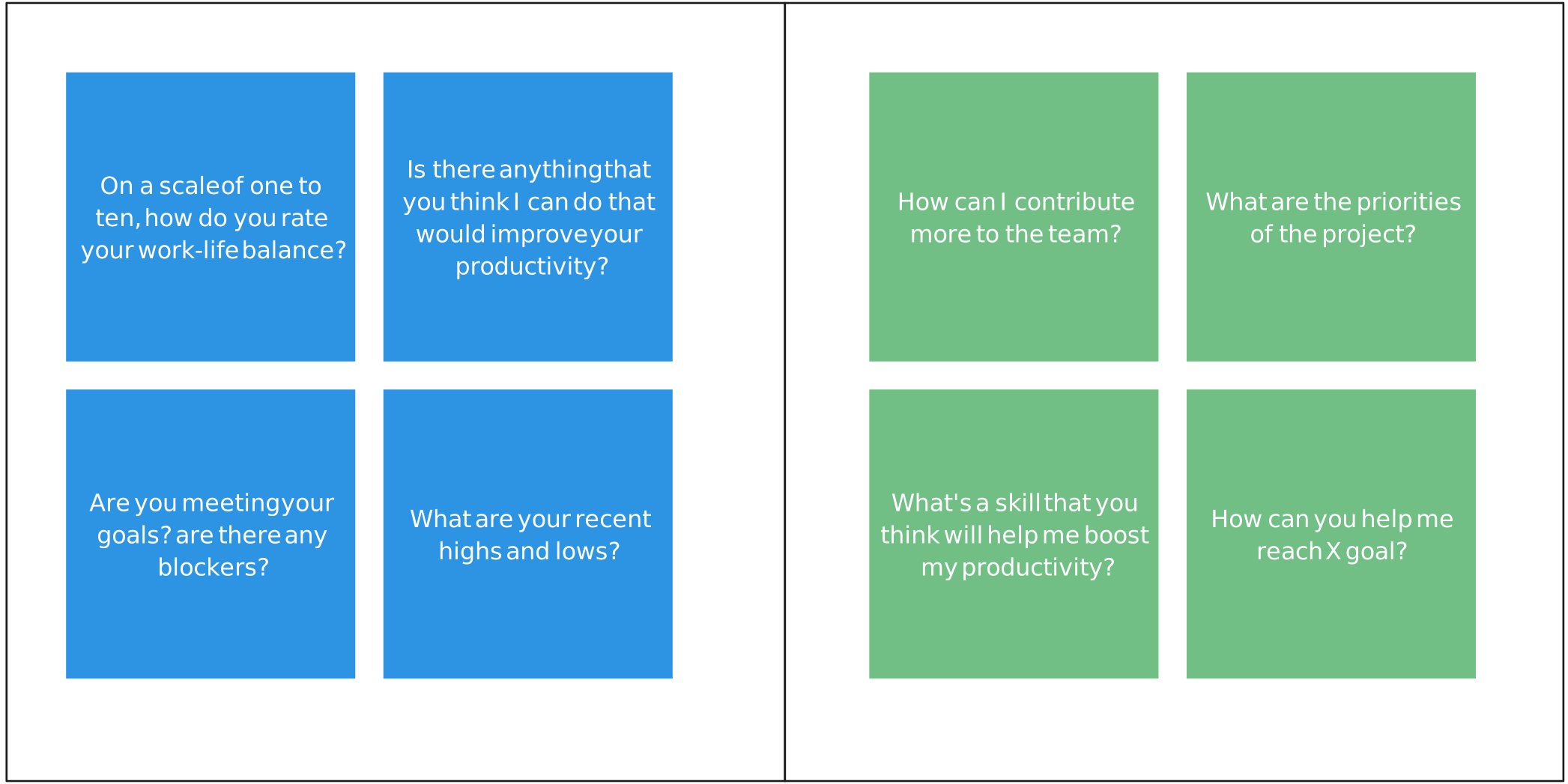
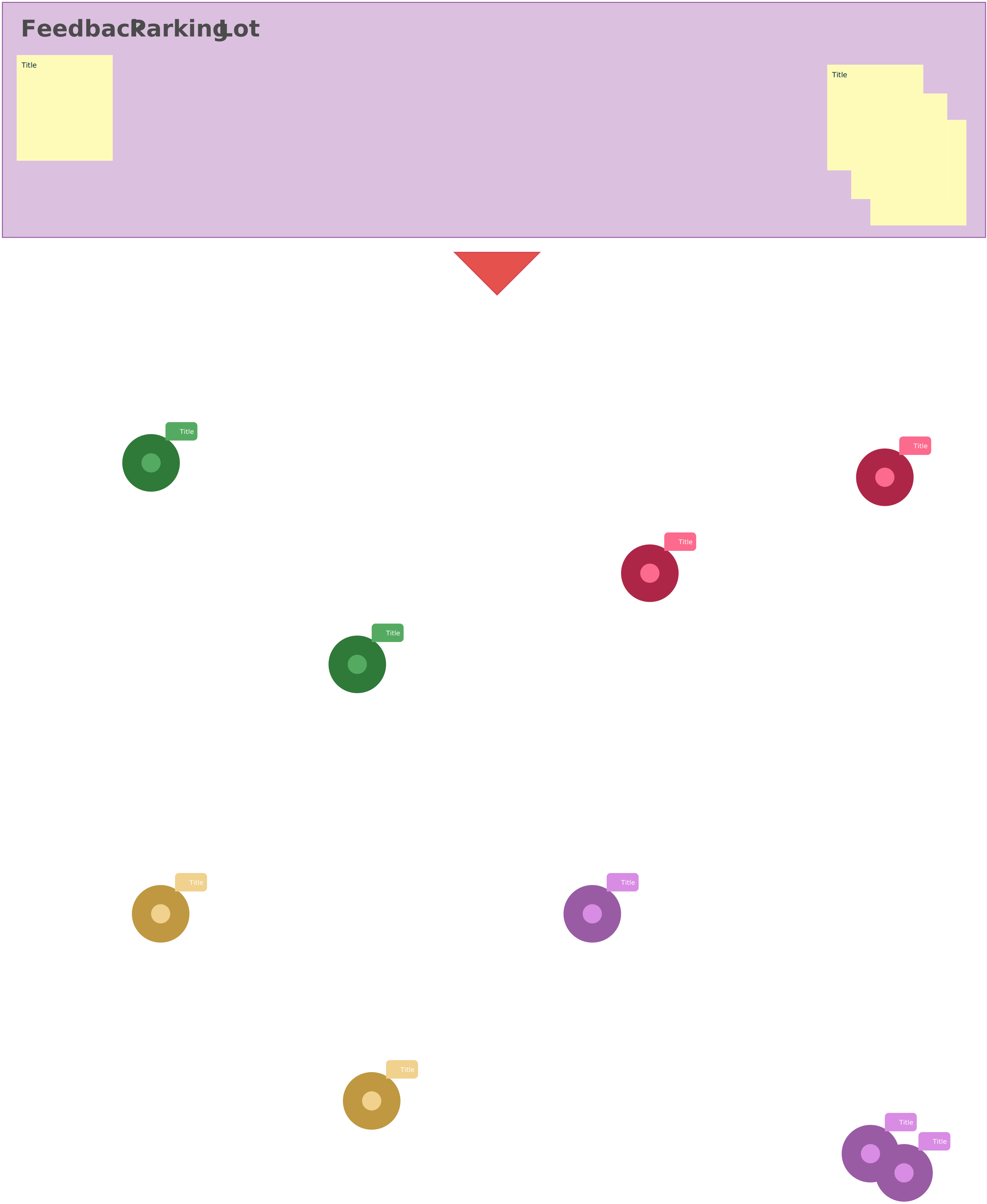
A feedback grid can help an authorized reviewer organize themes by source and topic. Keep sensitive employee information in the approved system and use the visual only in a way that matches your privacy rules.

5. Feedforward: Focus on the Next Attempt
Feedforward shifts the discussion toward a future action. It is especially helpful after the employee understands what happened and wants to practice a better approach. Make the suggestion concrete enough to try and review.
“For the next launch review, what would help you send an update by the previous afternoon? Would a short checklist or an earlier dependency check make that possible?”
Feedforward should not erase a serious past issue. Name the observed problem where necessary, then work together on a better next attempt.
6. Coaching: Ask, Explore, Agree
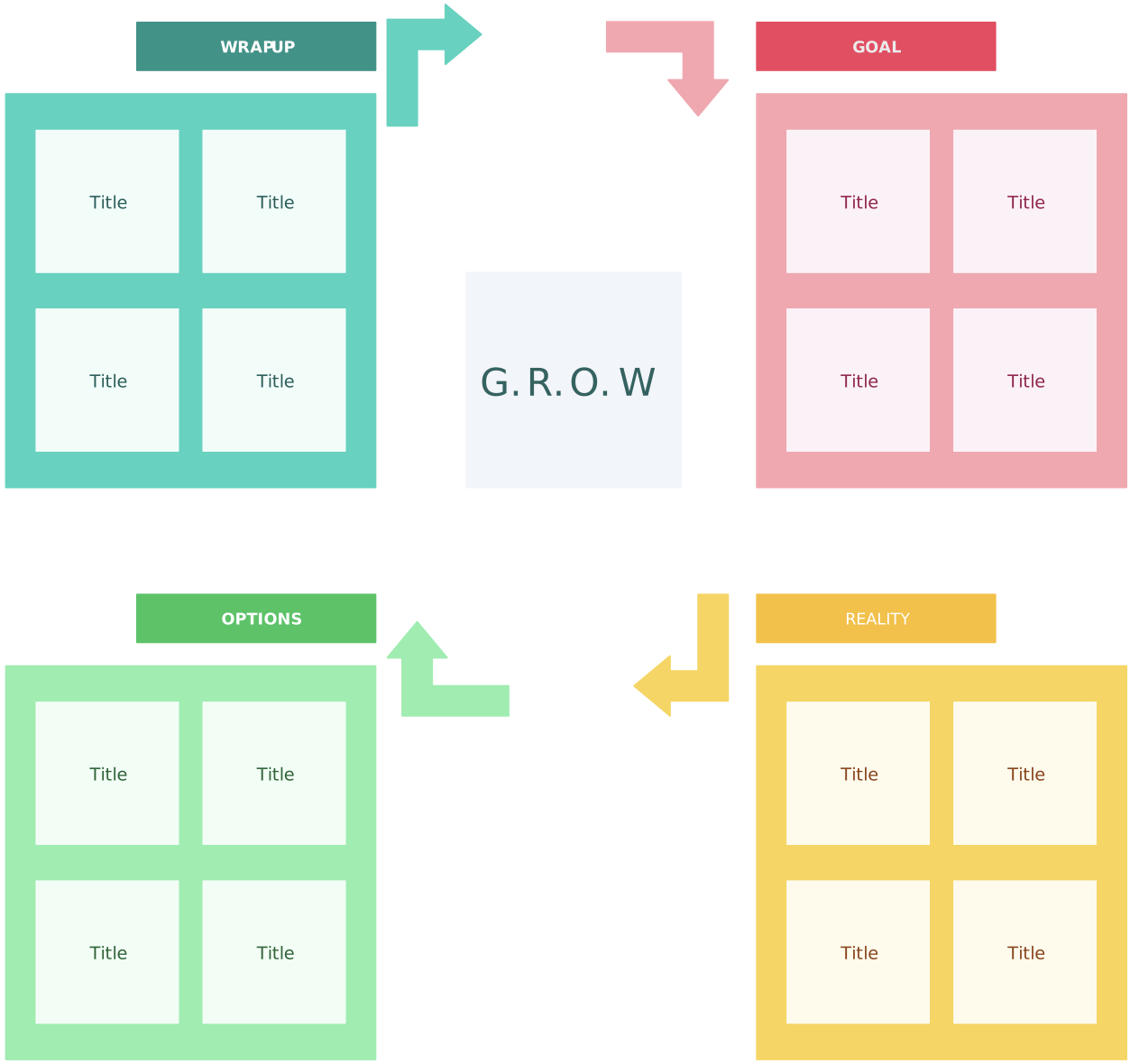
A coaching conversation uses questions to help the employee assess the situation and choose a next step. A named framework such as OSKAR can provide a fuller structure; a simple check-in can ask what outcome the employee wants, what is blocking it, what options exist, and what they will try.
“What made this update hard to complete on time? Which dependency could we surface sooner? What will you try before the next review, and how can I support it?”
Coaching does not remove the manager’s responsibility to state expectations. If an update deadline is fixed, say so clearly, then coach around how to meet it.
The GROW model template gives a coaching discussion room for the goal, current reality, options, and the action the employee chooses. Use it to capture their ideas and the support they need, rather than filling in the answers for them.
How to Choose the Right Approach
- Identify the purpose. Are you recognizing a useful action, correcting a specific behavior, looking for a pattern, or planning development?
- Check your evidence. Use SBI or STAR when you can point to an observable event. For a wider pattern, collect input carefully before making a claim.
- Match the level of structure. A brief check-in may need one SBI example. A recurring concern may need a DESC request and a documented follow-up. A development discussion may benefit from coaching.
- Invite the employee’s perspective. Ask what you missed, what constraints mattered, and what support would help. Do not mistake agreement in the meeting for a workable plan.
- Record one next step. Agree on the action, owner, and check-in date. Follow your workplace’s rules for storing sensitive feedback.
If the team needs a lighter reflection format, Start Stop Continue feedback groups suggestions into behaviors to begin, change, and keep. It is particularly useful for a balanced check-in; this guide offers a comparison when you need to select among several approaches.
Turn Feedback into a Follow-Up Plan
A feedback conversation should end with a manageable action, not a vague promise to “communicate better.” For the late-update example, the action might be: send a two-minute status note by 3 p.m. on the day before each launch review, flag unknowns, and revisit the process after three meetings. A one-on-one meeting gives the manager and employee a recurring place to review whether the change helped.
Use a performance review template for a scheduled review that covers goals and evidence over a longer period. Keep routine feedback timely rather than saving every conversation for the formal review.
An employee action plan can make the follow-up specific: write down the change to try, who will provide support, when to check progress, and what evidence will show improvement. Keep the plan proportionate to the conversation; an everyday adjustment does not need to become a formal performance-improvement process.
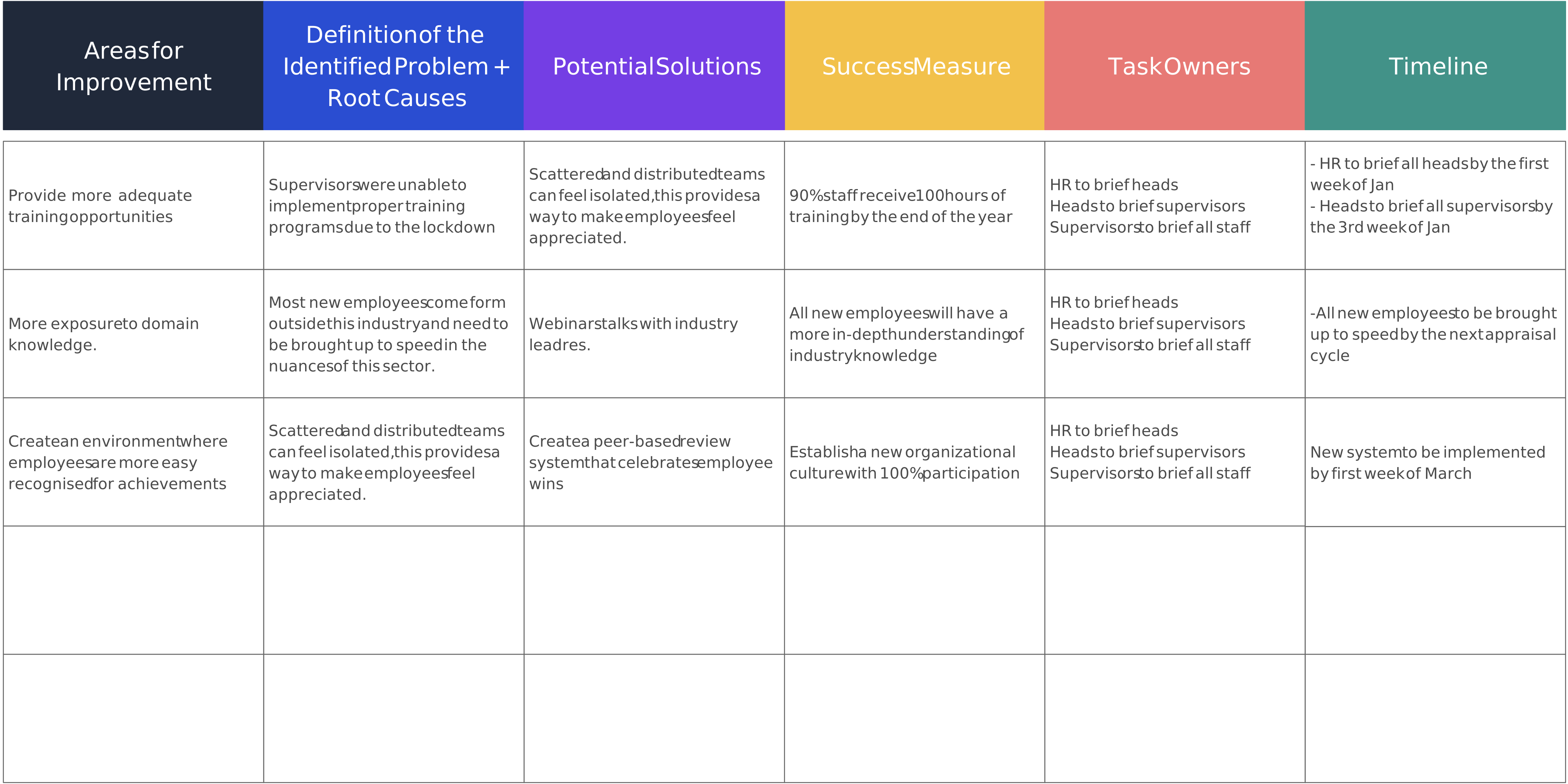
Creately Templates for Feedback Planning
The feedback grid, GROW model, and action plan above support distinct parts of the feedback process. Use these additional templates to prepare a one-on-one or a scheduled performance review. Purpose-built SBI, DESC, and 360-degree feedback templates can be added after they are drawn and published.