Trauma & Abuse Case View
Frames the family structure around the main counseling or therapy focus.
Frames the family structure around the main counseling or therapy focus.
Shows partners, parents, children, and siblings involved in the case.
Leaves room to note conflict, closeness, distance, or support.
Keeps discussion points visible for assessment and follow-up.
Connects current concerns with relevant family history.
Clarifies caregiving, custody, parenting, or support responsibilities.
Supports shared review before deeper clinical notes are added.
Can be extended as the conversation reveals more family context.
Map trauma history, harmful dynamics, protective strengths, and support needs across generations in one careful clinical view.
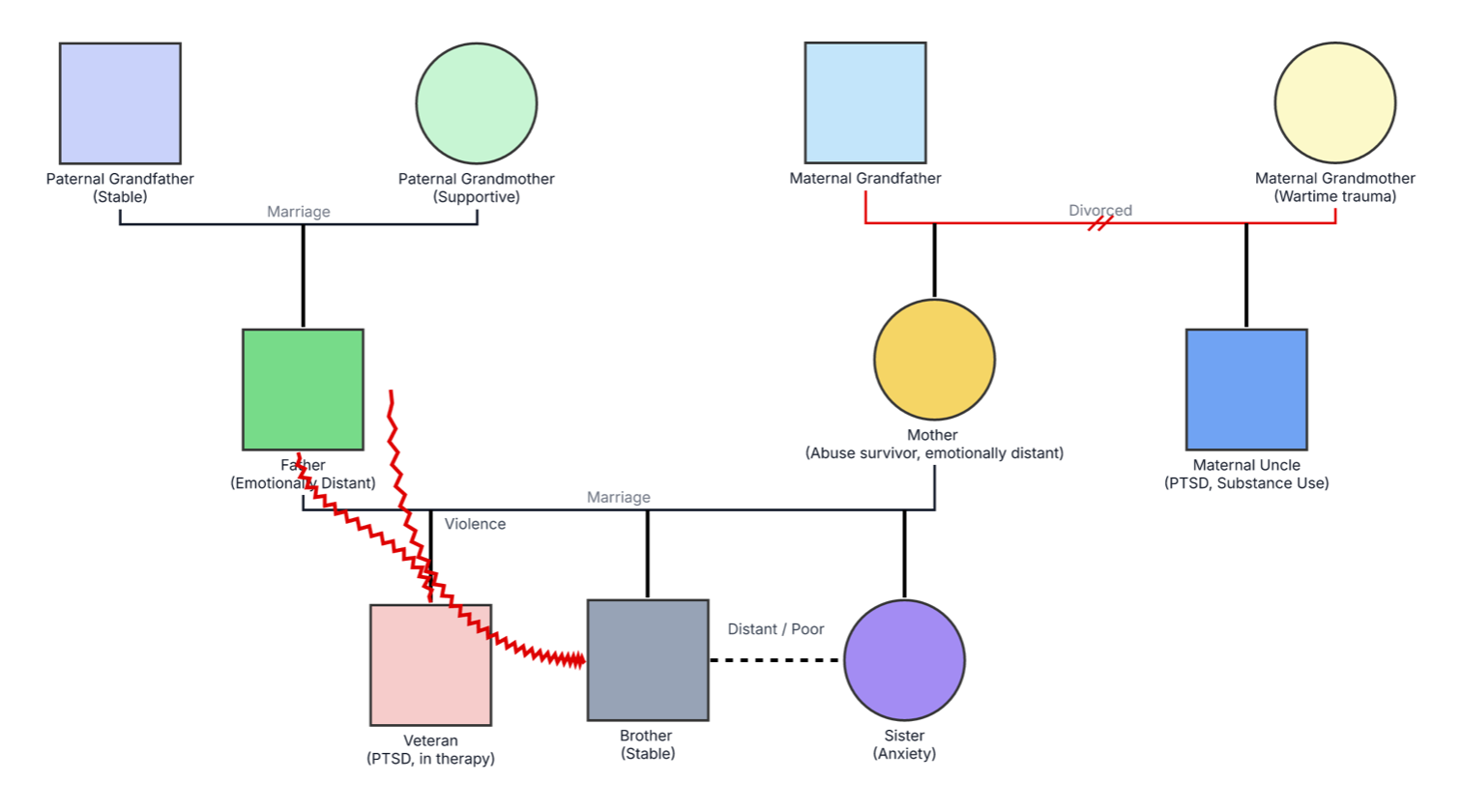
This trauma and abuse genogram combines a three-generation family structure with trauma history, mental-health context, difficult relationships, and protective family strengths.
The example contains 10 people. The oldest generation includes paternal and maternal grandparents, followed by the father, mother, and maternal uncle. The youngest generation includes a veteran, a brother, and a sister. Three partner-status lines represent marriage and divorce across the two family branches and the parents.
Nine family members have contextual notes. Strengths include a stable paternal grandfather, supportive paternal grandmother, and stable brother. Other notes record wartime trauma, emotional distance, abuse survival, PTSD, substance use, anxiety, and engagement in therapy. A violence marker and a Distant / Poor relationship add interaction context to the map while keeping protective relationships visible.
This trauma and abuse genogram supports professionals and care teams who need a trauma-informed view of family history, safety, strengths, and current support.
Explore intergenerational experiences, current impact, coping, and protective relationships.
Organize reported concerns, safety needs, services, and responsible professionals.
Review evidence, risk, strengths, and coordinated next steps in a shared case view.
Discuss family patterns and sources of support at an appropriate pace and with informed consent.
Standard family symbols establish the structure, while relationship markers and concise notes add trauma, safety, mental-health, and protective context.
Male family member
Female family member
Marriage or partner relationship
Divorced relationship
Parent–child relationship
Violence or another harmful dynamic, as defined in the legend
Limited, strained, or emotionally distant relationship
Trauma, mental health, substance use, treatment, stability, or support information
Visual category that can be defined for roles, concerns, or strengths
Use this example when trauma-informed work needs a shared view of family history, safety, strengths, and support.
Add the focus person, relevant relatives, partners, former partners, children, household groups, dates, and major family transitions.
Mark stable, supportive, safe, caring, treatment-engaged, and resilient people or relationships that can contribute to recovery and planning.
Use concise language for reported experiences, symptoms, harmful dynamics, mental-health concerns, substance use, treatment, and current impact.
Add immediate safety actions, support people, services, consent and access arrangements, referrals, responsible professionals, review dates, and agreed next steps.
Creately Clinical supports careful trauma-informed mapping with structured profiles, relationship notation, and access-controlled collaboration. Teams can keep concerns, protective factors, evidence, and agreed actions connected without flattening the case into a single risk narrative.
Include only information relevant to the agreed purpose: family structure, reported trauma, relationship dynamics, current impact, mental-health or substance-use context, treatment, strengths, protective factors, and support resources.
Use neutral and specific language, distinguish reported from observed or confirmed information, record dates and sources where useful, follow consent and safeguarding procedures, and apply appropriate access controls.
Yes. Supportive people, stability, coping, treatment, community resources, resilience, and progress create a fuller picture and help connect the assessment with recovery and safety planning.
Custom fields, notes, relationship markers, and visual categories can keep trauma and protective context organized. Shared editing, comments, version history, and exports support supervision, multidisciplinary review, and coordinated care.
Edit the genogram to map the family, add supported trauma and strength information, and create a carefully structured visual for safety, assessment, and coordinated care.