Therapy Case View
Frames the family structure around the main counseling or therapy focus.
Frames the family structure around the main counseling or therapy focus.
Shows partners, parents, children, and siblings involved in the case.
Leaves room to note conflict, closeness, distance, or support.
Keeps discussion points visible for assessment and follow-up.
Connects current concerns with relevant family history.
Clarifies caregiving, custody, parenting, or support responsibilities.
Supports shared review before deeper clinical notes are added.
Can be extended as the conversation reveals more family context.
Map multigenerational family structure, partner status, supportive bonds, conflict, estrangement, abuse, and other emotional dynamics using this therapy genogram on Creately Clinical.
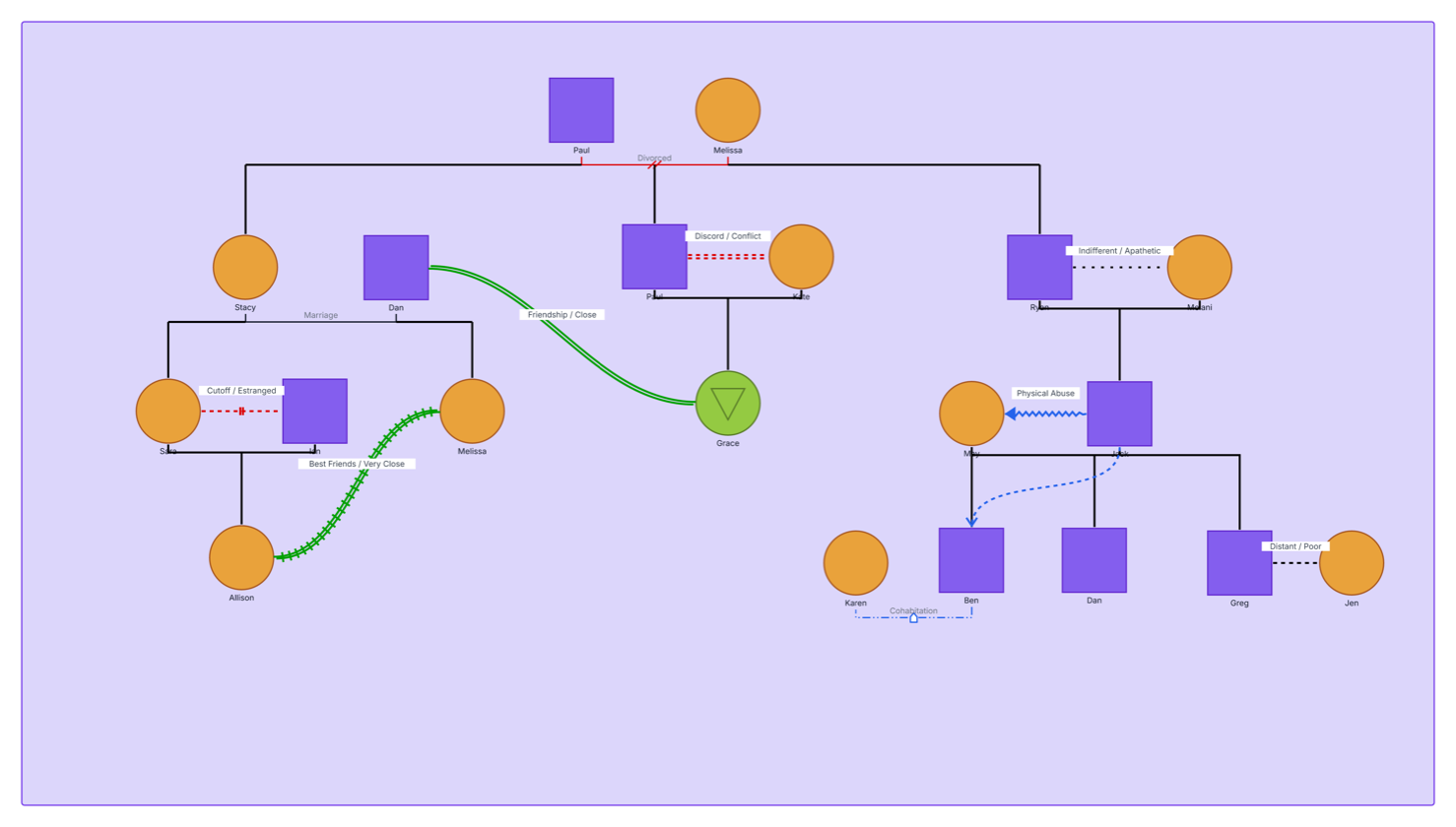
This therapy genogram combines a detailed multigenerational family structure with emotional relationship patterns that can support assessment, formulation, reflection, and collaborative treatment planning.
The example maps 20 people across four family levels. It includes married couples, a divorced couple, and a cohabiting couple, along with siblings, children, partners, and extended-family branches. The broad structure helps users see how current relationships sit within a larger family system.
Seven labeled dynamics add therapeutic context. Supportive connections include Friendship / Close and Best Friends / Very Close. Other relationships are marked Discord / Conflict, Cutoff / Estranged, Indifferent / Apathetic, Physical Abuse, and Distant / Poor. Viewing strengths and difficult experiences together creates a balanced starting point for exploring patterns, resources, boundaries, attachment, communication, and change.
This therapy genogram can help therapists, supervisors, and clients organize family systems and emotional relationship patterns in one clear view.
Support intake, assessment, formulation, reflection, and treatment planning.
Review patterns, strengths, safety needs, and therapeutic themes together.
Practice multigenerational family-systems and relationship notation.
Collaboratively map important people, supportive bonds, difficulties, and goals for change.
Standard family symbols establish the structure, while colored and patterned relationship lines describe emotional dynamics and partner status.
Male family member
Female family member
Marriage or partner relationship
Divorce
Cohabitation
Parent–child relationship
Close, very close, or supportive connection
Discord, conflict, cutoff, or estrangement
Physical abuse or another harmful dynamic, as defined in the legend
Indifferent, apathetic, distant, or poor relationship
Use this example when therapy or counseling would benefit from a shared systems view of family structure and emotional relationships.
Add the focus person, relatives, partners, former partners, children, households, important dates, and family transitions relevant to the work.
Mark close bonds, trusted people, caregiving, friendship, resilience, and other strengths that can support therapeutic change.
Add conflict, distance, estrangement, harmful behavior, interrupted contact, or other concerns using consistent notation and appropriate context.
Use the map to identify themes, exceptions, resources, boundaries, communication goals, safety needs, and practical next steps agreed with the client or family.
Creately Clinical supports therapy genograms with structured family-therapy fields, a broad relationship library, collaborative sessions, and report-ready outputs.
Include the family structure, important relationships, partner status, household context, major events, losses, caregiving, strengths, emotional dynamics, and themes relevant to the therapeutic purpose.
No. Begin with the people and generations most relevant to the client’s concerns and goals. Expand the genogram when additional relationships help explain a pattern, resource, or important experience.
Use neutral and specific language, distinguish reported from observed information, record dates and sources where useful, follow consent and safety procedures, and limit access according to professional requirements.
Custom fields, notes, relationship markers, and visual categories can keep therapeutic themes and family context organized. Shared editing, comments, version history, and exports support formulation, supervision, and coordinated updates.
Edit the genogram to map the family system, add supportive and difficult relationship patterns, and create a shared visual for reflection, formulation, and therapeutic change.