Virtue & Values Based Spiritual Spiritual Map
Shows spiritual identity, practices, and family relationships together.
Shows spiritual identity, practices, and family relationships together.
Captures affiliation, tradition, belief shifts, or spiritual influences.
Connects spiritual patterns across relatives and generations.
Leaves room for worship, rituals, coping practices, and values.
Keeps households, couples, children, and relatives clear.
Helps identify sources of support, tension, belonging, or change.
Supports counseling, chaplaincy, or care conversations.
Can be updated as beliefs, roles, or practices change.
Map the virtues, values, spiritual influences, and acts of service carried through a family across three generations.
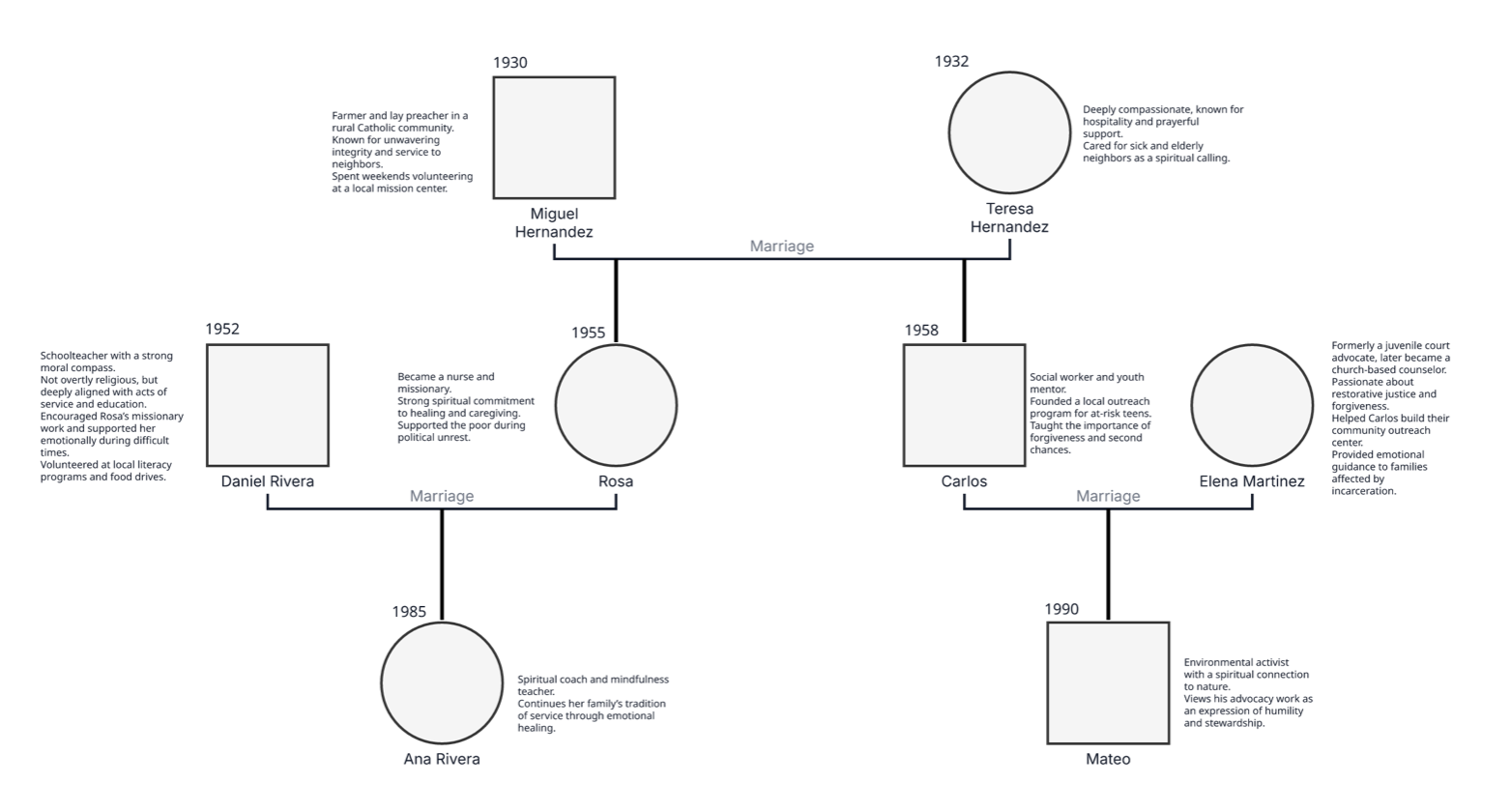
This virtue and values based spiritual genogram connects family structure with the principles people live by, showing how values are expressed through relationships, vocation, care, service, and community involvement.
The example maps eight people across three generations. Miguel and Teresa Hernandez form the oldest couple. Daniel Rivera and Rosa, and Carlos and Elena Martinez, form the next generation’s partner relationships. Ana Rivera and Mateo appear in the youngest generation. Birth years help place each person within the family timeline.
Every person has a detailed profile. Miguel represents integrity and neighborly service; Teresa compassion, hospitality, prayer, and care; Daniel service through education; Rosa healing and caregiving; Carlos forgiveness and second chances; Elena restorative justice and community guidance; Ana interfaith spirituality and traditional healing; and Mateo humility, stewardship, and connection with nature. Together, the profiles show how shared values can take different forms across generations.
This virtues and values based spiritual genogram helps care professionals, spiritual leaders, learners, and families explore how guiding principles are lived and passed forward.
Explore faith, meaning, vocation, service, and spiritual legacy across generations.
Identify strengths, guiding values, role models, and sources of meaning.
Study how beliefs and values are expressed through family, work, and community life.
Reflect on shared principles, differences, turning points, and legacies carried forward.
Standard family symbols establish the structure, while birth years and profile notes document each person’s values and how they are practiced.
Male family member
Female family member
Marriage or partner relationship
Parent–child relationship
Timeline reference for the person and generation
Guiding principle such as compassion, integrity, justice, or humility
How the value is expressed through work, care, service, ritual, or community life
Vocation, faith background, formative experience, contribution, or spiritual legacy
Use this example when family reflection needs to focus on strengths, meaning, and values carried across generations.
Add the relatives, partner relationships, children, birth years, and family branches relevant to the values story you want to explore.
Use the person’s own words for virtues, beliefs, commitments, or principles that shape their choices and relationships.
Add vocation, caregiving, community roles, spiritual practices, decisions, turning points, and everyday actions that demonstrate each value.
Note which values were passed forward, reinterpreted, challenged, combined with other traditions, or expressed differently by later generations.
Creately Clinical keeps spiritual and values-based context connected to the underlying family system. Flexible profiles and views let teams document each person’s language, lived practices, and intergenerational influences without treating one tradition as the default.
Include any values meaningful to the family, such as compassion, integrity, faith, service, justice, forgiveness, courage, hospitality, responsibility, humility, healing, education, or stewardship.
A value is a guiding principle; a practice is one way it is expressed. For example, compassion may be shown through caregiving, volunteering, hospitality, advocacy, prayer, or professional service.
Yes. The genogram can show how people from religious, interfaith, spiritual, or nonreligious backgrounds express common values in distinct ways.
Custom fields, notes, relationship markers, and visual categories can keep values and family context organized. Shared editing, comments, version history, and exports support reflection, collaborative care, and ongoing updates.
Edit the genogram to add your family, describe each person’s guiding values, and create a shared visual of the virtues, actions, and legacies carried across generations.