Spiritual Coping Spiritual Map
Shows spiritual identity, practices, and family relationships together.
Shows spiritual identity, practices, and family relationships together.
Captures affiliation, tradition, belief shifts, or spiritual influences.
Connects spiritual patterns across relatives and generations.
Leaves room for worship, rituals, coping practices, and values.
Keeps households, couples, children, and relatives clear.
Helps identify sources of support, tension, belonging, or change.
Supports counseling, chaplaincy, or care conversations.
Can be updated as beliefs, roles, or practices change.
Explore how family members draw on faith, spiritual practices, community support, and meaning during difficult experiences using this genogram on Creately Clinical.
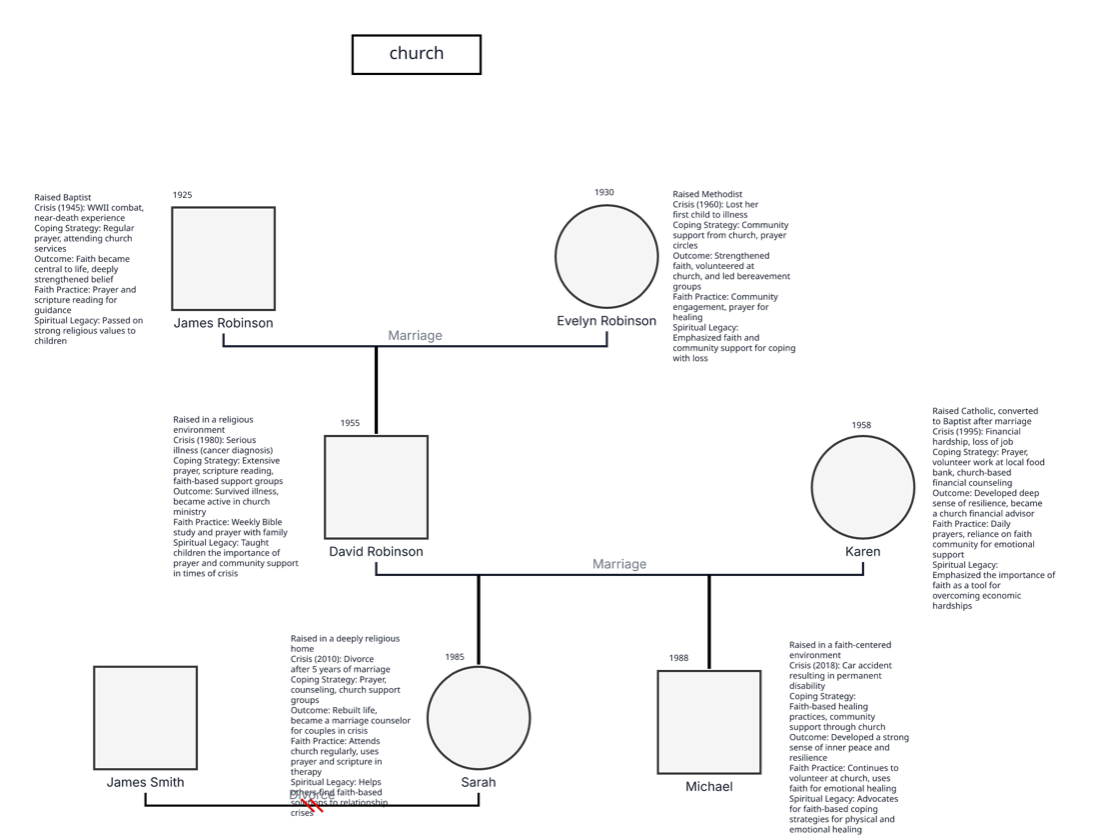
This spiritual coping genogram connects family structure with the beliefs, practices, relationships, and community resources people draw on during stressful or life-changing experiences.
The example maps seven people across three generations of the Robinson and Smith families. James and Evelyn Robinson form the oldest couple, followed by David Robinson and Karen. James Smith, Sarah, and Michael appear in the youngest generation, with divorce also included in the family context.
Six detailed profiles describe different crisis experiences: wartime trauma, the death of a child, serious illness, financial hardship, divorce, and a disabling car accident. The notes connect these experiences with coping strategies such as prayer, scripture, worship, counseling, volunteering, community participation, and support groups. Outcomes and spiritual legacies show how coping resources can shape resilience, service, vocation, relationships, and values over time.
This spiritual coping genogram can help spiritual-care professionals, counselors, and families organize crisis experiences, coping resources, and meaning across generations.
Explore prayer, worship, ritual, community, grief, resilience, and spiritual legacy.
Connect significant experiences with coping, relationships, values, and support.
Examine continuity and change in spiritual coping across generations.
Reflect on strengths, practices, outcomes, and sources of meaning in their own terms.
Standard family symbols establish the structure, while profile notes organize spiritual coping information around each person.
Male family member
Female family member
Marriage or partner relationship
Divorce
Relatives grouped at the same family level
Time reference for the individual and generation
Stressful, traumatic, or life-changing experience
Actions or resources used during the crisis
Prayer, worship, scripture, service, ritual, or community participation
Lasting effect, meaning, value, role, or practice carried forward
Use this example when spiritual coping and family history need to be explored together.
Add the people, generations, partner relationships, family transitions, dates, and other structural details relevant to the spiritual history.
Record the crisis or transition in the person’s own terms, including its timing, impact, and the context needed to understand it.
Include prayer, worship, scripture, counseling, volunteering, meditation, rituals, relationships, support groups, community involvement, or other helpful resources.
Note changes in meaning, identity, relationships, values, service, vocation, resilience, or practices that influenced later generations.
Creately Clinical supports spiritual-coping work with family and therapy fields, cultural and timeline views, collaborative reflection, and report-ready outputs.
Spiritual coping may include prayer, worship, meditation, ritual, scripture, service, community support, meaning-making, connection with nature, personal values, or other practices a person identifies as spiritually significant.
Yes. The map can record questioning, conflict, loss of faith, conversion, renewed practice, changes in community, or a shift toward nonreligious sources of meaning.
Add the values, practices, stories, roles, relationships, or sources of strength that a person passed to later generations. Include both continuity and change where relevant.
Custom fields, notes, relationship markers, and visual categories can keep coping resources and family context organized. Shared editing, comments, version history, and exports support reflection, collaborative care, and ongoing updates.
Edit the genogram to map your family, describe important experiences and coping resources, and create a respectful shared visual of resilience, meaning, and spiritual legacy.