Ritual & Practice Spiritual Spiritual Map
Shows spiritual identity, practices, and family relationships together.
Shows spiritual identity, practices, and family relationships together.
Captures affiliation, tradition, belief shifts, or spiritual influences.
Connects spiritual patterns across relatives and generations.
Leaves room for worship, rituals, coping practices, and values.
Keeps households, couples, children, and relatives clear.
Helps identify sources of support, tension, belonging, or change.
Supports counseling, chaplaincy, or care conversations.
Can be updated as beliefs, roles, or practices change.
Map family rituals, faith traditions, spiritual practices, community roles, and formative experiences across generations using this spiritual genogram on Creately Clinical.
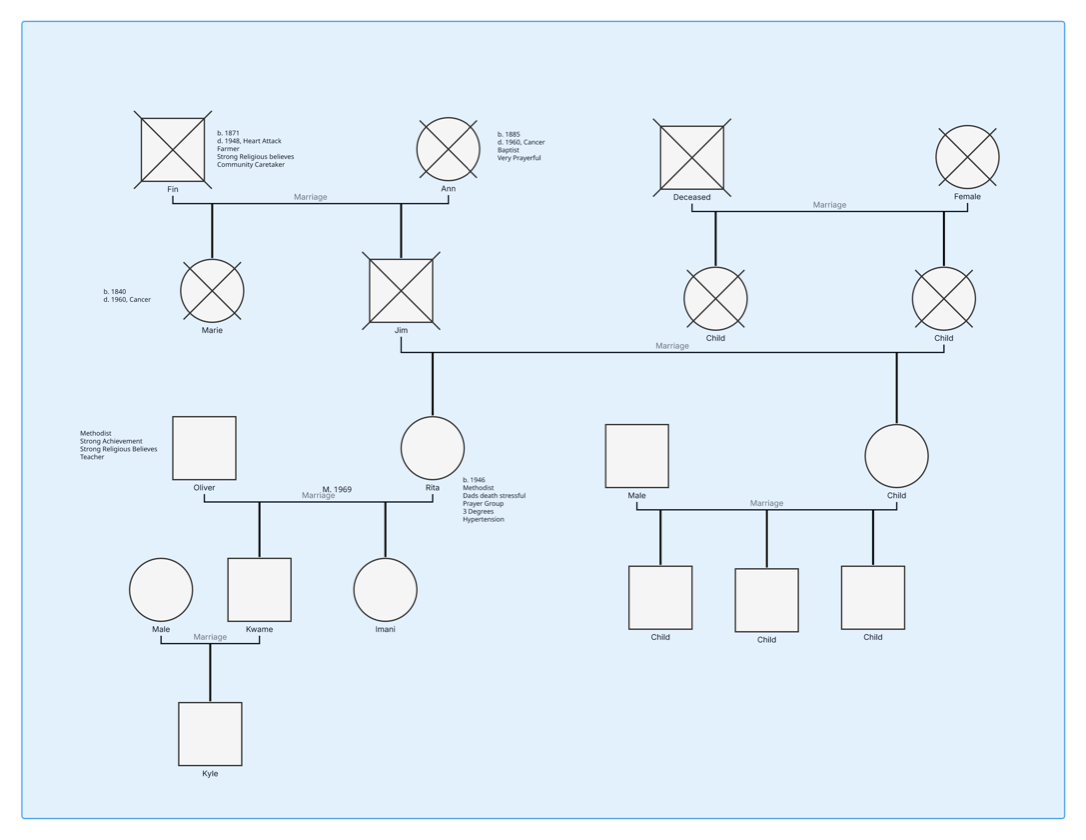
This ritual and practice spiritual genogram combines family structure with the beliefs, practices, community roles, and life experiences that shape spiritual identity across generations.
The example maps 19 people across five family levels. Named family members include Fin, Ann, Marie, Jim, Oliver, Rita, Kwame, Imani, and Kyle, alongside additional relatives represented with role labels. Six partner relationships connect the family branches, and deceased status is recorded throughout the earlier generations.
Four detailed profiles illustrate the kinds of context users can add. Fin is described through strong religious beliefs and community caretaking; Ann is identified as Baptist and very prayerful; Oliver is identified as Methodist, a teacher, and a person with strong religious beliefs; and Rita’s profile combines Methodist identity with education, a stressful loss, hypertension, and other life details. These notes show how ritual and spirituality can be recorded alongside vocation, health, family events, and community participation.
This ritual and practice spiritual genogram can help spiritual-care professionals, learners, and families organize beliefs, practices, and life context across generations.
Explore prayer, worship, ritual, service, grief, resilience, vocation, and sources of meaning.
Connect spiritual practices with family events, relationships, coping, and community support.
Study how beliefs, practices, and roles continue or change across generations.
Create a respectful shared record of traditions, turning points, strengths, and values.
Standard family symbols establish the structure, while concise profile notes capture spiritual identity, ritual practice, and relevant life context.
Male family member
Female family member
Deceased family member
Marriage or partner relationship
Parent–child relationship
Relatives grouped at the same family level
Denomination, beliefs, prayer, rituals, roles, or sources of meaning
Birth and death dates, health, education, vocation, loss, or community involvement
Use this example when spiritual practices and family history need to be understood together.
Add the relatives, partner relationships, children, dates, and living status relevant to the spiritual history you want to explore.
Add prayer, worship, holidays, ceremonies, music, food traditions, service, meditation, pilgrimage, or other repeated practices important to each person.
Note faith tradition, spiritual identity, community roles, formative events, losses, health experiences, vocation, education, and sources of strength or meaning.
Review traditions that continue, change, or reappear across generations, then add questions, resources, support needs, or practices the family wants to carry forward.
Creately Clinical supports spiritual-genogram work with flexible family and therapy fields, cultural and timeline views, collaboration, and report-ready outputs.
You can add prayer, worship, meditation, ceremonies, holidays, fasting, music, storytelling, service, pilgrimage, ancestral practices, home rituals, or other activities meaningful to the person or family.
Yes. Record each person’s own description of spirituality, values, worldview, practices, community, and sources of connection or meaning without requiring a religious affiliation.
Yes. Add dates, stages, or short notes to show changes following marriage, migration, loss, illness, education, community involvement, or other important experiences.
Custom fields, notes, relationship markers, and visual categories can keep spiritual and family context organized. Shared editing, comments, version history, and exports support reflection, collaborative care, and ongoing updates.
Edit the genogram to map your family, add rituals and spiritual practices, and create a respectful shared visual of the beliefs, experiences, and sources of meaning carried across generations.