Social Work Structure
Shows the main family members and relationships in this example.
Shows the main family members and relationships in this example.
Connects couples, parents, children, and siblings in a readable layout.
Places relatives across generations so patterns are easier to see.
Leaves room for names, roles, dates, and family notes.
Supports markers for marriage, separation, loss, conflict, or support.
Keeps the visual focused on the family story shown in the hero image.
Helps teams discuss the same structure before adding deeper notes.
Can be extended as new relatives or relationship details are added.
Map family structure, relationship dynamics, significant losses, safety concerns, and support needs using this social work genogram on Creately Clinical.
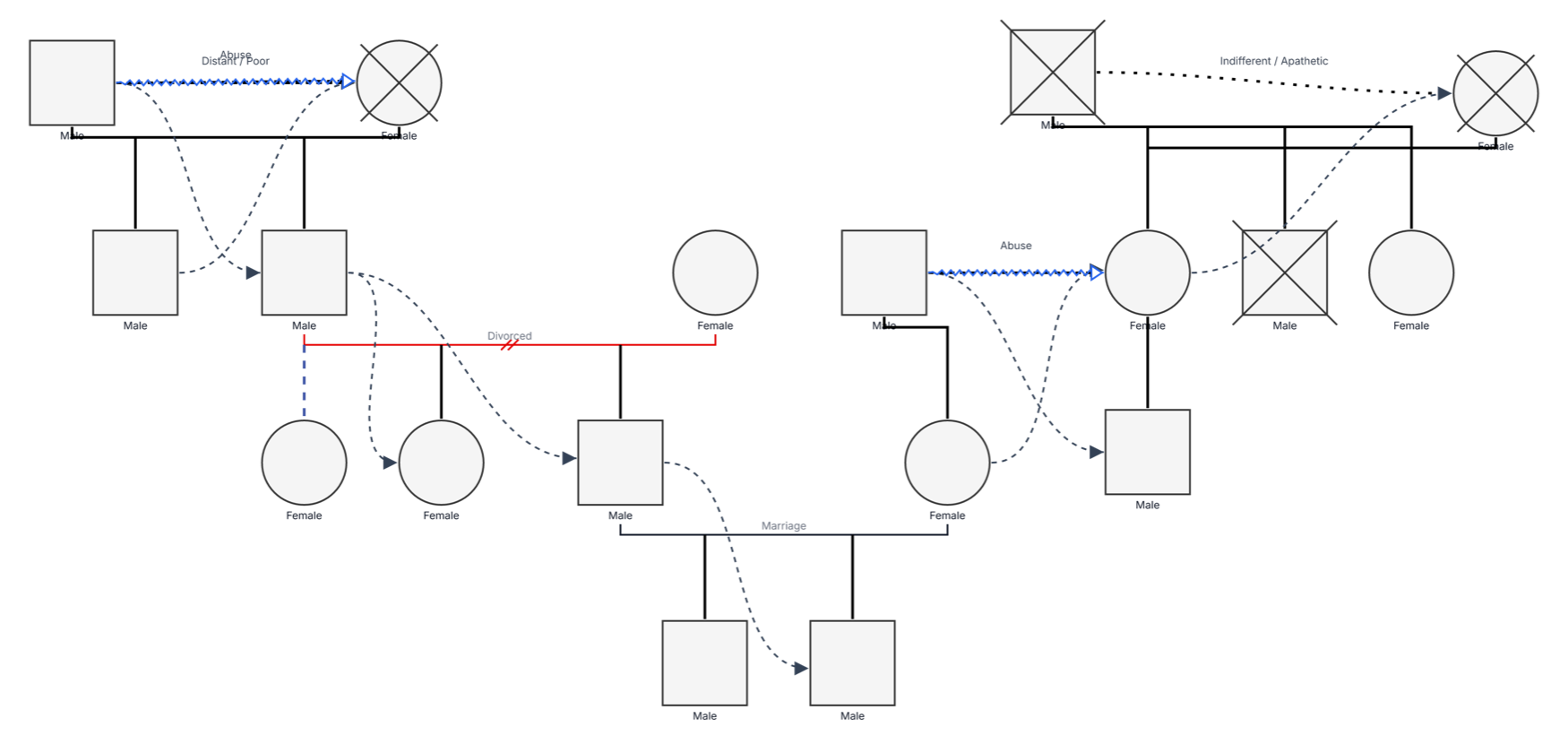
This social work genogram combines a multigenerational family structure with relationship dynamics that can inform assessment, safeguarding, support planning, and collaborative case review.
The example contains 19 people across four family levels. It includes current and former partner relationships, children, extended-family branches, and four relatives marked deceased. The role-based labels keep the example adaptable to a wide range of family configurations and practice settings.
Highlighted relationships add social-work context to the structure. Two connections are labeled Abuse, one combines Abuse with Distant or Poor, and another is labeled Indifferent or Apathetic. Additional directional relationship lines show how relevant interactions can be traced across the family network. Users can add strengths, supportive bonds, caregiving, household membership, services, risks, and protective factors alongside these dynamics.
This social work genogram can help practitioners and care teams organize family structure, relationships, risks, strengths, and services in one clear view.
Support intake, assessment, safeguarding, formulation, and case planning.
Map caregivers, households, important relationships, risks, and protective factors.
Coordinate services, referrals, responsibilities, information sharing, and review dates.
Use a shared visual for supervision, case conferences, handoffs, and training.
Standard family symbols establish the structure, while colored and patterned relationship lines add emotional, safety, and interaction context.
Male family member
Female family member
Deceased family member
Marriage or partner relationship
Divorced relationship
Parent–child relationship
Abuse or another harmful dynamic, as defined in the legend
Directional relationship or interaction pattern
Describes a relationship such as Distant / Poor or Indifferent / Apathetic
Use this example when social-work practice needs a shared view of family structure, relationships, risks, and resources.
Add the focus person, relatives, caregivers, partners, former partners, children, household groups, important dates, and living status relevant to the case.
Add supportive, close, distant, conflicted, harmful, or interrupted relationships using consistent symbols and concise descriptions.
Record protective factors, caregiving responsibilities, current concerns, agencies, professionals, informal supports, referrals, and existing plans.
Identify priorities, responsible people, consent and information-sharing arrangements, review dates, safety actions, and practical next steps.
Creately Clinical supports social-work assessment with structured case fields, relationship and service views, controlled collaboration, and report-ready outputs.
Include the family and household structure, significant relationships, caregiving roles, strengths, important events, safety concerns, services, informal supports, and other information relevant to the agreed purpose.
Use neutral, specific language; distinguish reported, observed, and confirmed information; record sources and dates; follow consent and safeguarding procedures; and limit access according to professional and organizational requirements.
Yes. Add social services, healthcare, schools, housing, legal support, nonprofits, faith communities, friends, neighbors, and other formal or informal resources connected to the family.
Custom fields, notes, relationship markers, and visual categories can keep family and service context organized. Shared editing, comments, version history, and exports support supervision, multidisciplinary review, and coordinated updates.
Edit the genogram to map the family, add supported relationship and safety context, and build a practical shared visual for assessment, planning, and coordinated support.