Hypertension Medical Focus
Highlights hypertension medical details alongside family health history.
Highlights hypertension medical details alongside family health history.
Connects diagnoses, risks, and relevant medical notes across relatives.
Shows how health conditions or risks appear across family lines.
Leaves space for symptoms, screenings, and care notes.
Keeps parents, children, partners, and siblings easy to trace.
Supports quick review of conditions that may need follow-up.
Gives clinicians a clear visual for discussion and documentation.
Can be expanded as new relatives or health details are added.
Map hypertension, blood pressure status, treatment, and cardiovascular outcomes across three generations using this medical genogram on Creately Clinical.
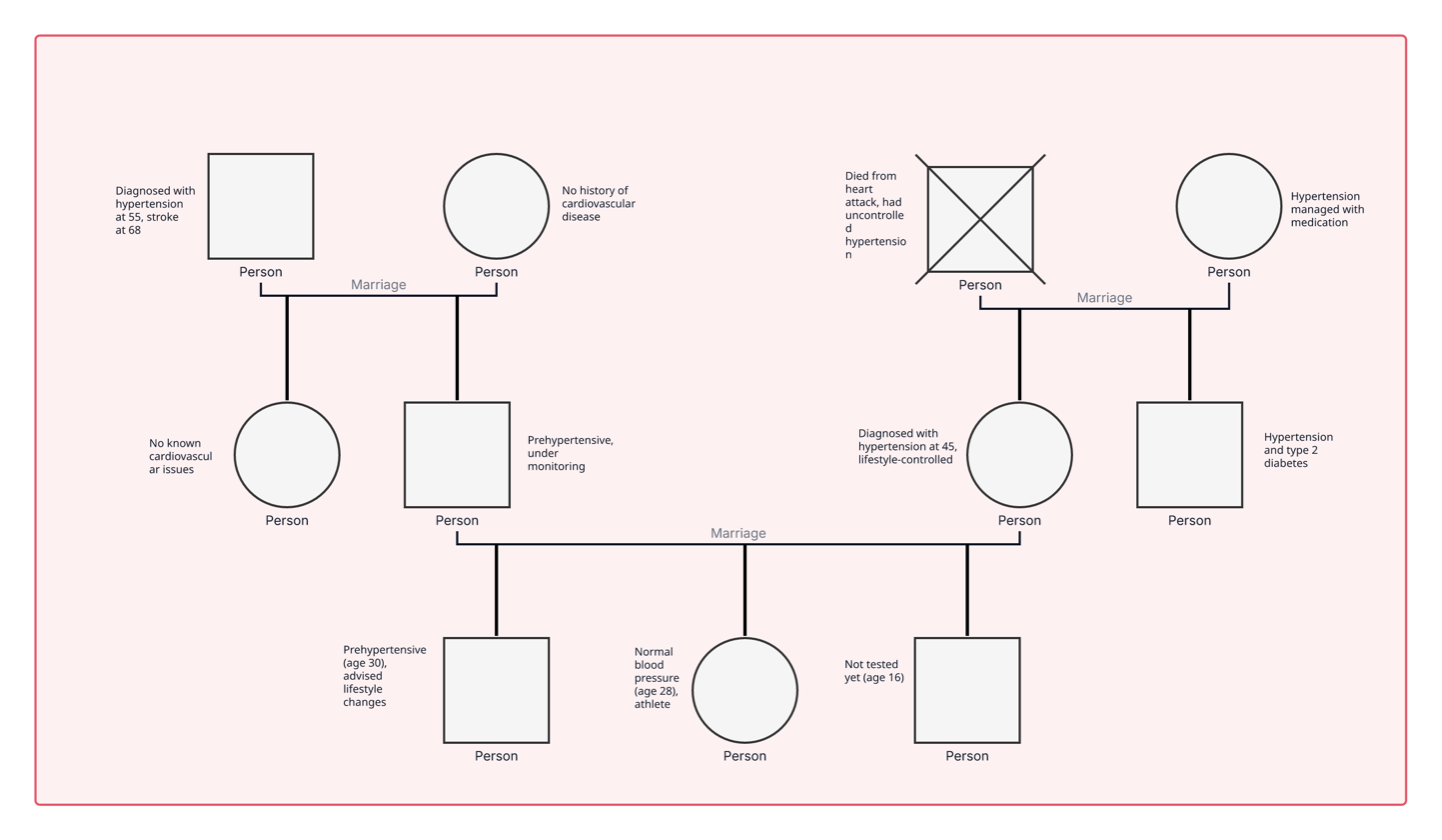
This hypertension medical genogram organizes diagnoses, age of onset, management, related conditions, and cardiovascular outcomes across three generations, helping clinicians and families prepare a more informed health-history discussion.
The example maps 11 relatives from two family branches. Five people are described as having hypertension: one relative was diagnosed at age 55 and later had a stroke at 68; one deceased relative is described as having uncontrolled hypertension and dying from a heart attack; one relative manages hypertension with medication; another was diagnosed at 45 and is managing it through lifestyle measures; and one relative has both hypertension and type 2 diabetes.
Two younger relatives are labeled “prehypertensive”: one is being monitored, and another was advised to make lifestyle changes at age 30. The remaining examples include no known cardiovascular issues, no cardiovascular disease history, normal blood pressure at age 28, and a 16-year-old who has not yet been tested. Because clinical terminology and thresholds change, replace “prehypertensive” with the current classification and recorded measurements used by the relevant healthcare team.
This hypertension medical genogram can help healthcare professionals, learners, and families organize blood pressure history and cardiovascular context in one clear view.
Review diagnoses, readings, onset, treatment, outcomes, and related conditions across generations.
Support screening, monitoring, prevention, education, and coordinated follow-up.
Practice distinguishing diagnosed, monitored, normal, negative-history, and untested statuses.
Prepare a visual blood pressure history for discussion with qualified healthcare professionals.
Use consistent condition labels and include dates, measurements, and information sources whenever they are available.
Male family member
Female family member
Deceased person
Marriage or partner relationship
Parent–child relationship
Recorded diagnosis, including age of diagnosis where shown
Medication, lifestyle measures, or monitoring described in the example
Stroke, heart attack, cardiovascular history, or type 2 diabetes
No testing status has yet been recorded for that person
Use this example to assemble hypertension-related family history before or during a professional health conversation.
Add the identified person, siblings, parents, grandparents, partners, and children. Keep each generation aligned and mark deceased relatives clearly.
Add confirmed hypertension diagnoses, current clinical categories, measurement dates, and ages at diagnosis. Keep diagnosed, monitored, normal, and untested statuses distinct.
Record medications, lifestyle measures, related conditions, cardiovascular events, and causes of death where relevant. Note the source and date of each item.
Use the completed map to support an individualized discussion about measurement, follow-up, and care. Update it as diagnoses, readings, or treatment plans change and protect access to sensitive health information.
Creately Clinical supports hypertension family-history workflows with medical fields, health-focused views, collaborative review, and report-ready outputs.
No. It organizes reported and documented family information. Hypertension is diagnosed by qualified healthcare professionals using appropriate blood pressure measurements and current clinical guidance.
They make the record more informative by distinguishing a documented normal reading from missing or untested information. This also helps reviewers identify where an updated history or measurement may be useful.
Use the terminology adopted by the relevant healthcare team and record the actual readings when available. Current U.S. guidance uses categories such as elevated blood pressure and stage 1 or stage 2 hypertension, so the example label may need to be updated when customized.
The Medical & Genetic field pack supports hypertension and other medical conditions, medications, cause of death, screening, and medical notes. Health view, AI-assisted pattern detection, evidence-gap analysis, real-time collaboration, role-based permissions, and PDF or DOCX reports support structured clinical review.
Edit the genogram to map your family’s blood pressure history, distinguish diagnosed, monitored, normal, and untested statuses, and prepare a clear visual for a healthcare conversation.