Generational Depression Pattern View
Highlights emotional or behavioral patterns connected to family context.
Highlights emotional or behavioral patterns connected to family context.
Shows relatives and relationship lines before deeper notes are added.
Connects current concerns with patterns across parents, children, and relatives.
Leaves room to mark closeness, stress, conflict, or support.
Supports brief clinical notes for review and discussion.
Helps identify protective factors and areas needing follow-up.
Gives clinicians a clear starting map for sessions or case reviews.
Can be expanded as new symptoms, relationships, or histories emerge.
Map depression history, emotional relationships, symptoms, and support across three family generations using this genogram on Creately Clinical.
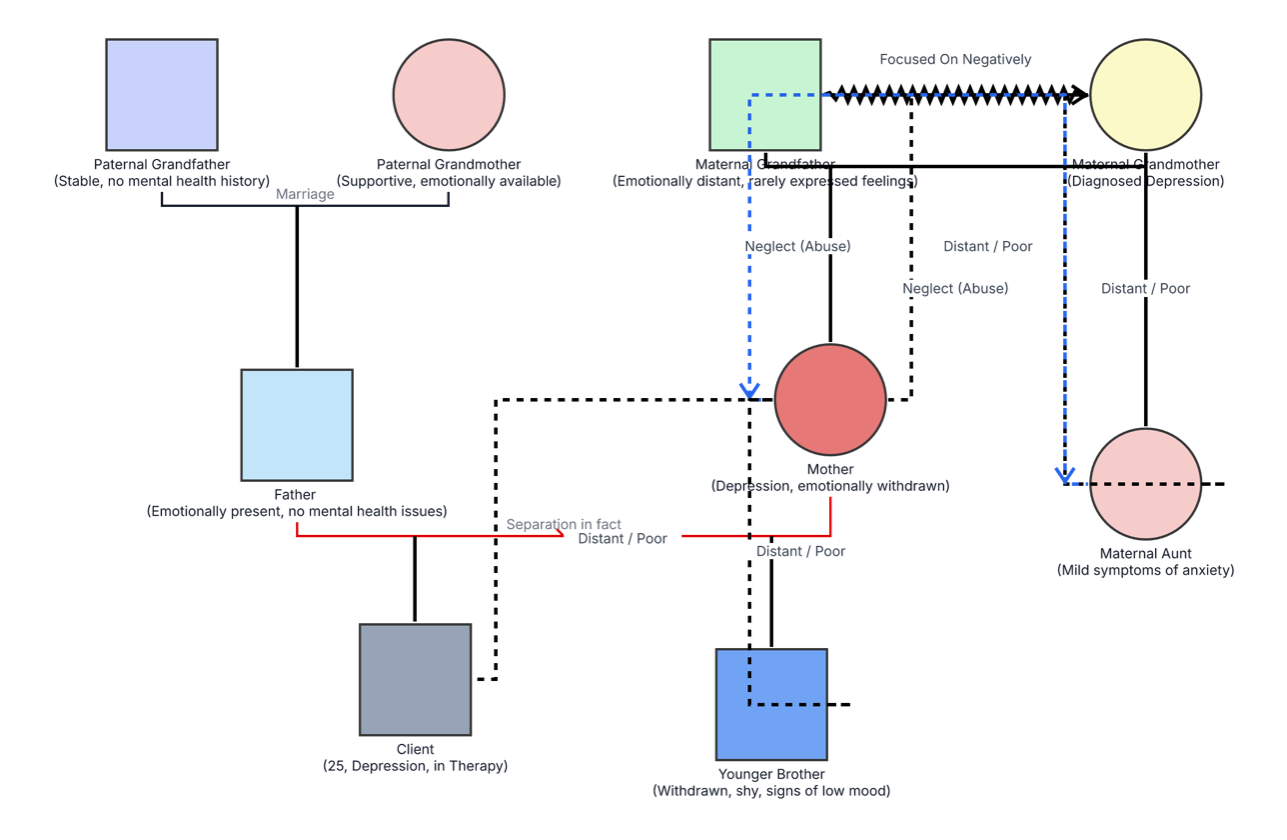
This generational depression genogram brings mental health history, emotional relationships, and support into one multigenerational view, helping clinicians and clients explore patterns and guide informed therapeutic conversations.
The example maps nine people across three generations. On the maternal branch, depression is recorded for the maternal grandmother, mother, and client, while the client is also noted as being in therapy. The maternal aunt has mild anxiety symptoms, and the younger brother has observed signs of low mood. These distinctions make it easier to separate documented conditions, reported symptoms, and current care.
Relationship annotations add context to the family structure. The diagram records a parental separation and labels selected relationships as distant or poor, focused on negatively, or involving neglect or abuse. The paternal branch also records stable and supportive relationships, keeping protective factors visible alongside areas for exploration.
This generational depression genogram can help behavioral-health professionals, learners, and clients organize mental health history and family relationships in one clear view.
Explore documented depression, reported symptoms, treatment, emotional relationships, and protective factors during assessment.
Create a shared multigenerational view for case conceptualization, supervision, and coordinated review.
Practice trauma-informed, evidence-aware mental health genogram notation with fictional or de-identified information.
Collaboratively map relevant history and support relationships with appropriate consent and professional guidance.
Use each symbol and label consistently so the diagram remains easy to interpret during sessions, supervision, and case review.
Male family member
Female family member
Marriage or partner relationship
Separated relationship
Parent–child connection
Records a diagnosis, reported symptom, observation, or treatment status
Shows the stated emotional dynamic, such as distant/poor, focused on negatively, or neglect/abuse
Places grandparents, parents, and children on separate rows so patterns are easier to scan
Use this example when a therapy or behavioral-health conversation benefits from seeing mental health history and family relationships together.
Add the identified person, siblings, parents, aunts or uncles, and grandparents. Confirm family connections before adding clinical detail.
Add confirmed diagnoses, self-reported history, observed signs, and treatment status as distinct notes. Include dates or information sources when they help interpretation.
Use labeled relationship lines for closeness, distance, conflict, neglect, or other relevant dynamics. Record supportive and emotionally available relationships as well as concerns.
Check the map with the client or care team, update uncertain details as information develops, and use the visible patterns to inform questions, goals, and next steps. Protect sensitive information with appropriate access and sharing controls.
Creately Clinical supports behavioral-health genograms with medical and family-therapy fields, relationship-focused views, controlled collaboration, and report-ready outputs. This example can keep depression history, treatment context, emotional dynamics, and protective relationships connected in the same clinical working view.
No. Family mental health history can help identify possible risk, but it does not determine an individual's outcome. Genetic, biological, environmental, and psychological factors may all play a role, so use the genogram to support informed discussion rather than prediction or diagnosis.
Label them separately. Record a diagnosis only when it is documented or reliably reported, and describe other information as reported symptoms or observations—for example, “signs of low mood.” A qualified health professional should assess persistent or concerning symptoms.
Collect only information relevant to the purpose of the genogram, explain how it will be used, and follow applicable consent, confidentiality, recordkeeping, and access requirements. Use de-identified details for teaching or presentation whenever appropriate.
Use Medical & Genetic fields for condition tags and the Family Therapy field pack for emotional bonds, trauma history, treatment, and goals. Health and Relationship Dynamics viewpoints can highlight different aspects of the same underlying genogram, while real-time collaboration, comments, and PDF or DOCX export support review and documentation.
Edit the genogram to map the family structure, add clearly sourced mental health information, and bring recurring patterns and supportive relationships into one collaborative view.