Parenting Style Counseling Case View
Frames the family structure around the main counseling or therapy focus.
Frames the family structure around the main counseling or therapy focus.
Shows partners, parents, children, and siblings involved in the case.
Leaves room to note conflict, closeness, distance, or support.
Keeps discussion points visible for assessment and follow-up.
Connects current concerns with relevant family history.
Clarifies caregiving, custody, parenting, or support responsibilities.
Supports shared review before deeper clinical notes are added.
Can be extended as the conversation reveals more family context.
Explore parenting approaches, family influences, child experiences, and goals for change using this counseling genogram on Creately Clinical.
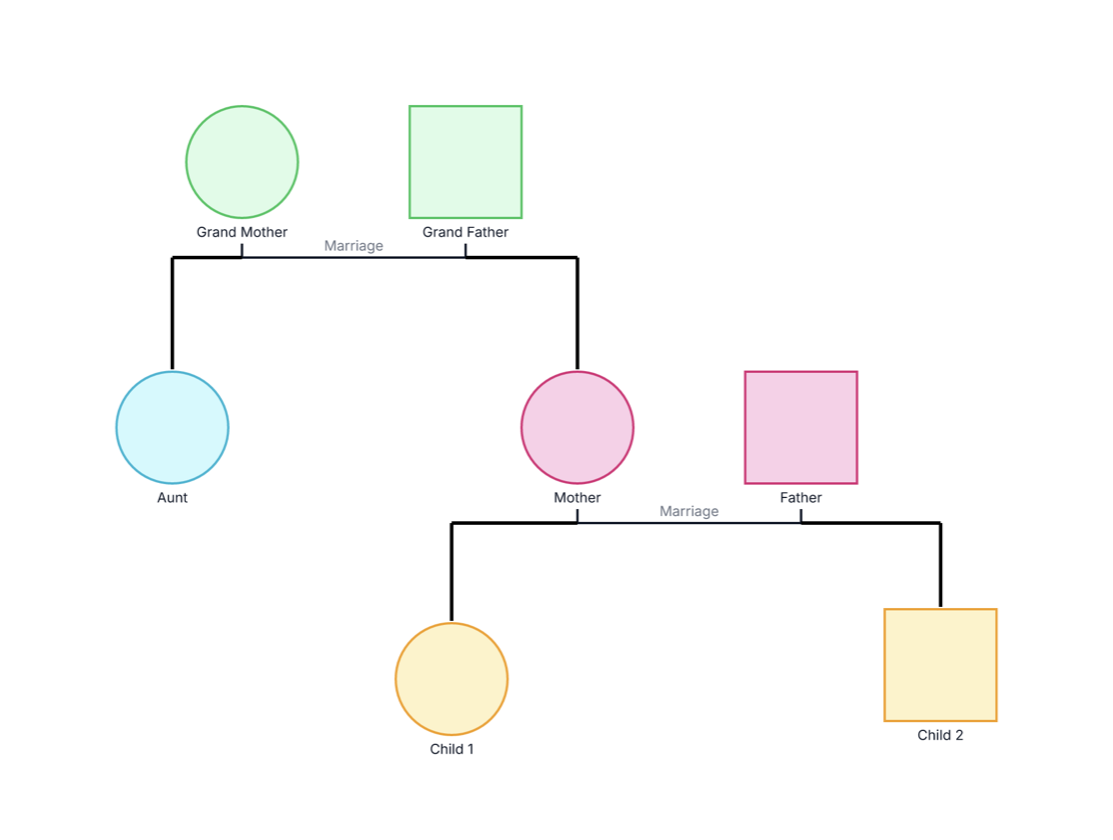
This parenting-style counseling genogram connects three generations of family relationships with the parenting approaches and experiences that can shape present-day family life.
The example maps eight members of the Reed and Anderson families. Edward Reed is identified with an authoritarian style and Helen Reed with a permissive style. Thomas and June Anderson are both identified as authoritative. In the next generation, James and Laura Reed are also shown with an authoritative parenting style and a legal separation.
The children’s row adds concise experiential context. Emma Reed is described as having been raised with a consistent authoritative approach, while Liam Reed’s note records permissive parenting associated with parental guilt during the separation. These details give counselors and families a practical starting point for exploring patterns, intentions, strengths, and opportunities for more consistent parenting.
This parenting-style counseling genogram can help counseling professionals and families organize parenting experiences across generations in one clear view.
Explore how upbringing, relationships, stress, and transitions influence current parenting.
Discuss expectations, responsiveness, communication, boundaries, and support.
Document caregivers, households, child experiences, strengths, and goals.
Build a shared visual for reflection, understanding, and positive change.
Standard family symbols establish the structure, while labels and notes describe parenting styles, relationship status, and the children’s experiences.
Male family member
Female family member
Marriage or partner relationship
Legal separation
Authoritarian, permissive, or authoritative approach
Description of how parenting was experienced or applied
Visual identifier that can be customized for a family branch, role, or category
Use this example when counseling conversations would benefit from seeing parenting patterns and family transitions across generations.
Add parents, children, grandparents, partners, former partners, and other caregivers who influence the family’s parenting experience.
Record the style associated with each caregiver and add specific examples involving expectations, responsiveness, boundaries, communication, and support.
Note how parenting approaches may differ by child, household, developmental stage, caregiver, or family transition.
Highlight strengths, identify areas where greater consistency may help, and record agreed actions for communication, routines, boundaries, and emotional connection.
Creately Clinical supports parenting-focused counseling with family-therapy fields, relationship views, collaborative editing, and report-ready outputs.
You can map authoritative, authoritarian, permissive, and uninvolved approaches, or use terms preferred by the family or counseling framework. Add examples so each label remains connected to observable experiences.
Yes. Parenting can vary by situation, child, developmental stage, stress level, or household. Use multiple labels, notes, or time-based observations to represent that context.
Yes. Add step-parents, grandparents, guardians, relatives, foster carers, and other adults who contribute to parenting, routines, boundaries, or emotional support.
Custom fields, notes, relationship markers, and visual categories can keep family experiences and counseling goals organized. Shared editing, comments, version history, and exports support collaborative review and ongoing family work.
Edit the genogram to map your family, describe parenting approaches with helpful context, and create a shared visual for reflection, communication, and positive change.