for a Child Custody Case Case View
Frames the family structure around the main counseling or therapy focus.
Frames the family structure around the main counseling or therapy focus.
Shows partners, parents, children, and siblings involved in the case.
Leaves room to note conflict, closeness, distance, or support.
Keeps discussion points visible for assessment and follow-up.
Connects current concerns with relevant family history.
Clarifies caregiving, custody, parenting, or support responsibilities.
Supports shared review before deeper clinical notes are added.
Can be extended as the conversation reveals more family context.
Organize households, parenting time, caregivers, siblings, and family relationships using this child custody case genogram on Creately Clinical.
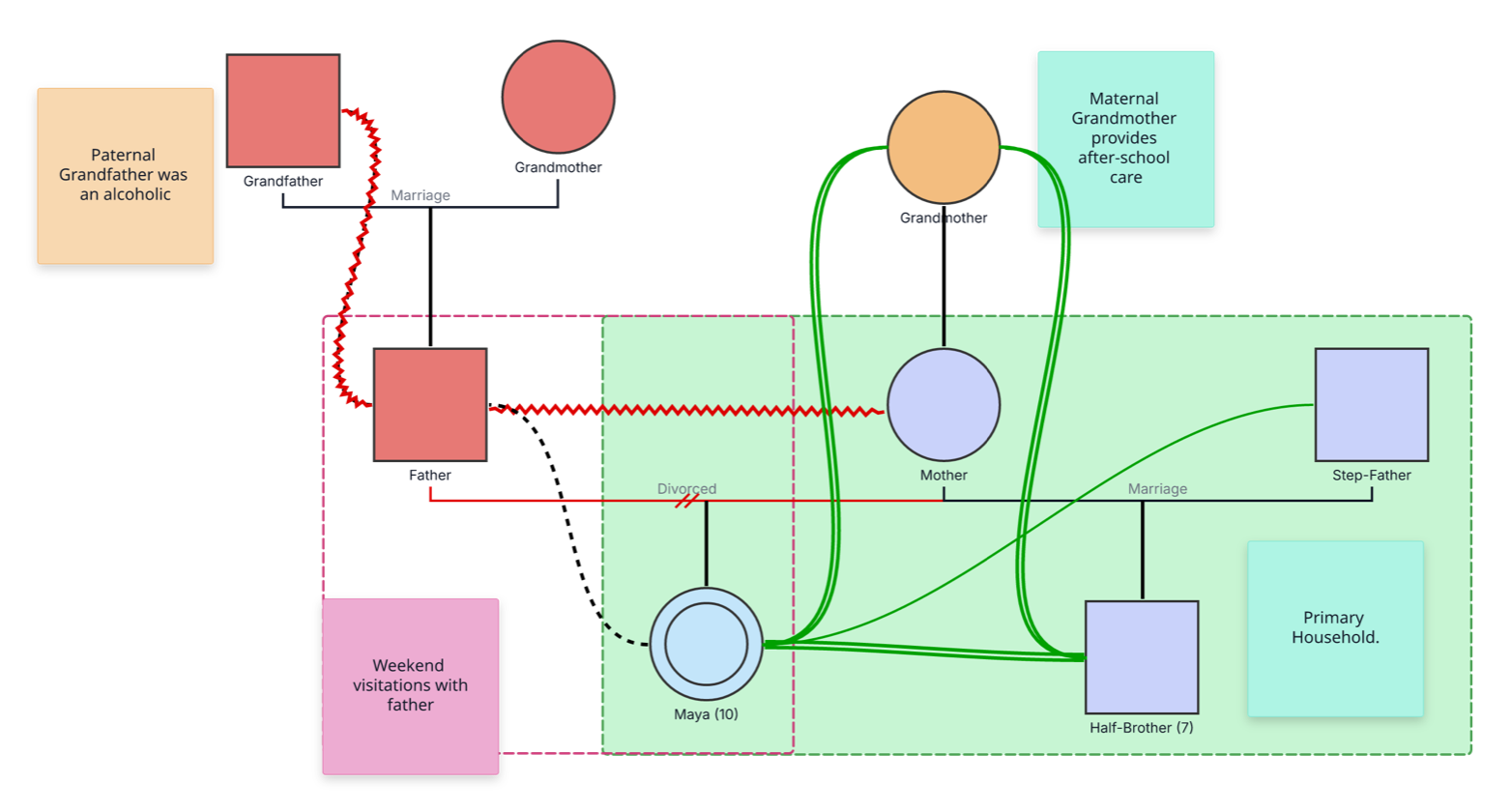
This child custody case genogram organizes the people, households, parenting arrangements, and caregiving relationships surrounding a child, helping legal and care professionals establish a shared, child-centered view of the family system.
The example centers on Maya, age 10. Her parents are divorced, and the diagram shows weekend visits with her father. Maya’s mother is married to her stepfather, and their primary household also includes Maya’s seven-year-old half-brother. A second household area keeps Maya’s time with her father visible without separating it from the wider family structure.
The maternal grandmother is shown providing after-school care, highlighting an important source of practical support. The paternal branch includes a family-reported note about the paternal grandfather’s history of alcohol use. Specialized relationship lines add further context, but any line used in case documentation should be clearly labeled and tied to a source rather than interpreted from styling alone.
This child custody case genogram can help legal and care professionals organize a child’s households, caregiving arrangements, and family relationships in one clear view.
Create a structured overview of households, parenting time, caregivers, and sourced case information.
Document the child’s family system, practical support, services, and household context.
Keep the child, siblings, stepparents, grandparents, and regular caregivers visible during review.
Share a controlled, child-centered visual for coordinated legal, care, and support discussions.
Label every household, relationship, and case note clearly so readers can separate family structure from reported information and formal arrangements.
Male family member
Female family member
Identified child or focus person in this example
Divorced parental relationship
Current marriage between Maya’s mother and stepfather
Parent–child connection
Groups people or arrangements associated with a household
Records caregiving, parenting-time, household, or relevant family-history information
Use this example to create a concise visual reference for child-centered legal, social work, mediation, or care discussions.
Add the child’s name and age, then connect parents, siblings, half-siblings, stepparents, grandparents, and other regular caregivers.
Group the people associated with each household and record the current parenting-time schedule in plain language. Distinguish an informal arrangement, written agreement, and court order.
Record caregiving roles, school-day support, major transitions, and other information relevant to the case. Attribute statements to records, interviews, or another identifiable source, and label disputed or unverified information accordingly.
Add dates, confirm that specialized relationship lines have labels, and review the diagram with the appropriate legal or care professional. Apply role-based permissions before sharing information about children or sensitive family circumstances.
Creately Clinical supports child-centered case mapping with structured family relationships, social-work and legal fields, controlled collaboration, and report-ready outputs. Different viewpoints allow authorized professionals to review the same underlying genogram through legal, service, or timeline context.
The genogram organizes family and caregiving information for review. Custody and parenting-time decisions are made through the applicable legal process, and the relevant standards vary by jurisdiction. Use the diagram with advice from a qualified family-law professional.
Record the current schedule, including school days, weekends, holidays, exchanges, and significant changes when they are relevant. Note whether each arrangement is informal, agreed in writing, or ordered by a court, and add an effective date.
Use neutral wording and identify the source. Clearly distinguish an allegation, a person’s report, a professional observation, and a court finding. Avoid presenting an unverified statement as an established fact.
Creately Clinical supports biological, step, foster, and adoptive relationships, along with Social Work and Legal & Estate fields. Risk & Services, Legal & Estate, and Timeline Events viewpoints can surface different case layers, while comments, viewer permissions, and PDF or DOCX reports support controlled professional review.
Edit the genogram to map the child’s family, clarify household and caregiving arrangements, and create a structured visual for informed professional discussion.