UML Diagram Tool
The Better Way to Create UML Diagrams
UML modelling, architecture and design. End to end, integrated and easy.
- Intelligent, standards compliant UML shapes
- Real-time Collaboration for team design sprints
- Link models, add notes and centralize your design docs
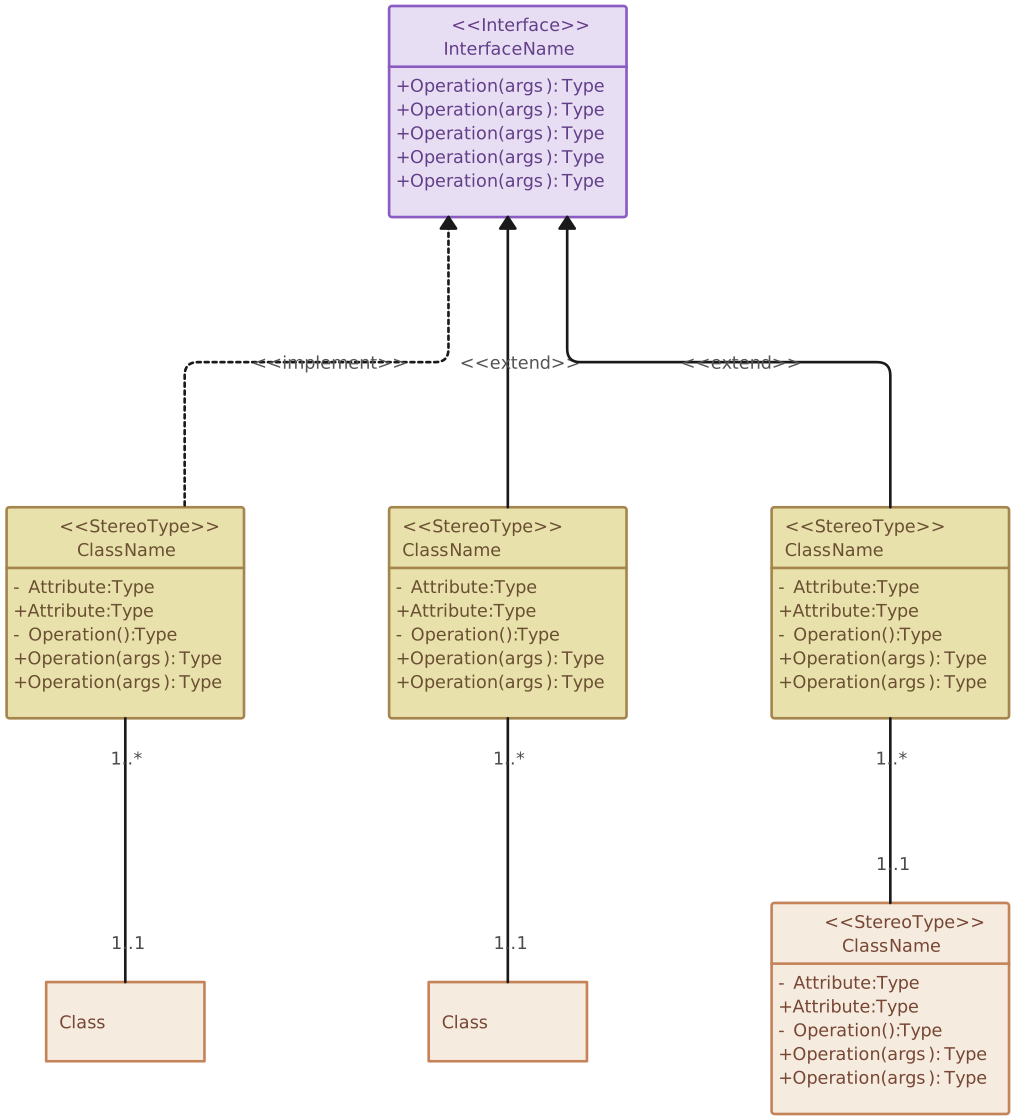

- Intelligent, standards compliant UML shapes
- Real-time Collaboration for team design sprints
- Link models, add notes and centralize your design docs


How to Create UML Diagrams?
Model Software Systems
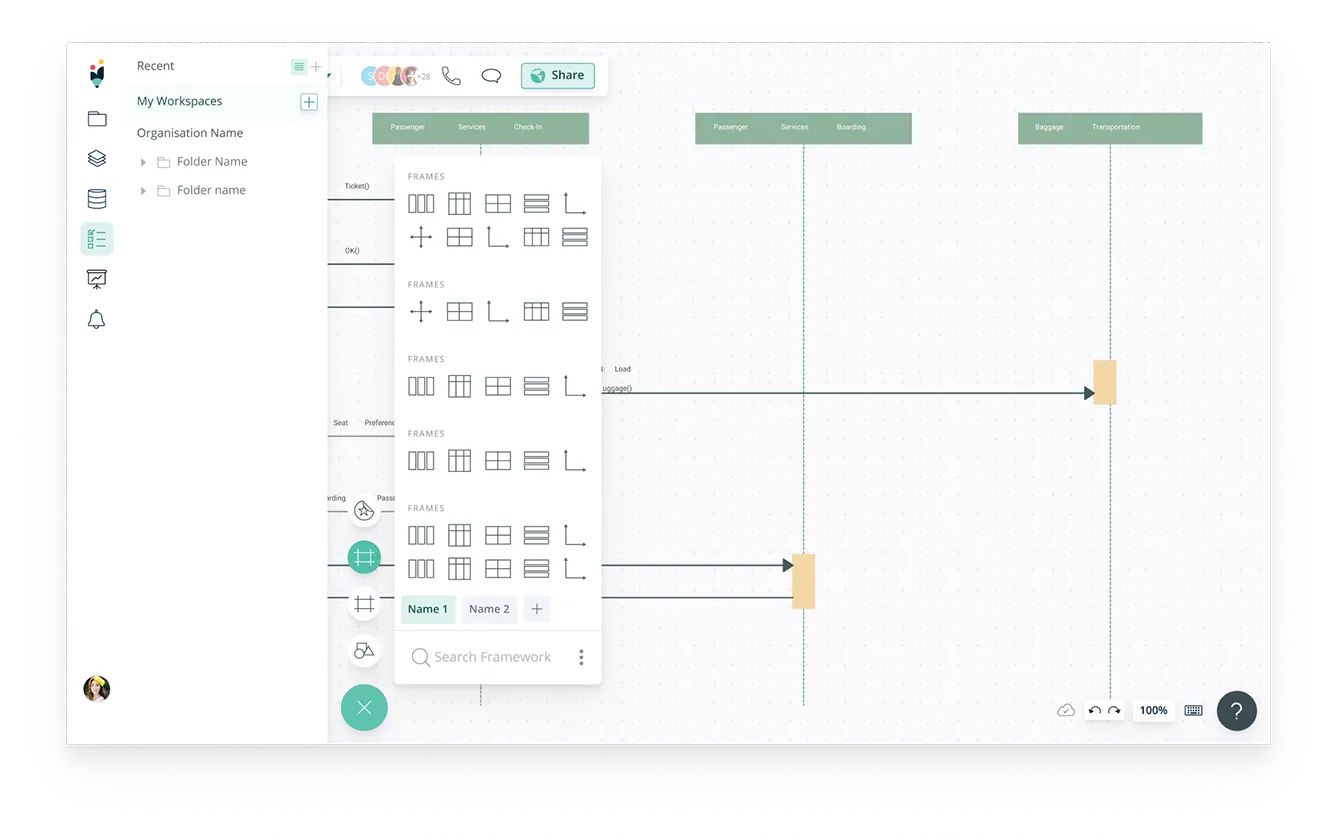
Simple to use drag and drop tools to easily add UML shapes onto the canvas. Visualize actors, objects, dependencies, attributes, classes, packages and much more on a single, connected workspace.
Purpose designed diagram tools to enable smooth visualizing when designing systems.
Multi-perspective modeling with adaptive shapes that change according to the context they are placed in.
Create Easily Understandable Representations of Complex Systems
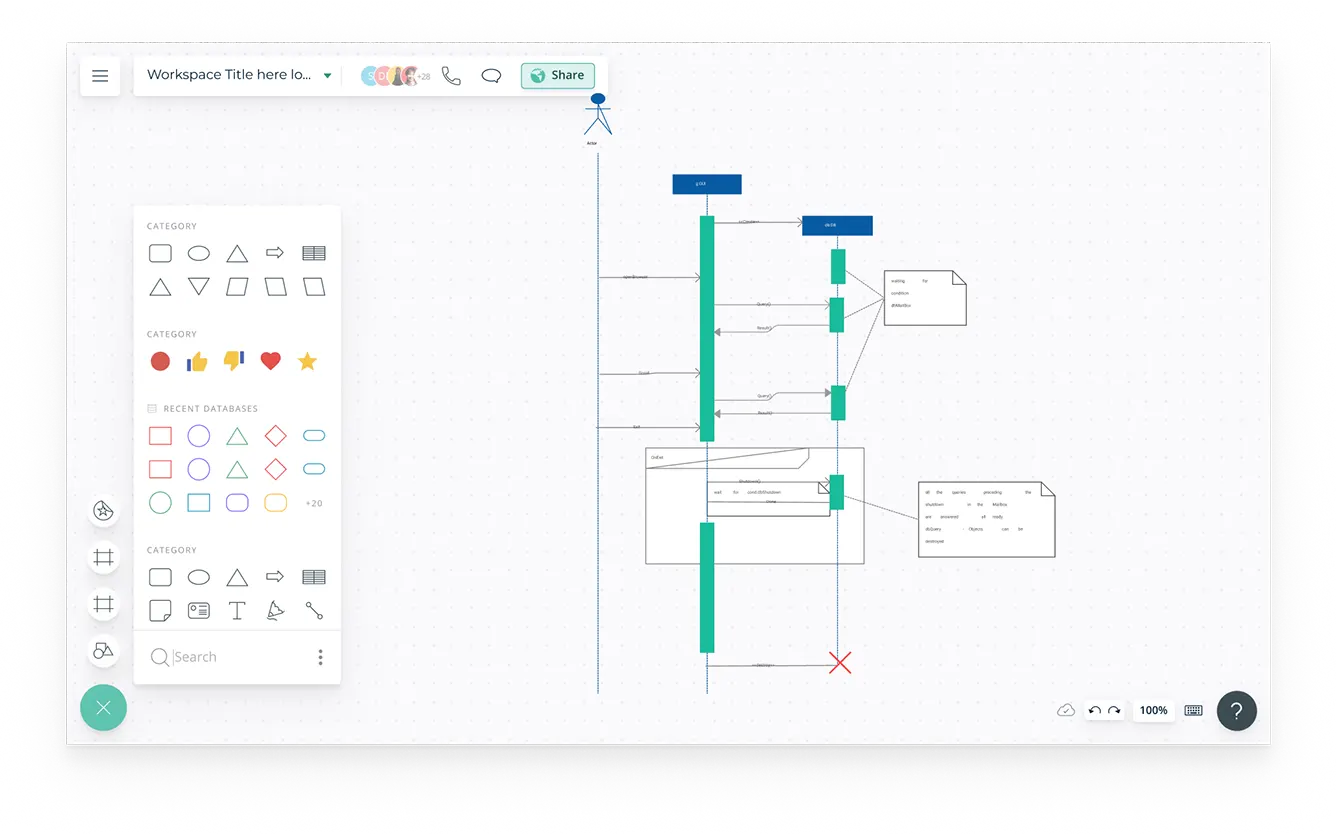
Universal, full-text search to easily find specific nodes and information in large, complex UML diagrams.
Connected shape links to build navigation structures to easily represent how components in a system interact.
Advanced collaborator controls to streamline sharing, reviewing, and editing of UML diagrams.

Design Systems Together With Your Team
Real-time cursors for any number of participants. Collaborate with team members on a shared canvas- add multiple collaborators and create UML diagrams together.
Video conferencing baked into the platform to feel like you are in the same room.
Comment with context, have discussions and follow-ups on the same canvas. Async!
Version history to save and revert back to each iteration to streamline reviewing and revising going forward.
Augment and Interact with Your Data

Add even more interaction to your UML Diagrams by adding reference notes and other key details to elements with custom properties and additional data fields.
Frames and containers to split canvas to boards. Organize diagrams and create multiple UML diagrams on the same canvas.
Connect to your favorite tools with Creately plugins for Slack, Google Workspace, Confluence, and more.

 Templates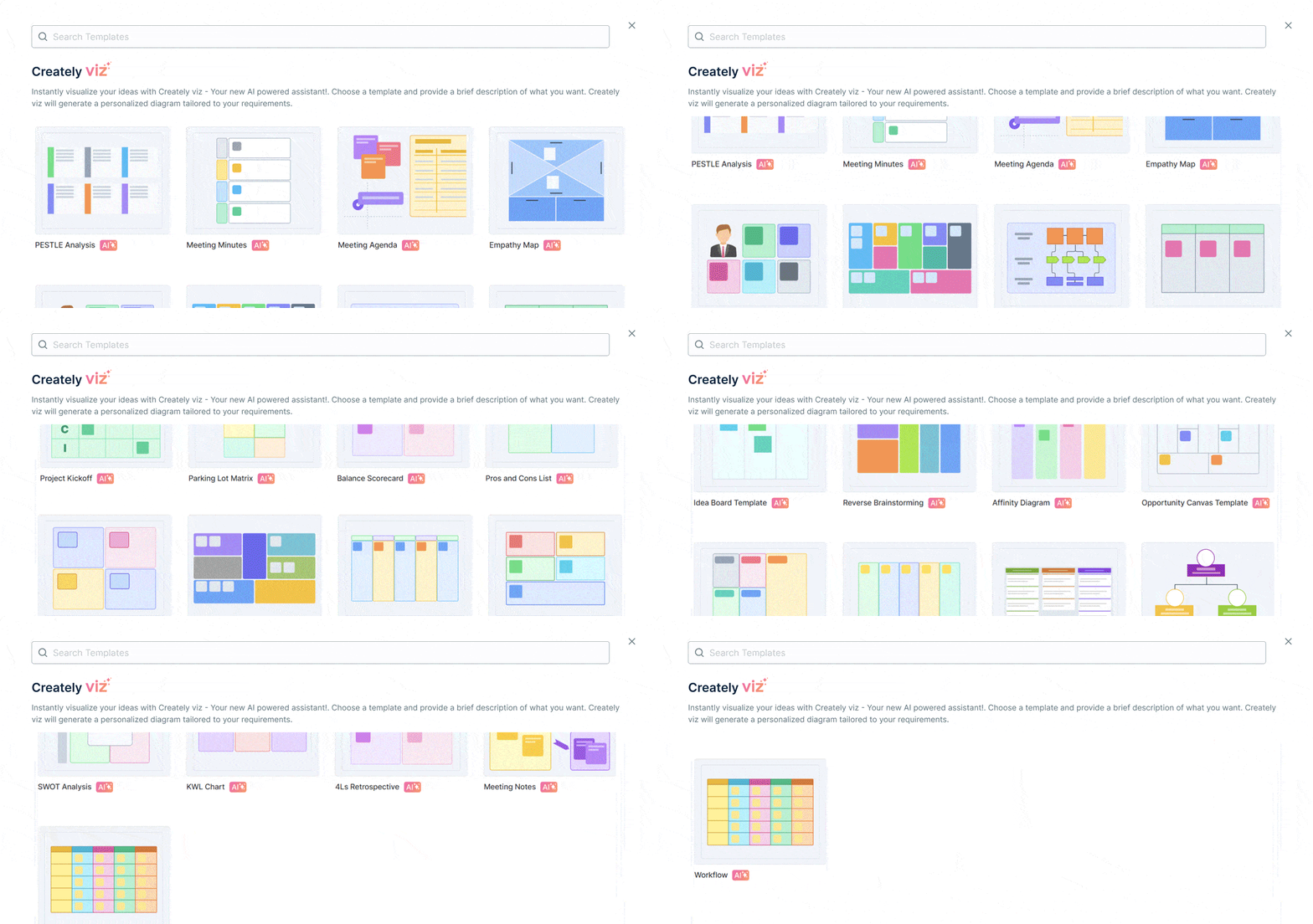
What Are UML Diagrams?
UML or Unified Modeling Language is a modeling technique used to document software. UML diagrams visually represent a system along with its main actors, roles, actions, artifacts or classes, in order to better understand, alter, maintain, or document information about the system.
Things to Remember While Creating UML diagrams
- When creating UML diagrams it is important to remember to create levels of abstractions that meet the need of your audience. Creating unnecessarily complex diagrams with too much information can confuse stakeholders. When creating UML diagrams with Creately’s UML diagram tool you can create multiple diagrams on different workspaces and link them together for better comprehension.
- Avoid lines crossing over each other while creating UML diagrams. This allows your diagrams to be more readable and understandable. If two lines must cross, use a “bridge” to show that the lines do not intersect.
- Try to make sure all lines go horizontally or vertically and create right angles with each other. When drawing connectors, having lines with multiple connectors make diagrams look messy and confusing.
- When drawing generalization or realization hierarchies on a diagram always make sure the parent elements are higher than the child elements so the arrows always point upwards.
- Unlimited Canvases
- 5000 items per Canvas
- Premium Shape Libraries
- 20 Active Folders
- Unlimited Imports
- JPEG, PNG, SVG & PDF export
- Premium Templates
- AI Diagrams
- 30 day version history
- Basic collaboration
- Email Support
- Unlimited Canvases
- 5000 items per canvas
- Premium Shape Libraries
- 50 active folders
- Unlimited Imports
- JPEG, PNG, SVG & PDF export
- Premium Templates
- AI Diagrams
- 30 day version history
- Advanced collaboration
- Email / Chat Support
- Multiple named users
- Account Management Portal
 MOST POPULAR
- Unlimited Databases
- 5000 items per Database
- Project Management tools
- HR, Product, IT, Process toolkits
- Advanced collaboration
- Most integrations
- 100 GB storage
- One Account Admin
- Email + Chat support
- SOC2 & ISO27001 Security
- 3 Canvases
- 60 items per canvas
- Standard Shape Libraries
- 1 Folder
- 2 Imports
- JPEG and PNG export only
- Single Sign On / 2FA
- Regional Data Servers
- MS Teams, Slack and Github Integrations
- 2 Way Data Sync with Excel/Sheets
- Multiple Account Admins
- Multiple Sub Teams
- Unlimited Databases
- Unlimited Items per Database
- SLA
- Member Onboarding and Training
- Managed Member offboarding
- Audit Logs
- Dedicated Customer Success Manager